The Myth That Expensive Means Quality: What You Actually Pay For in Jewellery
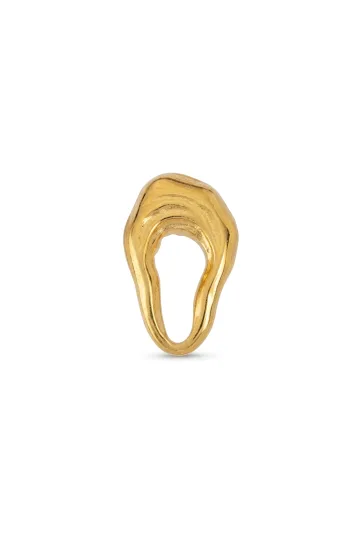
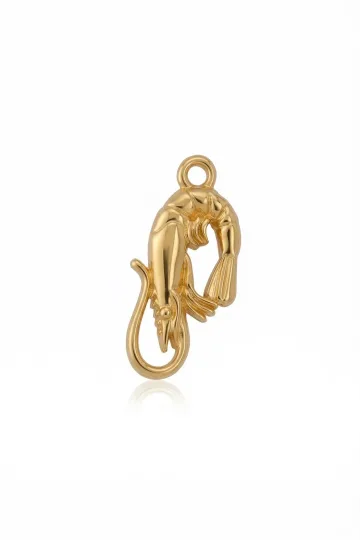
Wear the symbol, don't just read about it. These are in stock:

Why a price tag promises nothing
Yellow 18-karat gold is softer than yellow 14-karat and holds a stone worse: more gold, less hardness. A hallmark reports an alloy's metal share and nothing about the work. A seventy-percent discount, in the EU, must be measured against the lowest price of the past thirty days. The tag describes the seller, not the piece.
The belief that dearer means better holds tighter than any other superstition in the trade, and it holds for a plain reason. The quality of a piece hides where the buyer never looks: in the thickness of a wall, the seating of a stone, the way a clasp is built. The price is printed large and legible from the door. A brain gladly takes a visible number for an invisible property.
The second reason is more blunt. Jewellery retail has for centuries earned on the gap between what a buyer can check and what a buyer has to take on trust. As long as nothing can be checked except the price, the price does the arguing. What follows is built to close that gap: eight common claims about price, and what is left of each once you take it apart.
Price is the seller's decision, not a property of the object
A piece has a mass, a fineness, a polish quality, a setting type. All of that can be measured, and none of it changes with the shelf the piece sits on. Price is not on that list. A person sets it, and sets it out of a situation: the rent on the room, the cost of money, the season, the speed of turnover, the image the shop wants to hold in a buyer's eye.
The consequence is simple, and it hides from nobody. The same pendant, cast in one mould from one alloy, can stand in two places at noticeably different prices, and both are honest in the sense that a real economy stands behind each. The metal is identical. You are not paying for the metal, you are paying for the structure a shop built around it. Compare two listings by weight, fineness and stone size: if the figures match and the tags differ, what differs is two shops, not two grades of metal. The same swap runs through metals, which the debunking of silver myths takes apart on its own ground.
Where price and quality really are linked
Denying the link entirely would be a lie in the other direction. It exists, but it works at the bottom of the scale, not across all of it. Below a certain floor a good piece cannot physically be made: too little metal on a wall, cheap fittings, no budget for finishing and inspection. That floor is real, and dropping under it buys nothing worth having.
Above the floor the link breaks. The money added to the price stops going into metal or labour and starts going into the surroundings: the place of sale, the packaging, the recognition, the after-service. The gain in quality there is not zero, but it slows down while the gain in price speeds up. Your task is not to pay as little as possible, it is to know which stretch of that curve you are standing on.
The three tiers a jewellery counter splits into
The talk about overpaying gets concrete once you see that a counter divides into tiers, and each solves a different job. The accessible tier is plain shapes, standard fittings, plating instead of solid metal, and a minimum of hand steps. Such a piece is meant to live out its season and not disappoint, and at that it succeeds.
The middle tier adds finishing. The money added here still goes into the piece itself: into wall thickness, a cleaned reverse, a proper clasp, a hand-set stone. Each of those four lines can be felt with a finger, and this is the single tier where the added price can be verified physically.
The premium tier pays for rarity and for service. A rare stone, a complex original form, fitting to a person, care for years ahead. All of it exists and costs its money, yet the gain in sheer sturdiness there is small: a ring does not wear longer because a label changed tier.
Why a price reads as a promise
The first-number effect is described in a 1974 paper on the psychology of judgement: shown an arbitrary figure, a person anchors later estimates to it, even knowing the figure is random. In a shop the anchor is the price, and the struck-through price most of all.
The reverse runs too. An expensive purchase demands a justification to oneself, so a bought piece begins to seem better than it looked in the case. The mechanism is post-purchase: the decision is made and the money is gone, and a person builds arguments to fit that fact rather than the other way round. Sellers simply know that objections thin out after payment. Knowing the mechanism cancels nothing, but it shifts the moment of decision a minute earlier, and that minute is generally enough.
What counts as quality, if not price
It helps to keep your own list, because without one there is nothing to judge by. The quality of a piece rests on four measurable things: the material and its honest labelling, the accuracy of assembly, the reliability of the joints that move, and repairability after a few years of wear.
None of the four is printed on the tag, and all four show themselves in the hand within a couple of minutes. Each gets its own section below, but first it helps to see what the number on the tag is even built from: without that, the talk of overpaying stays a talk about taste.
What the price of a piece is actually made of
The estimate for a piece breaks into legible lines, and half of them have nothing to do with the object itself.
Metal: weight, fineness and the daily quote
The first line is arithmetic. Take the weight, multiply by the share of precious metal in the alloy and by the current quote. The figure comes out smaller than a buyer expects: a slender pendant holds little metal, and its share of the final number is modest. So the argument over whether gold rose on the exchange matters less to a particular ring than it seems.
Coatings are a separate story. Gold plating, gold-filled work and vermeil differ in the thickness of the layer and the way it is laid, and on a tag all three collapse into the one word "golden". The gap in lifespan between them is wide, and it shows in the bill only when the seller agrees to name it. How each of them is built is set out in the comparison of gold plating and solid gold.
Labour: how many operations hide behind a shape
The second line is the one taken least seriously. Between a sketch and a finished piece runs a chain of operations: model, mould, casting or forging, mounting, filing, sanding, stone setting, final polish. Each needs a person with hands and time, and time is the one thing that cannot be cheapened without a cost showing later.
Here sits the answer to why two rings of one weight cost differently. A fine openwork piece with eight stones needs far more hours than a plain band of the same weight. The metal in them is equal, the hand work is not. A buyer who compares by grams never sees this line of the estimate at all.
The stone: the murkiest line on the invoice
A stone differs from metal in that its price is not read off the weight. One mineral species varies by colour, clarity, cut quality and origin so widely that the difference can be dramatic. A buyer cannot judge this by eye, and a seller knows it better than the buyer does.
Treatment lives here too. Heating, fracture filling, irradiation, coating: some are stable and accepted by the trade, some demand special care and make themselves known with time. The question to a seller is not "is the stone natural" but "how exactly is it treated and what does that change in wear". The traps around stones are laid out in the debunking of gemstone myths.
The window, the rent and the person behind the counter
Now come the lines that do not touch the object at all. A room in a busy spot, the lighting, the security, the insurance on the case, the wage of an adviser, the training, the display samples nobody buys. All of it is paid out of takings, which means it is loaded into the price of every sold piece.
The economics here are unforgiving: the fewer people walk in, the larger the share of rent each purchase carries. A grand salon in the centre with two sales a day spreads its costs over those two sales. That is where the price gap on identical pieces comes from, and from it follows a practical point: the setting around the goods is a line on your bill too.
The time a piece sits before it sells
No estimate carries a line by that name, yet it sits in every tag. Jewellery is a slow good: between the day a shop pays for a piece and the day someone pays the shop, months pass, and for rare items years. All that time the money stands in the case instead of working, and the cost of waiting is spread over the pieces that finally sell.
Two things follow that a buyer can see. First, the narrower the range and the faster the turnover, the smaller this surcharge, while a vast case of rare stock is dearer at the same metal because someone pays for its standing. Second, a sale exists for turnover, not for the buyer. A piece that has lain two seasons is better let go cheaper than kept as frozen money.
The conclusion is unexpected. A deep cut on a rare item speaks more of a piece that went unsold than of a shop's generosity. To the object it means nothing: a chain that lay a year grew neither worse nor better, only the patience of its keeper changed.
The name on the tag
The last line is the most disputed, because it cannot be measured. The name on the tag pays for advertising, presentation, warranty policy and the confidence with which the piece is given as a gift. That is a real service, paid for knowingly and without deceit, as long as the buyer knows that is what the money buys.
The trouble starts when a name is passed off as engineering superiority. Metals are the same for everyone, the hardness scale is one for the trade, and a prong holds a stone by the same laws whatever is printed on the tag. A name promises predictability and service. It does not promise that the setting will be more accurate, and you check that exactly as you would on an unbranded piece. Recognition pays for what happens around the object, not for the wall thickness set on a lathe and a bench.
Do not pay for the box. It goes in the bin that same evening, while a crooked setting stays with you for years.
The stylist's read: telling dear from good
A dear piece and a good piece overlap often, but they are different sets, and confusing them is costly. A short talk with a Zevira stylist on what he looks at first when a piece is in his hand, and what he advises those building a jewellery box slowly.
What do you look at first when you pick up a piece?
I turn it over. The face is made for the case, and the truth shows on the reverse: how the sprues were cut, whether the solder joints are cleaned, whether the polish is even where nobody will look. Then I open and close the clasp several times in a row. If the action is stiff or has play, the rest interests me little, because pieces are lost through their clasps.
How do you tell a dear piece from a piece that only looks dear?
By the details they cut on quietly. I look at the band thickness against the light, I look at whether the prongs sit level, I look at the join of the bail ring: it should be soldered, not just closed. A dear-looking piece tends to give itself away by bulk with a suspicious lightness, and that is the first sign of a hollow inside and a thin wall.
What do you advise those building a jewellery box gradually?
Buy one piece at a time and choose each next one for a gap in the set, not for the case. I count days as I go: how many days a year a piece will really be on a person. A thing that goes with any clothing racks up hundreds of days, a formal piece collects a handful, and the order of purchases arranges itself without any wish list. I do not advise sets: three pieces wear at different speeds, and a year later one of the three gets worn while three were paid for. And the thing forgotten at the case: a piece has to come off as often as it goes on. A clasp you cannot fasten one-handed before leaving sends a piece to the box for good, however lovely it is.

Turn on your camera, pick earrings, a pendant or a ring, and see the piece on yourself in real time.
Switch items in one tap.
Everything runs in your browser: no photo or video is ever uploaded.
Myth one: handmade is always better
The phrase is pleasant, resists checking, and hides three different meanings inside.
What the words "handmade" actually hide
There is no single definition, and that is the root of the confusion. Handmade can name a piece a maker sawed and soldered whole. It can name a casting whose sprues a person cut off by hand, then polished and set. It can even name an assembly of ready factory parts. All three are honest in their own way, and all three cost differently. So the question "is this handmade" is useless, and a better one takes its place: which operations exactly were done by hand. The marks of hand work on silver are read in the piece on handmade rings and how to spot the real thing.
How craft became a pricing argument
The value of hand labour has a datable history of its own. Before the industrial revolution there was no other way, so there was nothing to boast of: the hand was the only means of making. It became an argument once an alternative appeared.
The British Arts and Crafts movement of the late nineteenth century grew as a direct reaction to machine output: its people set against the factory a piece made by one master from start to finish, and insisted that a visible tool mark was a virtue, not a flaw. The idea spread across Europe and settled into the language of selling. Since then the phrase works half as a description of process, half as a promise of attention. The second sells better, so it is repeated. It is worth remembering where the idea came from: it was born as a stance against sameness, not as a claim about strength.
Where the hand beats the machine
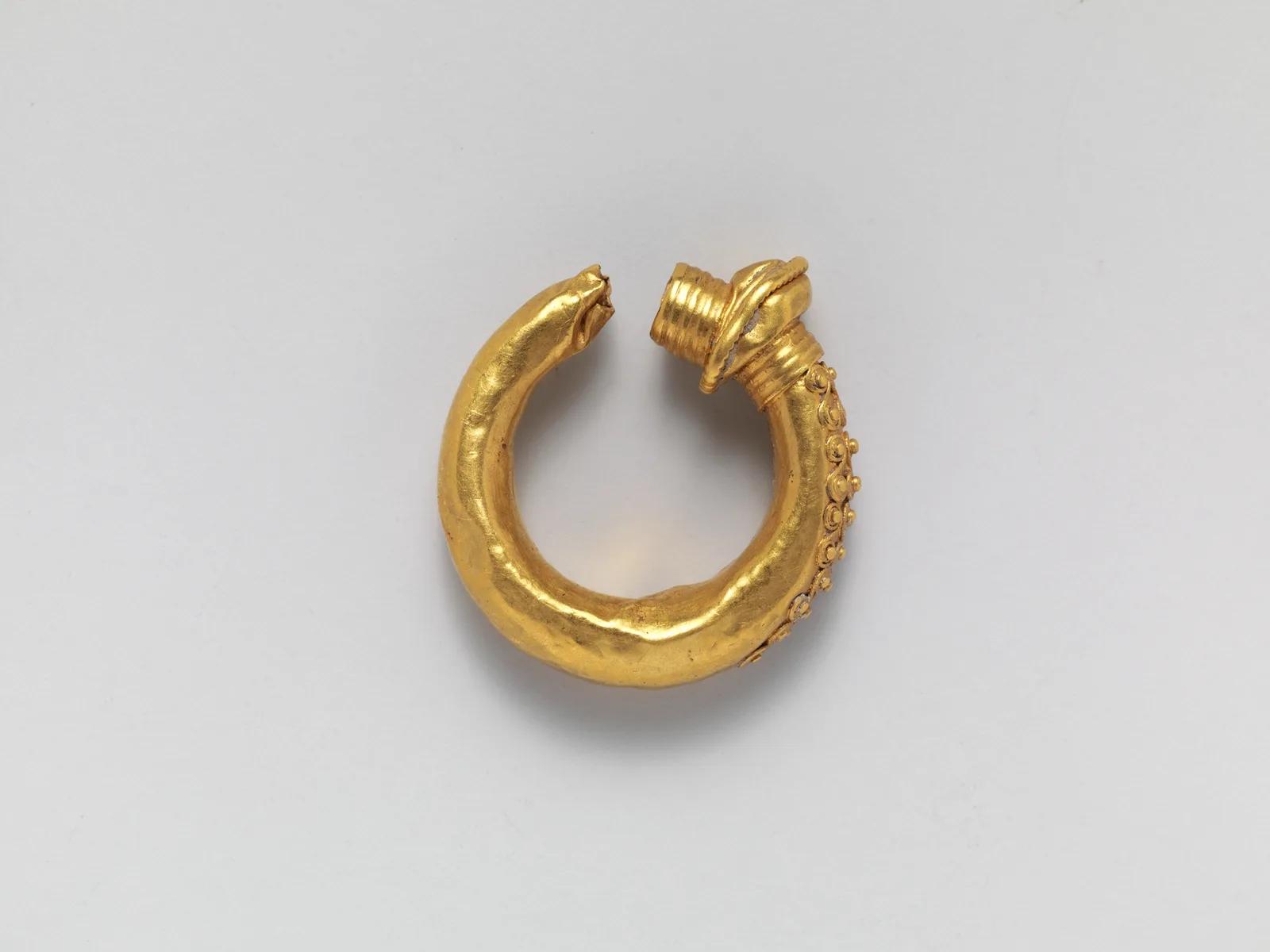
There are jobs where a person is still beyond competition. The first is setting a stone in a non-standard mount: a maker feels the metal's resistance and stops a moment before the prong cracks. The second is finishing a complex relief, where you must remove exactly as much as needed and not a micron more.
The third and least appreciated is fitting to a particular person. A ring sized to a hand, a bracelet shortened to a wrist, an earring whose post angle was changed. Serial production cannot do any of that by definition, because a run is built for an average buyer, and an average buyer does not exist.
Where the machine beats the hand
The other side is discussed less. Lost-wax casting, known since the Bronze Age, gives a repeatability the hand never gives: a hundred identical parts come out identical to a tolerance the eye cannot catch. Machine-cut facets on a chain are truer than any hand can hold. Electroplating lays down more evenly than any hand application.
The sober conclusion follows. Handmade is a method of production, not a badge of quality, and a good piece comes out either way. So does a bad one: an earring soldered crooked by hand stays crooked, however many hours went into it.
Customer reviews
Zevira is a real jewellery shop. Genuine payments, deliveries and customer thank-yous.
🥰🥰🥰 gracias
Ok, ¡gracias! 🙂
Myth two: mass production means poor quality
Here the error runs the other way, and it costs more: a buyer refuses good pieces on principle.
Casting is a technology, not a shortcut
The charge against a run comes down to the word "casting", said with contempt. Yet lost-wax casting served bronze for thousands of years before jewellery workshops existed, and the whole trade stands on it to this day, the top tier included. What differs is not the presence of casting but the quality of the mould, the alloy, the cooling schedule and the amount of finishing after.
A bad casting gives itself away by pores on the surface, a blurred relief and thick sprue stubs someone was too lazy to cut. A good one is indistinguishable from carved work, and cannot be told apart from a photograph even by a specialist. So the question is not about the technology but about who applied it and how.
Why control is stricter in a large run
A run has an advantage rarely mentioned. When a part repeats by the thousand, a deviation becomes visible and expensive: a faulty batch is a loss, so templates, gauges and sampling appear. A single piece has no such filter; it is checked only by the person who made it.
There is a second effect. A run lets a maker invest in tooling that a one-off piece could never justify: precise moulds, setting jigs, polishing machines. The tool pays back over the run, and the result reaches every unit in it.
What really suffers in a mass-made piece
Granting a run its virtues does not mean ignoring its weak spots, and they are predictable. The first is wall thickness: a run is cheaper made lighter, so rings grow thinner and hollow elements thinner still. The second is the fittings: clasps, posts and hinges are taken standard, and those are the first to fail.
The third is the finishing of the reverse. The side a buyer does not see is finished on a leftover basis, and that is the side that lies against the skin. All of it is checked with a finger in ten seconds, and the check works the same for a dear piece and a cheap one.
Myth three: 14-karat is worse than 18-karat
One of the few claims on this list that flips over exactly the wrong way round.
What the number on the mark means
The number on the mark states the share of precious metal in a thousand parts of the alloy, and nothing else. 585 means 58.5 percent gold, 750 means 75 percent, 925 means 92.5 percent silver. The rest is the alloying metal: copper, silver, palladium, zinc, nickel in various blends, and it is that mix which sets the colour and the mechanical behaviour.
The alloy also sets the colour, and this feeds straight into the cost after purchase. Copper and silver in different shares give yellow and red tones, palladium and nickel lighten the metal, and white gold on top of all that is coated with rhodium to remove the yellowish undertone. The rhodium layer wears off with daily use and is renewed at a workshop for a fee, and that future line of cost is generally left unmentioned at the moment of buying white gold. What the exact numbers mean and how the extra marks are read is set out in the guide to hallmarks and fineness.
Why the alloy with less gold is harder
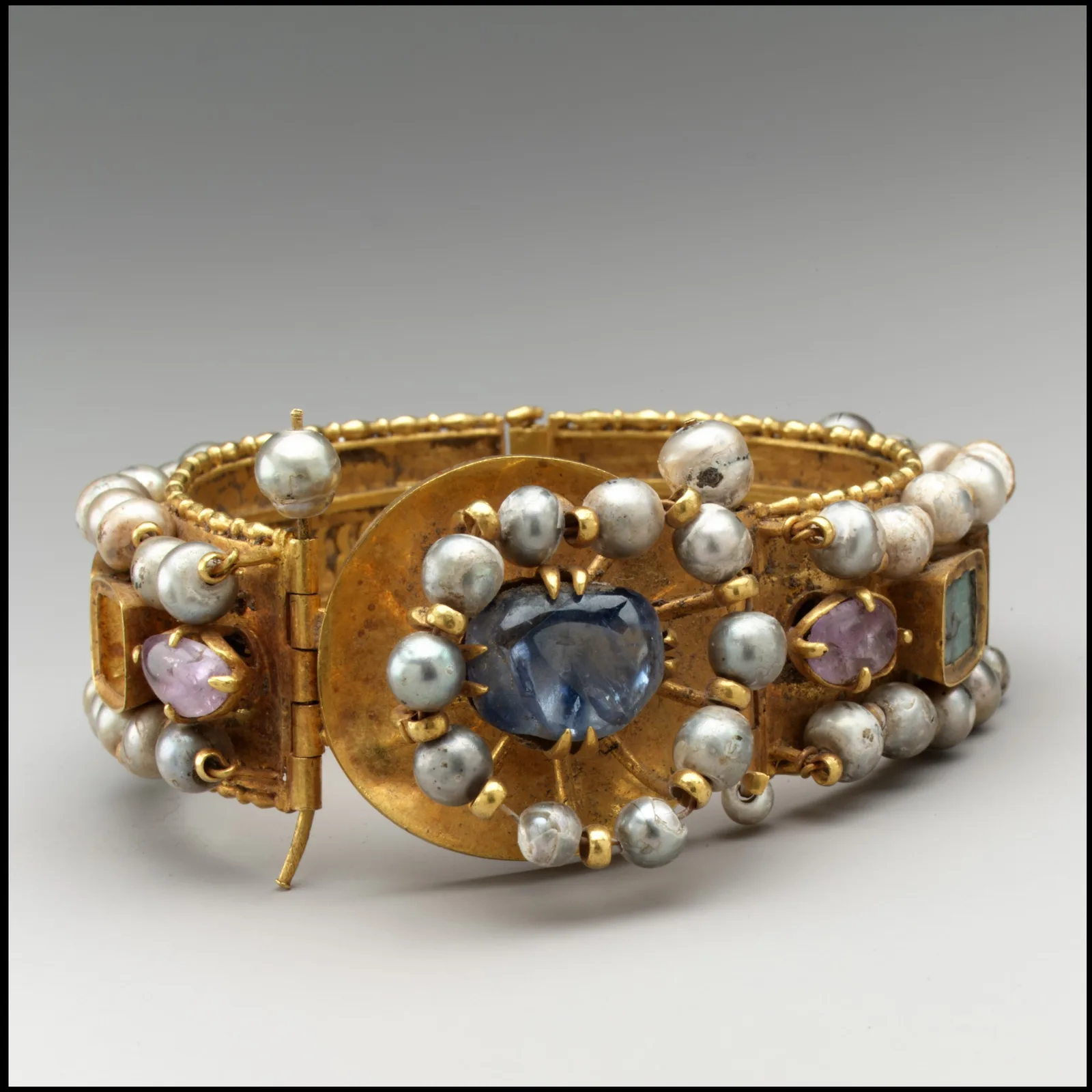
Pure gold is very soft: on the Mohs scale it sits around 2.5 to 3, and by Vickers the hardness of the highest fineness holds near 25 to 30. A piece made of it deforms under ordinary wear, and setting prongs on it bend open.
The alloy cures that softness. A 585 alloy generally shows a hardness well above a 750 of the same colour group: the added copper, silver and zinc form a stiffer structure that resists a dent and keeps a prong from bending. The practical point is direct. For a ring worn every day, and for a setting that holds a stone, the lower fineness is often the better choice. Dearer does not mean stronger; here it runs the other way.
When high fineness genuinely matters
High fineness has its point, of course, it just lies elsewhere. The first is colour: an alloy with more gold gives a deeper, warmer tone that a cheap mix cannot reach. The second is the skin: the fewer foreign metals in the alloy, the fewer reasons for a sensitive person to react.
The third is cultural tradition. In some countries a buyer expects high fineness and reads a low one as a substitution, and arguing with that is pointless. The sensible choice reads like this: for daily load take the harder alloy, for colour and for rare wear take the higher fineness.
Upload a photo of your pet, someone you love, or an object. We'll build a 3D model and hand-cast it in pewter.



Myth four: a known name guarantees quality
The most delicate point, because it is easy to slide into denunciation, and denunciation helps nobody.
What you pay for when you buy a name
Set it out honestly. Buying a known name, a person gets predictability: the piece will be exactly as expected, the size will be adjusted, the warranty honoured, the box will look like a gift. On top of that comes a social signal, and denying its value is silly: a present in recognised paper reads faster.
All of the above is a service, and services cost money. The only thing needed is to call them by their names. A person paying for confidence and for the wrapping of a gift acts sensibly. A person sure they bought engineering superiority as well is generally mistaken.
What a name actually gives you
One thing a name gives for certain: accountability. A seller who values a reputation replaces a fault more readily, repairs under warranty and does not quibble over trifles, because a scandal costs more than a repair. That is not a small thing, and over a long run it earns its money.
What a name does not give is release from checking. A prong is sometimes filed thin on a dear piece too, a clasp is sometimes weak in a known collection. You look with the same care whatever is printed on the tag, and a seller confident in the piece takes such an inspection calmly.
The certificate and the rights you have without one
The word "guarantee" names two different things, and a seller profits when a buyer confuses them. A stamped certificate is the shop's own promise: voluntary, limited to its own list, and ending when the paper says. Beside it stands liability under the law, which depends on no certificate. In the EU a seller answers for a good's non-conformity with the contract if it shows within two years of handover, and the rule runs for purchases made from 1 January 2022. A commercial guarantee does not narrow those rights: its text is required to state plainly that the legal remedies remain.
The practical difference shows in who has to prove what. In the first year after purchase the law assumes the defect was present at handover, and it falls to the seller to rebut that. From then to the end of the two years the burden shifts to the buyer, and this is where what you have on paper decides the matter, not what you were told on the floor. Keep the description you bought by: weight, fineness, plating thickness, setting type, and for an online order a screenshot of the listing too. A stated characteristic turns "it feels like the coating went too fast" into a checkable claim that the piece does not match its description, and that is a different tone of conversation.
What happens to the price on resale
The test of strength arrives when a piece is put up for sale. A retail price includes rent, wages and presentation, and the second-hand market pays for none of it: a private buyer wants the object, not the case it stood in. The gap between what was paid and what is offered is unwelcome news for a person sure they bought an investment.
Metal buyers reckon harder still. They look at weight, fineness and the current quote, while labour, small stones and provenance count for nothing. A finely worked ring and a plain band of the same weight are equal at the counter. A known name softens the drop, because the piece is searched for by name and a buyer turns up faster. It still does not make jewellery an asset. The practical lesson is not about money: make the decision to buy as if you will never be able to sell the piece again. Then the only test left is whether you will wear it, and that test needs no forecast.
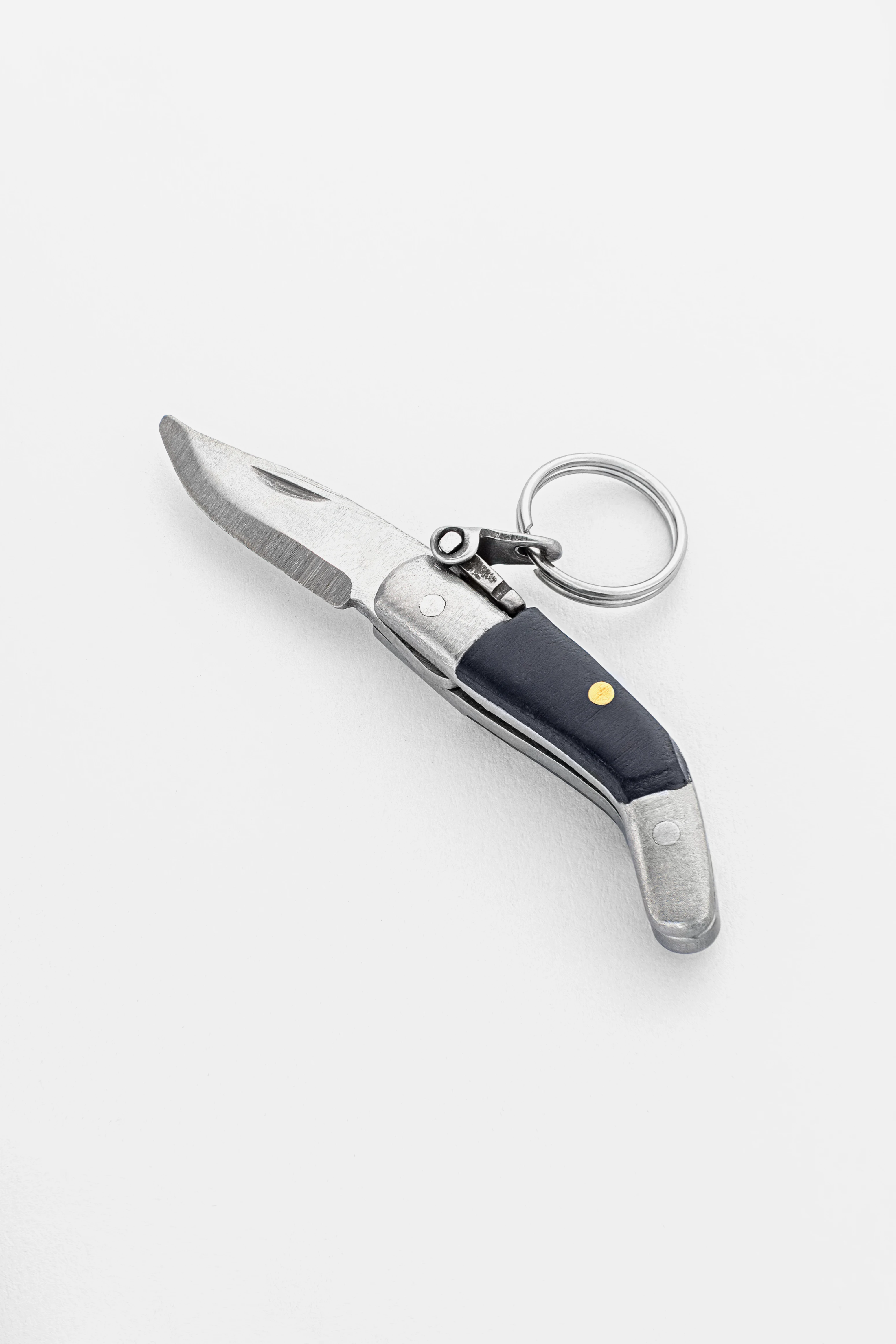
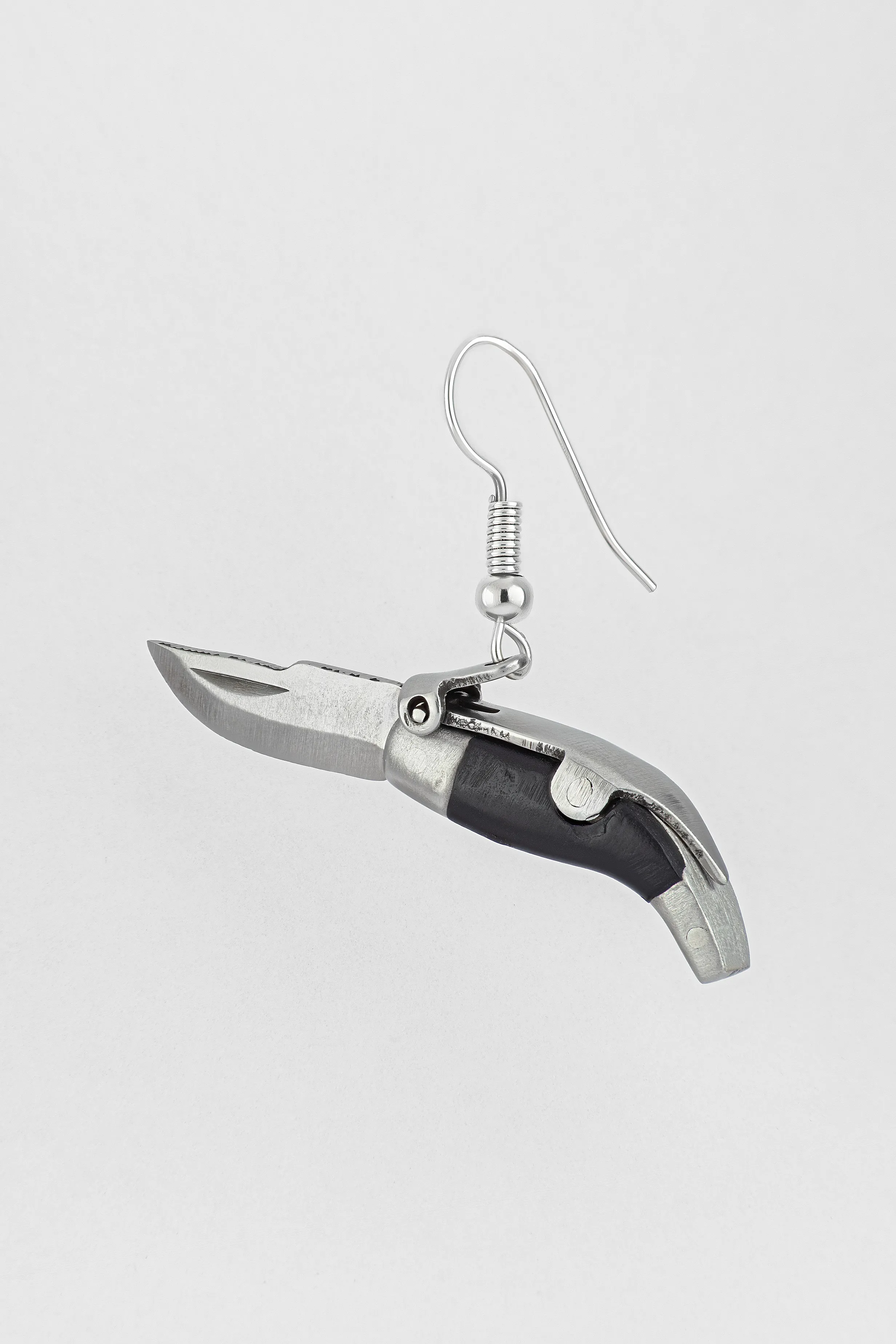
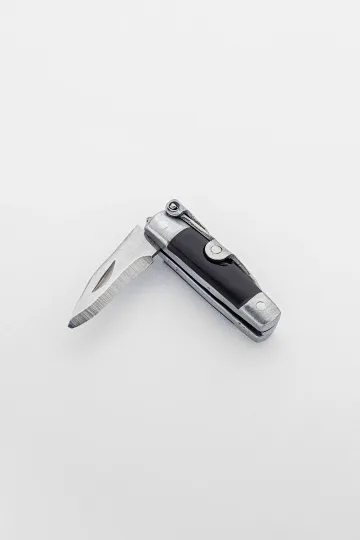
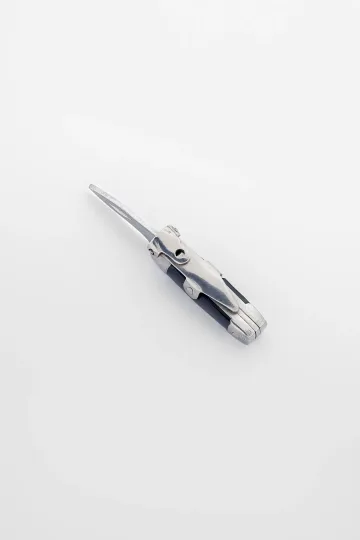
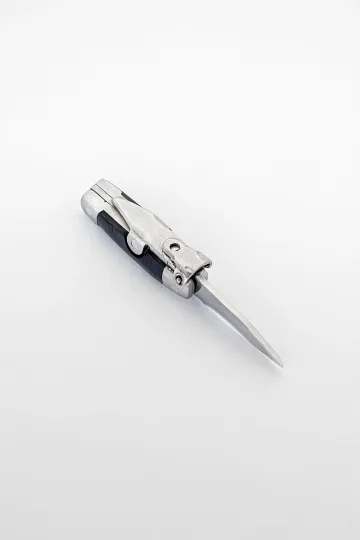
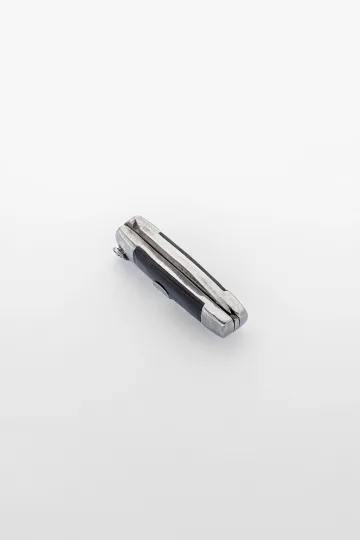
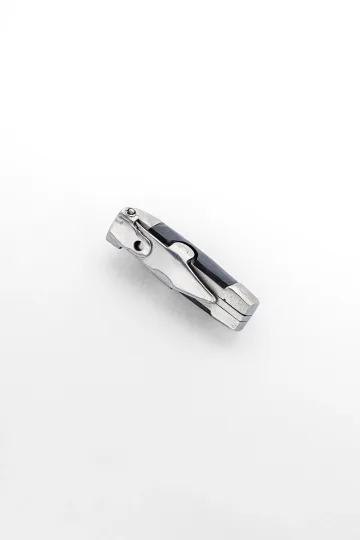
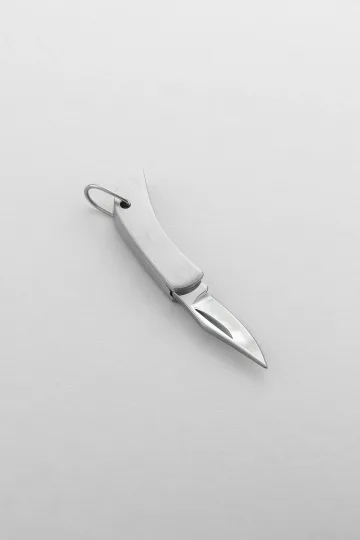
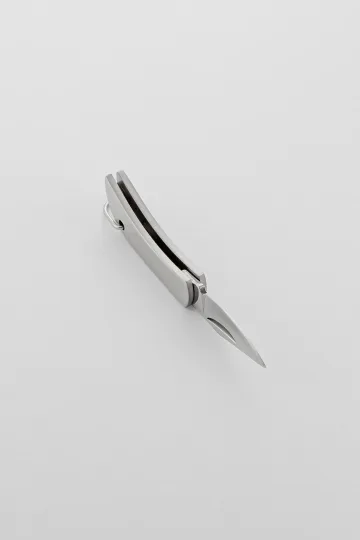
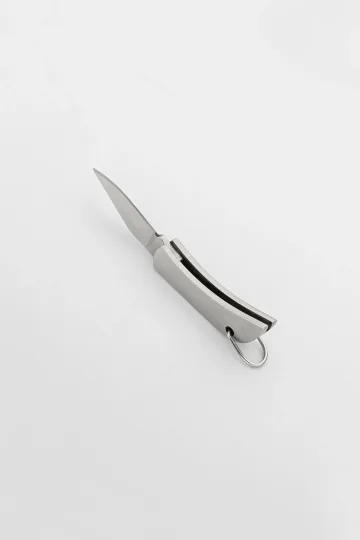
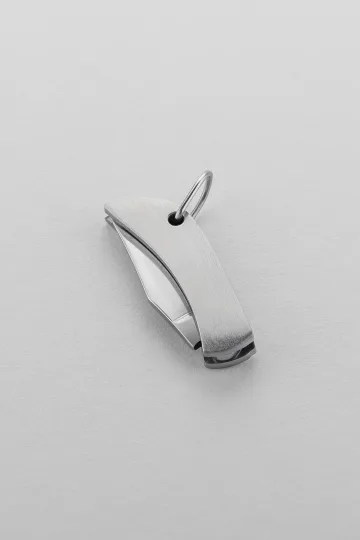
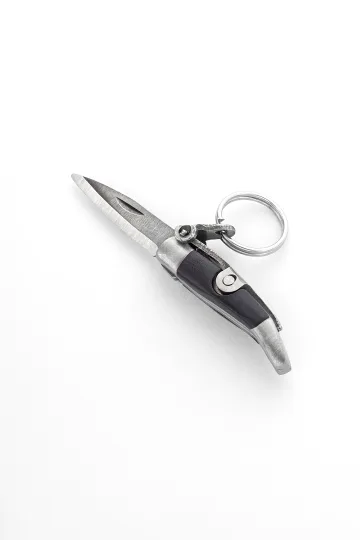
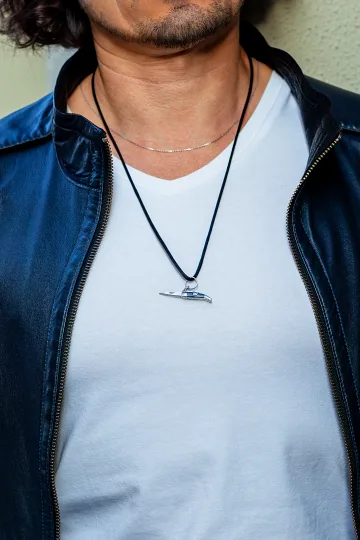
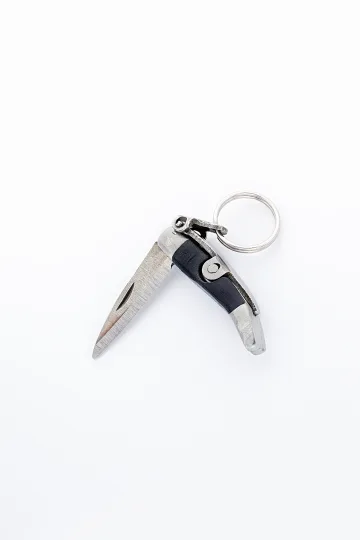
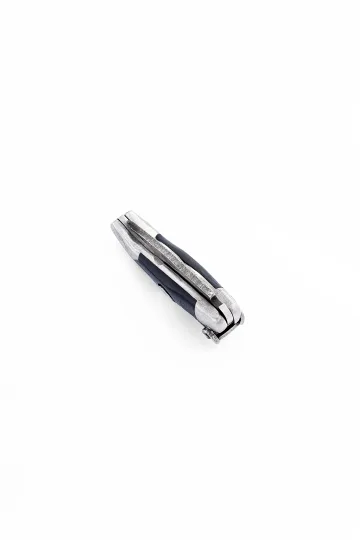
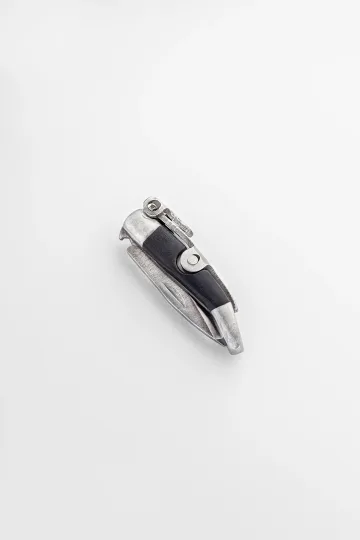
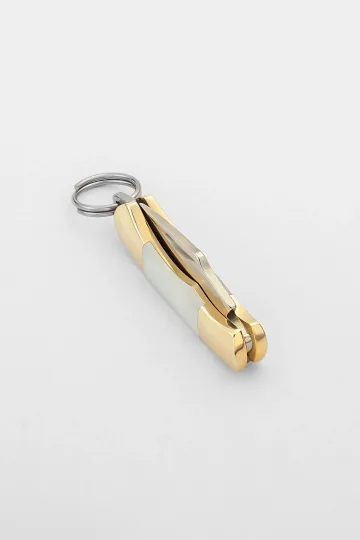
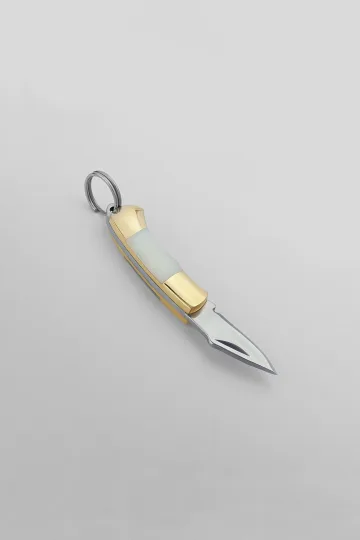
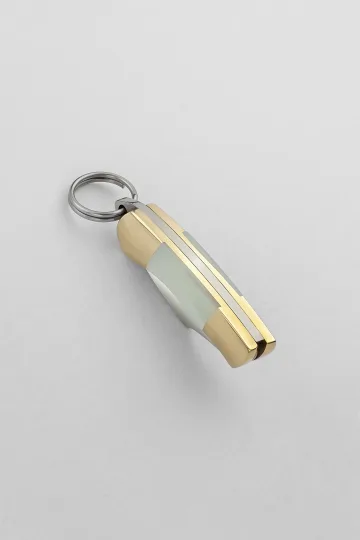
CAPAORA mini knife pendant
The 18th-century Spanish navaja in miniature: 40 mm of stainless steel, a real folding mechanism and a Palanquilla lock that clicks. An affordable gift to remember.
Authentic · Ships from Spain · 14-day returns
Myth five: the heavier, the better
Weight is felt in the hand, so it is trusted more readily than any paper.
Where the faith in weight came from
The root of the belief is honest: in an age when jewellery was a form of savings, weight did decide value, because a piece was priced by its metal and melted down in need. Jewellers worked for centuries as pawnbrokers too, and the logic of "what will it fetch" was a working one.
Today it has broken in two places. First, weight counts the metal and ignores the labour, and labour in a slender piece costs more than the metal. Second, metals differ in density: platinum sits near 21.4 grams per cubic centimetre, gold at 19.3, silver at 10.5, brass around 8.5. A piece that feels heavy may simply be a denser metal or a thicker wall, not a better build.
Hollow pieces, and when the void inside is normal
Buyers often take a hollow piece for a cheat, and wrongly. Large hoops, volume beads and wide bracelets are made hollow on purpose: solid metal of the same volume would be unwearable, and an earlobe could not physically bear it. The void inside there is an engineering choice, not a saving.
It turns into a saving when the wall is thinner than sense allows and the piece crushes under a finger. The check is easy: a careful press at the widest point should not feel yielding. A seller who knows the stock is not startled by such a press and will point out where the wall is thickest.
When weight does tell you something
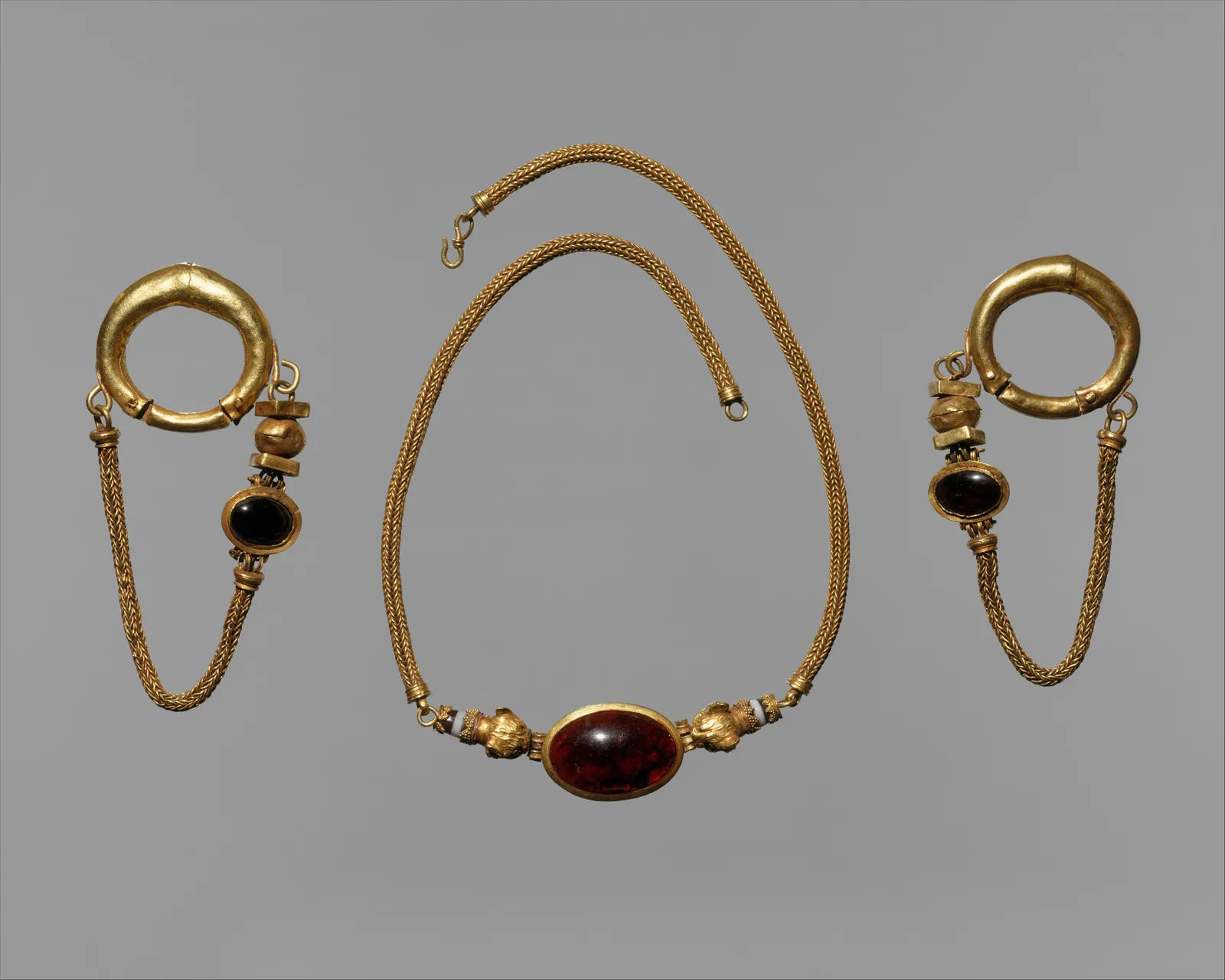
Writing weight off entirely is wrong too, it just has to be read together with size. A piece heavy for its size means a thick wall or a dense metal, and in a ring that is a direct forecast of how it will age: a thin band wears and loses its round over a few years of daily wear, a thick one goes into the same wear so much more slowly that the difference shows only beside a new ring.
The reverse signal works as well. A large piece that feels empty in the hand is almost certainly built from thin sheet, and dents on a door handle. A useful habit reads like this: compare not weight in the abstract but weight against size, and do it in the hand, not from a description. Chains deserve a note of their own. Their strength is set by the wire thickness in a link, not by total mass: a long chain of thin links weighs a fair amount and parts on a tug, a short one of thick links weighs less and holds.
Myth six: an expensive window means an expensive piece
The setting around the goods is part of the goods, and it moves the sense of a price more than the goods do.
How the setting changes the feel of a price
An expensive room works as a preface: by the time a buyer reaches the counter, they have inwardly accepted that prices here are high, and they rate the next number against that expectation. The same principle as the struck-through price, only the anchor is not a figure but the interior, the quiet and the way you are spoken to.
The reverse is real too: a good piece in a modest setting looks cheaper than it is and sells worse. Hence a simple hygiene of perception. Hold a piece longer than you looked at it through glass, and do not decide in the minute a person stands beside you waiting for an answer. A pause the length of one loop round the floor gives you back the judgement the interior had set.
Window light and what it does to a stone
Jewellery cases are lit with directed, high-rendering light, and not out of love of beauty. A narrow bright beam makes a cut stone flash at the least movement, and a cool tint flatters the whiteness of the metal. At home that light is gone. So a stone that sparkled in the shop looks quieter in a flat, and the letdown of that shift is familiar to many. The remedy is plain: carry the piece to daylight by a window or a door, look at it there, and only then return to the talk of price. A seller who refuses to bring a piece out from under the case lamp tells you a fair amount about it.
What online trade changed
The window lost its monopoly on presentation, and that shifted the balance. Comparing the price of a similar piece now takes a minute without leaving the shop, and a seller has to explain the gap in words rather than in an interior. That is exactly why characteristics that were never written before appeared in listings: weight, plating thickness, insert size.
In exchange the touch was lost. A photograph with lighting and retouching lies no worse than a case lamp, and size reads wrong in a shot because a pendant is photographed close up. Hence a rule for buying at a distance: read not the frame but the figures in the description, and demand them if they are missing. A seller who prints weight, fineness and sizes hands you a tool of checking for free, and that in itself is a signal. A seller with three adjectives and no characteristic tells you just as much.
Leave your email, we'll send your discount code. No spam, unsubscribe anytime.
The code arrives by email, valid on your first order.
Myth seven: seventy percent off is a bargain
The most durable mechanism in retail, and the only one on this list with direct legal regulation.
How the struck-through price works
The struck-through number does exactly one job: to set a point of reference. It need not have been a real selling price; it is enough that the piece stood with it for some time. Then the arithmetic of perception takes over: a buyer compares the new number not with the value of the piece but with the old number, and the difference reads as a win.
That is why the depth of a discount and the quality of a piece are not linked at all. If anything the link runs backwards: the higher the original markup, the more generous a discount can be declared while staying in profit. A piece that sells steadily without discounts rarely needs a struck-through number at all.
What the law demands of anyone announcing a discount
Here there is a checkable footing. The EU directive applied since May 2022 requires a seller, when announcing a discount, to name as the prior price the lowest price at which the good was sold in the thirty days before the reduction, at a minimum. It also allows member states to set their own rules for perishable goods and for items on sale for less than that span, so this is an option for countries, not a ready pan-European exemption.
The purpose of the rule is stated in its own reasoning: to stop a price being raised for a few days for the sake of a pretty discount. From it a buyer gains a concrete right. Asking what prior price a discount is figured from is lawful and appropriate, and a fair seller answers without irritation.
How to check a discount in a minute
First: look at what number is struck through and compare it with the price of similar pieces elsewhere. If the struck figure stands out well above the general run, the discount is taken from the ceiling.
Second: notice the urgency. A timer, a "last day" and "two left" exist to stop you comparing. A piece you need today will be needed tomorrow as well, and a shop whose sale ends every week shows that its price is provisional.
Third: count the final number, not the percentage. Seventy percent off an inflated price gives a worse result than ten percent off an honest one, and that is the only comparison that matters.
Myth eight: cheap is bound to fall apart
The mirror error, and it costs more than the rest, because it blocks the purchase of a decent piece.
What breaks first in a piece of jewellery
The list of failures is dull and the same across every price tier. The first to go are the moving joints: chain clasps, bracelet catches, earring hinges, jump rings closed instead of soldered. Next comes the stone setting, whose prongs bend open. The metal itself breaks rarely, unless the wall was thin to begin with.
None of those joints grows sturdier because a piece is dear. A weak bail ring costs the same little in a cheap piece and an expensive one, and it is swapped for a soldered one in minutes. So reliability is judged joint by joint, not by the tag.
Cheap and honest: what it looks like
There is a whole class of pieces that cost little and serve for years, and it is known by the honesty of its labels. Silver with a clear fineness, stainless steel, gold-filled with a stated layer thickness: each material has its limits, and when those limits are named, the piece behaves predictably. The properties of those materials are set side by side in the comparison of brass, steel and silver.
What is dangerous is not a low tag but a vague wording. "Jewellery alloy", "medical gold", "golden coating" with no thickness given: no standard stands behind those words, and they cannot be checked. A cheap piece with an honest description is more honest than a dear piece with a foggy one.
Real economy is not counted on the price tag
It helps to think not of the purchase price but of the cost of owning the piece. Into that go the service life, the chance of repair, the availability of spare parts and the number of times you will actually wear it. A pendant worn every other day for five years costs less per wearing than a formal piece put on twice and shut in the box.
Repair weighs heavily in that arithmetic. Replacing a chain clasp is cheap and done at any workshop, while resetting a stone that fell from a closed bezel costs noticeably, and buying new is sometimes cheaper. So the question of repairability is asked before the purchase, not after. And there is a third part people forget: a piece you do not like is not worn, and its cost per wearing runs to infinity whatever metal it is made of. That is easier counted with your hands than in your head: put in the price and the years you mean to wear it, and get the cost of a single day.
What actually determines the quality of a piece
Four things, each checked in the hand, and none written on the tag.
Fineness and the hallmark
The hallmark is the first thing to find, and the first to trust with a caveat. State hallmarking is not universal: in some countries an assay office is compulsory, in others a maker's mark is enough, and a stamp on one piece can mean nothing in the next country over. The International Convention on the Control and Marking of Articles of Precious Metals, signed in Vienna in 1972, brought in a common mark for member states precisely to answer that discord.
Read the whole set of marks, not one. Beside the fineness mark stands the maker's mark, the personal stamp of the maker or of whoever is answerable for the release: fineness speaks of the alloy, the maker's mark of who is accountable. Imported pieces add an import mark applied in the country of sale, so a set of stamps on such a piece looks unfamiliar and alarms a buyer for nothing. An absent familiar combination is not in itself a sign of a fake, but often a sign of another jurisdiction, and telling one from the other is helped by the guide to checking a piece for authenticity.
The stone setting
The most informative joint in a piece. Prongs should lie on the stone tightly and evenly, without gaps and without differing heights. The stone should not move under a nail and should not sound when tapped lightly beside the mount: a rattle means a loose seat and a stone that will fall. A closed bezel is checked along its edge: the metal should be crimped in an even band, without waves and without tears. A good setting is the single operation where a cut shows at once and costs most later, because a lost stone is rarely found.
Clasp, hinge and moving parts
A clasp is opened and closed several times in a row. The action should be clear, with a distinct click, without side play. A spring ring is tested by its spring: it should return the tongue briskly, and a limp spring stops closing fully within half a year. Earring hinges are checked for side wobble, the post for straightness, a lever back for the depth of its catch. Jump rings are read against the light: a soldered ring shows by the absence of a gap. It is that small thing which decides whether a pendant makes it home.
The reverse, the polish and repairability
The reverse tells more about the making than the face does. Smooth, polished, without sharp edges and without sprue marks: that is the sign of a piece finished whole, not only for the case. A sharp edge on the inside of a ring rubs the skin raw within a day of wear, and no price makes up for it. Repairability shows in the build, not in the tag. A thick band of a plain alloy takes soldering and reshaping for decades, and a workshop takes on such a piece without an argument. Working the other way are three signs: a stone glued in fast, a thin hollow wall, and a coating laid over a finished piece. Heat during repair spoils all three, which is why some workshops decline a piece with that set, and its fate is settled in the case. One material bonus: remelted gold does not differ in its properties from newly mined, and on that stands the whole economics of recycled metal.
Jewellery described before you buy
Each card names the material, the colour, the insert and whether a piece is plated, and many pieces list their sizes too. Weight and layer thickness in microns are not there yet: ask about a specific piece before you order. What we know for certain we will state, and what we do not we will not replace with a flattering adjective.
How to read a price tag and what to ask
A price tag is the last line of a long sum, and the sum cannot be rebuilt from it alone. But it can be taken apart in steps, and the order of the steps matters more than any ready list of questions: while a piece lies under glass there is almost nothing to ask, and after payment it is too late.
What is printed on a tag and what never is
A slip the size of a nail holds little: the item type, the metal with its fineness, sometimes the insert size and an article number. Weight, plating thickness and setting type are almost never there, and not out of ill intent but out of the size of the slip. So the talk begins not with a complaint but with a neutral question about where the rest of the figures live. A shop with nothing to hide keeps them in the listing or the piece's passport and shows them without resistance.
What should put you on guard is different: when adjectives are printed in place of figures. "Elite", "premium", "exclusive" take exactly the spot where fineness, weight and insert material belong, and they take it for a reason. A dear piece described in one line with no characteristic looks odd and generally is: a description grows shorter the less checkable it holds.
What to ask while the piece is in your hands
Much is checked in the hand, but two things fingers cannot check at all: the metal composition and what goes on under the stone. Start there. For the metal you need the weight and the fineness, and if you face a coating, the layer thickness in microns. The answer "golden coating" does not open the line, it hides it, because no measurable quantity stands behind those words. For the insert you need the stone size in millimetres and the setting type, not a pretty name for a shade. Millimetres compare between shops, while "deep glow" compares to nothing and appears in a description exactly when there is nothing to compare. The setting type says the rest: a closed bezel hides part of the stone and shields it, an open one shows it whole and lasts as long as the prongs hold. What else a seller finds it convenient to leave unsaid about a stone is gathered in the debunking of gemstone myths.
What to settle before you reach for your card
The last questions belong to the deal, not the piece. First: what is included in the price after the sale, meaning sizing, a first cleaning and an inspection after a year of wear. The answer shows whether service is built into the tag or the tag was assembled from rent and packaging. A shop that can name no after-sale service sells you the case alone. Second: what prior price the discount is figured from. The question is lawful, and the reaction to it says more than the answer does. It helps to know what normal ignorance looks like too. A floor seller is not obliged to hold every micron in memory, and "I will check with the supplier" together with a promise to send the answer by mail is a working reply, not an evasion. What is a verdict is the other thing: an answer in adjectives. It means the figure will not come today or next week, because nobody in the chain holds it.
Send a friend a discount code, they save on their first order.
Facts about jewellery pricing that surprise
- Compulsory silver hallmarking in England was brought in by a statute of 1300 under Edward I: a piece could not leave the workshop until it had been tested and struck with a leopard's head.
- The English word for a hallmark comes from the name of the goldsmiths' guild hall, where the first assay office stood: it means, literally, the mark of the hall.
- Coins have been tested for fineness in London since the late thirteenth century; since 1871 the trial takes place at the goldsmiths' guild hall, with assayers from among its members serving as the jury.
- The London daily procedure for setting the gold price began on 12 September 1919 and gave the world market its reference for close to a century.
- Industrial gold and silver electroplating was patented in Britain in 1840, and it is what made the look of a dear metal available to a wide public.
- The American standard allows a piece to be called gold-filled only when the gold layer makes up at least one twentieth of the weight of all the metal in the piece.
- The European rule limits not the nickel content of a piece but its rate of release: 0.5 micrograms per square centimetre a week for items in prolonged contact with skin, and 0.2 for pieces put into a fresh piercing.
- The carat as a weight for stones comes from the seeds of the carob tree, which traders used as counterweights; it got its settled 0.2 grams only in 1907, when the metric carat was adopted at an international conference on weights and measures.
Frequently asked questions about price and quality
Is expensive jewellery always better than cheap jewellery?
No. The link works only at the bottom: below a certain floor a good piece cannot physically be made. Above that floor the added price goes into the place of sale, the presentation and the recognition, while the build improves ever more slowly. The practical move: compare pieces within one price range rather than comparing ranges. Inside a range the difference in build shows in the hand, and the shop's costs are the same for all and drop out of the comparison.
For an everyday ring, is 14-karat or 18-karat the better pick?
For daily wear the 14-karat is generally the wiser one. An alloy with more alloying metal is harder and keeps its shape and its stone better, while the higher fineness gives a deeper colour and fewer reasons for a skin reaction. Compare alloys of the same colour, though: in white golds the hardness is set by the palladium or nickel added, and the balance between the two finenesses can run differently there.
Is handmade better than factory production?
It is a method of production, not a badge of quality. The hand wins in setting a non-standard mount and in fitting to a person, a run wins in repeatability and in control. A bad piece comes out by either route.
Why do jewellery pieces that look identical cost different amounts?
Looking identical says nothing about how a piece is built. Prices diverge for three reasons: a different number of hand operations at the same weight, a different grade of insert under the same mineral name, and a different shop economy. The first two are checked in the hand within a minute, the third cannot be checked at all, because none of it remains in the piece itself.
Should I trust a discount of seventy percent?
Check what it is figured from. In the EU since 2022 the prior price must be the lowest of the previous thirty days. Compare the final number with the price of similar pieces, not with the struck-through figure.
Does a large weight mean a good piece?
No. Weight reflects the density of the metal and the thickness of the wall, not the quality of the build. Hollow hoops and bracelets are made light on purpose, since a solid version could not be worn.
Can jewellery be treated as an investment?
As a rule no, and the structure of the deal is what prevents it. An investment is a thing with a clear price on any day and a buyer ready to pay it: a standard bullion bar has both, a particular ring has neither. An insurance appraisal, which is set by replacement value, shows what a similar piece costs at retail, not what you could sell yours for, and the gap surprises an owner once. A piece lying in a box brings nothing but the pleasure of owning it, so the answer follows on its own: buying for wear is sensible, buying for expected profit almost never.
Does a hallmark guarantee the quality of a piece?
No. An assay measures the alloy, and no procedure in hallmarking measures the accuracy of assembly. Beside the fineness stands the maker's mark, which answers a different question: who to hold responsible if the piece turns out to be built carelessly.
What is left when you take the tag away
Of the eight claims, some grew out of an old truth that has lost its force, some were invented by the trade, and nearly every one gets in the way of asking a plain question. They share one thing: they offer you a number to trust in place of looking at the object.
The good news is that the check takes two minutes and needs no education. Turn it over, open the clasp a few times, run a finger along the reverse, press the widest spot, rock the stone with a nail. A piece that passes those five moves serves for decades whatever case it lay in.
Buying it as a gift? Each one arrives ready to give.
 A branded Zevira box and a little card come with every order.











About Zevira
Zevira gathers jewellery that carries meaning: symbols, history, and forms shaped by the craft tradition of a Spanish region. We state the material, the colour, the insert and whether a piece is plated straight on the card, and to any question the card does not answer we reply with a figure or an honest "we do not know yet". A description you can check works better than a promise.