Gemstone myths: fourteen claims that cost buyers money
Why gemstones collect more folklore than any other material
The birthstone list was fixed by an American trade meeting in 1912 and revised three times since. The opal's bad luck was invented by a novelist in 1829. A pearl does not grow around a grain of sand: the oyster spits sand out. Fourteen things everyone knows about gemstones, and what survives a check.
Stones have a reason to attract invention that metals do not have. A metal is uniform and legible: one gram of sterling is like any other gram of sterling. A stone is individual, and two specimens sold under the same name can differ in price by a factor of fifty while looking almost identical in a display case. Where there is no visible criterion, a story moves in to fill the gap.
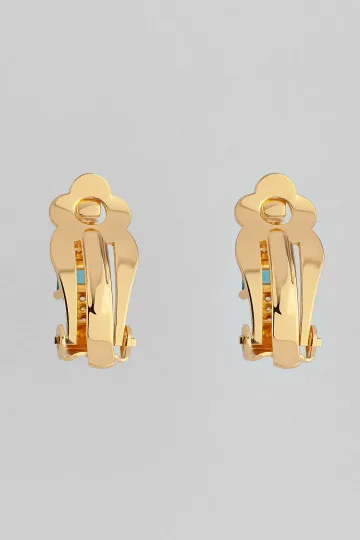
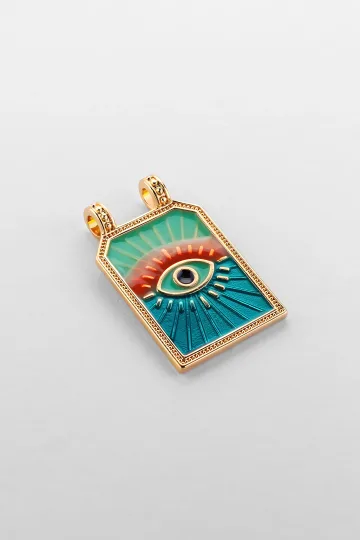
Wear the symbol, don't just read about it. These are in stock:


The second reason is commercial. A stone is hard to verify by eye, so it is easier to sell the history than the specification, and metal by comparison gets off lightly, as the companion list of silver myths shows. Several of the claims below were born exactly that way, not in folk tradition but in a novel or an advertising campaign, and then circulated as ancient wisdom until nobody remembered the author.
The legends are younger than they sound
What stands out about the most durable gemstone beliefs is how precisely they can be dated. The unlucky opal arrives in 1829 with a specific book. The birthstone chart arrives in 1912 with a specific trade meeting. Both are retold today as inheritances from antiquity, and the claim of antiquity is the part nobody checks, because a legend about being old defends itself.
None of this means gemstones lack a genuine old tradition. That tradition exists and it is rich: the Indian navaratna, the breastplate of the Hebrew Bible, the engraved gems of Greece and Rome, the medieval lapidary. The problem is that the old tradition and the thing sold today as the old tradition overlap surprisingly rarely. The substitution matters because it happens at the counter, in the sixty seconds when somebody decides what to buy.
Myth, tradition, and the line between them
Worth agreeing on terms before the list starts, so the argument does not turn into a quarrel about words. A myth here means a checkable statement that fails the check: about what a stone is, where it came from, or what it does. A tradition means something that never claimed to be checkable in the first place: giving a stone on an anniversary, passing a ring down a family, reading meaning into a colour.
The first is answerable to evidence, the second is not. Amethyst as a symbol of clarity survives perfectly well without a single study behind it. Amethyst as a cure for a hangover is a claim about a human body, and claims about bodies have to answer for themselves. Everything on this list belongs to the first category, which is why it can be settled at all.
Myth one: a lab-grown stone is a fake
Here there is a regulatory answer, and it is more definite than the argument around it suggests.
What the 2018 rules changed
In July 2018 the American regulator revised its jewellery guides and struck the word "natural" out of the definition of a diamond. The definition now reads that a diamond is a mineral consisting essentially of pure carbon crystallised in the isometric system. Origin does not appear in it.
The consequence is direct: a diamond grown in a laboratory is a diamond, not an imitation of one. The same revision kept disclosure mandatory. A seller must make clear that a stone was not mined, using wording such as laboratory grown or laboratory created, and selling one as an unqualified "diamond" is treated as deceptive. The regulator separated two questions that buyers habitually merge: what the material is, and where it came from.
An imitation is something else entirely
A true imitation substitutes the material. Cubic zirconia, moissanite, glass, doublets and triplets are different substances with different chemistry, different hardness and different optics that happen to look similar across a counter. A grown stone has the same chemistry, the same crystal lattice and the same physical behaviour as a mined one, which is why telling them apart takes laboratory instruments rather than a loupe. How the closest of these look alikes actually differs is set out in our comparison of moissanite and lab-grown diamond.
The practical upshot for a buyer is worth stating plainly. "Mined or grown" is a question about price and preference. "Gem or imitation" is a question about material. Blurring them serves whoever is selling, and never the person paying.
What a pocket diamond tester actually tells you
The question that follows immediately in every English speaking market is whether a grown diamond passes a tester, and the answer is yes. The common pen shaped instrument reads thermal conductivity, a physical property in which a grown diamond and a mined one are identical, so the light comes up green for both. Better units add electrical conductivity to separate moissanite, which fools thermal testing on its own.
What no handheld device does is tell you where the crystal formed. Origin is established by spectroscopy in a laboratory, looking at growth structures and trace nitrogen patterns that differ between a stone made over geological time and one made in weeks. So a tester answers "is this a diamond", never "was it mined", and a shop that waves a pen over a stone and declares it natural is either confused about the instrument or counting on you to be.
People bring me a ring with a cracked emerald and ask whether they got a bad stone. The stone was excellent, it was just worn while washing up. Hardness is about scratches, not impacts.
Myth four: only four gemstones are precious
An English language habit of speech that quietly misprices half the mineral kingdom.
Where "semi-precious" came from
The division of gems into precious, meaning diamond, ruby, sapphire and emerald, and semi-precious, meaning everything else, is a trade convention of the nineteenth century, not a scientific category. It fixed a hierarchy that was true of one European market at one moment and then outlived it by two hundred years.
Gemmology abandoned the term long ago. Robert Shipley, who founded the American gemmological institute, called it an indeterminate and misleading classification, and the international jewellery confederation has ruled that "semi-precious" is misleading and is not to be used, precisely because the prefix implies a lesser worth that the stones do not have.
Why the label misleads in both directions
The category fails in each direction at once. Several stones filed under semi-precious are far rarer than diamond: fine alexandrite, red beryl, jadeite of the top grade, demantoid garnet. Meanwhile commercial grade sapphire and emerald are produced in quantities that make them ordinary, and a poor emerald is worth a fraction of a fine tourmaline.
What actually sets value is a short list: quality, size, origin and demand, evaluated per stone rather than per species. A buyer who uses the old two tier vocabulary will systematically overpay inside the top four and systematically overlook everything outside them, which is the opposite of a bargain.
Myth five: a real stone cannot be scratched
The most expensive authenticity test in circulation, because the test damages the stone it is testing.
What the Mohs scale actually measures
The Mohs scale is a ranking, not a measurement. Each mineral on it scratches the one below and is scratched by the one above, and that is the entire content. It answers one question, whether a surface resists scratching, and says nothing at all about whether a stone survives being knocked against a door handle. Diamond sits at the top, corundum next, and below them stretches a long list of perfectly genuine gem materials that ordinary steel marks without effort.
Opal runs around 5.5 to 6.5, roughly the hardness of window glass. Turquoise sits at 5 to 6 and lapis around the same, malachite at 3.5 to 4, pearl between 2.5 and 4.5, amber softest of the group at 2 to 2.5. Every one of them is a genuine gem material, and a scratch on an opal proves that you own an opal rather than that somebody cheated you.
Hardness and toughness are different properties
The second confusion is more consequential, and it is the one that actually breaks stones. Hardness resists scratching. Toughness resists impact and fracture. The two are separate properties and they do not move together, which is why a single word like "durable" is useless in a shop: it hides the question of what exactly you are protecting the stone from.
Emerald makes the case. It is hard at 7.5 to 8, harder than steel, harder than the quartz dust that scratches everything else, and it remains one of the easiest gems in the case to break, because it is threaded with inclusions and healed fissures that give a shock a path to travel along. Jade sits at the other end: softer than quartz, so it dulls and scuffs, and so tough that it was worked into axe heads before it was worked into ornaments, because a fibrous interlocking structure absorbs impact instead of transmitting it.
The practical translation is short. Hardness decides how a stone will look after ten years of daily contact with dust, keys and other jewellery. Toughness decides whether it survives one bad knock against a doorframe. A stone can be excellent at one and poor at the other, and knowing which is which tells you whether the piece needs a protective setting or simply a habit of taking it off. That is why emerald belongs in a mount that shields its edges, a point covered at length in our guide to emerald.
Why even the hardest stone chips
Diamond makes the point cleanly, and it is the example that convinces people who will not believe it about anything else. Diamond is the hardest natural material known, and it is not indestructible: the crystal has cleavage planes, directions in which the atomic bonds part more readily than in any other, and a sharp blow at the wrong angle will chip a stone that nothing on earth can scratch.
This is not a theoretical weakness. Cutters have exploited it for centuries: before sawing was practical, rough diamond was split by placing a blade along the cleavage direction and striking it once, and a misjudged angle destroyed the stone rather than dividing it. The same physics operates in a ring, which is why the commonest damage a bench sees on a diamond is a chipped girdle, the thin exposed edge, rather than a scratched table.
Where it matters most is in shapes with points and thin corners. A princess cut has four unprotected corners, a marquise and a pear each end in a single vulnerable tip, and every competent setter puts a claw directly over those points for that reason. So the sentence to retire is that a diamond cannot be damaged. The accurate version: nothing will scratch it and a corner of a kitchen counter can still take a piece out of it.
Which stones ask for care in daily wear
More useful than an abstract number is knowing how a material behaves. Corundum, which is to say ruby and sapphire, and spinel take a daily ring calmly: they are hard and reasonably tough. The quartz family, amethyst and citrine included, holds up well but shows softened facet edges after years of wear.
Three families ask for restraint. Opal and turquoise are soft and sensitive to dryness and temperature swings. Pearl and coral are organic and dislike acids, cosmetics and friction. Emerald is hard but brittle and wants its edges covered. None of these is a lesser stone. Wearing them in a ring every day simply spends them faster, and that is a choice worth making knowingly rather than discovering later.
A stylist's take: choosing a stone without buying the legend
The myths on this list do their damage at the counter, where decisions are quick and emotional. Here is a short conversation with a Zevira stylist about what to look at instead of the story being told to you.
Somebody wants a coloured stone in an engagement ring. What do you tell them?
That the choice is between two lists, and only one of them is about looks. Sapphire and spinel go into a ring that never comes off and stay looking new for decades. Emerald, opal and tanzanite are beautiful and they are project stones: they want a protective setting, a gentler routine and an owner who takes the ring off for the gym. I say that plainly at the start, because the disappointment I see most often is a chipped stone in a ring somebody was told was fine for everything.
Round versus a fancy shape, when a client cannot decide?
I ask what they want the stone to do. A round brilliant returns the most light for its size and is the safest answer in a small stone, because brilliance covers for a modest colour. An emerald cut or a step cut shows the material instead of the sparkle, so it flatters a fine colour and exposes a poor one. And I always point out the corners: pear and marquise shapes have a point that takes the impact, and that point wants a claw over it rather than good luck.
How do you handle a client who is set on a laboratory grown stone?
I recommend it without hedging when size and clarity are what they are buying. My only condition is that the origin is written in the description rather than discovered afterwards. An undisclosed laboratory stone is a deception. A disclosed one is a choice, and the distance between those two is the whole issue.
And someone who comes in asking for their birthstone?
I hold two or three stones up beside the face first and let them see which one works with their colouring, then we check whether it happens to be the month's stone. The chart is barely a century old and was drawn up by the trade, so overriding your own eye to obey it makes very little sense. If the month's stone suits, that is a happy coincidence. If it does not, nothing has been broken.

Turn on your camera, pick earrings, a pendant or a ring, and see the piece on yourself in real time.
Switch items in one tap.
Everything runs in your browser: no photo or video is ever uploaded.
Myth two: a mined stone is always better and always dearer
A half truth whose first half is right and whose second half does not follow from it.
Dearer nearly always, better only on some axes
Mined stones do cost more than grown equivalents of the same quality, and the gap has widened rather than closed as growing capacity increased. But "better" is not a property of a stone, it is a property of a task. On clarity and colour, grown material frequently beats the average mined specimen, for the unremarkable reason that growth conditions are controlled and geology is not.
The value of a mined stone sits somewhere else: in scarcity, in geological history, in the fact that a particular specimen exists once and its journey can be traced. That is a real value, and it is worth naming honestly instead of dressing it up as an optical advantage the stone does not have.
What this changes at the moment of buying
The decision gets easier with one question: are you buying a stone or its history. When the requirement is size, clarity and colour for a defined budget, grown material answers it better and there is no shame in the answer. When what matters is that the thing grew underground over an unimaginable stretch of time and there is no second one, people pay for that, and they pay knowingly.
There is a third consideration that gets discussed less: resale. A mined stone with an independent report holds secondary value more predictably, while the market in grown stones is young and its prices have moved a long way in a short time. For a piece bought to keep, this is irrelevant. For a piece that might be traded up one day, it is not.
Myth three: diamond is the rarest stone on earth
A claim about scarcity that does not survive comparison with the mineral list.
Rarity and price are connected more loosely than anyone expects
Gem quality diamond is not among the rarest minerals. The record for scarcity belongs to painite, identified in Myanmar in the 1950s and long known from a handful of crystals, which held a place in the record books as the rarest mineral on earth; even after dedicated mining the count of gem quality material runs in the hundreds rather than the millions of carats a diamond year produces. Diamond's price is set by geology together with the structure of mining, cutting and distribution, and separately by twentieth century advertising, which welded diamond to the engagement ring so successfully that the association now reads as a tradition.
None of this makes diamond overpriced. It makes rarity and price two different parameters, and selling one as though it were the other is a sleight of hand rather than an argument.
Rare in what respect exactly
Scarcity in stones is nearly always conditional. A material can be common as a species and rare in one colour, ordinary in small sizes and scarce above a certain weight, abundant after treatment and hard to find untreated. So the sentence "this is a rare stone", with no statement of what exactly is rare about it, carries no information at all and functions as decoration on a price tag.
The useful version of the question is narrow: rare in what respect, compared to what. A seller who knows the material answers it in a sentence. A seller who does not will restate the word.
Why price jumps instead of climbing
One structural fact surprises buyers more than any other: weight does not raise price smoothly. Large crystals are disproportionately scarcer than small ones, so as a stone crosses the round weights the market watches, the price per carat steps up, and a stone just above a psychological threshold costs noticeably more than a neighbour that no eye can distinguish from it. How the four grading axes interact is unpacked in our guide to colour and clarity grading.
Hence a manoeuvre every cutter knows: buy just under the round mark. The visual difference is undetectable and the price difference is real. It is not a compromise on quality, it is a consequence of how the pricing grid was built.
Customer reviews
Zevira is a real jewellery shop. Genuine payments, deliveries and customer thank-yous.
🥰🥰🥰 gracias
Ok, ¡gracias! 🙂
Myth six: opals bring bad luck
One of the few superstitions that can be dated to a book, a year, and an author.
A superstition launched by a novel in 1829
In 1829 Walter Scott published Anne of Geierstein. In it the Lady Hermione wears an opal whose colour moves with her mood, blazing when she is angry and dimming when she is calm. Holy water falls on the stone, it throws off a single spark and goes dead as a pebble, and by the next morning the woman is a small heap of ashes. The novel was enormously popular, and within a decade the reputation of the stone across Europe had soured badly enough to hurt the trade in it.
Before that book, the record runs the other way. Rome prized opal, the Renaissance admired it, and the medieval lapidaries treated it as a fortunate stone containing the virtues of all coloured gems at once. In the European languages there is no meaningful body of text before that year calling opal unlucky. The belief that "you never give opals" is younger than photography and comes out of fiction rather than experience.
The counter-myth is also worth checking
A second story now circulates as the explanation of the first: that a diamond cartel paid Scott to write the novel in order to ruin a competing stone. It is repeated confidently on jewellery sites and in videos, usually by people debunking the original superstition, and the dates dispose of it in one line. Scott died in 1832. The mining company usually blamed was founded in 1888, fifty-six years later. Nobody was defending a diamond market against Australian opal in 1829, because Australian opal did not reach Europe in quantity for another sixty years.
The superstition needed no conspiracy in any case. Scott was the most widely read novelist in Europe, the scene is genuinely memorable, and a stone whose colour dies at a touch of holy water is an image that travels on its own. Adding a cartel to the story explains something that was never mysterious.
This is worth noticing as a pattern rather than as a single error. Debunking regularly produces a second myth with a better plot than the first, and the replacement spreads faster because it flatters the listener with the feeling of inside knowledge. The test is the same in both directions: names, dates, and whether the two of them can occupy the same decade.
How geology, not argument, restored the opal
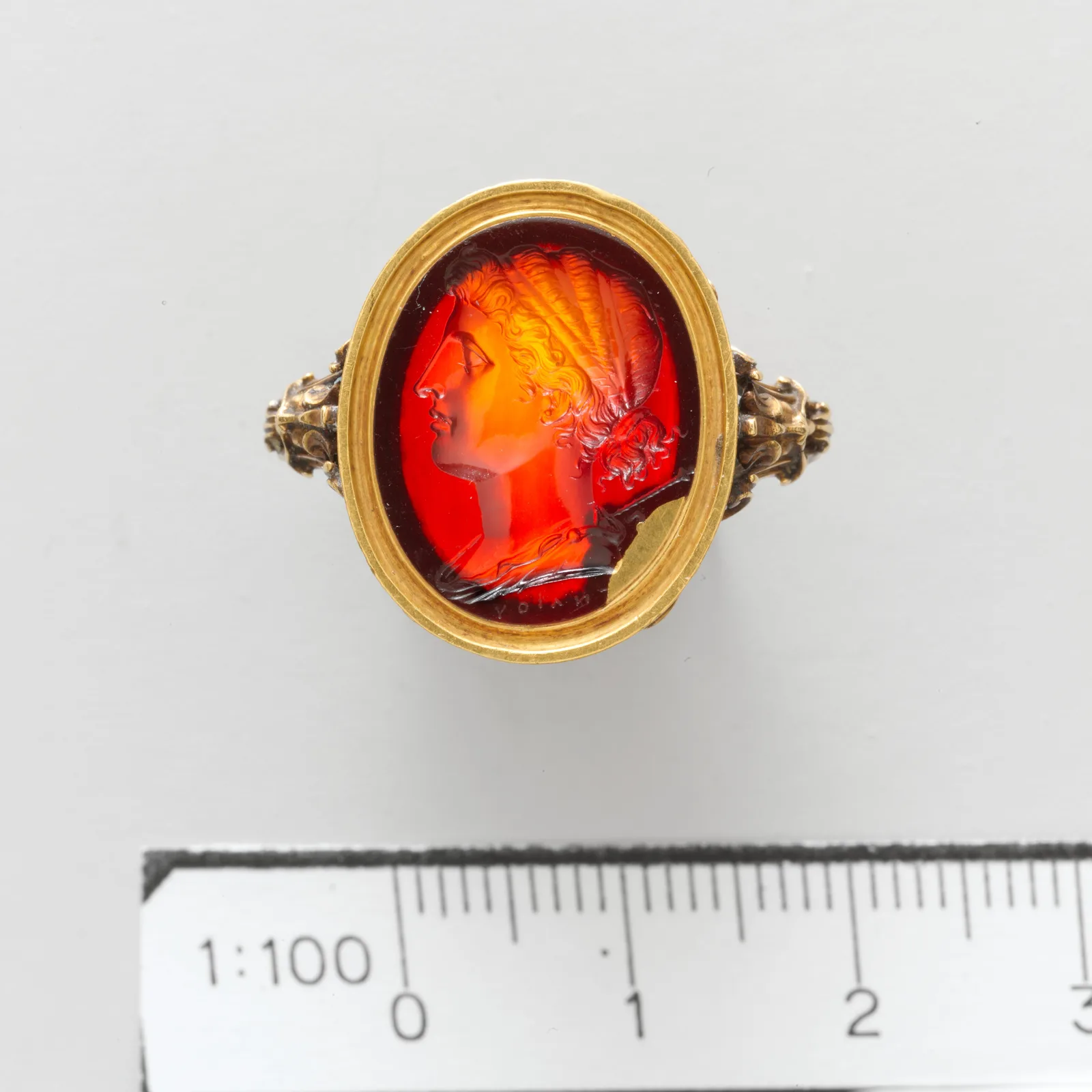
The stone's reputation was not repaired by anybody writing a rebuttal. It was repaired by supply. Australian finds late in the nineteenth century, and the fields opened across the dry interior afterwards, made opal plentiful and visible, and the market gradually outweighed a literary superstition. Australia remains the main source of precious opal and the stone holds national status there.
The mechanism is worth keeping. Superstitions are rarely refuted; they are usually crowded out. When a stone is abundant, beautiful and worn by people you know, the belief fades without a fight. Which also explains where myths survive longest: around rare and costly stones that almost nobody has handled.
Can you wear an opal every day
There is a real caution with opal, and it concerns care rather than fate. The stone holds water within its structure, dislikes sudden temperature changes and dry heat, and must never go into an ultrasonic cleaner. The failure it is prone to has a name, crazing: a network of fine surface cracks that appears when the stone dries or is shocked by temperature, and which cannot be reversed once it starts.
So the honest answer to the most common English language question about opal is a qualified yes. Solid Australian opal in a pendant or a pair of earrings takes daily life without complaint, because nothing strikes it there. In a ring worn through washing up, gardening and a gym bag it will eventually show the wear, and the same is true of pearl and emerald. Doublets and triplets, where a thin slice of opal is glued to a backing, are the ones to keep away from prolonged water, since the risk is to the adhesive layer rather than to the stone.
Two further beliefs are worth retiring while we are here. Sunlight does not fade the play of colour, which comes from the diffraction of light on ordered silica spheres rather than from a pigment that can bleach. And storing an opal in water does not feed it, because the water inside the structure is not exchanged with the outside. Sensible storage means a soft pouch away from a heat source. The full character of the stone is set out in our guide to black opal.
Myth seven: gemstones heal
The most delicate item on the list, because it is easy to slide into lecturing.
Where respect for a tradition ends
Lithotherapy as a cultural practice is thousands of years old and deserves no sneering: it is part of the history of how people have related to materials. There is also no confirmed effect of a mineral on the course of any disease, and no medical system recognises one. Both sentences are true at once and the second does not cancel the first.
The line between respect and agreement runs somewhere specific. While a stone comforts, steadies or reminds somebody of something that matters, it is doing what objects genuinely do. The moment it is offered in place of treatment, harm starts. We cover the correspondence of stones to chakras in a separate piece as a cultural system rather than as medicine, which is the frame that keeps the subject honest.
Where the belief in healing stones came from
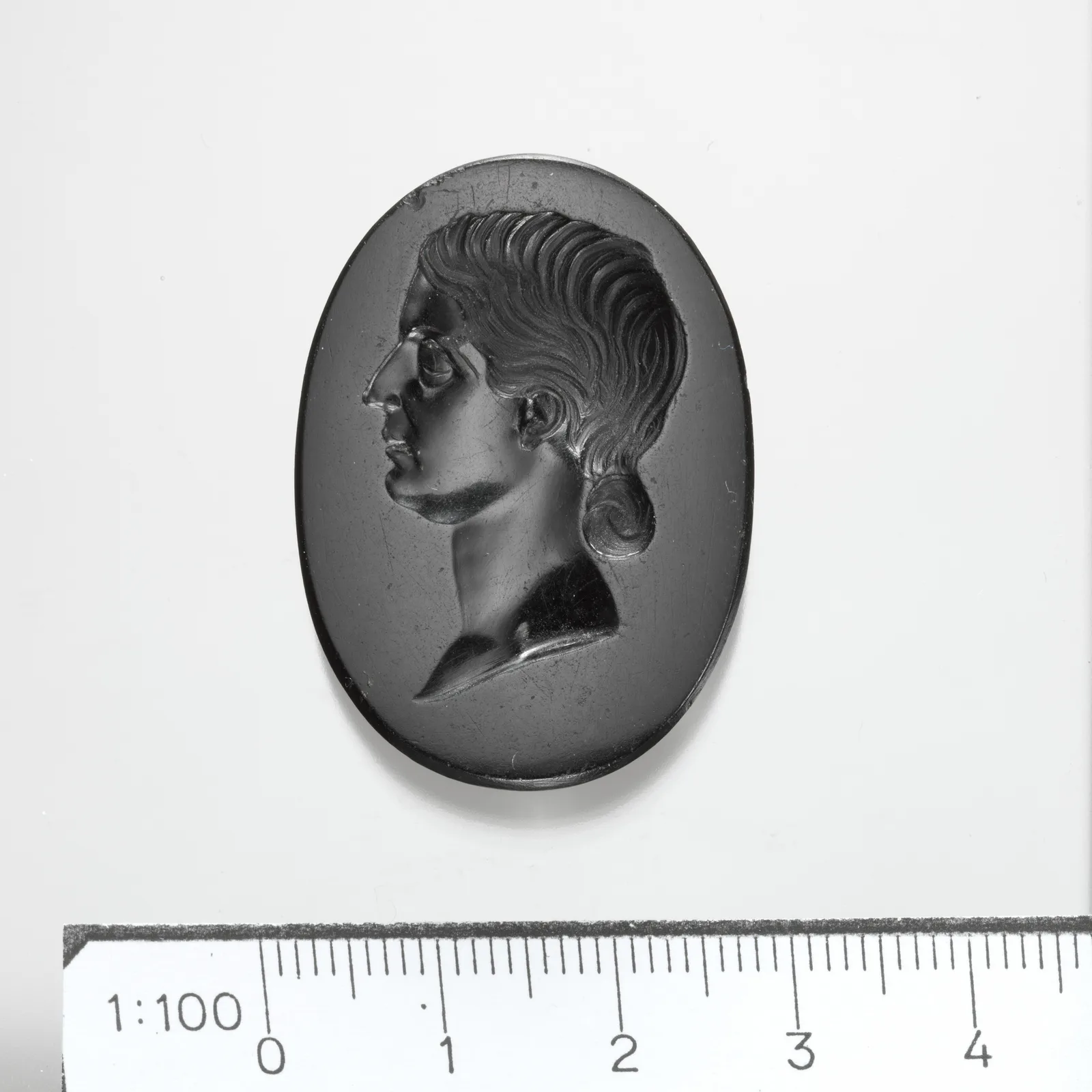
The belief has a long written history, and knowing it is more interesting than arguing with it. Pliny the Elder devoted a book of his Natural History to stones and listed their attributed powers conscientiously, frequently separating what he had seen from what he had been told. Medieval Europe gathered the same material into lapidaries, books in which a mineral appears together with its virtues and its uses.
What matters is what that genre actually was. In a world without chemistry or pharmacology, a lapidary served as a reference work, systematising what was taken to be known, exactly as a herbal did. Being wrong does not make it charlatanry: it was the best available knowledge of its moment. The trouble starts when a thirteenth century text is quoted today as a current medical instruction, after eight centuries in which a great deal has been learned about both bodies and minerals.
Why the feeling from a stone is nevertheless real
The other side deserves saying too. Someone who puts on a ring before a hard day does feel different, and that is not self deception. What works is not the mineral but the attention: an object on the hand returns you to the decision you made when you put it on. A wedding band and a memorial pendant work the same way, and nobody finds that mysterious.
The same applies to the practices around stones, the moonlight on a windowsill, the bowl of salt, the ritual of cleansing. A mineral does not absorb or discharge energy, and a night on a sill changes nothing measurable in it. What such a ritual does change is the person performing it, by marking an intention with an action, which is the oldest function objects have ever had. The distinction is in the wording. "This stone reminds me to hold steady" is a true statement about a person. "This stone regulates a thyroid" is a claim about a mineral, and it has nothing behind it.
Upload a photo of your pet, someone you love, or an object. We'll build a 3D model and hand-cast it in pewter.



Myth eight: birthstones are an ancient tradition
Here the date is known to the year, and it is more recent than almost anyone guesses.
A trade association settled the list in 1912
The modern set of stones by month of birth was standardised by the American national association of jewellers at its 1912 meeting in Kansas City. It is not priestly, not astrological and not Babylonian: it is commercial standardisation, adopted so that a trade scattered across a continent could speak to customers in one vocabulary.
The selection logic gives the game away. The 1912 set was assembled from what the trade could supply consistently and in quantity, rather than from what the older lists contained, and several months were given two stones at once. Alternatives of that kind serve a seller, not a tradition. The longer history of the idea, including the older lists worth knowing about, is laid out in our guide to birthstones by month.
The list is still being edited
If this were ancient knowledge, amending it would be a strange thing to do. Alexandrite, citrine and zircon were added in 1952, tanzanite in 2002 and spinel in 2016. Each amendment followed the market rather than any tradition: the 1952 additions gave months whose stone was scarce or expensive a workable alternative, tanzanite entered thirty-five years after the deposit in Tanzania was found, and spinel joined August to give peridot company after decades in which spinel had been mistaken for ruby and was finally being sold under its own name.
Worth noticing too that the chart is not universal. Britain keeps its own variations, and lists used in continental Europe and in India differ again, which would be impossible if a single ancient tradition stood behind all of them. What actually exists is a family of overlapping trade lists, each adjusted locally, plus much older systems of assigning stones to months, planets and apostles that the modern chart borrowed a shape from without inheriting its content.
That is not a reason to give up your birthstone. It is a reason to know that you are joining a tradition slightly over a century old rather than an inheritance from Babylon, and therefore to choose the stone you actually like.



Myth nine: a pearl grows around a grain of sand
The schoolroom explanation, and it fails at the first experiment.
The mollusc expels the sand
Sand is inert and does not work as an irritant, and a mollusc is perfectly capable of expelling foreign particles from its mantle. Oysters live surrounded by sediment and are constantly clearing it, which is the whole difficulty with the schoolroom version: if grit produced pearls, every oyster on every bed would be full of them.
The real trigger is different. Usually it is a parasite that penetrates the soft tissue and lodges there, or a displaced fragment of the animal's own mantle tissue. The decisive part is that cells capable of producing nacre travel in with it. Those cells continue their work in the new position and coat whatever is beside them, which is why a pearl forms at all.
Why the mechanism matters to a buyer
Understanding it explains the price. A natural pearl requires a coincidence of rare circumstances, an intruder in the right tissue at the right moment, and that is exactly why natural pearls are scarce and why old strands of them are auction material rather than shop stock. A cultured pearl is produced when a technician deliberately introduces mantle tissue, with or without a bead to shape it around, and the animal then does precisely what it would have done on its own. That is a managed repetition of a natural process rather than a forgery, which is why the trade calls the result a pearl without qualification and the regulator agrees.
Practically every pearl on the market today is cultured, and this is the norm rather than a secret. It also explains a price pattern buyers find confusing: two identical looking strands can differ enormously, because the animal takes years to lay down thick nacre and only months to lay down thin, and a shorter growth cycle is the cheapest way to increase yield.
How the two are actually told apart
From the outside, hardly at all, and that is the point. Both consist of the same nacre and an experienced eye will not separate them by surface. The difference is internal, and it depends on how the pearl was cultured. Saltwater culture implants a bead, usually a sphere cut from shell, together with a scrap of mantle tissue, so the pearl carries a foreign core with a nacre layer of finite thickness over it. Freshwater culture, which accounts for the overwhelming majority of pearls sold today, usually implants tissue alone, and the resulting pearl is nacre nearly all the way through, much like a natural one.
So the question is settled by looking through the pearl rather than at it, and an X ray shows the bead where there is one and the pattern of growth layers where there is not. That is what a laboratory is for, not for judging lustre. The applied conclusion for a buyer is that nacre thickness matters more than origin, because thickness decides how many decades the pearl survives and whether it wears through to the bead. A thin layer gives itself away in time, and sometimes immediately, through a flat even shine with no glow underneath it. Choosing by lustre, nacre and shape is covered in our complete pearl guide.
Myth ten: an emerald should be flawless
A requirement that leads a buyer almost infallibly in the wrong direction.
The garden inside the stone is normal
Inclusions in emerald are so expected that they have their own name in the trade, the garden. Their presence is a property of the material rather than a defect, and an experienced grader does not ask whether a stone has them but where they sit and whether any of them reach the surface in a place that will make the stone vulnerable.
A large, entirely clean emerald is rare enough that it raises a question about origin before it raises admiration. A buyer who insists on clarity will usually end up with either a grown stone or something that is not emerald at all.
Different stones are graded on different priorities
From which comes a general rule worth carrying around. In emerald, colour decides and clarity yields to it. In diamond, cut carries disproportionate weight, because the return of light depends on proportions rather than on the material. In ruby and sapphire, colour again outranks clarity, and a slightly included stone of superb red will leave a cleaner pale one far behind, a point we develop in the guide to ruby.
Opal is judged on the play of colour and the pattern rather than on clarity at all. Pearl is judged on lustre and nacre thickness. Jade is judged on translucency and evenness of tone. Each of these has its own hierarchy of what matters, developed over a long time by people trading the material, and none of them ranks stones on a single scale.
Which is why the four letter shorthand borrowed from diamond grading, dutifully applied by shops to everything in the case, is close to useless outside the stone it was designed for. A seller who runs one measure across every species is either simplifying for speed or has not learned the material, and the way to find out is to ask what matters most in this particular stone. The answer arrives immediately or not at all.
Leave your email, we'll send your discount code. No spam, unsubscribe anytime.
The code arrives by email, valid on your first order.
Myth eleven: ruby and sapphire are different stones
The simplest correction on the list, and the one that reprices a whole counter.
One mineral, two commercial names
Ruby and sapphire are both corundum, aluminium oxide. The red variety is called ruby and every other colour is called sapphire, blue, yellow, pink, green and colourless included. The difference lies in trace elements: chromium produces red, iron and titanium together produce blue.
Which leads somewhere buyers do not expect. A pink stone from a single parcel can be sold as pink sapphire or as ruby depending on where the line is drawn, and the line genuinely moves between markets. Hardness, durability and care are identical either way, because it is one mineral. What separates a strong colour from a weak one is set out in our guide to sapphire.
Myth twelve: a treated stone is a cheat
A half truth in which everything depends on a single word.
Treatment is the industry norm, silence is not
The overwhelming majority of coloured stones on the market have been treated, and most often that means heat, which makes colour more even and deeper. The practice is ancient, stable and disclosed as standard: unheated sapphire of fine colour is genuinely uncommon and priced accordingly.
The cheat is not the treatment but its concealment. Different processes carry different consequences for durability. Heat is generally permanent. Fracture filling with glass or oil is not, needs particular care and can show itself over time. So the question to ask a seller is not whether a stone has been treated but how, and what that means for wearing it.
Why oil in emerald is its own conversation
Filling emerald with oil or polymer is traditional and widespread, because it masks the very fissures of the garden and makes them optically disappear. The practice is old enough to be an industry standard rather than a modern shortcut, and a laboratory report on an emerald will usually describe the degree of it: minor, moderate or significant, which is the trade's way of saying how much of the stone's apparent clarity is borrowed.
The complication is what happens afterwards. Such a stone cannot go into an ultrasonic cleaner or meet aggressive solutions, heat will drive filler out, and the filler itself can dull or discolour over years, at which point the fissures reappear and the emerald looks suddenly worse than the day it was bought. None of this is a disaster: emeralds are re-oiled by a competent bench as routine maintenance, in the way a stone with a soft setting is retipped.
What matters is that the buyer knows this before the purchase rather than after the first cleaning. An emerald described only as "clarity enhanced" tells you nothing about how much enhancement is holding the picture together, and that is exactly the number worth asking for.
How to tell honest disclosure from a formula
The mark of good faith is not an absence of treatment but the specificity of the wording. "The stone has been enhanced" says nothing. "Heated, no additives" or "fracture filled with oil" is an answer you can live with. The second sign is a seller who volunteers the care restrictions before being asked.
The combination to be wary of is the opposite one. Saturated even colour, generous size, an attractive price and silence about treatment do not turn up together by accident. If the first three conditions hold, the fourth needs an explanation, and asking for it costs less than finding out later.
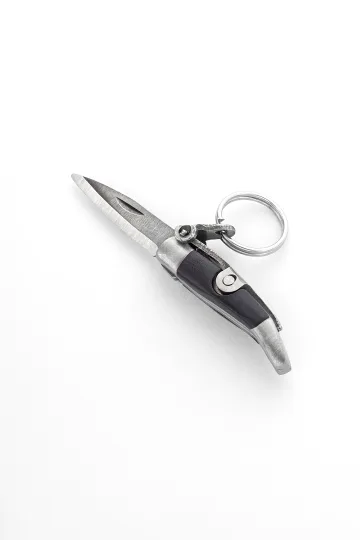
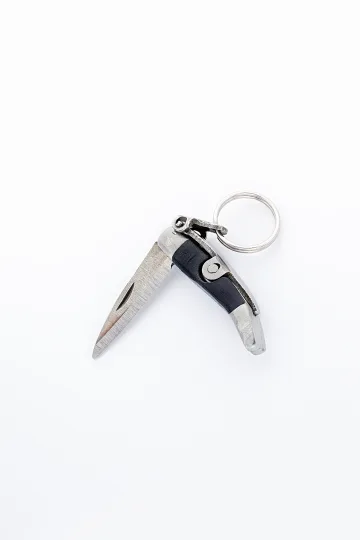
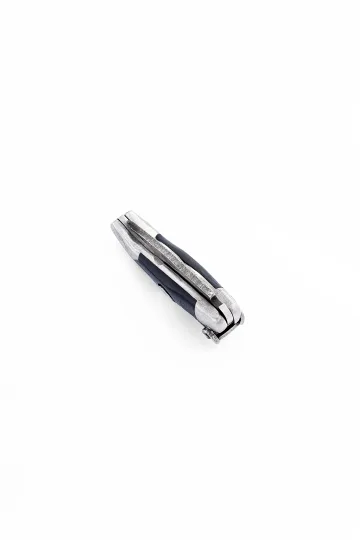
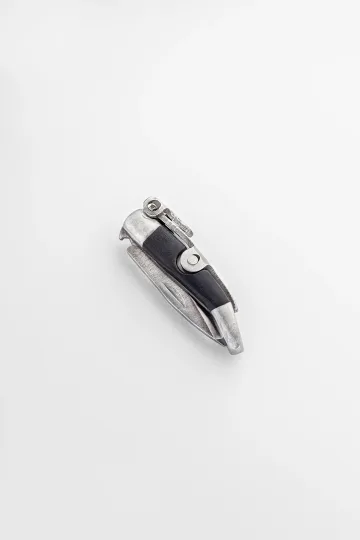
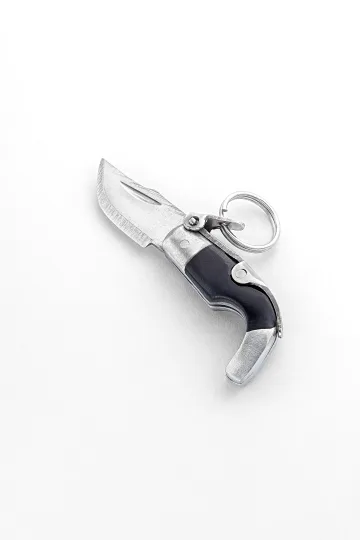
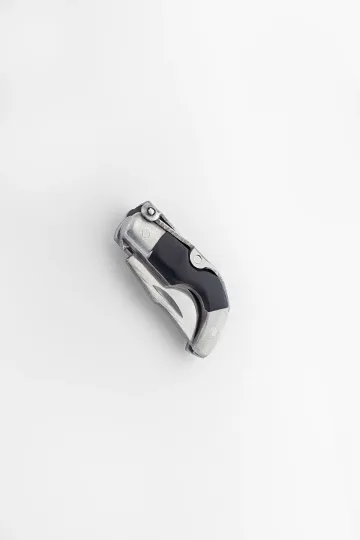
CAPAORA mini knife pendant
The 18th-century Spanish navaja in miniature: 40 mm of stainless steel, a real folding mechanism and a Palanquilla lock that clicks. An affordable gift to remember.
Authentic · Ships from Spain · 14-day returns
Myth thirteen: a stone with an inclusion will crack
A fear that talks people out of good pieces for no return.
Not every fissure is the same fissure
Internal inclusions and small fissures exist in nearly every mined stone, and most of them do not measurably weaken it. What matters is whether a fissure reaches the surface and whether it runs through a zone that takes impact, which means the girdle and the table.
This is assessed at the bench, and a good setter chooses the mounting for the individual stone: a vulnerable one goes into a closed setting, a sound one can take open claws. So the question is worth asking specifically rather than in the abstract: where does the inclusion run, and how will the chosen setting protect it.
Keeping a stone alive without paranoia
The rules are few and they cover nearly every material. Take a ring off for physical work and the gym, because the overwhelming majority of chips come from a blow against something hard rather than from wear. Do not tip everything into one box, where a diamond will scratch its neighbours and a chain will abrade a pearl. Keep stones that contain water or filler away from sudden temperature changes, which rules out leaving them on a sunny windowsill and rules out the dishwasher entirely.
Two habits do more than any amount of care product. Put jewellery on last, after perfume, hairspray and lotion, and take it off first, since cosmetics do most of the damage attributed to age. And have the setting checked once a year by someone with a loupe: claws wear thin, and a stone lost from a loose mount is by far the commonest loss in jewellery, well ahead of breakage.
The ultrasonic cleaner deserves its own line, because it is where good intentions destroy stones. It is safe for corundum and diamond in sound settings and unsafe for emerald, opal, pearl, turquoise, amber and anything fracture filled, where vibration finds the fissure the filler was hiding.
That is genuinely enough. A stone worn sensibly outlives its owner, and treating an inclusion as a sentence costs more good pieces than it saves.
Myth fourteen: amethyst protects against drunkenness
A myth that confesses to being one in its own name.
The name and the promise inside it
Amethyst comes from a Greek word meaning "not drunk": the stone was credited with holding off intoxication, and antiquity recommended amethystine cups and amulets at the table. The Greek and Roman texts are unusually explicit about it, which is what makes the case useful, because here the promise is not attached to the stone by a later seller. It is baked into the name the mineral still carries in every European language.
The mineral has no effect on the metabolism of alcohol. But the story is valuable because the mechanism sits in plain sight: a belief becomes a property of the stone, the property is fixed in a name, and the name outlives its context by two and a half thousand years. Nobody today drinks from a purple cup for safety, and everyone still says amethyst. The stone's longer history is followed in our guide to amethyst.
Why such myths are worth knowing rather than mocking
None of this diminishes amethyst, and the history of its name makes the stone more interesting than any invented benefit could. The difference lies entirely in how it is presented: as a cultural episode, or as a medical undertaking.
Which is why history belongs in the description of a stone and pharmacology does not. History promises nothing and breaks nothing. Pharmacology promises what it cannot deliver.
Gemmology is full of parallel cases and nearly all of them are built the same way. Bloodstone took its name from red flecks read as drops of blood, and every claim about staunching bleeding follows from the appearance. Cat's eye was tied to vision and vigilance because the band of light on the surface follows the observer. Magnetite was declared curative because it visibly pulls iron, a behaviour so inexplicable that it looked alive. How light behaves inside a stone, and why it produces effects like these, is explained in our piece on optical effects in gemstones.
The mechanism is visible once you look for it: an external feature of the stone turns into a promise. Red heals blood, green heals eyes, banded watches over you. Knowing the rule saves time. Next time you hear a property attributed to a stone, try to guess which visible feature it was derived from. The guess usually lands on the first try.
What an honest gem description looks like
The list of myths is finite and new ones arrive constantly, so memorising them is the weaker defence. Knowing what an honest description contains works on the myths that have not been invented yet.
Four questions that clear away half the fog
First: what is the material, mined, grown or imitation. Three different answers, none of them shameful, and only silence is.
Second: how has the stone been treated. Heat, filling, irradiation, coating, diffusion. The answer sets both the price and the care regime.
Third: what exactly does the report say, if there is one, and who issued it. An independent laboratory document and a slip printed by the shop are not the same object.
Fourth: how does this stone behave in wear. Hardness, toughness, sensitivity to water and heat. It is the only question whose answer you will feel every day.
Signs of a description not worth trusting
Four things should slow you down. A health benefit offered without a qualification. A claim of ancient tradition with no date and no source. The word "unique" standing in for specifications, since a stone with real merits always has nameable ones. And a superlative applied to the species rather than to the specimen: "the rarest of all gems" describes a marketing decision, while "unheated, Sri Lankan, 1.8 carats" describes a stone.
Two more patterns are worth recognising because they are technically true and still misleading. A grading report from a laboratory nobody has heard of, quoted as though every report carried the same weight. And a colour name doing the work of a colour grade, since terms like royal blue and pigeon blood have no universal definition and travel a long way from the stone they were coined for.
A good description of a stone is duller than a legend and considerably more useful. It lists parameters, admits treatment, states origin and promises no cures. The dullness is how you recognise it.
Where a seller's responsibility ends
A seller is answerable for composition, for origin and for the disclosure of treatment, and all three are checkable. Nobody can be answerable for how long one particular stone survives in your hands, because a chip against a door handle is not a defect in the material.
Which suggests a sensible order for the conversation. Settle everything about the material and its past first, because that is the shop's territory. Then discuss wear, which is yours: how often, which hand, what setting. Separating the two stops you demanding guarantees a seller cannot give and starts you getting the answers that matter.
Send a friend a discount code, they save on their first order.
Where the next myth will come from
Every claim on this list has been settled for years, and the supply of new ones has not slowed down at all. That is the part worth predicting, because myths about stones do not appear at random: they cluster around the same few events, and the events are visible in advance.
The reliable trigger is a new material arriving on the market. Tanzanite was found in 1967 and had a birth month within a generation. Every wave of grown stones has arrived with a fresh set of claims about what a laboratory can and cannot do, invented by both camps at once. The next colour treatment, the next deposit, the next synthesis method will bring its own folklore.
The second trigger is the lag between a new treatment reaching the counter and a laboratory publishing a way to detect it. That window has opened repeatedly: in the early 2000s a wave of vividly coloured sapphire circulated before laboratories established that the colour had been diffused into the stone with beryllium, and lead glass filled ruby spread through the trade in the same fashion, sold honestly by people who had no way of knowing. During such a window nobody can prove anything, so confident explanations multiply on all sides, and the ones that sound best outlive the correction when it finally arrives.
Optics decide which of those claims survive. A stone refracts, shifts as it turns, flares and goes quiet, and that motion is read as behaviour. Nobody says a chain behaves; everybody says a stone comes alive in daylight, and once an object is granted behaviour it is a short step to granting it intentions. So the claims that stick to a new material are the ones that match how it moves in the light. A stone that changes colour between daylight and lamplight will collect stories about transformation, and a stone that glows under ultraviolet will collect stories about energy, whatever anybody decides about it in a laboratory afterwards.
The last ingredient is money moving quickly. A stone is bought rarely, under time pressure, often for somebody else and often at an emotionally loaded moment, and a buyer who cannot evaluate the object still has to feel confident about the decision. A story supplies that confidence instantly, and it costs nothing to produce.
Which gives a usable test for a claim nobody has debunked yet, and one will reach you before any correction does. Ask how old it is: a property discovered in the last few years, about a material that reached the market in the last few years, has had no time to be anything but a guess. Ask who benefits from it being true, since a claim that raises the price of the thing being sold deserves a slower reading than one that does not. And ask what would have to be shown for it to be wrong, because a claim built so that nothing could ever disprove it is not a fact about a stone, it is a sentence about you.
Gemstone facts that surprise people
- The word "natural" was removed from the regulatory definition of a diamond in July 2018: the definition now describes only the material, while origin must be disclosed separately.
- The unlucky reputation of opal dates to 1829 and comes from a novel by Walter Scott. Before it, Europe treated the stone as fortunate.
- The story that a diamond cartel commissioned that novel fails on dates: Scott died in 1832 and the company usually blamed was founded in 1888.
- The modern birthstone list was standardised by a jewellers' association meeting in Kansas City in 1912: commercial standardisation, not ancient inheritance.
- The list kept changing: alexandrite, citrine and zircon in 1952, tanzanite in 2002, spinel in 2016.
- Painite, not diamond, has held the record as the rarest gem mineral on earth, known for decades from a few crystals found in Myanmar.
- A pocket diamond tester reads heat conduction, so a laboratory grown diamond passes it exactly like a mined one: no handheld device can tell you where a crystal formed.
- A pearl is started by a parasite or a displaced piece of the mollusc's own tissue rather than by sand, which the shell simply ejects.
- Ruby and sapphire are one mineral, corundum, separated only by the trace element that colours them.
- Inclusions in emerald have their own name, the garden, and a large flawless emerald makes a grader suspicious rather than delighted.
- Diamond is the hardest material known and still chips, because it has cleavage planes that a blow can follow.
- Amethyst is named from the Greek for "not drunk", which makes it the one gemstone whose discarded promise is still printed on every label.
Stones without the mythology
Jewellery with stones whose material, treatment and origin are stated. We promise nothing beyond that.
Frequently asked questions about gemstones
Do lab-grown diamonds test as real diamonds?
Yes. A handheld tester reads thermal conductivity, which is identical in grown and mined material, so both register as diamond. Distinguishing the two takes laboratory spectroscopy or a grading report. No pen shaped device can tell you where a crystal formed.
What is the rarest gemstone?
Not diamond. Painite has held the record as the rarest gem mineral, and fine alexandrite, red beryl, top grade jadeite and padparadscha sapphire are all scarcer than gem quality diamond. Rarity and price are separate parameters, and only one of them appears on a ticket.
Can I wear an opal every day?
In earrings and a pendant, comfortably. In a ring worn through washing up and the gym, expect wear. Opal dislikes dry heat, sudden temperature changes and ultrasonic cleaning, and the failure to avoid is crazing, a web of fine cracks that cannot be undone.
Is moissanite a fake diamond?
It is a different mineral, silicon carbide, not an imitation pretending otherwise when it is sold under its own name. It is softer than diamond, disperses light more strongly, and passes a basic thermal tester, which is why better instruments check electrical conductivity as well.
Do healing crystals work?
There is no confirmed effect of a mineral on the course of any illness. An object can steady a person, mark an intention and carry a memory, which is real and is what jewellery has always done, but it cannot replace treatment.
Do crystals need to be cleansed or charged in moonlight?
A mineral does not absorb or release energy, and a night on a windowsill changes nothing measurable in it. What the ritual changes is the person performing it. As a practice it costs nothing; as a claim about the stone it has nothing behind it.
Are semi-precious stones worth less than precious ones?
Not reliably. The two tier vocabulary is a nineteenth century trade habit that gemmology has abandoned, and a fine tourmaline routinely outprices a poor emerald. Value follows quality, size, origin and demand, assessed stone by stone.
Should I avoid a treated stone?
No, most coloured stones on the market are treated. What matters is which treatment: heat is generally permanent, while fracture filling and oiling call for gentler care and can need renewing. The problem is never treatment, only silence about it.
Is it bad if inclusions are visible in an emerald?
It is normal, and they have a name, the garden. Where the inclusions sit matters, not that they exist. A large, entirely clean emerald is rare enough that origin gets checked before anyone admires it.
Are birthstones an ancient tradition?
The modern list was agreed by American jewellers in 1912 and amended in 1952, 2002 and 2016. Older traditions of assigning stones did exist, but the chart in circulation today does not descend from them directly.
Buying it as a gift? Each one arrives ready to give.
 A branded Zevira box and a little card come with every order.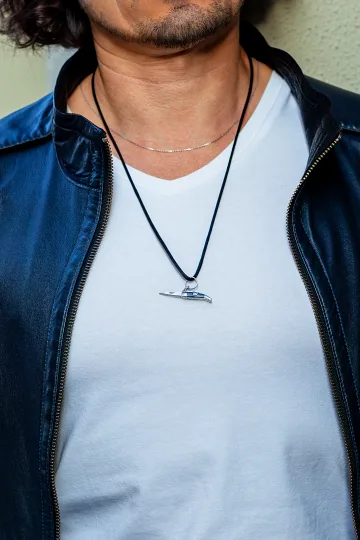








What is left when the legends go
Of fourteen claims, some rest on a substitution of terms, some on a novel, some on advertising, and nearly every one of them stops a buyer from asking a useful question. What they share is an invitation to believe instead of look.
Stones lose nothing by being debunked. An emerald with a garden inside it, a corundum with a history measured in geological eras, a pearl grown around a fragment of foreign tissue: all of that is more interesting than any promise of health. A stone chosen for its colour, its cut and the way it behaves on a hand serves for decades and needs no legend to be worth wearing.
About Zevira
Zevira makes jewellery that means something: symbols, history and a form standing on the craft tradition of a Spanish region. About stones we speak plainly, treatment and origin included, because trust matters more than a good story.