Jewellery gifts under $100: how to choose one piece that carries the occasion
Louis XIV had more than three hundred portrait boxes framed in diamonds made as presents. Many of the people honoured with one prised out the stones and sold them, which is why so few survive with their original diamonds. A present whose worth sits in the material gets treated as material. The rule holds at every budget.
This guide deals with a different problem from shopping on a small budget. Under this ceiling the limit barely pinches: nearly the whole catalogue fits beneath it, from artist-made sterling silver to miniature Spanish knives and tarot symbols. So the task changes. You are no longer hunting for something decent for little money; you are choosing one piece that weighs what the occasion weighs: a milestone birthday, a silver wedding, a graduation, a retirement, thanks owed to someone who did a great deal for you. If your limit is half this one and your worry is plating and clasps, that ground is covered in the guide to jewellery gifts on a small budget.
What to give at this budget: the short answer
One piece with a shape people recognise or a story you can tell, in the metal tone the person already wears, in its own box, with a card written by hand. Sterling silver for someone who wears white metal, a gold-tone piece for someone who wears yellow. A necklace or earrings if you do not know the ring size or fear how a ring will be read. Everything below expands on that: which occasions ask for weight, which type of piece carries it, why silver leads here, what four centuries of serious presents can teach, and what to find out about returns before the box changes hands.
What fits under the ceiling
Under this ceiling nearly the whole range is open, and that changes the question. On a tight budget you choose by elimination: which metal you can afford, where decent ends and flimsy begins. With room to spare, the line runs through meaning. Artist-made earrings in sterling silver, a slim necklace from the same workshop, a folding miniature of an Andalusian knife, a charm with a tarot card: all of it is available at once, and the choice is between pieces that are each good in their own way.
Wear the symbol, don't just read about it. These are in stock:

Hence the first rule: do not spend the whole sum for the sake of spending it. The ceiling is a ceiling and not a target. A piece picked for this person and this date outweighs one picked to brush the limit. Nobody opening a box works out how close you came to the limit; what registers is how much the present has to do with them.
The second rule follows from the first. With room to choose, responsibility moves from the wallet to attention. "It was all I could afford" is no longer available as an excuse, so accuracy decides. Three questions narrow the field faster than any price filter: which metal do they wear every day, are their ears pierced, and what do they put on for work as against a dinner out?
One strong piece beats two average ones
In 2012 the psychologists Kimberlee Weaver, Stephen Garcia and Norbert Schwarz published seven studies on what they called the presenter's paradox. The presenter is whoever assembles a bundle for someone else to judge. Their first study was about a present: a music player with its cover, imagined as a gift for a friend. The same bundle with one free song download added was valued lower than the bundle without it. Whoever evaluates a set does not add impressions up; they average them. A strong item and a weak one come out, in the recipient's head, somewhere in between. The person assembling the set reasons like a bookkeeper: something good was added to something good, so the total went up.
In a present the scene is familiar. A silver necklace with a cord bracelet added at the last minute so the box would not look empty. Earrings with a key ring on the side. Each extra is pleasant on its own, and next to the main piece it lowers the bar for the whole present.
For a generous budget the rule is direct: if money is left over, do not add a second piece, raise the first. A necklace of more worked form, artist-made earrings instead of off-the-peg ones, a piece from a short run instead of one sold everywhere. If you want something else in the box, let it be the card. It does not compete with the jewellery because it belongs to another category: it is words.
Upload a photo of your pet, someone you love, or an object. We'll build a 3D model and hand-cast it in pewter.



Occasions that ask for a present with weight
Not every occasion wants weight. At a colleague's birthday it gets in the way: too serious a piece embarrasses and leaves a sense of debt, which is why office presents have a guide of their own, the one on Secret Santa and gifts for colleagues. But there are dates and people where a small gesture reads as indifference. Six cases follow, each with its own demands.
A milestone birthday
Forty, fifty, sixty close a chapter, and the present is received as a verdict on the stretch just covered. That is why more is asked of it than of an ordinary birthday present: it has to stand years of wear and keep a shape that will not look dated when the next round number arrives.
In practice that points to sterling silver or to a piece with a symbol that can be understood. If the symbol you want comes on a plated piece, say so in the note that goes with the present: a round date deserves plain speaking about materials too. What works is a single piece to wear for years, not a collection of tokens. Particular ages have guides of their own, to jewellery for a 40th birthday and to a 60th birthday gift. Here the general rule is enough: a milestone asks for a piece that will reach the next one.
A silver wedding and other anniversaries
An anniversary present differs from a birthday present in whom it speaks to: the couple. It is about time shared, so pieces with a double meaning belong here: a necklace whose symbol means something to the pair of you and to nobody else, a shape that repeats something from your own history. The list of materials year by year, from paper to gold, is in the guide to wedding anniversary gifts by year and is not repeated here.
A generous budget on an anniversary lets you choose the thing your partner wants and would not buy for themselves. For someone close that is the strongest present there is, because it shows attention to their wishes instead of your taste. If at some point in the year you heard "lovely earrings, but I'd never buy them for myself", you already have the answer.
At twenty-five years silver has a place of its own. The silver wedding names its metal outright, and a sterling piece meets the tradition more exactly than anything else could.
Graduation and a first job
The United States has a jewel made for this occasion, the class ring. By West Point's own account the Military Academy was the first school to use rings as a class symbol, beginning with the class of 1835. A class ring says where someone has been. A present from the family can say something different: you have grown up, and this piece is for the life that starts now.
So choose for the working wardrobe: a necklace of clean geometry, earrings that will not get in the way in a meeting. Childhood symbols and very romantic shapes are out of place, because they point back to a stage the graduate is leaving. Sterling silver has a virtue here: nobody needs to save it for best. The piece will go out of the door every day, and its first scratches will become part of its story. Ideas sorted by level of study are in the guide to jewellery for graduation.
Retirement and thanks to a mentor
A retirement closes decades of work, and the leaving present, which often comes from a whole team, wants to say more than goodbye. Ask of it what you would ask at a milestone birthday and one thing more: that it can be worn away from the office. A piece designed for a suit goes unused from the first free Monday; one that suits weekend clothes begins its life then.
A present to someone who is retiring, or to someone who taught you, must not look like payment. Too dear a piece turns thanks into a settled bill; too slight a one shrinks the thing you are grateful for. The weight lies in how well it is chosen: something tied to what that person taught you, the emblem of a craft, a private reference between you. With a manager who is still your manager more care is needed, since a present upward can be read as a bid for favour: keep it sober, give it from the whole team, and read your employer's gift policy and the guide to a jewellery gift for your boss before collecting money. Ideas for the leaving day itself are in the guide to retirement jewellery.
Christmas and Mother's Day: dates you share with everyone
Two dates in the calendar are shared with everybody else, and that is their difficulty. On a birthday the present has no rivals. At Christmas it is opened alongside everybody else's, and a serious piece can drown in the paper. Give it a moment of its own, apart from the general unwrapping: before the others come down, or once the room has gone quiet. Order deadlines and the rest of the December logistics are in the guide to Christmas jewellery gifts.
Mother's Day needs a glance at the calendar if your family is spread across the Atlantic. In the United States it falls on the second Sunday in May. In Britain it is Mothering Sunday, the fourth Sunday of Lent, so its date moves with Easter and comes weeks earlier. A parcel timed for the American date reaches a British mother long after her day. What to choose for her on either date is taken up further down, among the recipients.
A present with no date: thanks, making up, a homecoming
A present without a calendar reason plays by its own rules. Someone helped you through a hard month. A friend is back after years abroad. A relationship has come through a bad stretch. Nobody is expecting this present, so its content has to be obvious: the recipient should understand at once what it is for.
The choice asks for more precision here than anywhere else. On a birthday a misjudged shape is put down to the rush of the party. A piece with no date attached is looked at slowly and held longer in the hand. What works best is a piece with a name or a story: a silver necklace that is called something, a symbol that can be explained, an object from a short run with a known origin.
One more difference. A making-up present must not look like compensation. A piece chosen to impress by what it cost will be read as an attempt to buy forgiveness. A quiet, well-chosen piece with a short note does the job better.
Customer reviews
Zevira is a real jewellery shop. Genuine payments, deliveries and customer thank-yous.
🥰🥰🥰 gracias
Ok, ¡gracias! 🙂
A maker's necklace goes on alone. A second chain beside it is a heckler at a recital, and don't argue.
How to wear a present like this: the stylist answers
A serious present is not tested on the day it is given but on the Monday after. The questions that reach the Zevira stylist once the piece has been unwrapped and has to find a place in an ordinary wardrobe are much alike, and the answers are useful before buying too: if you know how it will be worn, you choose better. The selector below crosses the shapes the person already wears, the palette of their clothes and the place the piece will go, and proposes one of four. Under it is the full conversation, with the cases that raise the most doubt: the metal that does not match, blue against warm colours, glasses and the lapel.
She was given silver and she wears gold. What now?
Give the silver company. A single silver piece among gold looks like an oversight; two look like a decision. I advise repeating the metal at a second point, small earrings or a slim ring, on the days the new necklace goes on. And I recommend giving it days of its own: with a white shirt or a grey jumper, silver alone looks cleaner than silver mixed.
What clothes go with silver and a blue element?
The cool palette, without conditions: grey, navy, white, black. On beige and brown the blue turns into contrast, and then size decides: I recommend the small element, the angular fragment or the petal, and keep the large faceted plate for cool tones. A small patch of blue on a warm fabric looks considered; a large one argues with it.
How do you wear a maker's necklace to the office?
Leave its length alone: choose the garment for the piece and not the other way round. If the necklace sits short, I advise an open-collared shirt, where it rests at the collarbones. If it sits lower, a fine round-neck jumper with the piece outside the knit. A maker's piece takes no neighbours: one necklace, one pair of earrings and no other chain at the neck.
Long earrings and glasses: is it too much?
No, if the earrings are fine. The arm of the glasses already draws a line at the temple, and a solid earring beneath it turns the profile into a pile of metal. A thin chain with a small element at its end passes under the arm without getting in the way. For people who wear glasses I choose earrings that start at the lobe and drop; wide hoops I leave to those who do not.
Where exactly does a lapel pin go?
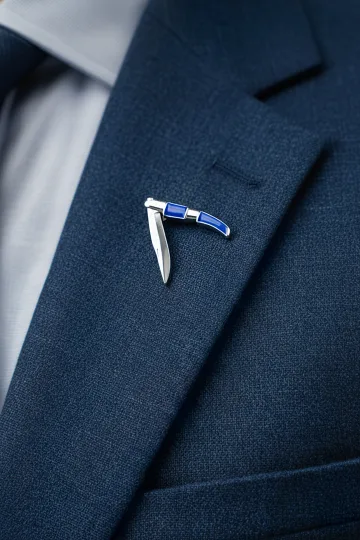
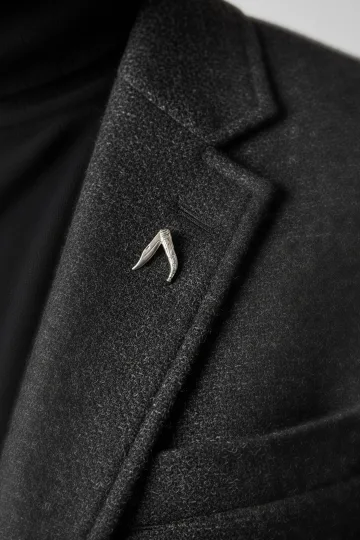
On the left lapel, in the buttonhole or beside it. For an occasion I recommend the pin on a dark, plain jacket; on checks and stripes a miniature gets lost. In autumn it can move to the coat, and the piece starts a second season.
How do you combine it with what is already in the jewellery box?
I build the look from the present: it leads and the rest adapts. If it is a large pair of earrings, the necklace stays at home. If it is a necklace, I choose small earrings so they do not distract. A serious piece has earned the centre, and its neighbours act as background.

Turn on your camera, pick earrings, a pendant or a ring, and see the piece on yourself in real time.
Switch items in one tap.
Everything runs in your browser: no photo or video is ever uploaded.
Necklace, earrings, ring or pin: which piece carries a serious present
The type of piece decides how often it will be on show and how exactly it has to match its wearer. In a serious present that matters more than in a modest one, because a mistake is harder to put right.
A necklace: the piece that asks for no measurements
A pendant on its chain is the safest choice when you know no measurements at all. It sits at the centre of the chest, in view through any conversation, and it asks for neither a ring size nor pierced ears. At this budget it has another advantage: you can choose a worked form, and a maker's necklace says more than a plain disc.
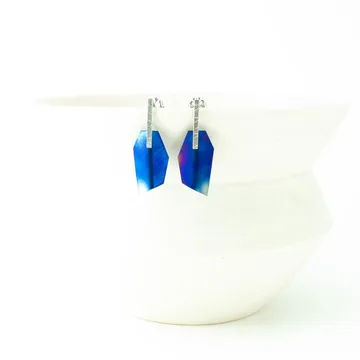
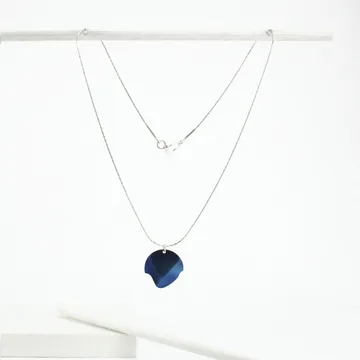
Look at the photograph before the description. On the artist-made necklaces in the catalogue the element hangs on a fine silver chain, and the picture shows where it comes to rest. Then think of the person's everyday clothes: a shirt buttoned to the top hides a short necklace, a fine jumper lets it lie on the knit. The Pétalo Simple necklace, a curved blue petal on a slender chain, is the rounder and larger of the two. The Mini Roble necklace, a small angular blue element under a short textured silver bar, is the quiet one for every day.
Earrings: the present seen in every conversation
Earrings sit beside the face and are seen every time someone talks to the wearer. For a serious present that is their strength: the piece is on show without effort. There is one condition and it is not negotiable: pierced ears and the habit of wearing earrings.
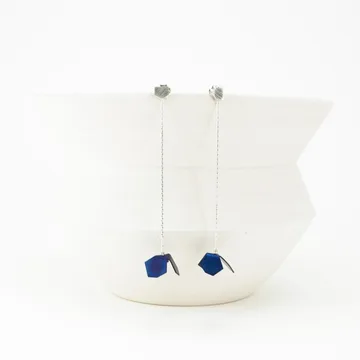
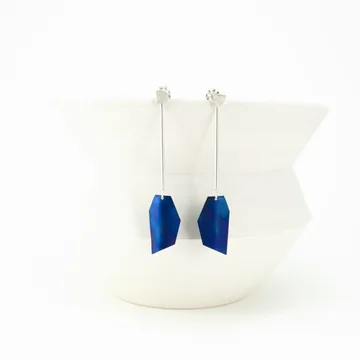
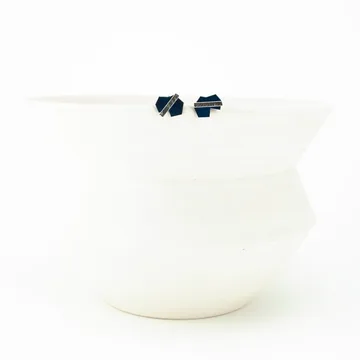
In a maker's line the earrings are often more interesting than the necklaces, because the form works as a pair and with the movement of the head. On the Roble earrings a textured silver bar on a stud holds a faceted blue plate. On the Arce en Flor design a fine chain drops from a small silver stud with a little blue element at its end, and it sways at every turn. Weigh a pair in your mind as well as with your eye: heavy earrings stretch the lobe over the years and end up in the box however much they are liked, while a light pair with a small element can be worn through a whole working day.
A ring: why it says more than you meant
No piece carries more risk as a present than a ring, and a generous budget makes the risk bigger. First, size: a ring that does not fit stays in its box. Second, meaning: a ring from a partner, especially a noticeable one, can be read as a proposal or a promise even when you meant something else.
If nothing but a ring will do, there are two ways to lower the risk. Find the size from a ring the person already wears, measuring its inner diameter against a ruler. And choose one that is not meant for the ring finger, which custom keeps for the wedding band. When the size is a mystery and the ring could be understood two ways, a serious present is solved sooner and better with a necklace or earrings.
One case remains in which a ring works without reservation: when it was asked for. If the person has pointed at a particular ring and you know the size, both doubts vanish, and all that is left to decide is how to hand it over. For every other case the tool below helps you estimate a size without asking.
A lapel pin or a brooch
The lapel pin is the last thing people think of for a serious present, and that is a mistake. It needs no piercing and no size, it never rests on skin, and it works as well for a man as for a woman, for a mentor as for a manager. And it is seen: whoever stops to talk has a lapel pin right in front of them.
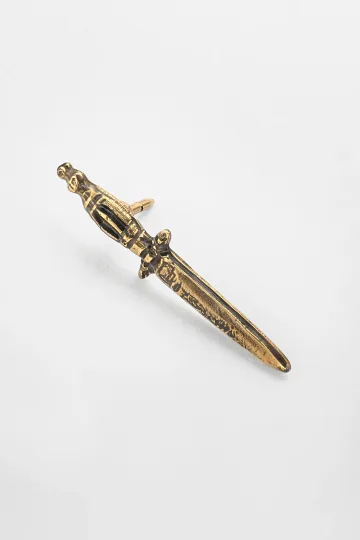
It works as a serious present when it has a subject. A miniature sword or navaja speaks of craft and history; an enamelled symbol speaks of meaning. A piece like that moves from jacket to coat when the weather turns and serves for years without tiring. Where to fasten it, garment by garment, is set out in the guide on how to wear a brooch.
It also has a virtue no other piece shares: it does not sit next to the other jewellery. A pin on a lapel competes with neither the watch nor the wedding band, so it suits the person who wears only gold, the one who wears only silver and the one who wears nothing at all.



Sterling silver: why it leads at this budget
Under this ceiling sterling silver is the main metal. There are four reasons: the size of piece it allows, the mark that stands behind it, the way it gives back light and the way it ages.
Silver or gold for the same money
The same sum buys pieces of different scale in gold and in silver. Gold costs dozens of times more than silver, weight for weight, so at this budget a gold piece comes out far smaller and plainer than a silver one. In silver the same money buys a necklace of worked form at full size or earrings that move. For a serious present scale counts: the piece should be visible when worn and visible in the hand when it is given, and a very small gold piece falls short of a round birthday.
Silver also has a gift tradition of its own. Twenty-five years of marriage carry its name, and the metal is understood as a present without explanation. What the number 925 means and where the proportion comes from is told in the guide to silver 925.
Gold remains the right answer in one case: when the person wears only yellow metal. Silver would argue with everything else they own, and then a smaller piece in the tone they like is the better present.
The 925 stamp: a guarantee that makes no noise
The standard of a silver piece is shown by a mark, the figures 925. The recipient rarely looks for it at the moment of unwrapping, but where it is present it works as a silent argument: this is a metal that can be checked. In a serious present that is part of the value and does not need saying aloud.
Where to look: on the back of a pendant, on the bail, beside the clasp of a chain, on the post of an earring. On small pieces the mark is tiny and shows best under a magnifier or a phone camera zoomed in. British readers should know that a small silver piece can lawfully carry no assay office hallmark at all; the reason is given in the small-budget guide linked at the top, and how to read the marks of different countries is explained in the guide to hallmarks on jewellery.
The mark is useful to you as well. If a seller cannot show you where the standard is stamped and does not name the metal plainly, choose another piece. A serious present begins with knowing exactly what you are giving.
Why silver glows by candlelight
Silver has a physical property rarely mentioned when a present is being chosen: it reflects more visible light than any other metal, about 95 per cent when the surface is freshly polished. That is why in the evening, under the warm light of a restaurant or a celebration table, a silver piece shines more than its size would lead you to expect.
For a present this is a practical property. Anniversaries and milestone birthdays are celebrated at night, with candles and lamps, and silver in that light looks festive without any stones. A smooth polished surface catches light best; matt and textured ones give a softer gleam. If the present will be handed over at the table, that is an argument for polished planes.
The other side of the same property is that fingerprints show on silver. A soft cloth removes them, and it makes sense to put one in the box.
Patina and niello: how silver ages with its owner
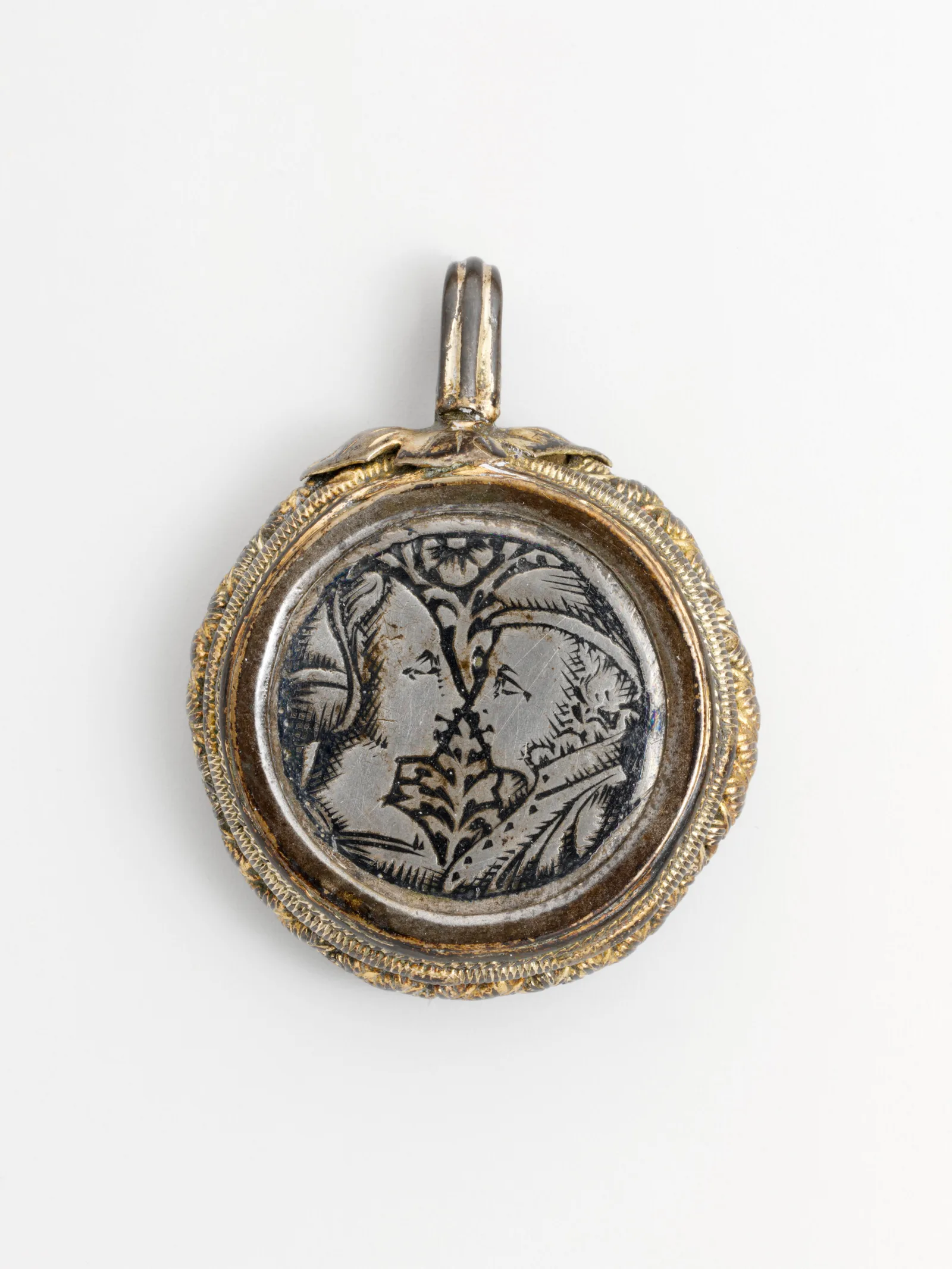
A silver piece has an age, and it shows. Over time the hollows of a relief darken, the raised parts that rub against clothing stay bright, and the design grows sharper. The cause is a film of silver sulphide, formed by sulphur compounds in the air. In a present meant for years this is a virtue: the piece keeps the traces of its wearer's life and ends up looking like theirs and nobody else's.
Silversmiths use the effect on purpose. Niello, a dark mixture of metal sulphides worked into an engraved design, has been known since antiquity: the dark ground makes a drawing readable from a distance. The pendant in the picture shows it with two profiles traced in black on the pale metal. Today's workshops reach something similar by oxidising the silver, and how the old technique works is told in the article on niello and blackened silver.
Hence a piece of advice for the handover: add two lines saying that the dark areas in a relief should not be polished to a mirror, because they are what holds the form. If years later the wearer wants the first-day shine back, the guide to tarnished jewellery explains how to do it without harm.
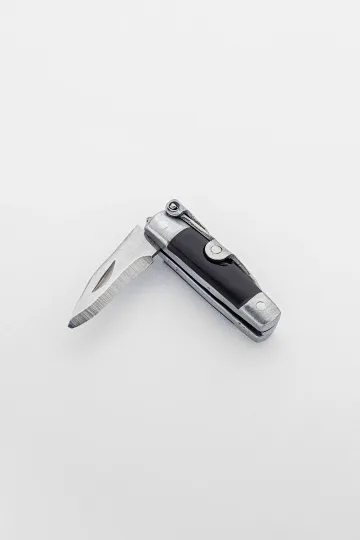
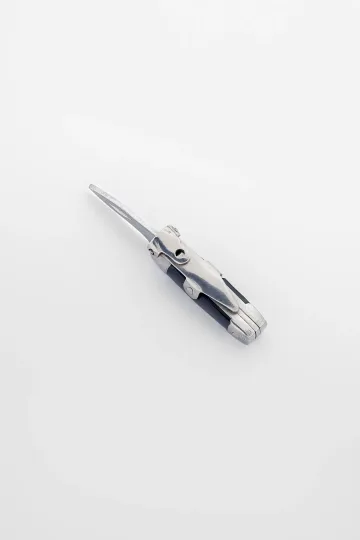
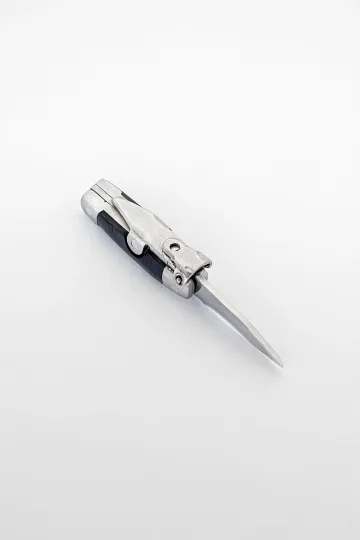
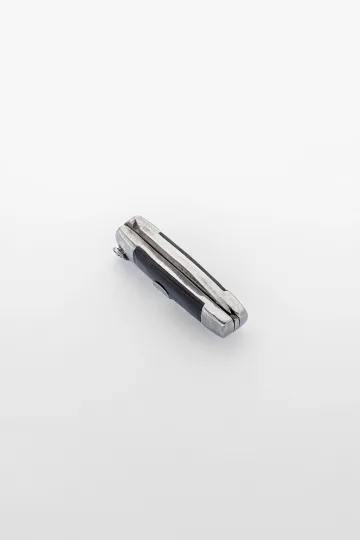
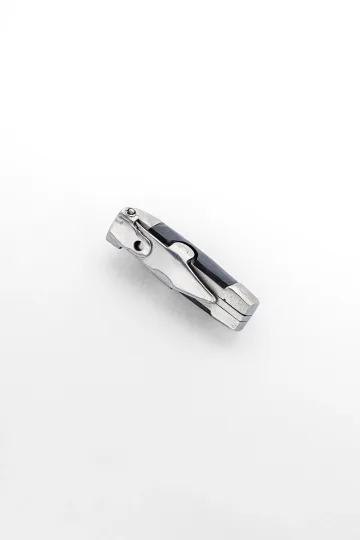
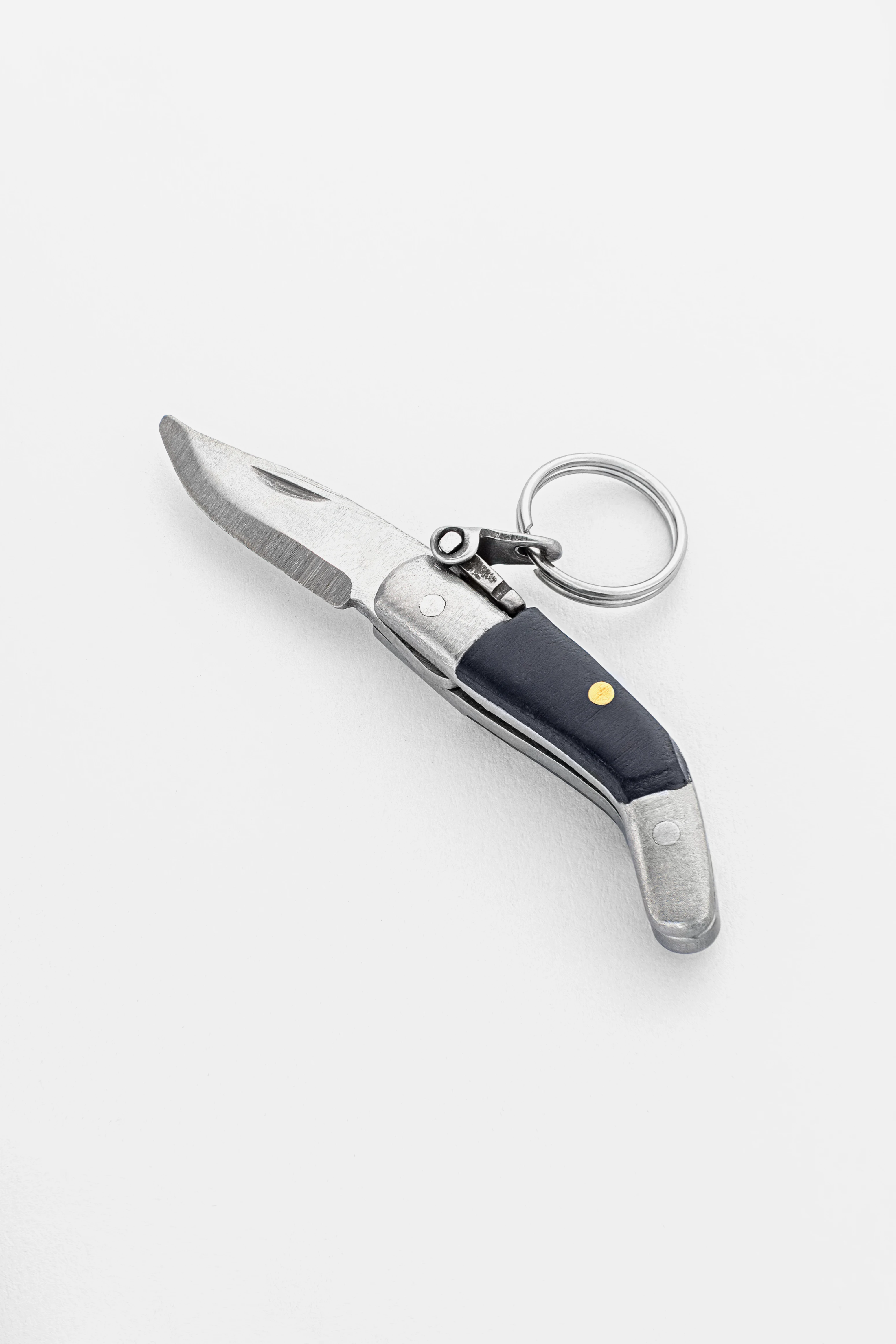
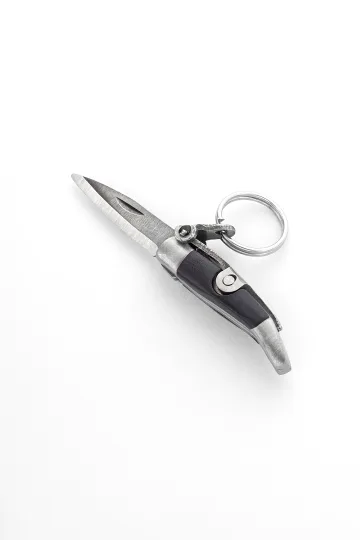
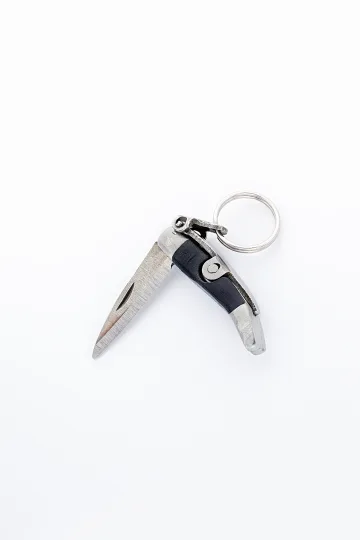
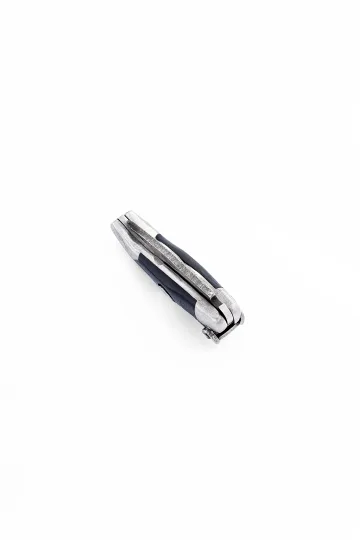
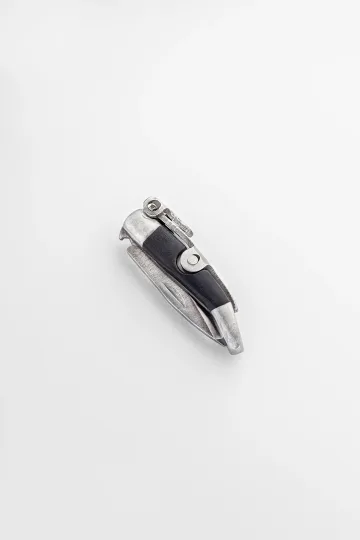
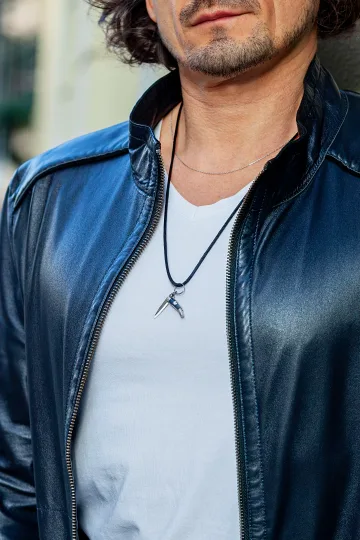
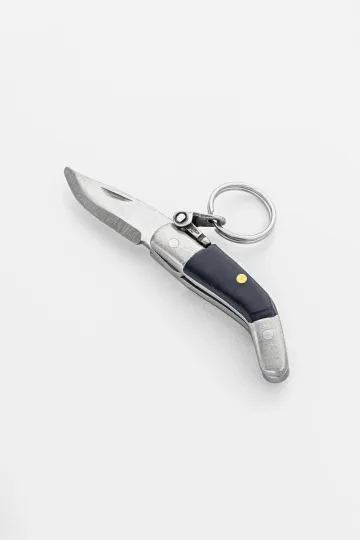
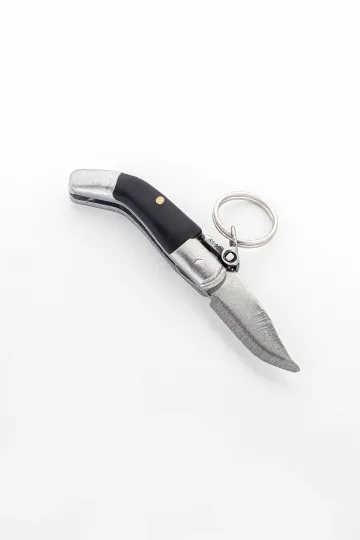
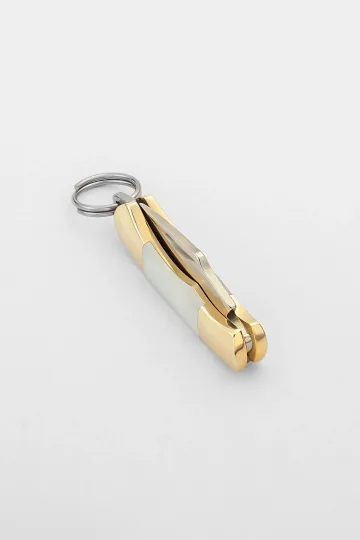
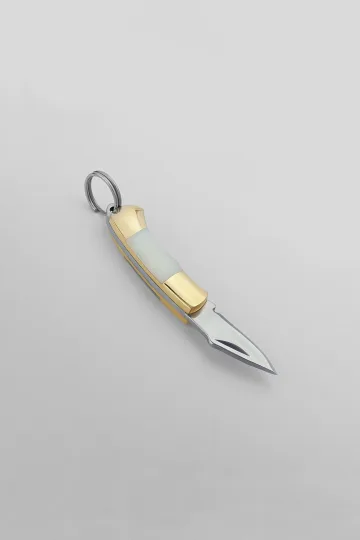
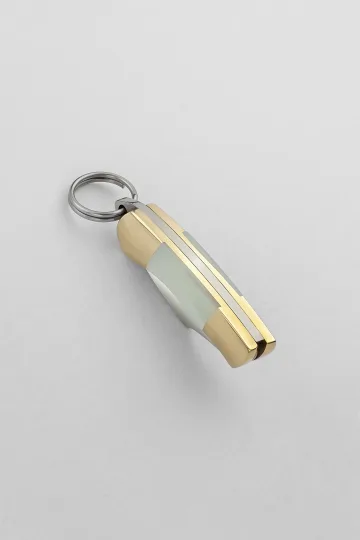
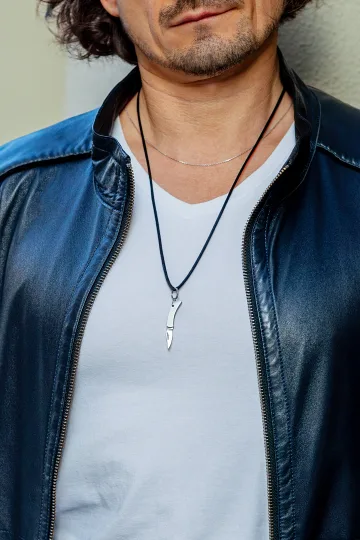
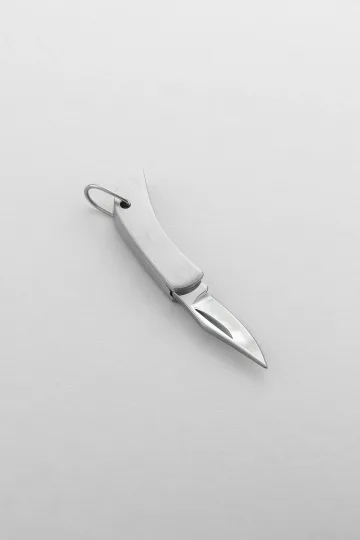
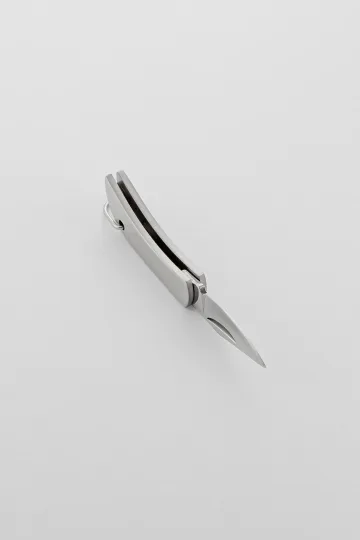
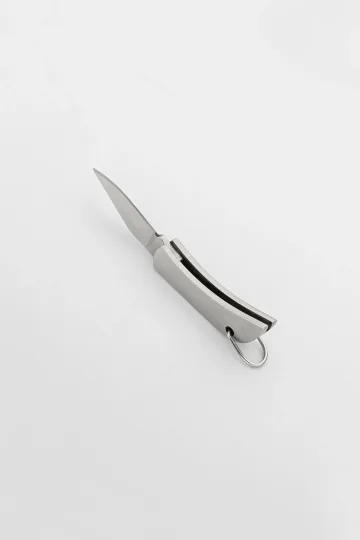
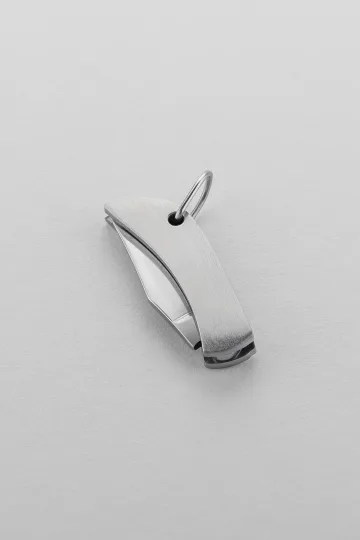
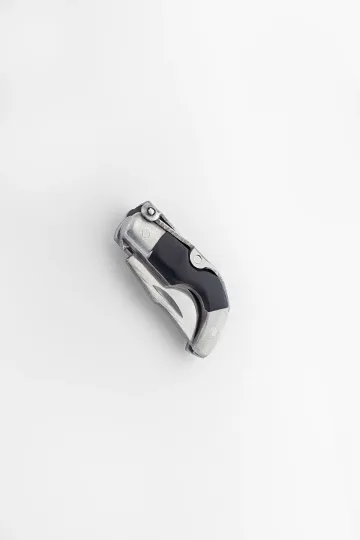
CAPAORA mini knife pendant
The 18th-century Spanish navaja in miniature: 40 mm of stainless steel, a real folding mechanism and a Palanquilla lock that clicks. An affordable gift to remember.
Authentic · Ships from Spain · 14-day returns
What gives weight without a big stone: a maker, a short run, a symbol
A big stone does not fit this budget, and it is not needed. A piece gets its weight from three other sources: a form that not everybody has, a run that is small and a meaning that can be told.
A maker's line: a form nobody else at the table is wearing
Off-the-peg jewellery repeats what is already around. A maker's piece shows how one particular silversmith solves a form. For a present the difference is real: the recipient will not meet the same necklace at the office, and the piece stays theirs.
In the catalogue this is the Acosta en Plata line: artist jewellery in sterling silver from Rodrigo Acosta's workshop in Valencia. The forms are geometric, and each piece sets slender silver against a blue element: a faceted plate, an angular fragment or a curved petal. That element is a separate coloured part fixed to the silver, and the 925 standard refers to the silver. The pieces look neither antique nor seasonal. Five of the earring designs and two of the necklaces fit under this ceiling; the larger pieces of the line sit above it.
To tell a maker's piece from a production one without knowing the workshop's name, look for the trait that recurs across different objects of the same line. Here it is the pairing of a single blue with thin silver. A piece like this is given as part of a line, and later another of the same level can join it.
Oak: what a name can carry
The Acosta pieces bear Spanish plant names: Roble is oak, Arce is maple, Pétalo is petal. The forms are abstract, yet one of those names trails a long history.
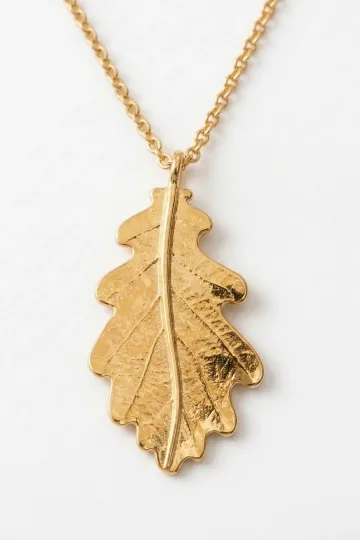
Oak has stood in Europe for endurance and honour for a very long time. In ancient Rome a wreath of oak leaves, the corona civica, went to the soldier who had saved the life of a fellow citizen in battle. The man who had won it wore it at the public games, and the audience rose when he came in. Plutarch, in his Roman Questions, runs through the explanations for the choice of tree: oak leaves are easy to find on campaign, and the oak was sacred to Jupiter and Juno, whom the Romans held to be guardians of the city.
For a present that is a ready-made meaning, with nothing to invent. A piece named for the oak suits the person who held you up, got you out of a tight spot or has simply been a steady support; the Mini Roble earrings, small studs crossed by a silver bar, are the most discreet version. Maple and petal have no documented history of that kind behind them, and the sensible course is to choose those for their form. If you choose by the name, say so on the card: a name explained works harder than a pretty shape left unexplained.
A short run: why scarcity reads as a sign
In 1975 the psychologists Stephen Worchel, Jerry Lee and Akanbi Adewole ran an experiment with cookies. Some participants were offered a cookie from a jar holding ten; others from a jar in which two were left. The cookies were identical and the ratings were not: those from the nearly empty jar seemed more desirable.
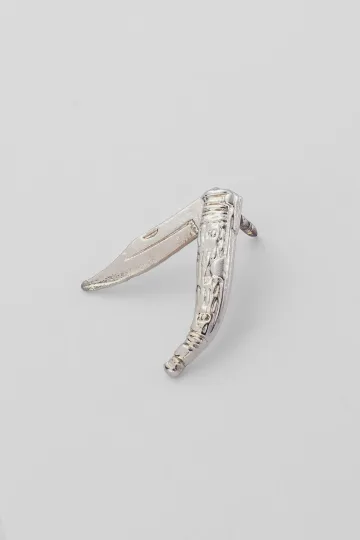
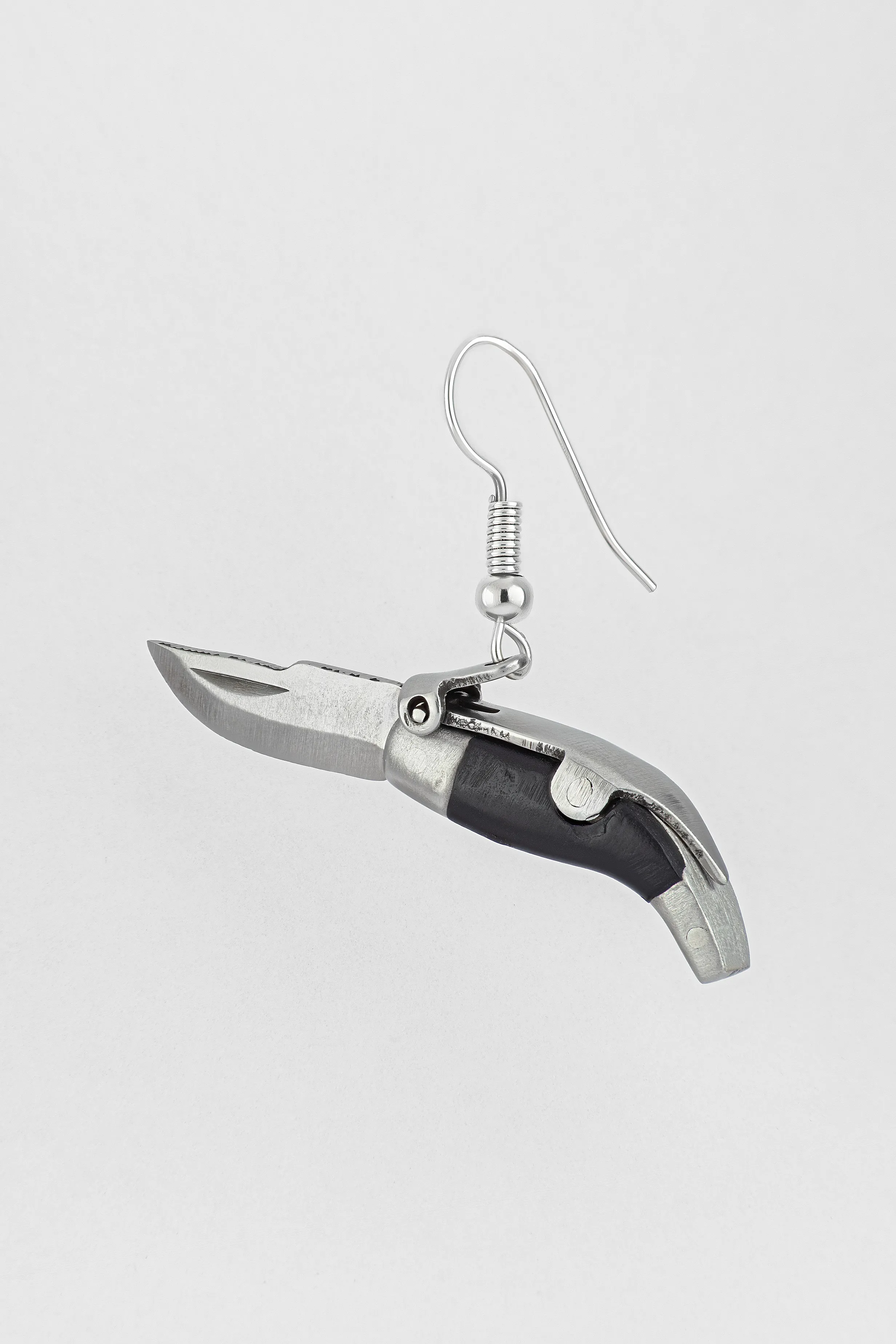
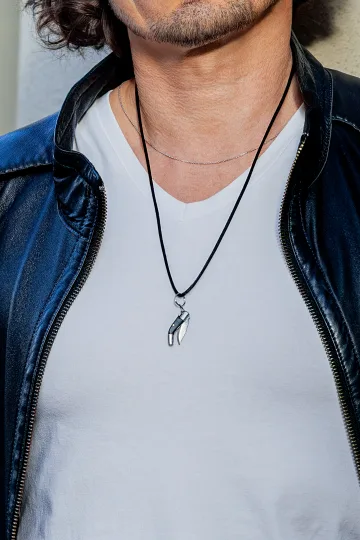
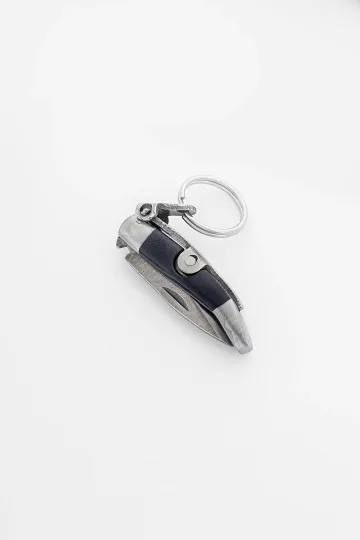
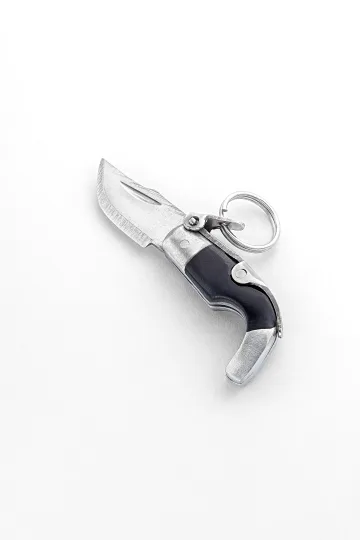
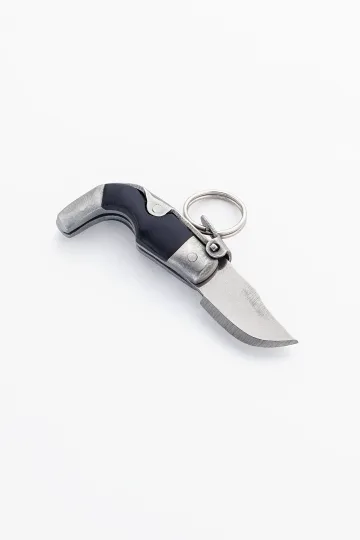
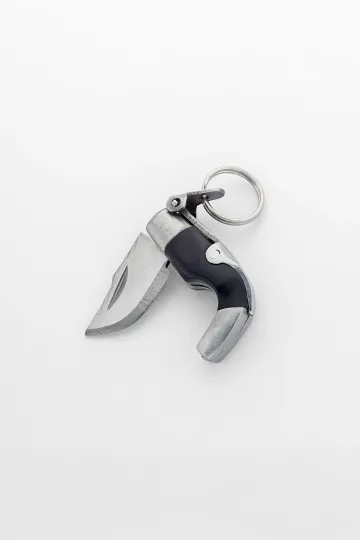
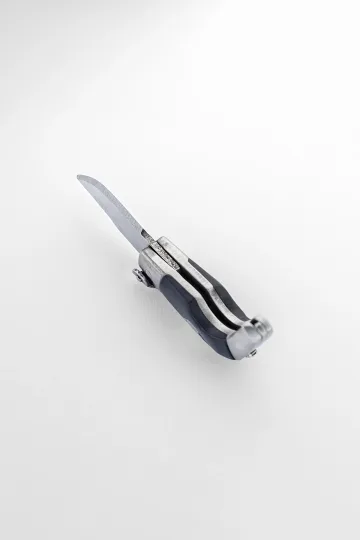
In a present the effect is legitimate when the scarcity is real. A piece from a limited edition is received as a find: it is not in every shop, so somebody went looking. In the catalogue that label belongs to the Jerezana knife pendant from the Forja Española collection, a miniature of an Andalusian navaja in stainless steel and dark composite that folds and unfolds like the real thing. The collection is built on such miniatures of historical Spanish knife forms, and it includes lapel pins, among them the Warrior Sword pin, a small medieval sword with its crossguard and pommel worked in detail.
Two practical notes. The pages of these knife pendants list no chain, so each is a present for someone who already wears one. And a blade, even a decorative one, wakes an old superstition; where it comes from is told in the article on giving a knife as a gift. For a man, or for anyone who values the history of a craft, a piece like this means more than one more accessory without an origin.
A symbol that has to be explained: the Lovers
The third source of weight is a symbol with a layered meaning. Tarot cards are known in Italy from the fifteenth century as a pack for play; their symbolic reading took shape later, and over the centuries a language of its own gathered round each card. A present with a tarot card has more depth than one with a heart because it calls for an explanation, and the explanation becomes part of the handover.
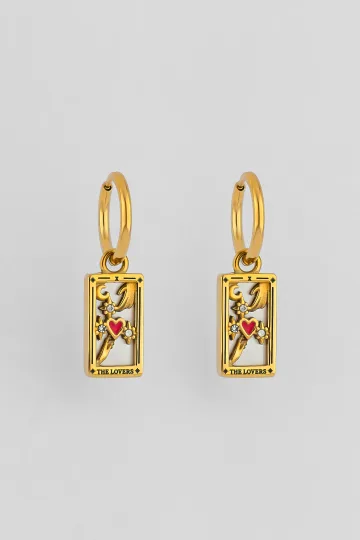
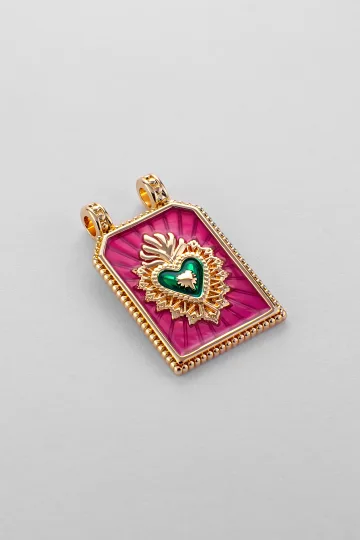
For an anniversary the sixth card fits, the Lovers, which tradition reads as choice and union ahead of passing infatuation. The catalogue has the Arcana VI The Lovers charm, in a silver tone with red enamel, and hoop earrings with the same card in a gold tone. The story of the card is told in the article on the Lovers in tarot.
What they are made of has to be said, because neither is silver. The charm is a hypoallergenic metal alloy with enamel; the hoops are gold-plated stainless steel with enamel and cubic zirconia. They are presents for someone who puts the symbol ahead of the metal, and should be chosen as such. In return the hoops solve what the silver line cannot: the present for a person who wears only yellow metal. For a sceptic the card will stay a picture, and then a form without a meaning is the better choice.
Four centuries of serious presents: what the old gift-givers knew
A serious present in the form of jewellery is older than any shopping guide. Five stories from courts and wills follow, and each leaves behind a device that still works: weight that lies in meaning, words placed where only one person reads them, a detail two people recognise, a sum made personal, a stone tied to its wearer.
Louis XIV's portrait boxes: when the diamonds outweigh the gift
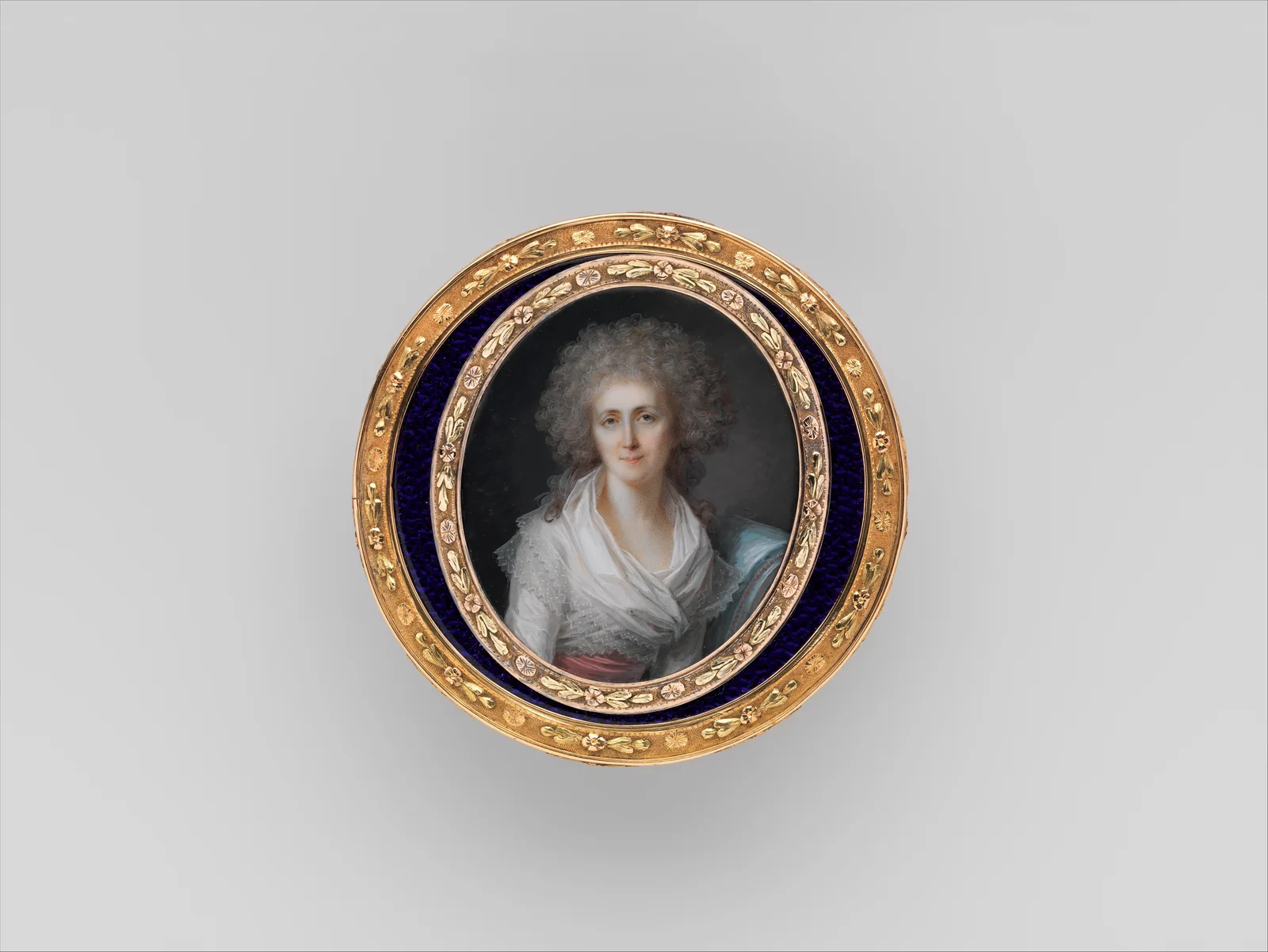
The boxes from the opening lines had a name, boîtes à portrait, and they were among the chief diplomatic presents of the French court in the second half of the seventeenth century: a miniature of the king in a frame crowded with diamonds. They went to ambassadors, allies, foreign nobles and subjects who had distinguished themselves in his service, and they were entered in registers of the king's presents that begin in 1662.
The present said two things. The portrait spoke of personal favour: whoever received it carried the monarch's face. The diamonds spoke of what that favour was worth, and it was the second message that so many recipients turned into money. The box in the picture is more than a century younger and was made for private life, with no diamonds on it, but it belongs to the same family of objects: a face that matters, set in a precious frame and kept close.
The conclusion for anyone giving today is plain. A present whose value is concentrated in its material risks being reduced to material. A present whose value lies in meaning and form cannot be taken apart.
Posy rings: words on the inside
In England in the sixteenth and seventeenth centuries the serious present between people who were close was a ring with a short inscription on its inner face. They were called posy rings, from poesy, and what was engraved inside was a brief line of verse, a promise or a wish. The inscription touched the skin, and only the wearer saw it.
The heart of the device is where the words are. Written on the inside they are not for other people; they are a conversation between two. Posy rings were given at betrothals, at weddings and as tokens of friendship, and their form was usually simple: a plain band of gold or silver with no stone. The words supplied the weight.
The modern equivalent works without a ring. An engraving on the back of a pendant, a date beside the clasp of a bracelet, initials on the reverse of an earring. Which text to choose and which technique suits thin metal is covered in the jewellery engraving guide. Keep one practical consequence in mind before you order it: an engraved piece is a personalised piece, and that changes what you can do if it misses, as the part on returns explains further down.
The eye of 1785: a detail only two people recognise
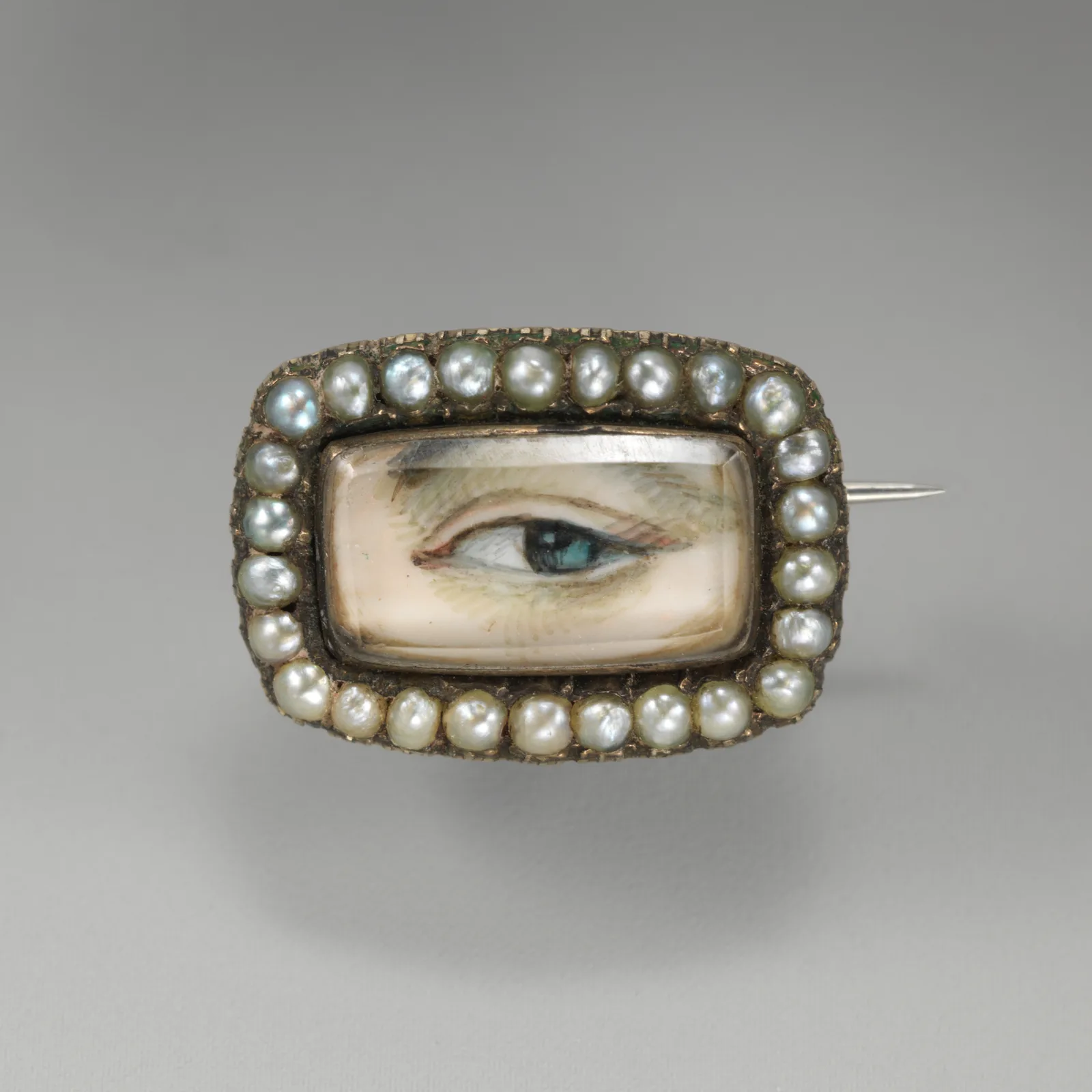
In 1785 the Prince of Wales, the future George IV, was courting Maria Fitzherbert, a Catholic and twice a widow. A lawful marriage between them was out of reach: under the Royal Marriages Act of 1772 no member of the royal family could marry without the king's consent, and marrying a Catholic, under the Act of Settlement of 1701, cost the right to the throne. With the letter in which he proposed, the prince sent her a miniature: the image of one of his eyes and nothing more.
The device was exact. Anyone would have known a portrait; only intimates knew an eye, and so the present declared the feeling and kept the secret at once. The couple married in secret that same year, and the fashion for eye miniatures spread through Britain and lasted several decades. They were worn in brooches, rings and pendants, often within a border of pearls, as in the brooch shown here.
Carried over to a present today: a detail that only two people understand weighs more than an obvious symbol. A recognisable heart says "I love you" to anyone who looks. A shape that recalls the place where you met says it only to the person wearing it.
Shakespeare's will: a sum left for rings
William Shakespeare's will, drawn up in March 1616, contains a line that theatre historians quote often. To three fellows of his company, John Heminges, Richard Burbage and Henry Condell, he left a small sum each to buy themselves rings.
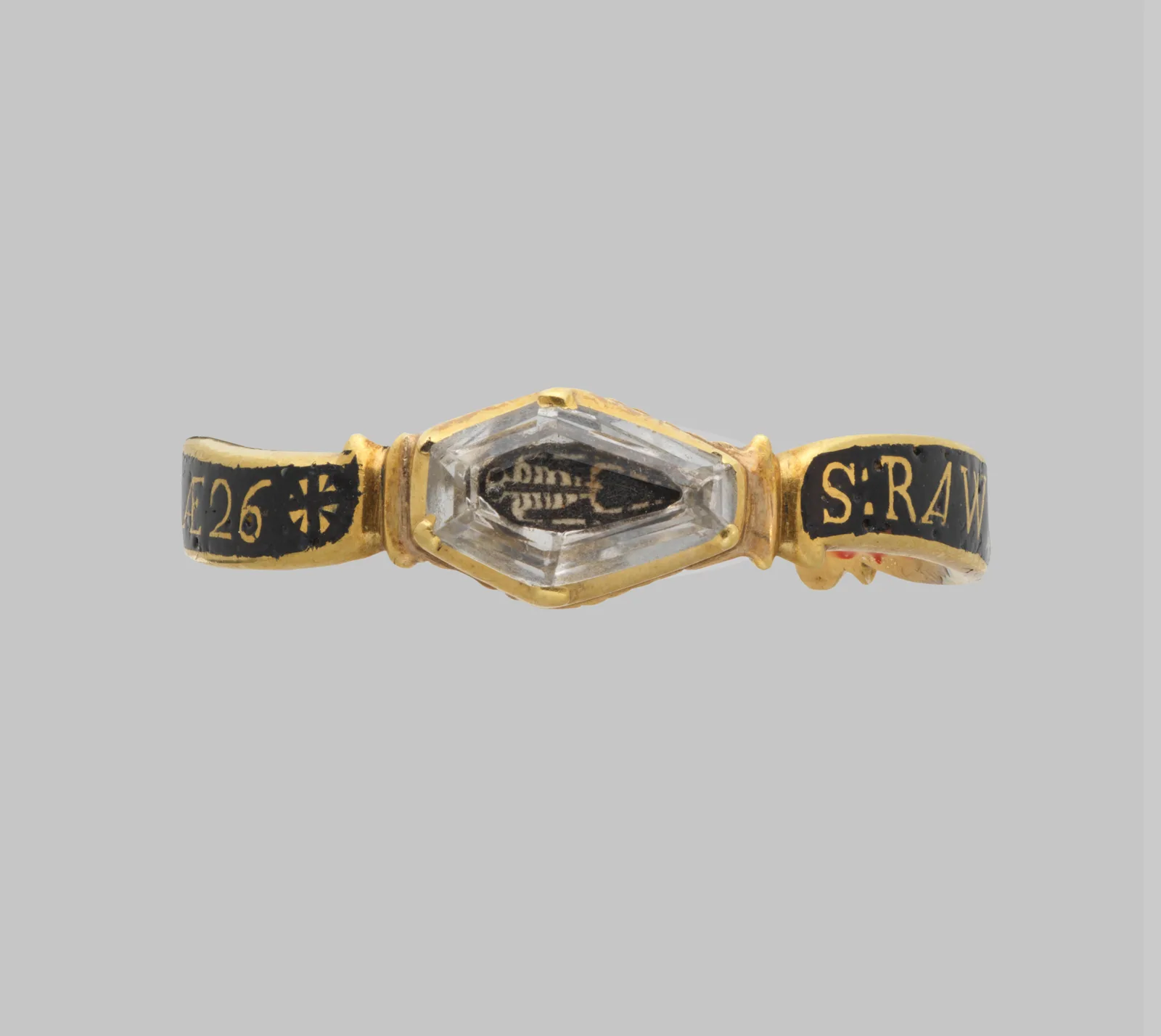
Rings in memory of the dead were then an ordinary item in English wills. They were ordered with a skull, an inscription, a date, sometimes a lock of hair under glass, and they were worn as a sign of a bond: the person is gone and the circle is still a circle. The custom was alive in the eighteenth century as well, on both sides of the Atlantic; the American ring in the picture was made almost a century and a half after that will. Shakespeare chose exactly this sign for three colleagues from the stage.
The story holds an idea that applies to any serious present. The sum was modest for a will, but it had been made personal: it was not money as such, it was money for an object to be worn in his memory. The bond sets the value, and the figure only points to it.
Albert's emerald serpent: the stone of her month
In 1839 Prince Albert gave Queen Victoria, for their engagement, a gold ring in the form of a serpent set with an emerald. The emerald was the stone of her month, May, and the coiled serpent stood in the language of the period for eternity and fidelity.
A snake on an engagement ring looks an odd choice now. But that present had what makes a present serious: a stone tied personally to the woman receiving it and a symbol with a long past. The queen could have been given any ring, and she was given one that held her own month.
From this comes the most useful device for anyone choosing a present: a personal tie beats price. The stone of a birth month, the emblem of a profession, a material from the place a person comes from make the piece theirs. Which stone belongs to which month is listed in the guide to birthstones by month, and the snake's long career in jewellery is traced in the article on snake jewellery.
Leave your email, we'll send your discount code. No spam, unsubscribe anytime.
The code arrives by email, valid on your first order.
Who it is for: the piece chosen by the person
When the budget opens nearly the whole range, the person decides. Four recipients follow, each with a logic of their own.
For a wife or partner
With her, a serious present works when it shows that you see her taste and not your own. Look at the jewellery she wears all the time: which metal, what size, with stones or without. The present has to be able to sit beside it. If everything she owns is slim, discreet silver, a large gold-tone pendant will argue with the rest of her jewellery box however good it is.
For an anniversary, earrings from a maker's line do well: they sit by the face, and a form that moves sets them apart from everyday studs. A necklace makes sense if it brings a story bound up with your own: a name you can explain on the card or a sign that belongs to you both. And if the date falls close to Christmas or her birthday, do not fold two presents into one box: each occasion has earned its own.
For a husband or partner
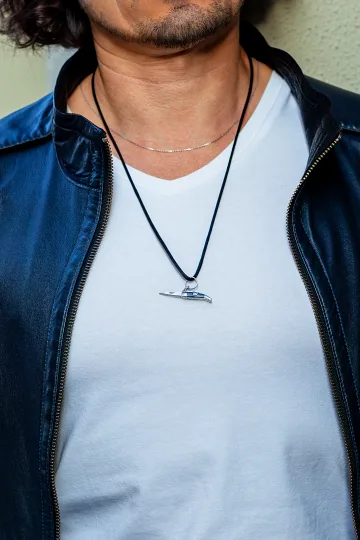
For a man a serious piece of jewellery is chosen by a different logic: the piece should have a function or a history. A folding miniature of a navaja, a lapel pin, a pendant with a symbol that means something all work better than a decorative chain.
Find out first whether he wears anything round his neck. If not, a pin on a jacket will be a first piece of jewellery he does not have to get used to. If he wears a chain, choose a pendant in the same colour of metal, so the present joins what he already uses without making him change anything. The full survey is in the guide to jewellery gifts for men.
For your mother
For a mother, whatever the date, start with what she already has. A jewellery box of many years holds family pieces, presents from other occasions and the odd heirloom, and the new present should not repeat any of them. Before buying, ask your father or a sister what kind of piece she lacks or which she has stopped wearing. If she always wears the same earrings she may not want to change them, and then a necklace has more of a future.
Then think about how it will be worn. A quiet necklace and earrings without heavy drops go with everyday clothes and ask for no special outfit. Long habits in metal deserve respect too: if she has worn gold for twenty years, silver may look to her like a mistake however fine the piece, and if she wears silver, a maker's piece in silver will meet her taste more exactly than any classic. The whole case is set out in the guide to a jewellery gift for Mum.
For yourself, after a big year
A present to yourself can weigh as much as one for somebody else: a thesis defended, a first big contract signed, a hard year finally closed. And it escapes the great problem of presents, because you know your taste, your size and your metal.
A piece like that works as an anchor: putting it on, you remember why you bought it. So here you can allow what would be a risk with another person, such as a ring whose size you know or earrings of a length you are not used to. How and why people give themselves jewellery is told in the self-gift guide.
Handing it over: box, card, moment and the question of returns
In a serious present the presentation becomes part of the piece. The box, the words and the moment the present reaches the hands are remembered along with the jewellery. Four things bring the handover up to the level of the occasion.
The box that stays on as the piece's home
The box of a serious present has to outlive the handover. Card wrapping is in the bin within a minute; a case with a soft base stays on as the place where the piece lives for years. The wearer opens it every time they take the piece out, and every time the box reminds them where it came from.
Choose a case in which the piece does not rattle: the pendant fixed to its base, the earrings in their slots. Silver tarnishes more slowly in a closed box, because it has less contact with the air, which is one more argument for a case that shuts snugly. Keep ribbon and paper to quiet tones, so that attention does not slide from the piece to the wrapping.
Put no other presents in the box. Whatever travels with the piece should serve it: the card, a short note on the metal and its care, a polishing cloth. Those are not extras; they are the piece's own kit.
The card: what to write for a date like this
A handwritten card turns an object into a message. For a serious present three formulas work, and it is better to settle on one than to mix them.
The first names the reason: "For the twenty years you have been beside me." It says why the present exists and ties it to the date. The second explains the choice: "It is called Roble, oak: the Romans gave an oak wreath to the man who saved a fellow citizen's life." It makes the piece intelligible and shows that you chose with thought. The third looks ahead: "To wear every day, not to keep for best." It takes away the fear of spoiling a good piece.
What to avoid: general wishes for health and happiness, which fit any present, and any mention of price, even as a joke. The card with a serious present should be written so that it could not be slipped into any other box.
In private or in front of everyone
The moment of the handover changes the impression of a present more than it seems. At a party with guests the present becomes part of the celebration: it is looked at, passed from hand to hand, discussed. That is good for a piece with a story that can be told aloud. It is bad for an intimate piece, one with an inscription or a meaning only two people understand.
An anniversary present, and any present with a personal meaning, is better given in private, before the celebration or after it. The recipient can look at the piece without witnesses, read the card and react as they please. If the present comes from a group, it is given in front of everyone, but by one person and with a few words, without the box doing a lap of the table.
The note in the box and the returns rules of two countries
The price tag always comes off. What is forgotten more often is the other half: a short note with the metal and its standard, the name of the piece within its line, the workshop or collection and a line on care. A piece with a note is received as a piece with an origin.
Then comes the question of an exchange, and here a reader in the United States and a reader in Britain stand on different ground. In the United States no federal rule gives a buyer the right to change their mind about an online order: the Federal Trade Commission's Cooling-Off Rule covers sales made at the buyer's home or at a seller's temporary location, and it leaves out sales made entirely online, by mail or by telephone. Whether a piece can go back, and for how long, is a matter of the seller's own returns policy, so read it before you pay.
In the United Kingdom the Consumer Contracts Regulations give a consumer who buys at a distance fourteen days to cancel, and for goods the period is counted from the day they come into the buyer's hands. Goods made to the consumer's specifications or clearly personalised are outside that right, and an engraved piece is personalised. That is the rule for a consumer in the United Kingdom; wherever you live, the seller's returns page tells you the terms that seller offers. Neither rule is about a purchase made across a counter, so in a shop ask for the exchange policy before paying. Keep the proof of purchase yourself: the figure stays out of sight, and while the window is open the recipient has a way out if the piece does not suit.
Jewellery, an experience or a gift card: where else the money could go
A budget like this also gets spent on other things: an experience, a set instead of one piece, a gift card, an object with a famous name. An honest comparison shows when jewellery really is the best option.
Jewellery or an experience
In 2017 the researchers Cindy Chan and Cassie Mogilner showed that experiential gifts, a concert, a trip away, a dinner, strengthen the relationship between giver and recipient more than material gifts do. The reason lies in emotional intensity: an experience stirs strong feeling while it is being lived. The finding deserves to be weighed honestly.
Jewellery has, in exchange, something an experience does not: it stays. A concert is remembered; a necklace is worn, and each time the clasp is fastened the wearer goes back to the day it was given. At an anniversary, a retirement or a thank-you, when the present should recall the occasion for years, the object works for longer. If the budget allows, the best answer is to join the two: a dinner for the date and a small piece handed over at that dinner.
One piece or a matching set
A set is tempting: a necklace and earrings in one style look more generous than a single piece. The presenter's paradox is at work here too, with one exception. A set from a single line is received as one object, because its parts are equals. Necklace and earrings from the same workshop, in the same form and the same material, make a whole.
The trouble starts when a set joins pieces of different level: a strong necklace and weak earrings bought to make a pair. Then the whole set is judged by its weaker half. Under this ceiling there is a second obstacle: two pieces from the maker's line together go past it. The way round is to build the set in two stages, one piece now and its companion at the next occasion, which also settles the question of what to give next time. And before planning the second half, ask yourself whether the person wears a necklace and earrings together at all. If they usually put on one thing, the second will stay in its box.
Jewellery or a gift card
A gift card removes the risk of getting it wrong, and that is its one advantage, though a large one. In 2011 Francesca Gino and Francis Flynn showed that recipients value presents they had asked for more than unexpected ones, while givers believe the opposite. A card comes close to that: the person chooses.
What a serious present loses with it is the main thing, the sign of attention. The card says "I did not know what you like"; the jewellery says "I do". So a card makes sense when you truly do not know someone's taste, and none as insurance against your own nerves. How to choose in that case is explained in the guide to a jewellery gift when you are unsure of their taste.
Between the card and the piece already chosen lies a middle way that keeps the best of both. Pick two or three pieces from one line yourself, print them on a sheet and put it in the envelope with the gift certificate: "I liked these; keep the one that goes with your wardrobe." The person chooses, as Gino and Flynn found recipients prefer, but chooses among things you selected, and your attention stays in view. The catalogue's certificate comes in a single amount and is valid for twenty-four months, so there is no hurry to decide.
A maker's piece or a famous name
The last comparison is for anyone torn between a maker's piece from a little-known workshop and one bearing a name known round the world. On the same budget the famous name usually turns into a small, simple piece in which a good share of the price pays for the name. The maker's piece at the same level is larger, more complex and seen less often in the street.
The choice depends on the recipient. To someone for whom the name counts in itself, give the name. Someone who values form and rarity will be better served by the maker's piece. How the price of a name is put together and what it guarantees is examined in the article on the myth that expensive means quality. For a serious present the exact answer is this: a piece that speaks of the person receiving it and not of the label.
Facts that surprise
The cookie that suddenly became scarce was rated highest of all. In the second part of Worchel's experiment some participants had a jar of ten cookies and saw eight taken away; others had two and saw eight added. Those who had just lost theirs rated the cookies above everyone else: sudden scarcity outdoes the lasting kind.
A rubber band darkens silver. Vulcanised rubber contains sulphur, the element that blackens the metal in air, which is why museum conservators advise against keeping silver bundled with rubber bands.
A bunch of flowers is named after the inscription in a ring. In the 1530s posy meant the verse motto inside a ring; by the 1570s the same word was being used for a small bouquet. Etymologists explain the jump in two ways: the language of flowers, in which a bouquet was already a message, and the custom of sending verses along with flowers.
The presenter's paradox works with punishments too. In one of Weaver's studies a fine for littering had two hours of community service added to it, and the whole penalty seemed milder than the fine alone. Averaging does not care whether what is being put together is good or bad.
An experience does not have to be shared. Chan and Mogilner checked separately whether it mattered that giver and recipient lived the experience together. It did not: the relationship grew stronger just the same when the person went to the concert or on the trip alone.
Two of the three men Shakespeare left ring money to saved his plays. In 1623, seven years after the will, Heminges and Condell published the collection of his plays known as the First Folio. Eighteen of its thirty-six plays had never been printed before.
Send a friend a discount code, they save on their first order.
Frequently asked questions
What is a good jewellery gift for a woman on this budget?
Start from the metal she already wears, then let the length of the relationship set the form. With someone you met recently, an abstract geometry in sterling silver: it hints at nothing and commits nobody. In a young romance, leave out the heart and the matching pair, which can look hasty. In a long one there is room for a detail only the two of you recognise, even at the cost of a less showy piece.
What do you give for a silver wedding anniversary?
Silver, as the name of the anniversary says. Between husband and wife that means a sterling piece for daily wear. Children and friends are giving to two people, and jewellery is worn by one, so their choice is different: a small silver piece for each of the two, equal in level so that neither outranks the other, or one shared present with a card signed by everyone in place of several scattered tokens. If there is a lunch, hand it over before the guests arrive: a present about twenty-five years opens better among few.
Is sterling silver good enough for a big occasion, or should it be gold?
Sterling silver is good enough: it is a precious metal with a standard that can be checked, and nothing about a big occasion calls for a dearer one. If the person switches between the two metals with no preference, silver leaves you more forms to choose from. Should you want a gold colour all the same, know what you are buying: the gold-tone pieces in the catalogue are plated, the Lovers hoops are gold-plated steel, plating wears where it rubs, and it is fairer to write that on the note that goes in the box.
Is it bad luck to give a knife pendant?
Only if the recipient believes it is, and for that case custom supplies the cure. The superstition says a blade given as a present cuts the friendship. The answer, known in Britain, Ireland and the United States as the penny for the knife, is that the recipient hands back a small coin, which turns the gift into a purchase. Tuck a coin into the box with a line explaining the custom, and the ritual becomes part of the present. If you would sooner not raise the matter at all, choose a piece without a blade.
Can jewellery that was a gift be returned or exchanged?
It depends on where the order was placed from. In the United States a piece goes back only on the seller's own terms; in the United Kingdom an online order carries a legal fourteen days to cancel, a right that belongs to the person who ordered and runs from the day the parcel reached them. Anything more generous than that, an exchange for another piece or a longer festive period, is the seller's own offer in both countries. Either clock can run out before the party: a present bought a month early may be out of time on the day it is unwrapped, so if you buy early, ask the seller in advance what applies and who has to make the request. Mention an exchange to the recipient only if it is still open that day. And a personalised piece falls outside the right to cancel, which is exactly what an engraving makes it.
Is jewellery a good present for a man?
Yes, provided he is left to decide when to put it on. A man who has never bought himself jewellery takes it more easily when it comes with a clear reason, a promotion or the end of a long project, and two sentences on what it is and why you thought of him. If he answers that he does not wear that sort of thing, do not ask him to try it there and then: leave the box within reach and let him choose the day. A pin can be tried against a jacket in seconds, and it is the piece that asks for the least habit.
What do you give someone who does not wear jewellery?
A lapel pin or a brooch: they go on clothing and ask for no habit. Or a necklace on a long chain, which stays outside the jumper and comes off in one movement. If the person wants to wear nothing at all, choose an experience.
What do you give a woman who has everything?
Something she cannot already own twice: a maker's piece from a small workshop, or one that carries a fact about her, such as a date or a pair of initials engraved out of sight. For someone who lacks nothing, a well-judged choice counts for more than size. The full case is in the guide to the gift for someone who has everything.
Choose a present with weight
Artist-made sterling silver, miniatures of Spanish knife craft and symbols with a history.
Buying it as a gift? Each one arrives ready to give.
 A branded Zevira box and a little card come with every order.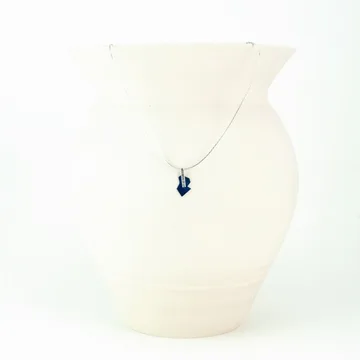



Conclusion
When the budget leaves nearly the whole catalogue within reach, a serious present is chosen by accuracy. One piece instead of two, the metal the person already wears, a form that will be in use the day after the celebration. Sterling silver leads here because at this level it gives a piece of real size and ages gracefully.
Weight comes from meaning and form: a maker's line, a short run, a symbol with a history, a personal detail. The Sun King's diamonds were sold off by the people he honoured; the Prince of Wales sent the picture of one eye, and that present is still talked about. The handover, from the case to the card, makes visible the bond for which the piece was chosen.
The general survey by occasion is in the jewellery gift guide.
Wear the symbol, don't just read about it. These are in stock:







About Zevira
Zevira gathers jewellery around forms and symbols with a history: artist-made sterling silver, miniatures from the Spanish knife-making tradition, tarot cards. We tell where a sign comes from before we offer a piece that carries it: our view is that jewellery should come with an explanation as well as a shine.
Wear the symbol, don't just read about it. These are in stock: