The Lovers in Tarot: Meaning, History and Jewellery Behind the Sixth Arcanum
Two people stand side by side and say nothing. Not because there is nothing left to say, but because words would not settle anything here. Ahead of them lies a choice that changes everything: to stay or to walk away, to trust or to step back, to bind their life to another person or to take a different road. This is the moment of the Lovers. Not a scene from a romance film, but the point where life demands an answer.
The sixth Arcanum of the Major Arcana is called the card of union. Yet anyone who has studied it closely knows it is, first and foremost, a card of choice. A choice that is conscious, moral, and changes the person who makes it. That is why it ranks among the most layered and image-rich cards in the whole deck.
This article walks through the card from fifteenth-century Italian wedding panels to the Adam-and-Eve iconography of Pamela Colman Smith. We look at every symbol and what it carries: the angel Raphael, the two trees, the mountain and the sun. We talk about the archetypal weight of union and choice in culture and myth. And we settle in detail on how the imagery of the Lovers turns into jewellery: paired pendants, rings, hearts and the tree of life, pieces you can wear yourself or give to someone.
The card's place in the deck: sixth, after the Hierophant
The Major Arcana lay down a path. Each card inherits from the one before it and prepares the ground for the next. The Lovers hold the sixth position: straight after the Hierophant (V) and before the Chariot (VII).
The Hierophant embodies the institution: the church, tradition, collective law, authority. He tells a person: here are the rules, follow them. The Lovers come after him and ask a completely different question: and what do you want? Not what is prescribed, but what you choose? This is the decisive shift from following the norm to making a personal decision.
The Chariot, which follows, stands for movement and the victory of will. But before moving forward, a person has to settle on a direction. The Lovers occupy the moment of that settling. It is the point after which a vector already exists.
Wear the symbol, don't just read about it. These are in stock:

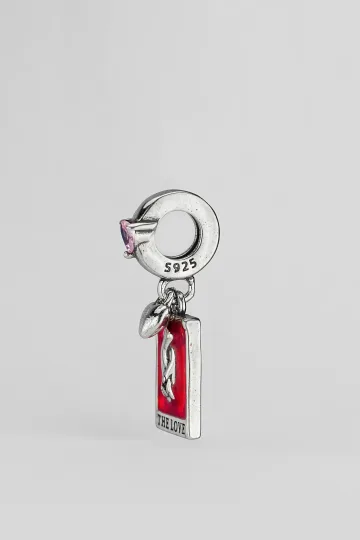
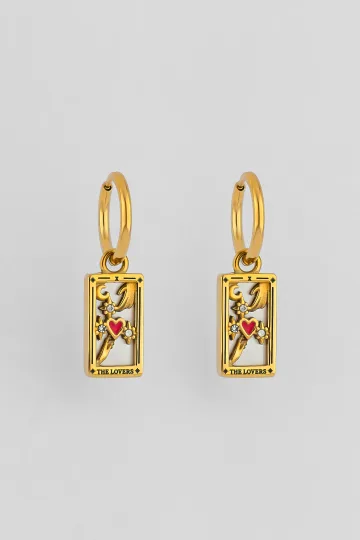


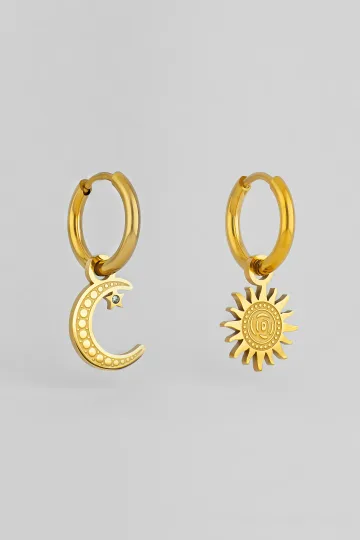
The number six carries meanings of balance, responsibility, harmony and care. It holds the idea of two sides finding their balance, and a third force that joins them. On the card itself the structure is plain to see: a man, a woman, and an angel above. Six is also tied to the home and to relationships: in the numerological system it is the number of Venus.
In the context of the whole journey through the Major Arcana, the sixth position is special. The Fool (0) sets out in innocence, the Magician (I) becomes aware of his tools, the High Priestess (II) keeps the secret, the Empress (III) embodies fertility, the Emperor (IV) sets order, the Hierophant (V) hands down tradition. By the time the Lovers arrive, a person has already passed through the structures of the world and is ready for the first truly personal choice.
The Lovers across the centuries
The history of the sixth Arcanum is the history of three completely different ideas that replaced one another over five hundred years. Each era poured into the card what mattered most to it: a political alliance, a moral choice, a mystical union.
Visconti: the choice between two women
The Visconti-Sforza deck, made around 1451, existed in several versions. In one of them, not the wedding version but an older one, the card shows a young aristocrat between two female figures. This variant survives in scattered sheets and reflects an earlier Italian iconographic tradition, pointing directly back to the choice of Hercules.
The young man stands in the centre: to his left a young woman with flowers, the embodiment of earthly passion; to his right a mature lady wearing a wreath, the figure of prudence and reputation. Cupid hovers above, but here he can see, he is not blind: the union must be a conscious one. Ducal decks were made for a court society that knew how to read allegory, and what they read was a young man facing a choice between two ways of living, both painted as genuinely attractive.
The Marseille tradition: L'Amoureux and the blind Cupid
The French Marseille tradition, which took shape by the seventeenth century, sharpened the image. On the L'Amoureux card the young man still stands between two women, but above them now hovers a blind Cupid with a drawn bow. The blindness is the point: the arrow flies at random, love does not pick and choose. The young man looks toward the younger woman, while the elder lays a hand on his shoulder.
The French occultists of the nineteenth century, Eliphas Levi, Papus, Oswald Wirth, read the card as a psychomachia, the struggle of good and evil within the soul. The young woman stood for Vice, the elder for Virtue. The image itself is more convincing than the lesson: both paths are drawn without any belittling marks, and that is more honest than any moral sermon.
Waite-Smith: the alchemical wedding
In 1909 Arthur Edward Waite made a radical break with tradition. Instead of a choice between two figures, he showed the union of two. Adam and Eve in the garden, not after the fall but in the moment of original wholeness. An angel spreads his arms over both. The scene of choosing between women vanished; in its place came the alchemical wedding, the coniunctio, the joining of opposites.
Waite knew the alchemical literature well. The operation of coniunctio, in which Sulphur meets Mercury and Sun joins Moon, was described as the birth of a third thing out of two: not addition, but a leap in quality. That is exactly what Pamela Colman Smith pictured: two figures beneath an angel, different yet bound by something that stands above them both.
The parallels with alchemy in Waite's imagery are deliberate. Two trees, sulphur and mercury, fire and water, the solar and lunar principles. The mountain between the figures, the athanor, the laboratory furnace inside which transformation takes place. The solar disc above the angel is both the heavenly body and Tiphereth, the sixth sefirah of the Kabbalistic Tree of Life, toward which the path Zayin leads from Binah. More on that below.
A half-heart belongs on silver, worn in silence, not as a note begging for a call. Want the whole story? Wear the card and answer to no one.
How and with what to wear Lovers jewellery
Over the years of building looks, paired symbols and Lovers signs have passed through dozens of my shoots and evenings out. Here is what actually holds a look together, by occasion.
What do you wear a Lovers symbol with every day? For daytime I recommend a single pendant on a fine chain: a half-heart, a small tree of life, a clean sign of union. A light top (white, sand, grey) lifts the metal, a dark one turns the symbol into the accent. I suggest a medium length, just below the collarbone, so the sign stays in view rather than hiding under fabric.
Is a piece like this right for the office? Quite, if you keep it restrained. I choose one neat pendant or a Claddagh ring, with no scattering of other pieces. Under a shirt or a blazer I recommend wearing it below a closed or half-closed collar, so the symbol peeks out rather than juts forward. One accent always beats five.
How do you build an evening look? For the evening I suggest an open neckline: a V-neck, a boat neck, an off-the-shoulder cut. On bare skin near the collarbone the symbol reads larger. Here you can play with layers: a Lovers pendant at the main length plus a fine short chain above. Keep no more than two or three lines of different length, or the look falls apart.
How do you wear paired pieces as a couple? When I build a paired look, I recommend not copying each other but choosing complementary halves: each in their own style, yet on one metal. That way two pieces read as one whole, not as a uniform. For metal I suggest holding to a single tone: silver with cool fabrics and cool skin, gold with warm.
Who do these symbols suit anyway? Those who value the meaning behind a piece over its shine, who love symbols and stories. Two rules that never fail. First: choose the length for the neckline, not the other way round, the symbol should land in the open zone. Second: one sign on a clean chain always beats one crushed between five pendants.
Turn on your camera, pick earrings, a pendant or a ring, and see the piece on yourself in real time.
Switch items in one tap.
Everything runs in your browser: no photo or video is ever uploaded.
The history of the card: three versions of one story
Visconti-Sforza: the wedding celebration
The earliest Tarot decks appeared in Northern Italy in the fifteenth century as cards for play and amusement at aristocratic courts. The Visconti-Sforza deck, made around 1451 for the Milanese duke Francesco Sforza and Bianca Maria Visconti, showed the Arcanum of Love (L'Amore) as a marriage scene: a couple beneath a canopy bearing the coats of arms of both families. It was literally a wedding card, glorifying one particular union of two particular people.
Other Italian decks of the era offered a different version: a young man standing between two women, with Eros or Cupid hovering above with a bow. One woman young and attractive, flowers in her hair. The other older and more serious, crowned with laurel. A choice between passion and prudence, between youth and reputation, between the moment and the long term.
This image goes back to the ancient myth of Hercules at the crossroads. The Greek sophist Prodicus set it down around 400 BC: a hero meets two women who embody Vice and Virtue, and he chooses the thorny road. Italian masters of the fourteenth and fifteenth centuries knew the story well and used it as a frame for a visual tale about human choice.
The setting in which the first decks were made matters. Aristocratic families commissioned cards as works of art, as gifts, and as part of court culture. The marriage of Visconti and Sforza was a political event of enormous weight, and the Lovers card in that deck carried a concrete meaning: the celebration of a union that joined two powerful houses of Northern Italy.
The Marseille Tarot: L'Amoureux and the Cupid
The French Marseille tradition, settled by the seventeenth century, kept the theme of choice in an almost pure form. The L'Amoureux card shows a young man between two women, with a blind Cupid above him preparing to loose an arrow. Cupid's blindness points to the randomness of love: the arrow may strike any target. The man looks toward the younger woman, but the elder rests a hand on his shoulder.
The nineteenth-century French occultists leaned on this version. Eliphas Levi, Papus and Oswald Wirth said plainly that the card pictures a person choosing between Virtue and Vice. That turned the Lovers into a moral allegory in the tradition of the medieval psychomachia, texts about the fight between good and evil in the soul. Tellingly, both paths on the card are drawn as genuinely appealing: this is not a choice between obvious good and obvious bad, but a choice between two values, each of which is worth something.
The Marseille system shaped the development of nineteenth-century occult Tarot and created the context in which Waite built his own version. He started from this tradition, then went the other way.
The 1909 Waite-Smith: Adam and Eve in the garden
Arthur Edward Waite and the artist Pamela Colman Smith reimagined the image entirely. In the Rider-Waite-Smith deck, published in London in 1909, the three figures disappear. In place of a choice between two women comes a couple: a naked man and woman in a garden. Behind them, mountains and trees. Above them, in a cloud of sunlight, hovers an angel.
It is a reference to Adam and Eve in the Garden of Eden, but not to the moment of the fall. Rather to the state that comes before it: two people in fullness and closeness, not yet parted. At the same time Waite put into the card the idea of choice as a conscious decision rather than an impulse. The angel blesses but does not compel.
Pamela Colman Smith, the artist behind the entire visual language of the deck, was an educated woman, a member of the Order of the Golden Dawn. Her images carry layered symbolism: Kabbalistic, alchemical, astrological. The Lovers card in her reading is dense with detail, and every piece of it works.
It was the Waite-Smith version that became the basis for most modern decks and the standard iconography of the sixth Arcanum. When people picture the image on the Lovers card, this is almost always the one they have in mind.
Waite-Smith iconography: every symbol read in turn
The angel Raphael: healing and connection
Above the couple, in a cloud of sunlight, hovers an angel with outspread wings. Waite did not name him in the text, but tradition identifies the figure as the archangel Raphael. The name Raphael in Hebrew means "God heals" or "God unites". This is the angel of air, of healing, and of the connection between heaven and earth.
Raphael holds his arms spread in a gesture of blessing. His presence above the couple says the union is consecrated: it is a conscious bond that has received approval from above, not a chance attraction. The angel's presence also says that the choice made by those standing below is seen from on high and treated as something that matters.
The angel of air is directly tied to the sign of Gemini, the card's astrological correspondence. Air here stands as the element of thought, communication and exchange. The angel's wings, as an image of the airy element, underline the intellectual, communicative nature of the union.
The sunlight from which the angel emerges underlines the theme of clarity. This is a choice made in the light, not in fog, not under the pressure of fear or uncertainty.
The woman: the Tree of Knowledge and the serpent
Behind the woman stands a tree heavy with fruit, a serpent coiling up its trunk. It is a direct visual quotation from the Book of Genesis: the Tree of the Knowledge of good and evil, the tempting serpent, the fruit. The woman stands before this tree; she is closer to knowledge, to experience, to feeling and the body.
The readings diverge. Some take it as a sign that the feminine side is open to intuitive knowledge and sensory experience. Others see a reminder of the fall as a necessary step toward awareness: knowledge demands a choice, and a choice demands responsibility. This is the card's doubleness: temptation and wisdom live in one image, side by side, and you cannot take one without taking the other.
On the tree behind the woman are twelve fruits, one for each sign of the zodiac. It is a mark of a completed cycle, of full knowledge of the world. The fruits are ripe: knowledge is available, it waits for its hour.
The serpent on the tree also carries a Gnostic meaning. In the Gnostic traditions to which Waite was connected, the serpent of Eden is sometimes read not as an evil tempter but as a bearer of knowledge who opens to a person the possibility of conscious choice. The evil in that system is not in knowledge but in the lack of awareness.
The man: the Tree of Life with flaming leaves
Behind the man stands a different tree, its leaves shaped like tongues of flame. This is the Tree of Life. It differs from the Tree of Knowledge and completes it. The man stands closer to action, to will, to making decisions.
On the tree behind the man are twelve flaming leaves, a mirror of the twelve fruits on the tree behind the woman. Each leaf burns without being consumed, like the burning bush of Moses. It is vital force that renews itself rather than running out. The shape of the flame points to the element of fire as the principle of will and transformation.
The Tree of Life as a symbol appears across a vast number of cultures: from the Celtic Crann Bethadh to the Norse Yggdrasil, from the Kabbalistic Etz Chaim to the Buddhist Bodhi tree. In the sixth Arcanum it stands behind the figure that embodies the rational, active principle. Life as a force that strives forward.
Together the two trees form a pair of meanings: knowledge and life, experience and action, feeling and will. Neither exists without the other. The whole image of the card is built on this principle of complementarity.
The mountain between the figures
In the background, between the man and the woman, rises a mountain with a triangular, almost pyramidal outline. The shape is deliberate: in late nineteenth-century Western occultism the pyramid was a symbol of ascent, of three synthesised into one. The triangle as the geometry of a peak points to the meeting place where two become a third.
In Tarot the mountain traditionally stands for an obstacle, a trial, or a high goal. Here it separates two people physically: a reminder that the union of two different people calls for effort, that the distance between them is real and not an illusion. Two people with different trees at their backs, with different inner worlds, arrive at something shared not because they are alike but in spite of their difference.
And yet the angel hovers above them both, and above the mountain too. From his vantage the obstacle stops being insurmountable. It is a sign that from a higher perspective what looks like separation is seen differently.
The triangular shape of the mountain is also tied to the number three: two figures and an angel, two trees and the mountain between them. Three as the structural principle of the card.
The sun and the clarity of choice
In the upper part of the card the sun shines. It is a clear light, not a blinding heat. The sun in Tarot is linked with consciousness, vital force and truth. Its presence here means the Lovers stand for a conscious choice made in full light, not under the sway of an impulse or outside pressure.
In Waite's Kabbalistic system the sun above the angel corresponds to the sefirah Tiphereth, the sixth, set at the centre of the Tree of Life. Tiphereth means "beauty" and "harmony"; it is the point of balance among all the forces of the tree. The number of the Arcanum (6) and the position of Tiphereth (the sixth sefirah) coincide by design: in this system the sixth Arcanum embodies the principle of central balance.
This is the decisive difference from the blind Cupid of the Marseille tradition. There the arrow flies blindly, at random. Here everything happens in the light, openly, with responsibility.
The sun is also linked to the Sun card (XIX) in the deck. When the Lovers have made the right choice and travelled the whole path of the Arcana, the outcome is the joy and fullness of the Sun. The symbol appears on both cards, creating an inner rhyme within the deck. We write separately about how the Sun, the Moon and the Lovers read together: the solar and lunar principles of the two trees on this card are unfolded there in more detail.
Adam and Eve in early Christian art and on the card
Waite did not invent the image of Adam and Eve; he took it from an iconographic tradition that, by 1909, was already a millennium and a half old.
In the Christian catacombs of the second to fourth centuries, in Rome, Naples and Syracuse, the scene of Adam and Eve at the Tree of Knowledge appears as one of the earliest narrative images. Naked figures on either side of the tree, the serpent on the branches, the fruit: the iconography was recognised instantly. The catacomb images were read as a foreshadowing of redemption: the fall is necessary so that salvation may appear.
In Michelangelo's Sistine Chapel (1508-1512) the scene of the fall occupies a central panel of the ceiling. Adam and Eve on the left of the tree are still in innocence; on the right they have already been driven out. The serpent on the Sistine ceiling is shown with a female torso: tradition confused, or deliberately identified, the temptation of the serpent with the feminine, and this shaped later iconography.
Waite and Smith took the moment before the fall: the couple in the garden in their original wholeness. But they kept the visual markers: the Tree of Knowledge with the serpent behind the woman, the Tree of Life behind the man, and so they put into the card two truths at once: the state of unity as a possibility, and knowledge as the next step. The card stands on a threshold: the two are still together, the choice is not yet made, but it is already in sight.
This is a theologically precise moment. Not before Eve was created, not after the expulsion, but exactly at the point where the possibility of choice already exists but the choice has not yet happened. The sixth Arcanum literally pictures the moment between innocence and knowledge.
Customer reviews
Zevira is a real jewellery shop. Genuine payments, deliveries and customer thank-yous.
🥰🥰🥰 gracias

Ok, ¡gracias! 🙂

The angel Raphael: the Book of Tobit and the patron of unions
Raphael is the only angel in the Jewish canon who enters into direct human contact as a narrative figure rather than a vision or a voice from heaven. His story is told in detail in the Book of Tobit, which belongs to the Catholic and Orthodox biblical canon but is absent from the Jewish and Protestant ones.
The plot is simple and extraordinary at once. The young Tobias sets out for a distant city to collect his father's debt. A stranger who calls himself Azariah hires on as his companion. Along the way Tobias catches an enormous fish, and Azariah tells him to keep its organs. In the city Tobias meets Sarah: a beautiful young woman pursued by the demon Asmodeus, who has killed seven of her bridegrooms on the wedding night. Azariah advises Tobias to marry Sarah and explains exactly how to defeat Asmodeus with the heart and liver of the fish, burned in the marriage chamber. Tobias does everything precisely, the demon is driven out, Sarah lives, the young couple are happy. On the way home Azariah uses the fish's gall to cure Tobias's father of blindness. At the threshold of the house Azariah reveals himself: he is the archangel Raphael, sent by God.
Out of this story grew three meanings of Raphael that matter for understanding the sixth Arcanum.
First, healing. The name literally means "God heals". On the Lovers card the angel acts as the healing force that makes the union possible. A true union calls for healing: from the fear of closeness, from old wounds, from the demons that pursued before.
Second, patronage over unions. Raphael is the angel who blessed the first marriage in the story of Tobit. He is the one who made sure the union came about against all odds. On Waite's card he spreads his arms over the couple in exactly the same gesture: a union under Raphael's protection, guarded, not accidental.
Third, journeys. Raphael accompanied Tobias on a dangerous road and brought him back alive. A union, in the broad sense, is a journey too: long, full of obstacles, in need of a guide. The angel of air with his wings is also an image of the road.
In the medieval and Renaissance jewellery tradition, images of Raphael with a traveller's staff adorned the amulets of those on the road. The link between guarding the journey and guarding the union was plain in the culture, not a metaphor.
Hercules at the crossroads: the ancient choice at the root of the Lovers
The Greek text that laid the iconographic foundation of the sixth Arcanum was written neither by an artist nor a poet, but by a rhetorician and teacher. Prodicus of Ceos, a contemporary of Socrates, wrote a parable called "Hercules" around 400 BC. It survives only in Xenophon's retelling in the "Memorabilia".
The young Hercules sits alone at a crossroads, wondering which way to go in life. Two women approach him. The first, lavish, with shining eyes, calls herself Eudaemonia, Happiness; she promises everything that is easiest: pleasures, rest, immediate reward without effort. The second, in a white robe, modest, calls herself Arete, Virtue; she promises labour, effort, a hard road, and the reward of true glory that cannot be taken away.
Hercules chooses Virtue. That choice becomes the foundation of the whole mythological cycle of the twelve labours: they are the direct consequence of a decision made at the crossroads.
Why this story became the template for the Lovers card is clear without explanation: a young hero, two figures, one choice. Italian artists of the fifteenth century knew Xenophon's text through humanist translations and reproduced it literally. The Marseille L'Amoureux is a visual Prodicus.
But Waite did something substantial with the story: he removed the third figure. On his card there is no choice between two women. There is one union, one couple, and an angel above them. Waite turned the question from "whom should I choose?" into "what does it mean to choose?", from a social dilemma into an existential one. That makes the modern sixth Arcanum richer than the Marseille precedent: it contains the question of Prodicus but is not limited to it.
The image of Hercules at the crossroads outlived antiquity and became one of the great topoi of Renaissance painting, emblem books and education. Jesuit colleges put it into their teaching programmes; court painters painted it as a portrait of a young monarch before a choice. In that cultural context a Tarot card with two figures and one choice was read at once, without explanation.
Upload a photo of your pet, someone you love, or an object. We'll build a 3D model and hand-cast it in pewter.

The Lovers according to Jung: anima and animus made manifest
Carl Gustav Jung did not write about Tarot cards as a subject of study, but his concept of anima and animus describes the structure of the sixth Arcanum so precisely that analytically minded readers of Tarot have used it since the middle of the twentieth century.
For Jung, the psyche of a man contains a feminine archetype, the anima. The psyche of a woman contains a masculine archetype, the animus. These figures are built from the experience of interacting with the opposite sex, from earliest childhood onward, and they carry the whole potential of qualities a person does not realise in their dominant gender role: tenderness in a man, decisiveness in a woman.
When a person falls in love, they first of all project their inner anima or animus onto the other. The real partner serves as the "hook" on which the projection hangs. That is why infatuation is often blind to the real traits of a partner and disappoints painfully when the real person does not match the image.
In the Jungian reading the sixth Arcanum pictures the meeting with the projection. The moment of choice is the moment when a person sees in the other their own hidden side. The angel above the couple is the Self, the archetype of wholeness, the highest organising principle of the psyche, which surpasses both anima and animus.
In this sense the Lovers card speaks of union as a meeting with what lies within, mediated through another person. It is about the principle of complementarity: two people arrive at something neither could have reached alone. A deep friendship, in which one person sees in the other the honesty or the courage they have not yet found in themselves, is also a meeting with a projection, also the material of the sixth Arcanum.
The Lovers in Kabbalah: the path Zayin, the sword, the division
In the Kabbalistic system of the Order of the Golden Dawn, which Waite knew from the inside, each Major Arcanum corresponds to one of the paths on the Tree of Life. The sixth Arcanum corresponds to the path Zayin, the seventeenth path, joining the sefirah Binah (understanding) to Tiphereth (beauty, balance).
The Hebrew letter "Zayin" means "sword". This matters for understanding the card: the choice the Lovers make is, by its nature, a sword. A sword divides. To choose one thing means to give up another. There is no union without loss: the person who says "yes" to this says "no" to everything else. The blade of Zayin cuts through the endless field of possibilities and leaves one concrete reality.
The path from Binah to Tiphereth symbolically describes the movement from abstract understanding to concrete embodiment. Binah is the sefirah of understanding, of the mother, of the dark water; Tiphereth is the sefirah of beauty, of the heart, of the solar centre. To join them through the sword is to give an abstract feeling a concrete form: to make a decision, to name the union a union, to bring love into action.
The numerical value fits precisely too: Tiphereth is the sixth sefirah, the Lovers the sixth Arcanum. Waite built these correspondences on purpose.
The gematria of the letter Zayin equals seven. In seven Kabbalah sees the number of completion, the day of rest after creation. A union that has come about through the sword of choice leads to a state of completeness, not static but dynamic: two people who have found each other form a closed system that carries its own inner balance.
Jewellery bearing the symbol of Zayin, a stylised sword or blade, in the context of the Lovers carries exactly this: a decision that split the world into "before" and "after", and testimony that the split was accepted consciously.





The Claddagh ring: history and three symbols
The Claddagh ring takes its name from a fishing district in the Irish city of Galway, on the shore of the bay of the same name. The district existed as a separate fishing village from the Middle Ages; by the seventeenth century it held several hundred families living as a closed community.
According to the most widely told version of the ring's origin, it was made by the craftsman Richard Joyce of Claddagh around 1700. Joyce was captured by pirates and sold into slavery to a Moorish goldsmith. Over the years of captivity he mastered the craft, and when he gained his freedom after a war, he returned to Galway. Coming home, he found that the woman he loved had waited for him all that time. As a sign of their union he made a ring with three symbols: a heart, hands and a crown.
The three symbols of the ring make up a complete description of a union.
The heart at the centre, love. Not sentimental but deliberate: the heart is held by hands, it does not float freely. Love here is held and supported.
The hands on either side, friendship. This is the fede, the faith, the loyalty of the hand, the oldest form of obligation in the European jewellery tradition. Hands offering a heart mean: I give you my heart freely and with intent.
The crown above, loyalty. Not a crown as power, but a crown as completion, as the thing that surpasses and ennobles all that lies beneath it. A union sanctified by loyalty takes on dignity.
The way the ring is worn encodes one's status. On the right hand, crown facing out, the wearer is free. On the right hand, crown toward the heart, the wearer is looking. On the left hand, crown out, engaged. On the left hand, crown toward the heart, married.
The three symbols of the Claddagh ring correspond remarkably well to the three levels of the Lovers card: the heart answers to feeling, the crown to the conscious decision of loyalty, the hands to the foundation of friendship without which a union does not last. A seventeenth-century jeweller from Galway and an artist from 1909 London were describing the same thing in different languages.
Paired jewellery across the centuries
The history of paired jewellery as obligation made material runs deeper than people tend to think.
In ancient Greece there was a custom of clasping the fingers of rings belonging to two different people in a single gesture of a handshake. Such rings, "symphysis" or interlocking rings, have been found in excavations in Athens and on the islands. They were not worn on one finger but passed in pairs: one fit the other exactly. This is the literal half that took on meaning only in the pair.
The Roman tradition gave the world the fede ring, the ring with clasped hands. Fede in Italian means "faith", "loyalty". On coins, on gems, on signet rings of the third and fourth centuries AD, the image of two hands clasped was a universal symbol of obligation: between business partners, between political allies, between husband and wife. In iconography the right hands were called dextrarum iunctio, "the joining of the right hands". This gesture appears on gravestones as a sign of an eternal union that death does not dissolve.
Medieval Europe inherited the fede and added new meanings to it. Rings with joined hands were worn as betrothal rings; sometimes there was a heart in the palms. This is the direct forerunner of the Claddagh ring. In Germany and Northern France of the thirteenth and fourteenth centuries such rings were called "Gimmel", from the Latin gemelli, "twins". A gimmel ring was made of two or three rings that came apart and were worn separately, then joined into one when the wearers met.
The Victorian era, with its cult of the sentimental gift and the family keepsake, gave rise to a whole industry of paired jewellery. Locks of a loved one's hair in a locket, miniature portraits of one another under glass, paired brooches with matching stones. It was an age when the distance between people literally grew: the railway, emigration, colonial postings. A piece of jewellery as a reminder of someone far away became an everyday necessity.
Modern paired jewellery is heir to all of this. Half-pendants with a split heart are the Greek symphysis. Engraved coordinates of the place of a first meeting are the fede of our time. Paired bracelets with matching stones are Victorian sentiment in a modern form.
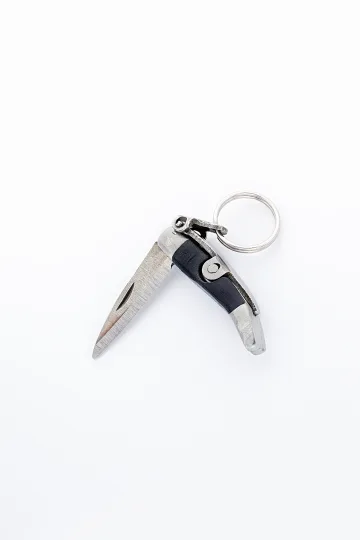
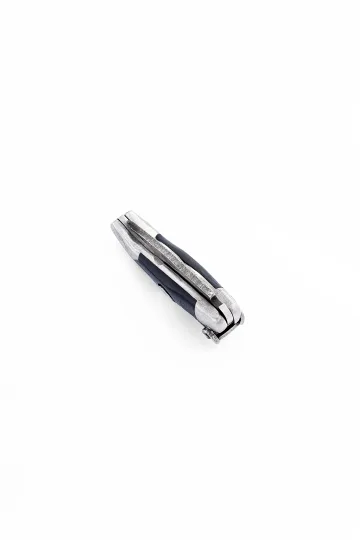
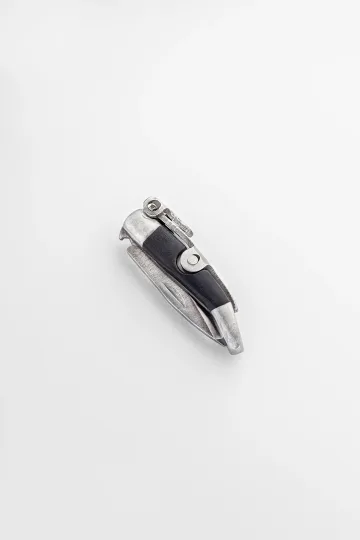
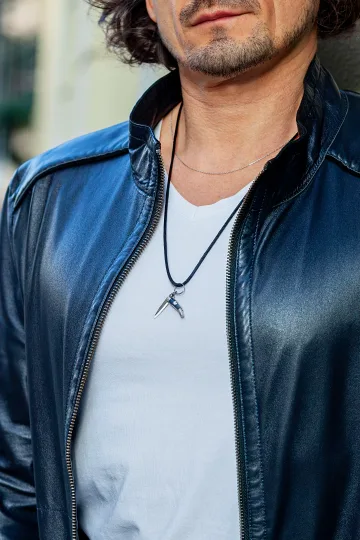
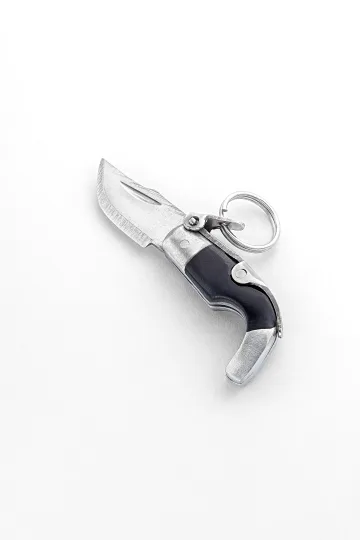
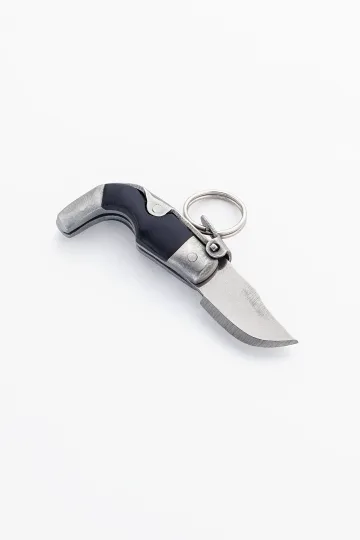
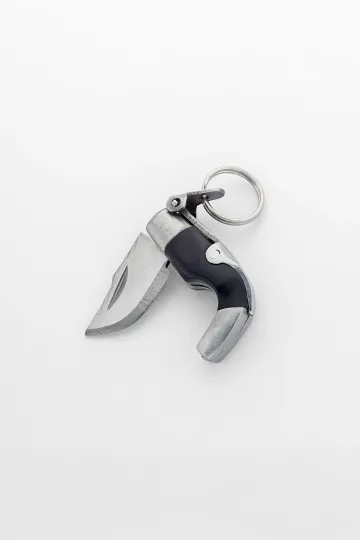
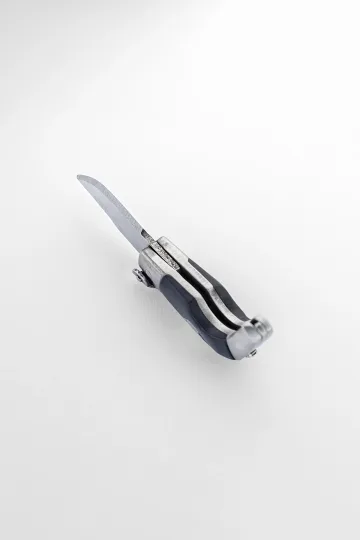
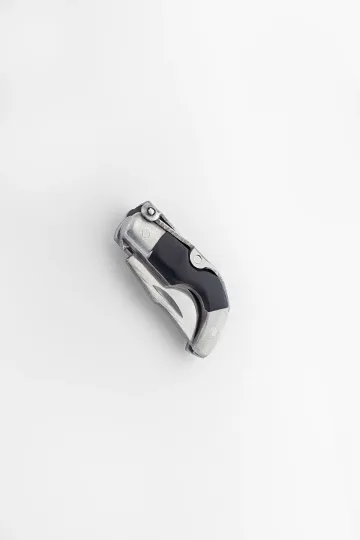
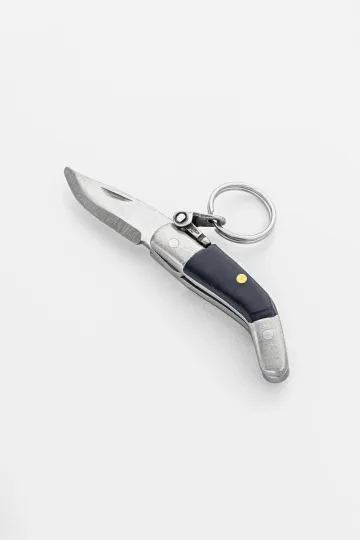
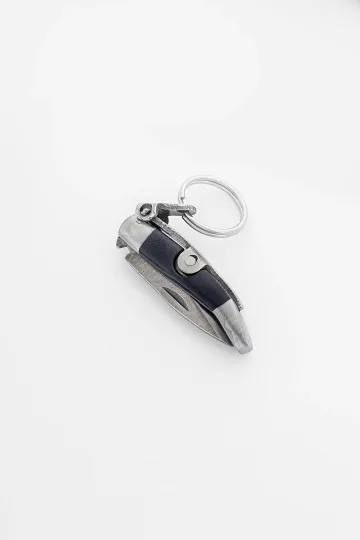
CAPAORA mini knife pendant
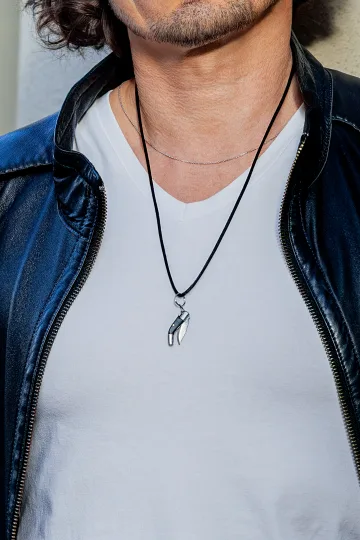
The 18th-century Spanish navaja in miniature: 40 mm of stainless steel, a real folding mechanism and a Palanquilla lock that clicks. An affordable gift to remember.
Authentic · Ships from Spain · 14-day returns
Engraving the coordinates of a meeting place
The practice of engraving the coordinates of a meeting place onto jewellery arose as a direct response to satellite navigation. GPS turned any point on the earth's surface into a pair of numbers, and those numbers turned out to be the perfect content for personal engraving.
Coordinates work as the fede of our time. Two people know what is written on the piece. To everyone else it is just figures. It is an utterly intimate code: not "I love you" in words, but a precise geographic record of a moment.
What to engrave: the coordinates of a first date, of the place where "yes" was said, of the city where two people met, of the home that became shared, of the summit of a mountain climbed together. Coordinates can be engraved in decimal form (48.8566, 2.3522) or in degrees-minutes-seconds (48°51'24"N 2°21'08"E). The first is more compact, the second more traditional.
Technically, engraving coordinates needs no special equipment: laser engraving can place several lines of fine text on the inner surface of a ring or bracelet or on the back of a pendant. The font and style are chosen to match the character of the piece.
On paired jewellery the coordinates can be split: latitude on one, longitude on the other. Together they make a point. Apart they are meaningless numbers. This is literally the logic of halves: each carries a part that takes on meaning only in the pair.
The archetypal meaning: union, choice, the alchemy of joining
The card works on several levels at once, and each of them stands on its own.
On the level of relationships it speaks of the union of two different principles: masculine and feminine, conscious and unconscious, action and feeling. It is a joining in which both remain themselves. The alchemical metaphor of coniunctio, the union of opposites that creates a third thing, is embodied literally in the image of two figures beneath a single angel.
On the level of psychology it is a card of integration: the reuniting of scattered parts of the self. Carl Gustav Jung described the process of individuation as the gradual inclusion of the shadowy and opposing aspects of the psyche. The meeting of anima and animus in his concept is the inner counterpart of what the sixth Arcanum pictures outwardly. When a person finds a partner, they meet their own hidden side in another person.
On the level of ethics it is a card of moral dilemma. The choice it offers is not between good and bad. It is a choice between two values that cannot be kept at once. It is a choice with consequences, adult and irreversible. The card does not say the choice is easy. It says the choice is necessary.
On the spiritual level it is a card of joining something higher through another person. The angel above points to the fact that the union of people reflects a deeper principle of unity, and that through love a person touches that principle.
In the alchemical tradition Waite knew well, the operation of coniunctio was described as the meeting of Sulphur and Mercury, of sun and moon, of fire and water. The result of that joining is something qualitatively other than each component on its own. That is what the Lovers card speaks of at its deepest level: the union of two principles gives birth to a third that surpasses them both.
All these levels exist at once. That makes the sixth Arcanum one of the richest cards in the deck. Everyone who looks at this card sees something of their own in it, and each of those readings is true.
Upright and reversed meaning
Upright: a conscious union
Upright, the Lovers signal harmony in relationships, a choice that matches one's deepest values, a moment when a person stands before an important decision with a clear head.
In the context of relationships this may mean a new bond with a strong resonance, the strengthening of an existing union, or the taking on of a commitment. In the personal context it is a decision that calls for honesty with oneself.
Union here is understood broadly. It may be a romantic relationship, a business partnership, a deep friendship between two people who have decided to build something together. The card does not limit the type of bond.
The key word of the upright position is coherence. A person acts in line with their values. There is no inner conflict, and the outward choice reflects the inner state.
In Tarot practice the upright Lovers often turn up in readings when a person is on the eve of an important conversation, the taking on of a commitment, or the forming of a new union in any area of life. The card does not say what to do. It says: now is the moment for a conscious step, and it is fitting.
Reversed: discord and avoidance
Reversed, the Lovers point to discord. Two people are moving in different directions. A decision has been made under outside pressure rather than from inner understanding. One person pours far more into the union than the other.
It is also a card of flight from choice. A person plays for time, avoids deciding, puts off the answer. The reversed Lovers ask: why are you not deciding? What keeps you in a state of uncertainty?
On the psychological level it is inner conflict. Different parts of the personality pull in opposite directions and find no point of contact. A person is out of touch with their values and so cannot make a choice that will feel right.
The reversed Lovers may also point to a decision made out of fear or out of a wish to please others. Not your own, but someone else's.
Leave your email, we'll send your discount code. No spam, unsubscribe anytime.
The code arrives by email, valid on your first order.
Astrology and elements: Gemini and air
By the system of astrological correspondences worked out by the Order of the Golden Dawn and adopted in Waite's tradition, the sixth Arcanum corresponds to the sign of Gemini.
Gemini is a sign of air, ruled by Mercury. Air represents the element of thought, communication, connection and the exchange of information. Gemini carries in its archetype the idea of doubleness: two principles in one sign, the ability to hold opposing viewpoints at once, plasticity and movement.
This link explains the heart of the card well. The Lovers represent, above all, a choice made through reflection. The mind takes part in this choice alongside the heart. Gemini thinks, weighs, analyses. They can see both sides of the coin. That is exactly why choice is so hard for them: they understand both options too well.
Some traditions also link the card with Venus, the planet of beauty, love and harmony. This is an added layer: the airy mobility of Mercury plus the pull of Venus give the image of a conscious yet still alluring union. Reason and feeling together.
Air as an element is also present in the image of the winged angel. The wings literally belong to the airy element. Raphael, the angel of air, joins heaven and earth, thought and action.
Parallels: myth and literature
Hercules at the crossroads
Prodicus of Ceos, in a text called "Hercules" (around 400 BC, surviving in Xenophon's retelling in the "Memorabilia"), describes the young Hercules visited by two women. The first bears the name Eudaemonia (Pleasure or Happiness), the second is called Arete (Virtue). Each invites him to go her way. Happiness promises ease, pleasures and immediate reward. Virtue offers labour, effort and lasting glory. Hercules chooses Virtue.
This archetype lies directly beneath the Marseille version of the card. But in Waite's version too the theme of choice between two values does not disappear. The serpent behind the woman carries the temptation of the easy road. The flaming Tree of Life behind the man offers the way of effort and growth. The difference is that Waite does not judge either option as wrong in advance.
The Judgement of Paris
Another ancient story with three figures and one choice: the Judgement of Paris. Three goddesses, one golden apple inscribed "to the fairest", one choice with catastrophic consequences for a whole people. Paris chooses Aphrodite and love, rejecting the wisdom of Athena and the power of Hera. It is a choice made without grasping the full consequences, a choice of passion over reason and calculation.
In the context of the Lovers, the Judgement of Paris shows what an unconscious choice looks like: when a person takes what attracts at once, without regard for what stands behind the door. The reversed Lovers warn of exactly this.
Adam and Eve: knowledge as choice
The biblical image Waite used directly carries its own depth. Adam and Eve in the garden before the fall embody a state of original wholeness and innocence. Eve's choice to take the fruit of the Tree of Knowledge was the first truly free choice of a human being, followed by responsibility and history.
The fall, in the Gnostic and a number of other readings, is read not as a catastrophe but as a necessary step toward maturity. Innocence without knowledge stays childhood. Knowledge gained through choice opens to a person the possibility of a full life, including its difficulty.
Waite, as an occultist of the Gnostic tradition, understood it exactly this way: knowledge is worth more than blind innocence, but the price of that knowledge is real.
Orpheus and Eurydice: the price of a choice
In the story of Orpheus and Eurydice the choice sounds different. Orpheus was allowed to lead his wife out of the realm of the dead on one condition: not to look back. On the threshold between the worlds he turns all the same, and loses Eurydice forever.
This is the Lovers in one of their most piercing dimensions: a union that rests on a single decision. The failure to hold a choice that has already been made costs everything. The archetype reminds us that a union is an ongoing decision, one that needs confirming anew each time, not a single act.
Daphnis and Chloe
The Greek novel "Daphnis and Chloe" by Longus (second to third century AD) pictures a pastoral couple who discover love through growing up. Their story is a slow recognition of one another, not an instant attraction. They come to union through experience, through hardship, through understanding. It is a direct embodiment of the conscious union of which the upright Lovers speak.
The Lovers in literature
The image of two people at the crossroads of a choice, and its price, has run through the whole of Western literature, from the archaic shepherd to the modern urban novel.
Tristan and Isolde (twelfth century, the versions of Beroul and Thomas of Britain) is the first great literary union that destroys everything. Tristan chooses Isolde knowing that this choice means betraying the king, exile, and in the end death. Isolde chooses him. Both know the price and choose all the same. This is the reversed Lovers as tragedy: a union that is real but incompatible with the order of the world.
Eros and Psyche from Apuleius's "Metamorphoses" (second century) give the reverse story. Psyche won a union with a god and lost it because she could not hold back and lit a lamp while he slept. Again a prohibition, again a breach, again a price. But this story ends differently: Psyche performs her labours, passes through hell quite literally, and Jupiter returns Eros to her. It is a union restored through labour: the Lovers upright again after the reversed position.
In the nineteenth century, Flaubert's "Madame Bovary" and the great novels of the doomed-passion line showed what happens when a choice is made under the influence of a projection rather than real understanding. The heroine chooses passion and reaps ruin. Such novels are an extended commentary on the reversed Lovers.
In the twentieth century, Marguerite Duras's "The Lover" and Nicholas Sparks's "The Notebook" added one more dimension: love that exists across time, a choice confirmed over years. This is the rarest and most precise image of the upright Lovers: not the moment of infatuation, but a decision two people make anew every day.
The Lovers in cinema
Cinema gave the image of union-as-choice a new visual power. Several films became archetypal for understanding the sixth Arcanum.
Michael Curtiz's "Casablanca" (1942) gave perhaps the most famous cinematic moment of choice. Rick lets Ilsa go. He chooses not personal happiness but the right cause. She chooses her husband. Both make the choice in clear light, and both know what they are losing. This is the Lovers in the reversed position that turns out to be the right one: the refusal of a union as the highest act of union.
David Lean's "Doctor Zhivago" (1965), after Pasternak's novel, plays out the same conflict against the backdrop of historical catastrophe. Yuri chooses Lara again and again, knowing it is impossible. Lara leaves. Two people who recognised in each other their anima and animus are parted not by weakness of will but by history. This is the Lovers against the Chariot, a personal union against the movement of history.
Luca Guadagnino's "Call Me by Your Name" (2017), after André Aciman's novel, unfolds the sixth Arcanum in its Jungian dimension: Elio sees in Oliver what in himself has not yet become himself. Their summer is one long moment of the card, the moment of a choice already made yet still going on. The ending, a parting without explanation, leaves both with what they have learned about themselves through the other. That is what makes the story a story of the Lovers rather than a love affair.
The Lovers in readings
Practical work with the sixth Arcanum in a reading depends on position and surroundings.
A first date. The Lovers in a reading before a first date do not say that the meeting will lead to marriage. They say the person is open to real contact rather than to a game of expectations. The upright Lovers here are a green light for honest presence.
An engagement. The Lovers before a proposal, paired with the Hierophant, point to a union that fits both levels: the personal and the social. Without the Hierophant it is a union still looking for its form.
A crisis in a relationship. The Lovers in a crisis reading, whether upright or reversed, point to the heart of the problem: someone is avoiding the choice, someone made a decision under pressure. The upright Lovers, even in a crisis position, say: the strength of the union is still there, but it needs confirming in words.
A divorce or a parting. The reversed Lovers next to the Moon and the Eight of Swords point to a decision put off for too long. The upright in the same position say the parting is conscious and perhaps fitting: sometimes letting go is also a choice made in clear light.
The Lovers combined with other cards
The Lovers read differently depending on the neighbouring cards in a spread.
With the Hierophant: a union secured by tradition, a rite, a formal commitment. Often literally: a wedding, a registration, a public announcement.
With the High Priestess: a union with much left unspoken. Intuition matters more than words. Sometimes it points to a secret bond.
With the Chariot: the choice is made, now comes movement. The union gives direction and speed.
With the Tower: a union destroyed by outside circumstances or by hidden conflict. If the cards are upright, it is a cleansing break. If both are reversed, destruction with no lesson drawn.
With the Moon: a union under the influence of illusions. One of the two, or both, does not see the partner clearly. Projection is stronger than perception.
With the Sun: a rare and precious combination. A union in full light, the joy of mutuality, a choice that proved itself.
With the Three of Swords: pain within the union, betrayal or loss, three sides where there should be only two.
With the Two of Cups: the ideal combination for a new union. The Lovers as archetype plus the Two as the concrete meeting of two people. This is the most direct "yes" to a question about the start of a relationship.
Send a friend a discount code, they save on their first order.
Jewellery by the symbols of the Lovers
The card is overflowing with images that have long become symbols in their own right within jewellery. Wearing a piece inspired by the sixth Arcanum goes beyond a fashionable nod toward Tarot. It is the choice of a symbol with a concrete, layered meaning.
Paired jewellery: two people, one meaning
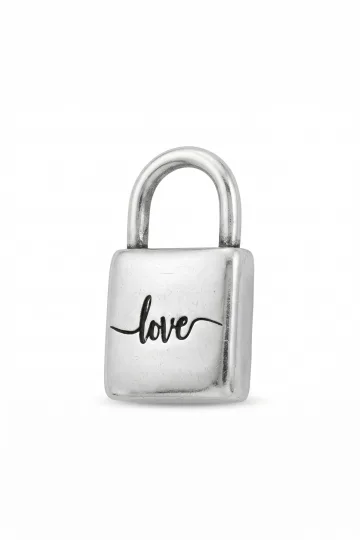
The most direct translation of the Lovers into jewellery: paired pieces worn by two people. Paired jewellery for couples covers a wide range: from pendants with complementary symbols to bracelets with matching engravings, from rings with a single inscription to earrings with mirrored motifs.
The point here is not to look identical. The man and the woman on the card stand side by side but before different trees. Each remains themselves. Paired jewellery works by the same logic: two separate pieces that together make a whole. Different, yet bound.
The principle of complementarity is essential here. Sun and moon, lock and key, two different stones in one ring: all of it is a conversation about a pair as a system of mutual completion, not of merging.
Halves: a separable wholeness
Even more precisely, the image of the card is embodied by paired half-pendants. These are pendants that fold together into a single image: a heart split in two, a puzzle, a key and a lock, yin and yang.
A half without its pair is incomplete. This is literally the structure of the Lovers: two who apart carry only part of the image, and together create the whole. The man without the woman in this system is incomplete, and the reverse. Two trees, life and knowledge, both are needed.
Such jewellery is especially apt in the context of distance. Two people in different cities or countries each wear a half and know: the image exists, it is simply divided. It is the bond made material in the absence of physical presence.
The half-heart as a form goes back to a very old image. In the Greek myth that Plato put into the mouth of Aristophanes in the "Symposium", the original humans were round beings with four arms and four legs. The gods cut them in half, and ever since each person seeks their other half. This myth literally describes the logic of the half-pendant: two parts of one whole that wants to be reunited.
Symbols of love: hearts and their meanings
Symbols of love in jewellery reach back a thousand years. The stylised heart as a form appears in European art from roughly the twelfth and thirteenth centuries, linked first with the courtly love of the troubadours and then with religious symbolism.
In the context of the Lovers two variants are especially apt.
The anatomical heart speaks of a deep, unidealised feeling. It is a choice without romantic illusions, mature and exact. A real heart is an organ that works, not an ideal from a sticker. The anatomical heart in jewellery belongs to people who do not hide their vulnerability but do not turn it into drama either.
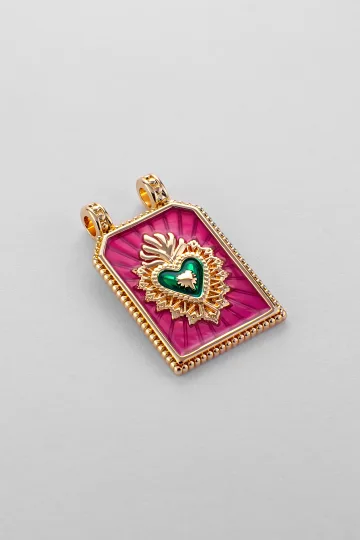
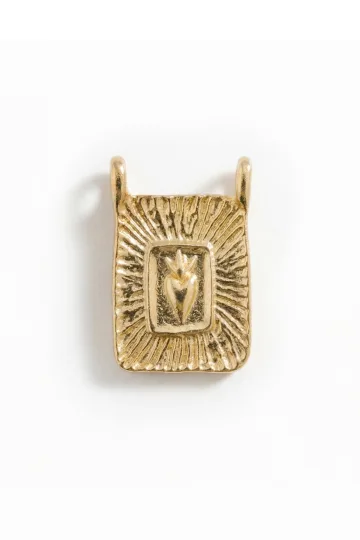
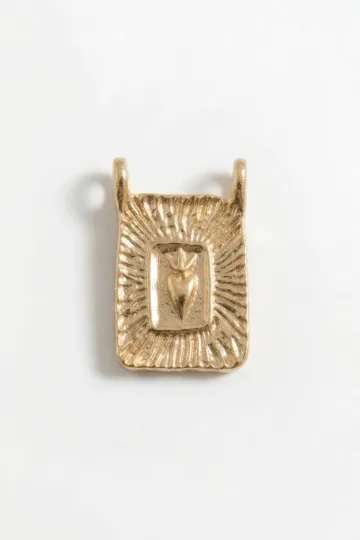
The sacred heart carries the idea of passion, sacrifice and devotion. The flame around the heart corresponds literally to the flaming leaves of the Tree of Life behind the man on the card. It is heat that gives strength rather than consuming. A symbol of serious commitment.
Tree of life: roots and ties
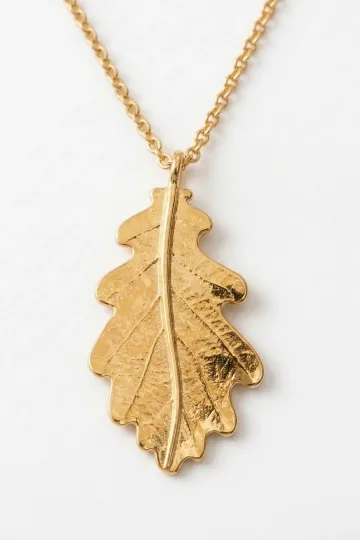
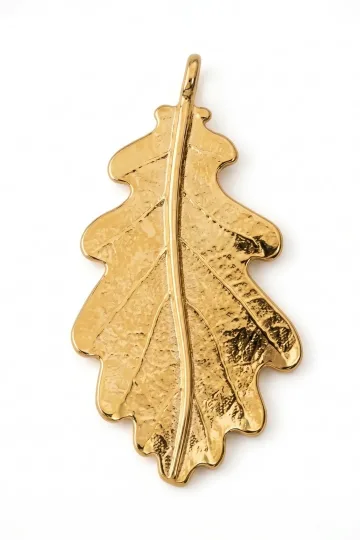
One of the two trees on Waite's card corresponds directly to the tree of life as a symbol, worn across all the cultures of the world. A tree-of-life pendant points to ties: with those who came before us, with those who will come after, with being rooted in something larger than a single moment.
In a pair this is especially apt. The union of two people always carries the meeting of two histories, two families, two life paths. A tree of life in jewellery speaks of this dimension. It is a choice whose roots run deeper than a single day.
The twelve flaming leaves on the card echo the twelve branches of the Celtic Crann Bethadh. The tree of life as a symbol has the character of cyclicality and the connection of worlds, which makes it an exact image for a conversation about a long-term union.
The Claddagh ring: three symbols of union
The Claddagh ring appeared around 1700 in an Irish fishing district of Galway. The craftsman Richard Joyce, returned from captivity to his homeland, made a piece in which three symbols give a complete description of a union: the heart (love), the hands (friendship), the crown (loyalty).
These three qualities correspond exactly to the three levels of the Lovers card: the heart answers to feeling, the crown embodies the conscious decision of loyalty, the hands point to the foundation of friendship without which a union does not last.
The way the ring is worn shows the status of the relationship. It is literally a jeweller's language for marking that very point of choice the card speaks of. Free or attached, engaged or married: the ring carries the answer.
Pendants with the Lovers themselves
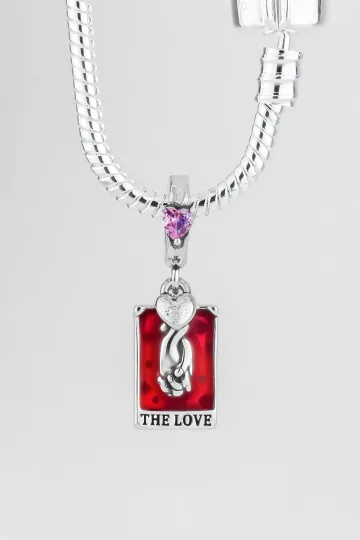
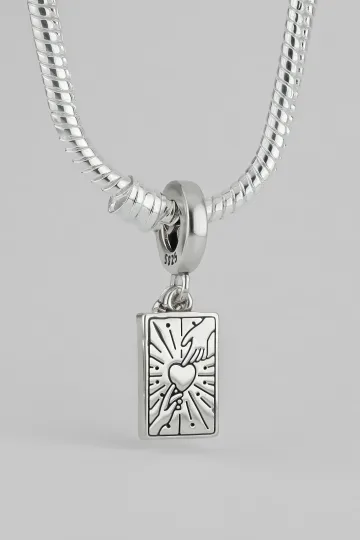
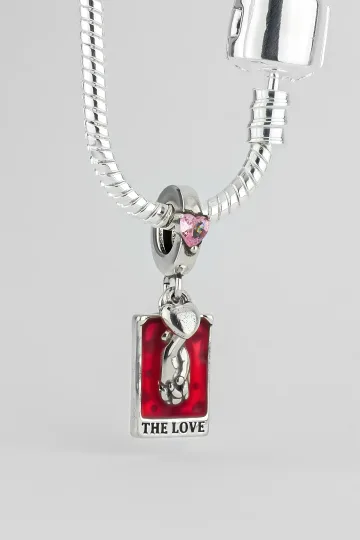
Jewellery bearing the image of the card is another variant. A pendant with the sixth Arcanum carries the whole imagery at once: the angel, the couple, the symbol of choice. Such a piece suits someone who identifies with this card as their own archetype, or who wears it at the moment of an important decision as a reminder: a conscious choice matters more than outside circumstances.
The popularity of Tarot-card jewellery has grown noticeably in recent years. The reason is that the cards offer a rich visual language with concrete meanings: to wear the Lovers is to mark, concretely, one's intention or one's value. The piece turns from decoration into a statement of will.
For more on Tarot-card jewellery in general, read our guide to Tarot jewellery, and the breakdown of the three main cards, including the Lovers, is in the article on the meaning of Tarot cards.
The link with other cards in the deck
The Lovers are in constant dialogue with several cards of the Major Arcana.
The Hierophant (V) comes before them and stands for authority, tradition, faith in institutions. When the Hierophant hands the baton to the Lovers, there is a shift from collective law to personal choice. This is not a denial of tradition but its overcoming for the sake of something more personal and honest.
The Chariot (VII) follows the Lovers. If the sixth Arcanum embodies the moment of choice, the Chariot embodies the movement that comes after it. A person who has made a choice now knows the direction and can move with will and discipline.
Justice (VIII or XI, depending on the tradition) echoes the Lovers in the theme of responsibility. Every choice has consequences, and Justice recalls this with the precision of the scales. The scales of Justice balance what the choice of the Lovers sets in motion. These are a pair of cards that complete each other in meaning.
The Sun (XIX) shares with the Lovers the symbol of solar radiance. If the Lovers represent the moment of choice, the Sun is the result of the right road, joy and fullness. A detailed breakdown of these cards is in the article on the meaning of Tarot cards.
The Two of Cups in the Minor Arcana is often seen as a direct counterpart of the Lovers on a more concrete, everyday level: two people, two cups, a toast to the union, a mutual commitment without the grand angel above. Where the Lovers speak of the archetype, the Two of Cups describes the concrete meeting of two people in ordinary life.
Buying it as a gift? Each one arrives ready to give.
 A branded Zevira box and a little card come with every order.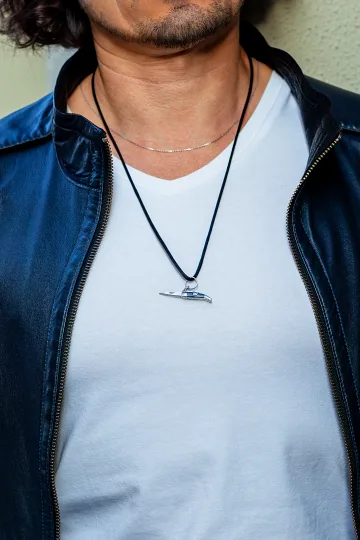




Who these pieces are for, and when to give them
A new couple
The beginning of a relationship is literally the moment of the card: the choice is made, the union is only taking shape. A paired pendant or rings at this moment becomes a symbol that makes the decision to be together material. A considered sign, not a hasty gesture.
The meaning of the gift matters here. A paired piece at the start of a relationship says: I choose this. I choose to be in a pair that wears one symbol. It is not a lifelong vow, but it is a conscious step.
An anniversary
An anniversary returns people to the point of the original choice. A piece in Lovers symbolism becomes a reminder that the choice is made anew every day. It is not a single event of the past but an ongoing decision that both people confirm.
For long relationships, pieces with a tree of life or half-hearts are especially fitting. They speak of depth, of a union that has put down roots.
An engagement
An engagement is literally the moment of the Lovers: a public commitment, a point of choice with serious consequences. A Claddagh ring or paired pendants as an accompanying gift add a symbolic layer that goes beyond the traditional engagement ring.
For an engagement, pieces with the three symbols of union are especially apt: love, loyalty, friendship. A Claddagh ring or pendants with a similar three-part symbolism speak directly of what makes up the foundation of a serious commitment.
Closest friends
The sixth Arcanum is not limited to romance. A deep friendship is also a union of two people built on a choice. Paired half-pieces have long become a language of friendly loyalty: bracelets with matching symbols, pendants with complementary images, rings with a single engraving.
The meaning does not change here. Two people who have chosen to be important to each other wear the sign of that choice. It is the very structure of the Lovers: two people, one meaning.
A personal milestone
A person standing before an important decision in life, before a change of direction or the end of one chapter and the start of another, sometimes chooses a piece with Lovers symbolism as a reminder to themselves. Not of a pair, but of the fact that a conscious choice is an act of strength. That the moment of decision matters. That a choice in the light is better than a drift through fog.
This way of wearing jewellery has a tradition centuries old. Ancient rings and pendants with mythological imagery were worn as talismans, reminding the wearer of a particular value or quality. A piece with the archetype of the Lovers in this tradition says: I choose awareness in my bonds, and I confirm that choice each time I put it on.
For such a case, a pendant with the Lovers card or with a paired heart symbol is fitting. To wear it alone means: I am in union with my values.
Frequently asked questions
Are the Lovers in Tarot only about love?
The card is called the Lovers, but its main theme is choice. Love appears here as the most telling context, because it is in relationships that a person most often faces the need to make a life-changing decision. But the same card speaks of a career decision, of a break with an accustomed way of life, of a moral dilemma of any scale. What matters is not the subject of the choice but its character: conscious, responsible, made in full light.
What does the angel Raphael on the card mean?
Raphael is the angel of healing, of air, and of connection. His presence above the couple points to a union under the protection of a higher power, one that is neither accidental nor fleeting. At the same time the angel of air is tied to Gemini, the card's astrological correspondence, and underlines the theme of thought and communication as the foundation of a union. The name Raphael means "God heals", which speaks of the healing nature of a true union.
What is the difference between the Marseille L'Amoureux and the Waite-Smith Lovers?
The Marseille version pictures a man between two women with a Cupid above: a choice between two paths, often read as a choice between virtue and vice. Waite's version shifts the emphasis from a choice between two outer options to the union of two principles, masculine and feminine, consciousness and feeling. The Marseille card asks "what will you choose?", while Waite's version offers: "look at what it means to be two". Both images have substance; they simply place the emphasis differently.
Why is the tree with the serpent behind the woman and not the man?
It is a reference to the biblical text, where it is the woman who takes the fruit from the Tree of Knowledge. Waite and Smith did not read it as a condemnation of the feminine: in their system the woman is closer to feeling, intuition and knowledge through experience, the man closer to will and action. Both qualities are needed, neither is above the other. The serpent in this context carries the Gnostic meaning of a bearer of knowledge, while the temptation itself is seen as its instrument.
Which zodiac sign is linked with the Lovers card?
Gemini. A sign of air, ruled by Mercury, the planet of communication. This explains why the card is first of all about choice, and choice calls for thought: Gemini thinks, analyses and weighs. They can see both options clearly, which makes the choice both rich and hard. The airy nature of the sign echoes the winged angel on the card.
Can you wear a Lovers piece if you are not in a relationship?
Yes. The card speaks of choice and union in the broad sense. A person who wears it as a personal symbol may mean anything: a union with their own values, a conscious choice of life path, an intention to build deep bonds, including friendships or professional ones. A piece with the sixth Arcanum worn alone means: I am at a point of choice and I look at it in full light.
What is the difference between paired pendants and half-pieces?
Paired jewellery is two separate pieces with a matching or complementary motif, worn by two people. Half-pieces literally picture one image split into two parts: a half-heart, a piece of a puzzle, one side of a key and lock. The first speak of harmony and parallel, the second of incompleteness without the pair. Both variants work by Lovers symbolism, but with a different emphasis. If you want to say "we are alike", you choose paired pieces. If you want to say "I am part of you, you are part of me", you choose halves.
How do you choose a gift on the theme of the Lovers?
It depends on the context and on what exactly the gift needs to say. For a new couple, paired pendants with simple, clean symbolism work well: two complementary symbols, one metal, one inscription on both. For an anniversary it is better to choose something with depth: a tree of life, a Claddagh ring, or a piece with a story you can explain. For an engagement, in addition to a ring, half-pendants or pieces with the three symbols of union work well. For closest friends, choose what they will both wear with pleasure: bracelets with matching details, small paired pendants, something to wear every day without a second thought.
The main criterion in choosing: the piece should carry a meaning that both people understand. If one person sees in a Claddagh ring just a pretty ring while the other invests in it the whole ritual of wearing and the meaning of the three symbols, that creates an asymmetry. A symbol works when both understand what it is about.
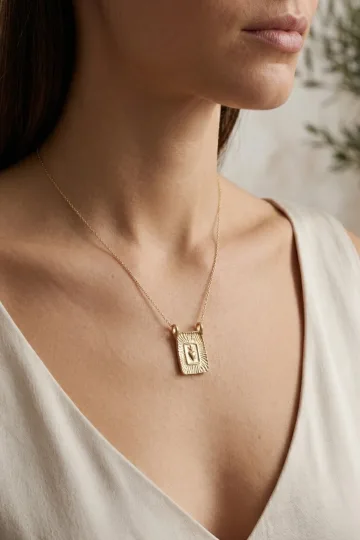
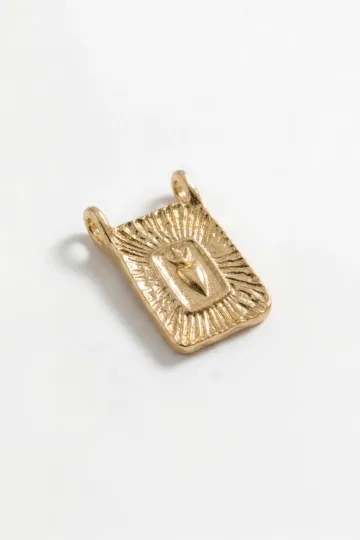
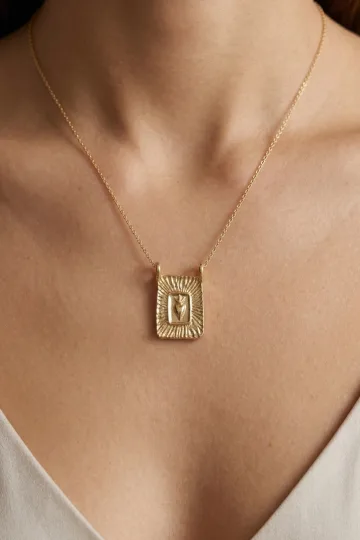
Wear the symbol, don't just read about it. These are in stock:
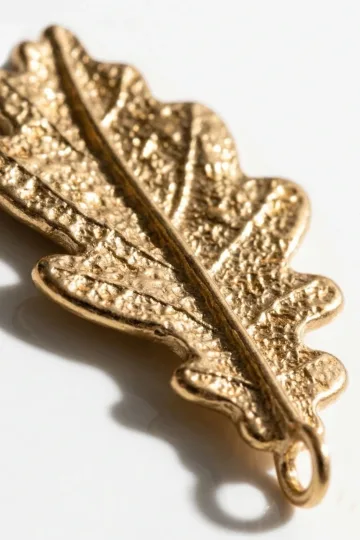
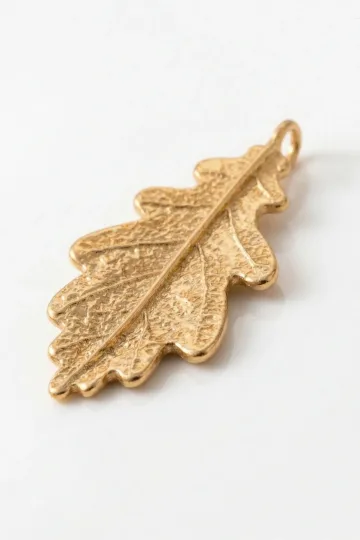
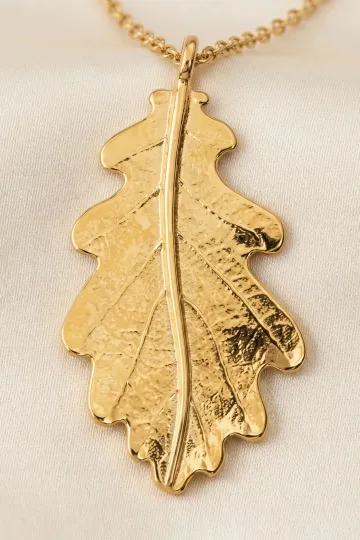
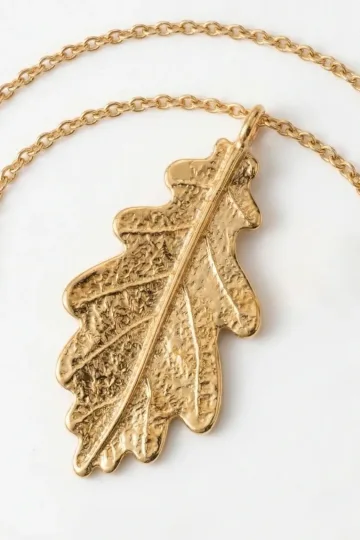

Conclusion
The sixth Arcanum has lived in European culture for almost six centuries, and in that time it has changed its face several times. A wedding scene, an allegory of moral choice, a biblical couple in a garden. But one thing stayed constant: the card sets a person before a question that cannot be sidestepped.
Every symbol on the Waite-Smith card is exact. The angel speaks of the higher recognition of the union. The Tree of Life behind the man and the Tree of Knowledge behind the woman say that two people come to a union each with their own, different self. The pyramidal mountain between them speaks of the real distance between two inner worlds. The sun above them all says the choice is made in the light, not in darkness.
The angel Raphael above the couple is not decoration. He is the healer, the traveller, the patron of unions, the one who walked beside Tobias and brought him to Sarah. The twelve flaming leaves on the Tree of Life and the twelve fruits on the Tree of Knowledge are the zodiac twice over, the fullness of knowledge and the fullness of life joined through choice. The path Zayin with its dividing sword reminds us: every "yes" contains within it all the other "no"s, and that is not a tragedy but the price of an adult decision.
Jewellery made after these images carries the same meaning in metal and stones. A paired pendant asks: who are you with? A half-heart says: I am incomplete without you. The Claddagh ring lists what a union is made of: love, loyalty, friendship. A tree of life on a pendant points to the fact that any choice has roots deeper than a single moment. Engraved coordinates of a meeting place fix the point on the map of the world where two paths crossed and became one.
What stands out is that Lovers imagery works both alone and in a pair. To wear a piece with this archetype without a partner means: I am at a point of choice and I look at it with clear eyes. To wear it together means: we chose each other, and that choice we carry on ourselves.
To wear such a piece is to remember the choice. Not the one made some time ago, but the one made every day.
Silver, gold, wedding rings, symbolism, paired sets.
About Zevira
Zevira makes jewellery in the artisan tradition of Albacete, Spain. The Lovers Arcanum is the archetype of conscious choice, and paired jewellery is our strong suit: halves, paired pendants, wedding rings with double engraving.
What you can find with us in Lovers symbolism:
- Paired "half" pendants of one whole
- Paired bracelets and pendants with the coordinates of a meeting place
- Claddagh rings as a symbol of friendship, love and loyalty
- Pendants with a tree of life (the tree of knowledge on the card)
- The anatomical heart as a modern variant
- Paired pendants for closest friends
Every piece can be personalised with engraving, with the option of personal engraving. We work with 925 silver and 14-18K gold.