Jewellery for Emigration and New Citizenship: What to Give and Why It Should Be a Piece of Jewellery
Introduction: not a souvenir
Most farewell gifts for a friend who is emigrating end up being a fridge magnet with a skyline on it or something "to remember home by". That is the worst possible choice. A gift like that reminds the person that they left. A piece of jewellery reminds them who loves them. Around 281 million people in the world live outside the country where they were born. Every single one of them, at some point, held their first foreign document in their hands and understood something quietly: the connection to the people left behind now lives only in objects.
This is a piece about jewellery as the language of transitions. What to give when someone close to you opens a new chapter in a new country. What to give yourself when you receive a new citizenship. How to say "welcome" through a piece of jewellery. And why the parents of a child who has moved abroad sometimes need a gift just as much as the emigrant does.
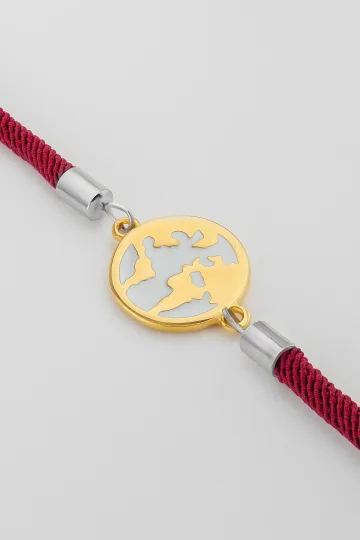
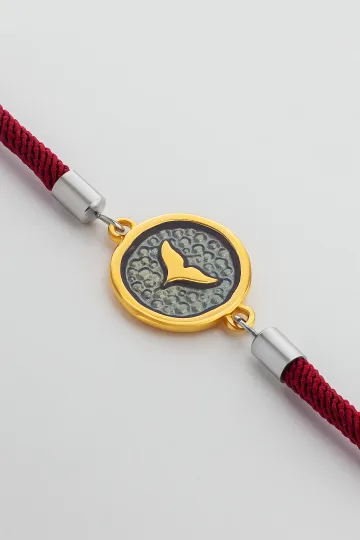
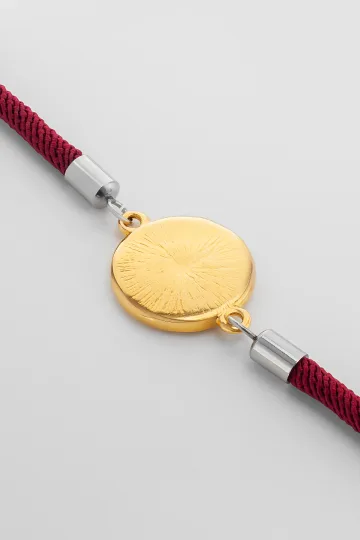
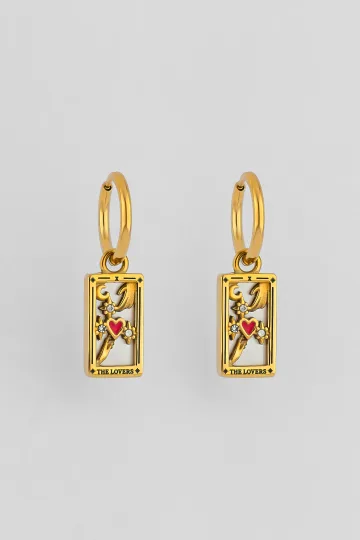
Wear the symbol, don't just read about it. These are in stock:


Emigration as a rite of passage
The French ethnographer Arnold van Gennep, writing in 1909, described the structure of transition rituals across cultures. He identified three phases: separation from the old state, a threshold period, and incorporation into the new. Weddings, initiations, funerals, first communions, graduation ceremonies: all of these share a similar three-part shape.
Emigration fits this pattern more precisely than it first appears.
The separation phase begins months before departure. Handing back the keys to the flat. Giving away belongings. Farewell dinners. Last visits to relatives. A person stops belonging to their old place before they ever board the plane. Social roles shift: from resident to someone who is leaving. That is already a different status.
The threshold period, which van Gennep called the liminal phase (from the Latin limen, meaning threshold), is the time between departure and the achievement of a full new status. The visa. Temporary residence. A residence permit. Waiting for citizenship. Sometimes it lasts months, sometimes years. During this period a person hangs between two identities: no longer there, not yet fully here. The anthropologist Victor Turner, who developed van Gennep's ideas in the 1960s, called this state "neither-nor": the subject of a liminal ritual is neither here nor there, neither one thing nor the other. This is often the psychologically hardest stretch: no roots in the new place yet, the old place already turned into memory rather than reality.
The incorporation phase ends with a symbolic act: receiving a new passport, a citizenship ceremony, a first mortgage, or simply the morning when you catch yourself thinking, this is my home.
A piece of jewellery chosen to mark such a transition works as a ritual object in the literal anthropological sense. It gives material form to an invisible relationship and fixes a moment that otherwise exists only in memory.
What research says about "ambiguous loss"
The Polish-American psychologist Pauline Boss introduced the concept of "ambiguous loss" to describe situations where a person has not fully gone: alive, but unreachable, present in memory, but physically absent. Boss began this work in the 1970s with families of prisoners of war and the missing, but the concept was later applied to a far wider range of situations, including the emigration of loved ones.
The family left at home goes through a particular kind of grief: the person is alive, doing well, but simply not there. Traditional rituals of mourning do not apply, because there is no one to "bury". The parents of a child who has moved abroad find themselves in a strange position: proud, anxious, missing them, glad for their successes. The emotions refuse to settle into a single tidy feeling.
A gift that the person carries away with them, or leaves with those who stay, is a small attempt to give that relationship a form. A tangible object you can wear, one that says: the bond exists regardless of distance.
Ritual objects in the history of transitions
Most cultures had practices of giving meaningful objects at the moments of important transitions. The wedding ring as a marker of new status. The locket with a portrait that a soldier leaving for war left with his wife. The cross used to bless someone setting off on a long journey. The earrings a mother fastened on her daughter on her wedding day.
The logic in all these cases is the same: a transition that cannot be undone needs to be marked by an object that records it. Jewellery in this context is a marker of the moment, and beauty is secondary.
Moving to another country, as a kind of transition, has been less ritualised in modern culture than, say, a wedding, even though in terms of how much it changes a life the event is comparable or even larger. In recent years this has started to shift: people are actively looking for ways to mark receiving a new citizenship or residence with the same solemnity as other milestones.
A compass rides bare skin at the collarbone, never buried under a scarf. A landmark no one can see is just called lost.
How to wear relocation jewellery
Dozens of these travelling gifts have passed through my hands. Here is what actually works when a symbol crosses a border with someone.
How do I wear a compass or anchor every day? For daily wear I recommend a small compass or anchor pendant on a thin 45 cm chain. It sits in the neckline of a tee, a roll-neck or a shirt and argues with nothing. Against plain knitwear, a denim shirt or light linen, silver reads as a personal detail rather than an accent. A thin ring with an engraving inside I suggest wearing without taking it off, it lives on its own.
Is it right for the office in a new place? Yes, as long as you keep it restrained. When someone is only settling in and does not want to stand out, I choose a minimalist form and a muted metal. A pendant under a closed collar, a flat bracelet under a cuff, a ring without relief: the meaning is close, but not on show. Oxidised silver is more fitting here than the shiny kind, it is quieter.
How do I build the look for ceremony day? For a formal entrance I suggest an open or V-neck and a smooth fabric in a deep colour: wine, navy, emerald. A larger pendant belongs here, 4 to 5 cm, on a shorter chain so the symbol rests near the collarbones. Gold adds warmth and weight. Wear the piece for the first time on that very day, and it will be bound to the moment forever.
Silver or gold, and can I mix them? I look at what the person wears in ordinary life. I recommend silver for every day and gold for a moment you want to mark with weight. Mixing metals stopped being a mistake long ago: a gold symbol on a silver chain plays out the theme of two worlds, the place you left and the place you reached.
What about paired pieces and layering? A paired piece I choose to fit the style of each of the two, not a shared template: a good pair is jewellery both will wear gladly. Several chains at once work if they are different lengths and there is one noticeable element while the rest stay thin and quiet. A rule that never fails: one meaningful piece per look, the rest is background.

Turn on your camera, pick earrings, a pendant or a ring, and see the piece on yourself in real time.
Switch items in one tap.
Everything runs in your browser: no photo or video is ever uploaded.
A gift from the one who stays: "you are not alone"
When a friend or relative moves to live in another country, one of the most human reactions is to give them something they will carry with them. Not as a souvenir of the past, but as a sign that the relationship continues.
Jewellery serves this purpose better than most alternatives. It is light: it will not eat into an already overflowing suitcase. It is durable: it will not spoil in transit and will not lose its meaning a year on. It is worn on the body: the person who has left can literally keep a piece of those close to them on them every day.
But the main thing is that jewellery says what is hard to say out loud. When words fail, or sound too heavy, the object speaks for you. And it goes on speaking afterwards, every day, whenever the person puts it on.
Compass: a new direction and an inner bearing
A compass in jewellery carries the symbolism of a chosen path and an inner bearing. It is not a navigation instrument but an image of the fact that a person has their own direction. Wherever they end up geographically, their inner compass knows what matters.
The history of the compass as a symbol is rich. The compass rose in jewellery goes back to the navigation charts of the age of exploration, when quite literally every seafarer trusted their life to a compass. By placing such a symbol around their neck, a person takes on something of that courage and that precision.
A compass pendant or a ring with a compass rose becomes a fitting marker for someone opening a new chapter. An engraving on the back can record the date of departure or a simple message: "Know your way."
The compass works especially well as a gift from those who stay behind: you are, in effect, saying, "you have an inner bearing, you will not get lost, whatever happens on the other side."
The compass pairs well with other symbols: a compass rose plus the coordinates of two cities on a single piece gives you a complete story in one object.
Anchor: support and hope in a new place
The anchor as a symbol has one of the longest histories in jewellery. In early Christian iconography the anchor was a symbol of hope: the anchor holds the ship, hope holds the soul. Later it became a secular symbol of steadiness and loyalty.
A piece with an anchor suits someone starting to build a life in an unfamiliar place. The message is not "stay tethered to the past" but something quite different: you are able to hold steady in a storm, you will find your footing where it does not yet exist. The anchor does not drag you to the bottom; the anchor keeps you from being swept away by the current.
For the liminal phase, that very "neither-nor" period Turner described, an anchor carries an almost practical meaning: you have something steady inside while everything outside is still undecided.
This is a gift offered with faith in the person, not with regret about their leaving.
Lighthouse: a bearing that always stays put
The symbolism of the lighthouse has many layers. The lighthouse is "I will wait for you". The lighthouse is a bearing for anyone out on the open sea. It does not move towards you; it stands where it stands and says: here is the shore, here is the direction, here is safety.
In the context of emigration a lighthouse pendant carries several meanings at once. From those left behind: "we are here, if you ever need a bearing, we have not gone anywhere." From the person to themselves: "I have an inner lighthouse, I will not lose my way."
Giving a lighthouse to someone who is leaving means saying: you have the strength not to get lost. It is not a promise of an easy road, but faith that the person will find their direction.
Paired pendants: a shared bond split between two
Paired jewellery is often taken to be a strictly romantic genre. But best friends, sisters and brothers, parents and children have long used it too. The point is that one piece exists only because the other exists, like two halves of one story.
A paired pendant in an emigration situation carries a particular value: it fixes the relationship physically. One stays here, the other flies there. Two bracelets with the same symbol. Two pendants that complete a single image when held side by side. Halves like a heart or a key with its lock, split between two shores.
Each time one of the two people looks at their piece, they know: an identical one is on someone on the other side of the planet. This is not literal separation but a confirmation: we are both part of one story, no matter how many time zones lie between us.
A practical note: when choosing paired jewellery, make sure both pieces suit the style of both wearers. A good pair is jewellery each person will wear with pleasure, not keep in a box out of respect for the gift.
A gift from the host side: "welcome"
There is another situation people often overlook: a new colleague has moved to your country. Or a new friend has become part of your life in a new place. How do you welcome their arrival with something more meaningful than a bottle of wine or an envelope with a gift card?
A piece of jewellery with the symbolism of a new beginning or a new home is a way to say something that is hard to put into words in the first weeks of knowing someone: we are glad you are here. You have become part of this place. You are welcome.
A gift like this also says something about the host: people live here who think of others, people here know how to welcome.
Infinity: a bond with no breaks
The infinity symbol in jewellery speaks of continuity, of a relationship that is not broken by distance or change. It is a fitting gesture from new friends or colleagues: we met in a new place, and that meeting matters.
A piece with an infinity symbol from the host side carries the meaning: this bond, which is only just beginning, is real. We are not temporary neighbours, we are people who have entered your life.
Infinity works well as a gift from a group: several colleagues or friends can choose such a piece together for a new member of the team.
Tree of life: roots and new branches
The tree of life is one of the universal symbols found in cultures all over the world. The roots reach into the earth, the branches stretch towards the sky. It is an image of the bond between past and future, between where you came from and where you are going.
For someone only beginning to put down roots in a new place, a piece with a tree of life from the host community says: there is enough soil here, there is room for your roots. Bring your own, add ours.
This is a gift that needs no long explanation: the symbol is understood intuitively in most cultures.
Lighthouse from the hosts: "we will be your bearing"
To give a lighthouse from new friends or a community to someone who has just moved means saying: while you learn this new place, we are here, we are your bearing. You can ask, you can lean on us, we are not going anywhere.
For an occasion like this, complex symbolism is not required. A small, beautifully made piece with a warm note explaining the choice says more than a utilitarian gift of any value.
Upload a photo of your pet, someone you love, or an object. We'll build a 3D model and hand-cast it in pewter.




A gift to yourself on receiving new citizenship
A naturalisation ceremony is a moment many describe as unexpectedly moving. People from different countries, speaking with different accents, reciting the words of an oath in a courtroom or a council office. A new passport. Sometimes tears. Always an enormous relief after years of waiting.
A moment like that deserves to be marked on purpose.
Giving yourself a piece of jewellery on receiving a new citizenship is not buying for the sake of buying. It is a ritual. The chosen object becomes a marker of the date: from this moment my documents call me something else. From this moment I hold a different passport. I have come through the liminal phase.
Coordinates on jewellery: two places, one story
A pendant or bracelet with coordinates engraved inside or out is one of the most personal formats. You can engrave the coordinates of the city where you were born. Or the city where you received citizenship. Or both at once, on two sides of the piece.
Coordinates as a format are especially precise when you want to hold not a date but a place. Right here, at these coordinates, the thing that changed my life happened. This approach is close to what is discussed in the article on unconventional gifts for important transitions: jewellery as a marker of place and moment.
There is one more format: a pendant with two coordinates (from where and to where) as a visual image of the distance crossed. Between those two points on the globe lies a whole life.
Labyrinth: a hard path walked to the end
The symbolism of the labyrinth, contrary to the popular stereotype, is not about wandering and dead ends. A classical Knossos-type labyrinth has a single continuous path that leads to the centre. No false turns, no dead ends. There is a long, demanding, winding route that in the end takes you exactly where you need to be.
A piece with a labyrinth is fitting precisely when a person has walked a hard path and reached the goal. Receiving citizenship after several years of bureaucratic procedures, a few refusals, a few interviews is exactly that case. The final point of the labyrinth has been found.
A labyrinth as jewellery also carries the meaning: I did not get lost. However many loops there were on this path, I walked it and I arrived.
Infinity: both identities living at once
To give yourself the infinity symbol on receiving citizenship is to say: my two identities, the old and the new, do not cancel each other out. They exist at the same time, with no break, no renunciation.
For people experiencing a split sense of self (who am I now: the one I was, or the one I have become?), the infinity symbol carries an exact meaning. Not "either-or". "Both-and". Both stories go on.
A ring with an infinity symbol, worn on the day of the naturalisation ceremony, is jewellery for decades. Every time the person looks at it, they return to that day. And to what they decided for themselves on it.
The Fool of the Tarot: the leap into the unknown made
In the Tarot deck the Fool is card zero. A young man stands at the edge of a cliff, looking at the sky, not down. A small bundle over his shoulder, everything he needs. A drop beneath his feet. The unknown ahead. But there is no fear in his stance, only readiness for the next step.
The Fool in jewellery has become a symbol of the voluntary leap into the new without guarantees. That is exactly why it fits the emigration situation so well. A person who decided to move to another country took the Fool's step: deliberate, without a safety net, towards an open horizon.
The nuance that makes this symbol especially fitting: the Fool is not reckless, he is simply unafraid to begin. The zero card means: I am starting over. Not because the past was bad, but because something new lies ahead, and I am ready.
A piece with the Fool is an acknowledgement of one's own courage. An honest conversation with yourself: what I did took nerve. And that nerve deserves to be marked.
Customer reviews
Zevira is a real jewellery shop. Genuine payments, deliveries and customer thank-yous.
🥰🥰🥰 gracias

Ok, ¡gracias! 🙂

A gift to parents from the child who left: the other side of emigration
One of the most underrated threads in the subject of emigration is what the parents who stay at home go through.
The child who has left is usually busy surviving in the new place: the language, housing, work, paperwork. The parents at home go through their own version of the same experience, only without the busyness. They have time to feel the empty room and the silence in the chat between calls.
Giving parents a piece of jewellery on leaving, or already from the new place, means saying: I remember that this is my story too. You let me go, and that took strength as well.
What to give parents whose child has left
Tree of life as an image that the roots are alive even when the branches have gone far. A piece with this symbol, given to a mother or father on leaving or after, carries the meaning: I grew from your roots, and they are in me wherever I go. The tradition of sending a mother jewellery as a sign of gratitude and connection is old and needs no explaining.
A paired bracelet or pendant: one part leaves, the other stays. It is a concrete conversation about the bond continuing. When a mother looks at her bracelet, she knows: the matching one is now on the other shore. Distance does not erase that.
A piece with the coordinates of the new place as a sign: now you have an address to which thoughts can be "sent". It may sound sentimental, but parents often describe exactly this: they want to know the coordinates, because it makes the place concrete. Not "somewhere across the ocean", but this latitude, this longitude. My child lives there.
A date on the piece: sometimes the date of citizenship or the date of departure, engraved on the back of a locket, is enough. A mother will look at that date not as a loss but as a milestone in her child's life. As a fact of biography to be proud of.
Lighthouse: a gift the child gives the parents before leaving says: I will be your lighthouse, you will always know that I am here. You can take your bearings from me, as I took mine from you.
The psychology of the reverse gift
Research on transnational families shows that exchanging gifts across distance matters both for the recipient and for the giver. For the child who has left, who often feels guilt towards the parents left behind, the act of choosing and sending a gift, especially a deliberate, meaningful one, is a way of saying: I am thinking of you. I have not forgotten that I left you there.
It lifts some of the weight carried by people who have moved away from family on their own.
Engraving: words that travel with the jewellery
Engraving is a particular layer in a gift. It turns a piece of jewellery from a beautiful object into a personal artefact. After engraving, a pendant or ring no longer has any other owner; it was made for one person at one moment in life.
What to engrave in the context of moving and new citizenship:
The coordinates of two cities. The coordinates of your home city on one side. The coordinates of the new city on the other. This says: I belong to both places at once. There is no opposition, there are two addresses.
A date. The date of citizenship, the date of the first day in the new country, the date of departure. One date, not a single extra word. Just "12.03.2025" on the back. Each time the person picks up the piece, that date will remind them: here is the moment that changed everything.
The first letter of a name on each side. Or two names, yours and that of the one who stayed. On small lockets this takes up less than a centimetre but holds a whole world.
Words in the language of the new home. A short phrase in the language of the country you are moving to. Or in the language of home. Something that reminds you why all of this. A language on a piece is also a declaration: this language is mine now.
Navigational data. A bearing. Latitude. Longitude. For those who love precision and concreteness more than poetry. Navigational coordinates on a piece of jewellery sit somewhere between cartography and poetry.
A counter. A year or an ordinal number: "Year one". For those who want to mark each year of life in the new country.
The technical side of engraving
Laser engraving allows text from 1 mm in size and suits fine detail and complex symbols such as coordinates. The result is crisp and uniform. Hand engraving gives a warmer, more alive result: small irregularities of the tool are visible, and the piece takes on the character of something made for a specific person by a specific craftsman. Both methods work on silver and gold.
When ordering engraving, settle the details in advance: exactly what, in which typeface, in which language, on which side. If it is a gift and you know precisely what you want to say, formulate it ahead of time. Good engraving takes time.


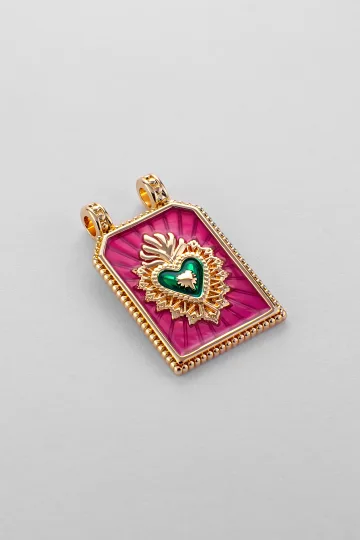


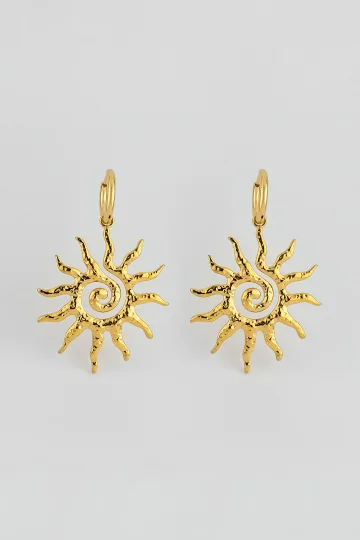

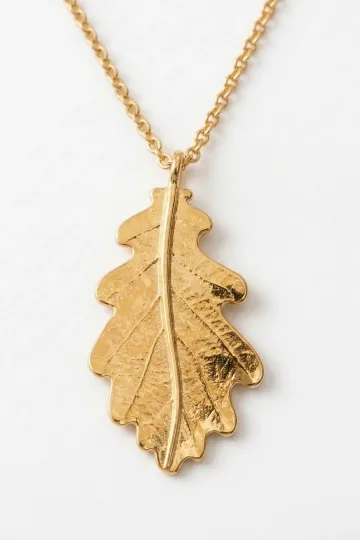
Jewellery for a relocation: a detailed look at the symbols
Each of the symbols mentioned in this piece deserves its own conversation about why exactly it works in the context of emigration and new citizenship.
Compass and compass rose
The compass was historically the instrument of those who set off into the unknown. Seafarers, explorers, the first cartographers. All of them moved into places without bearings, and the compass was their only link to a system of coordinates.
In a figurative sense the compass is an inner system of values and direction. A person who knows "where their north is" does not lose their way even when the external markers vanish. Moving to another country means losing many external markers: the language, the familiar routes, the people you know. The inner compass matters more in a situation like that than ever.
A piece with a compass or compass rose suits both the emigrant (as a reminder of that inner bearing) and a gift from those who stay (as faith that the person has that bearing).
Anchor
The anchor in maritime tradition never meant stillness for the sake of stillness. The anchor is a tool: it lets the ship hold where it needs to while cargo is loaded, while sailors rest, while they wait for a fair wind. Then the anchor is raised and the ship goes on.
For an emigrant the anchor is an image: when everything feels unstable, there is something that holds. Not forever, but long enough to gather strength and move on. A good metaphor for the first years in a new country.
The maritime symbolism of the anchor is also linked to hope: in early Christian catacombs the anchor was drawn in place of the cross (the anchor resembles a cross at its lower part) as a sign of hope. That meaning survives in the phrase "anchor of hope".
Lighthouse
The lighthouse is a particular kind of bearing: it is stationary, but everyone out at sea knows of it. It does not come towards you, it simply shines. Reliably, without pause, whatever the weather.
For a person in the liminal phase of emigration the lighthouse is an image of what stays constant when everything around is changing. The home you left. The people who stayed there. Or something inner: values, convictions, the things that make you yourself.
A pendant or ring with a lighthouse works especially well as a gift in the first months after a move, when a person has not yet found their place.
Paired jewellery with halves
When two people share a single piece, it is not a break but a continuation. Paired halves physically embody the thought that separation does not mean a break.
The classic heart halves are familiar to everyone. But there are other options: a compass split between two people. One keeps the upper half with north, the other the lower with south. A lighthouse and a ship split between those who stayed and the one who sailed away. A tree split so that one has the roots and the other the crown.
Labyrinth
The labyrinth as a symbol is unfairly reduced to "a confusing place". The classical labyrinths of antiquity and the Middle Ages had only one path, no forks. It was a route of meditation: enter, reach the centre, come back out. The difficulty lay in the loops and the length, not in choosing a direction.
The labyrinth in jewellery carries exactly this meaning: the path was long and demanding, but it led where it needed to. Whoever reached the centre of the labyrinth (received citizenship, settled into the new country) did precisely what was required: kept walking.
For a gift to yourself at the end of a long bureaucratic road it is one of the most precise symbols.
Infinity and dual identity
The infinity symbol in a jewellery context is often used in romantic symbolism. But its meaning is broader: two loops joined at a single point are an image of two entities existing at once without contradiction.
For a person with two citizenships or two mother tongues it is literal: I am from there and from here, both parts of me are real. The infinity symbol refuses the question "who are you really" and offers the answer: both at once.
Tree of life
The tree of life is one of the few symbols present in practically all world cultures: the Norse Yggdrasil, the Kabbalistic Tree of Life, the Celtic Crann Bethadh, the Islamic tree Tuba. Each tradition reads it in its own way, but the common thread is one: the bond between the roots (the past, the ancestors, where you came from) and the crown (the present, the future, what you are becoming).
For an emigrant this is an especially precise image. The roots are where you grew up. The crown is here, where you live. A tree does not die when its roots are far from its crown. It grows.
The history of gifts at moments of transition: where the tradition comes from
The tradition of giving jewellery at the turning points of life is far older than it seems. There is no need to go into the distant past; the last few centuries are enough.
In Europe between the seventeenth and nineteenth centuries there was a firm custom of giving jewellery to those setting off on a long journey. Sailors before a long voyage received lockets, crosses, bracelets from wives or mothers. Soldiers carried portrait miniatures. The first emigrants to the New World took family jewels with them as the only material embodiment of the life they were leaving.
Interestingly, in this tradition jewellery served a double function: it carried personal meaning and at the same time held practical value. In an emergency a piece could be sold or pawned. But that very fact made jewellery as a farewell gift especially weighty: a person was given something valuable for a new life, as well as a sentimental object.
In nineteenth-century Britain and Ireland a particular tradition formed, tied to mass emigration. Mothers gave departing children small pieces of jewellery or lockets as "a part of home". This was so widespread that the letters of nineteenth-century Irish emigrants to their families preserve descriptions of these objects: mother's cross, grandmother's ring, father's chain.
In the twentieth century, after the Second World War, millions of people were forced to move or be evacuated. Among the personal belongings of refugees and displaced persons, jewellery took up a disproportionately large place: it is light, it is valuable, it carries identity. That experience fixed in several generations an understanding: jewellery is not a luxury, it is portable memory.
Today emigration is often voluntary and planned. Suitcases are far larger. Passports more accessible. Planes fly every day. But the human need to mark such a transition with a meaningful object has not gone anywhere. It is simply looking for new forms.
Why jewellery in particular, and not something else
You could give a watch. Or a painting. Or good clothing. Why is jewellery especially precise for this moment?
Several reasons that work together.
Jewellery is worn on the body. Not on the wall, not on a shelf, not in a cupboard. On the body. That means the symbol literally touches the person every day. For an emigration situation, where a person loses many of their habitual physical contacts, a tactile, wearable object with a story works differently from an object standing on a shelf.
Jewellery travels without losses. A book is heavy. A painting is fragile. Clothing takes up space. Jewellery fits in a jacket pocket and survives a twelve-hour flight unharmed. That makes it an ideal gift for the road.
Jewellery is durable. Sterling silver and gold survive decades. They do not date the way clothing or electronics do. A piece with good symbolism is just as relevant twenty years on as on the first day.
Jewellery scales by meaning. A small pendant can carry enormous meaning. A thin ring with an engraving inside that no one sees but the wearer is a very private conversation with yourself. A large pendant with a labyrinth is a public statement about your path. One category of objects, but different registers of conversation.
Jewellery creates a point of return. Each time a person puts it on or sees it in the mirror, they can briefly return to that moment. Not with sadness about the past, but with the memory of who they are and where they came from. That is psychologically valuable when everything around is unfamiliar.
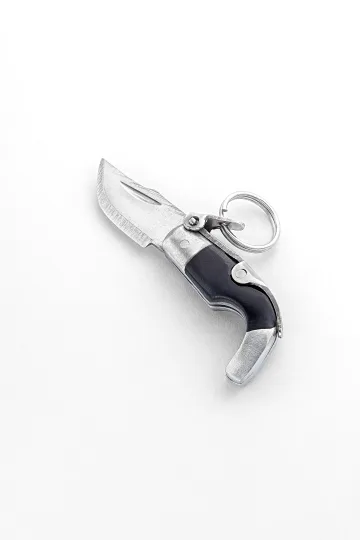
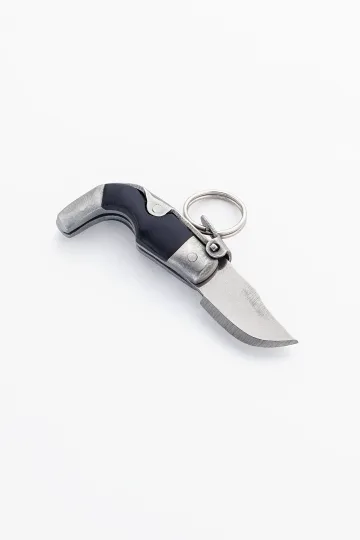
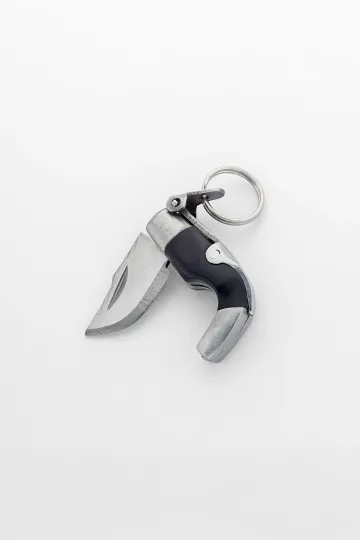
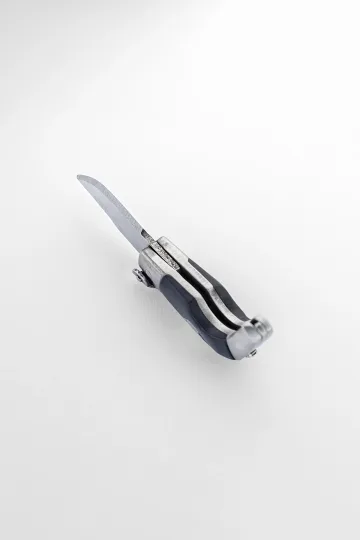
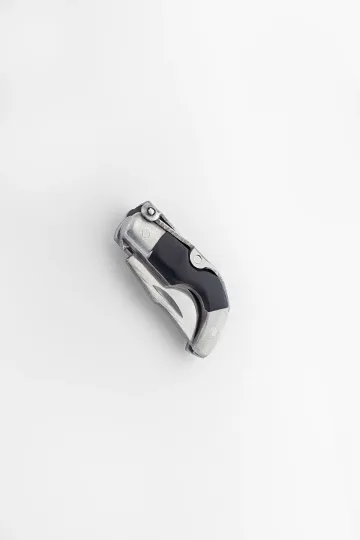
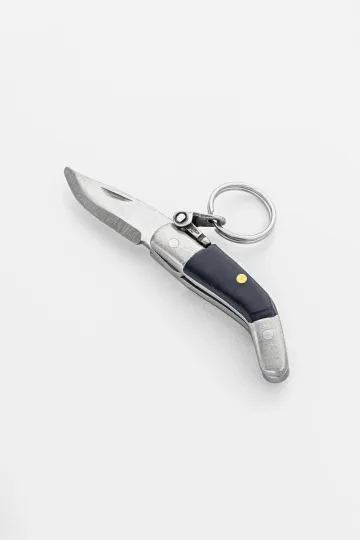
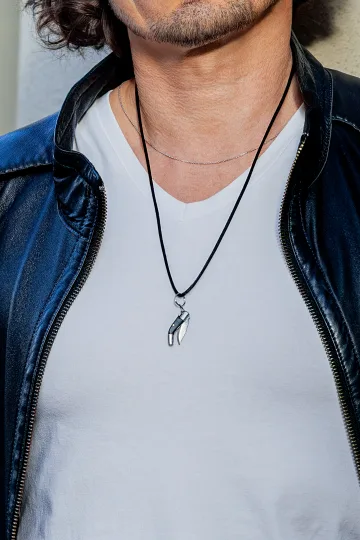
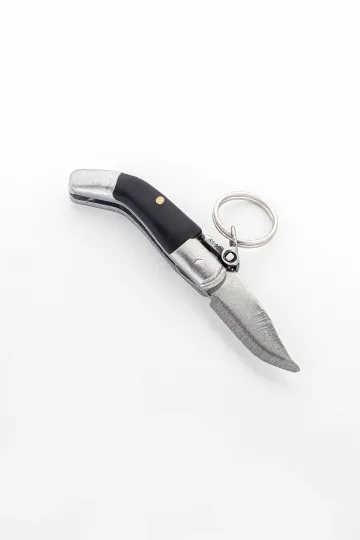
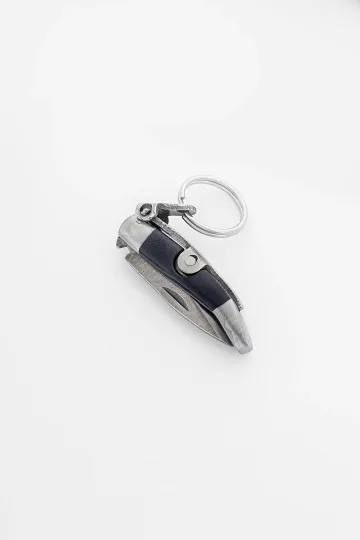
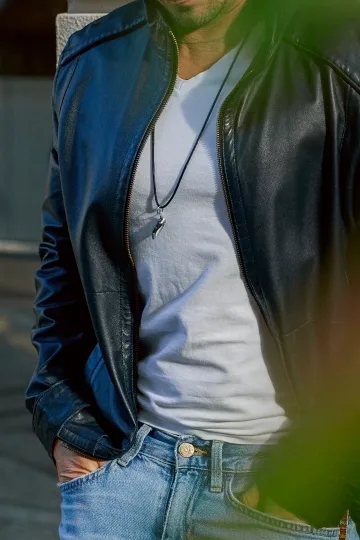
CAPAORA mini knife pendant
The 18th-century Spanish navaja in miniature: 40 mm of stainless steel, a real folding mechanism and a Palanquilla lock that clicks. An affordable gift to remember.
Authentic · Ships from Spain · 14-day returns
Materials and form: practical advice on choosing
Jewellery is chosen both for its symbolism and for how it will live in everyday wear. A few practical considerations.
Sterling silver as the main choice
Sterling silver (925) is the most versatile and affordable option for jewellery with symbolism. It:
- Takes engraving of any kind well
- Goes with any style of clothing
- Does not cause allergic reactions in most people
- Looks equally at home in everyday wear and at a formal ceremony
- Stays affordable even when well made
Silver darkens over time, and that is normal. A dark patina on a relief symbol (compass, lighthouse, labyrinth) deepens the detail and the visual depth. Many people deliberately do not polish silver, letting it age: the patina makes a piece feel more alive.
Oxidised silver, deliberately darkened, gives a sharper contrast and often conveys the depth of a symbol better. An anchor with dark recesses and bright relief reads differently from the same anchor in shining silver.
Gold (14K): for the solemn moment
Gold (14K) does not tarnish and needs no special care. It suits those who want to underline the weight of the moment. Yellow gold carries a warm, classic look. White gold appears more modern and more neutral. Rose gold adds softness and romance to symbolism that might otherwise seem too stern.
Gold works well as a gift to yourself on the day you receive citizenship: there is something right about investing in such a moment with something genuinely valuable.
Form and size
For everyday wear the optimum is: a pendant of 2 to 3 cm on a chain of 45 to 50 cm, a thin ring 1 to 3 mm wide, a flat engraved bracelet. These are pieces you put on in the morning and take off before bed (or never take off).
For a more noticeable look: a pendant of 4 to 5 cm, a ring with a relief symbol, a bracelet with a three-dimensional element. A piece like that draws the eye and opens a conversation.
Remember that the person will be wearing this piece in a new environment. If they are moving into a conservative office culture, jewellery that is too noticeable may be uncomfortable. A minimalist option with personal meaning works anywhere.
Chains and bracelet clasps
People often choose a piece without thinking about how it fastens. A good chain to a pendant is as important as the pendant itself. A thin chain of 0.8 to 1 mm looks good with a small pendant. A chain of 1.5 to 2 mm is better with a medium pendant. A Venetian or anchor chain holds its shape better than a thin openwork one.
For bracelets: a lobster clasp is more convenient than a box clasp if a person takes the bracelet off every day. If permanent wear is planned, choose something you do not need to open daily.
Jewellery and the language of the new home
One of the less obvious aspects: an engraving in the language of the new country.
When a person engraves a word or phrase in a language they are still learning, it is an act of acceptance. Such an inscription sounds like a declaration: this language is mine now. I speak it uncertainly, I make mistakes, but I have chosen it as my own.
A few options for such engraving:
The word "home" in the language of the new country: "home", "heim", "hogar", "maison". Simple and precise.
The date of naturalisation in the new country's format: in some countries dates are written differently (year-month-day or day/month/year). Using the local format is a small detail of acceptance.
The name of the city as it is said locally: not a transliteration from your own language, but the name the locals use. That too is a small gesture of accepting a new place.
A short phrase in the language, meaningful to the wearer. Something that sounds right precisely in that language and has no perfect equivalent in your own.
Pieces like this are especially valuable because they create daily contact with the new language. Each time a person sees the engraving, they say the word to themselves. A small lesson, repeated every day.
Style archetypes: which piece suits whom
The same thing does not suit everyone. Before choosing a piece, work out what is closest to the recipient.
Deep meaning, worn every day
The best option for most. A small pendant on a chain that can be worn daily without drawing attention. Sterling silver or 14K gold, a minimalist form of compass, anchor or infinity. The wearer thinks of the meaning, outsiders see simply a beautiful piece.
This archetype suits people who wear jewellery in everyday life as well as on special days. Ideal for those who want the symbol always close, but not on display.
Architectural symbolism: jewellery as a statement
A large pendant with a labyrinth or compass that becomes the centre of the look. Well made, noticeable. For those who want the piece to "work" in conversation: people ask what it is and get the chance to tell their story.
A piece like this suits people who are open to talking about their path and proud of it.
Minimalism without open symbolism
A thin ring with an engraving inside, a bracelet with a date, a pendant with coordinates. A piece that looks neutral on the outside but carries meaning solely for the wearer. It suits those who prefer the meaning to stay private. No one needs to know what it stands for.
The paired format
When it matters to underline the bond between two people specifically, paired jewellery with a shared motif speaks more precisely than any words. It is not two identical pieces, it is one piece in two parts.
Leave your email, we'll send your discount code. No spam, unsubscribe anytime.
The code arrives by email, valid on your first order.
How a piece links two lives: stories from practice
To understand better how such a gift works, it helps to look at concrete scenarios. Not real names, but real situations that recur again and again.
Scenario one: a best friend moves to the other side of the ocean
They had been friends for twelve years. Met for coffee every week. One received an investor visa and is moving to Canada. The other stays.
The one who stays does not know what to give. Books? Her friend reads in English too. Money? Awkward. Clothing? A different climate, a different style. In the end she chooses two bracelets: one with a compass, the other with a matching symbol. She gives one to her friend and keeps the other.
Later she says: "When I feel low without her, I look at the bracelet. And I think that somewhere out there she is wearing the same one. It is not sad, it is like a conversation without words."
That is what a piece of jewellery does that no other gift does.
Scenario two: a gift to yourself on the day of the naturalisation ceremony
He waited four years for citizenship. A visa. A renewal. A refusal. An appeal. A new application. Finally, a letter with the date of the ceremony.
On the day of the ceremony he made a point of going to a jeweller's before heading to court. He bought a silver ring with a labyrinth. He put it on right there, in the shop. He arrived at the ceremony wearing it. The documents recorded his new official name. The ring held his old name, engraved on the inside.
"I wanted both versions of myself to be in one object on that day."
Scenario three: parents given a piece on departure
She left when she was twenty-eight. Before leaving she went to a jeweller and engraved the coordinates of the new address on a locket. She gave the locket to her mother. She gave her father nothing, she did not know what to choose. She regretted it later.
A year on, when she received her residence permit, she sent her father a bracelet with the date and his initials. She wrote in the chat: "This is for you, because you were the first to teach me not to be afraid."
These stories repeat with different details but with the same result: a piece of jewellery becomes the carrier of relationships that otherwise do not know where to live.
Jewellery as an object of identity in a new environment
When a person moves to another country, they often face the question: who will I be here? Local people perceive them through the lens of an accent, an appearance, documents. The person themselves looks for ways to keep a sense of self in an environment where no one knows them.
Jewellery in this context works like a small anchor of identity. It does not change depending on how those around perceive you. A compass on a chain will be a compass in any country, with any accent, with any passport.
Anthropologists who study emigrant communities note that personal objects brought from home mean especially much during the adaptation period. They create a "personal space" inside an unfamiliar environment. A person can walk an unfamiliar city, speak a language that is not their own, live in a flat without personal things, and still wear around their neck a pendant that knows them.
This is not sentimentality, it is a psychological function: jewellery gives continuity of a personal story in a situation where everything external is being renewed.
Dual identity and jewellery
One of the most interesting themes in emigration research: how a person combines two cultures, two languages, two sets of values within themselves. Sociologists speak of a "hybrid identity": not a blend and not a choice of one, but the existence of two systems of coordinates at once.
A piece whose symbolism fits both contexts supports this hybrid identity. Infinity belongs to no single culture. A compass is understood everywhere. An anchor needs no explaining. These symbols work as a bridge between two versions of a person.
When one side of a piece holds the coordinates of one city and the other those of another, it is not a split and not a choice. It is both at once. That is exactly how people with dual citizenship feel, or those who have long lived somewhere other than where they grew up.
What NOT to give
Some options seem logical at first glance but work badly in this context, or even against the intention.
The flag of the old or the new country. National flag symbolism in jewellery sounds political and is tied to a specific state. Emigration is always the personal story of a specific person. National symbolism in place of personal symbolism simplifies and impoverishes the gift.
A typical souvenir of the place of departure. Tourist landmarks, national symbols, regional ornaments. This is a tourist's view of a place, not what a person carries away in their memory. A good piece should not be a fridge magnet that merely happens to be made of precious metal.
Jewellery that is too heavy or too fragile. The logistics of a move are unforgiving. Large enamel brooches risk not surviving several flights. Choose something you can put on right now or tuck into a travel case without risk of breaking it.
Overblown amulets with a vague meaning. A four-leaf clover "for luck", a horseshoe, a general charm "against all evil". If a symbol is not tied to a specific person and a specific story, it stays a wish on the level of a greeting card.
Jewellery with document symbolism. A pendant shaped like a passport or visa, a piece with a map of the destination country. This turns a serious moment into a joke rather than a marker.
Too personal without agreement. A piece with a portrait of the person staying behind, or with a photograph, can have the opposite effect: a reminder of loss rather than of connection. A good piece for such a moment works with symbols of transition and path, not with images of separation.
When to give: before, after or on the day
The moment of giving affects how a gift is received and what it carries.
Before departure: support and accompaniment
A gift a day or two before departure or at the airport says: I thought about this in advance. I chose it for you even before your new beginning. You will leave with this from the very first step.
A piece given before departure travels with the person from day one. It is associated with those who stayed, not with the new place. It is a gift "from the past", and there is more love in it than distance.
Fitting options: a compass (you have a direction), a paired pendant (we both carry this), an anchor (you will find your footing).
After arrival: welcome and inclusion
A gift from those who meet or wait at the new place says: welcome to your new life. There are people here who are glad to have you.
It is a gift "from the future": it is associated with the new place from the start. Receiving a piece from new friends, a person links it with acceptance, not with parting.
Fitting options: infinity (the bond does not break), tree of life (you can put down roots here too), lighthouse (you have a bearing in this new place).
On the day of citizenship or the passport: the final point
The most precise moment for a gift to yourself. Or for a gift from the family that waits at the new place.
This is not about the start of the path, the path is already walked. It is about its completion and a new definition. A piece with a date or coordinates. A labyrinth whose final point has been found. Infinity as the acceptance of a dual identity.
Sometimes receiving a passport comes with a solemn ceremony, sometimes not. A personal ritual, even a modest one, such as putting on a new piece on this day, gives the moment a weight that a bureaucratic procedure does not always provide.
The etiquette of the one who stays
This is an important subject that is rarely discussed openly.
When someone close leaves for a long time or for good, those who stay sometimes feel the urge to make the parting as solemn, as "correct" as possible. A gift in this context can become part of an attempt to "say goodbye properly" in a way that makes you feel better yourself.
A few things will help to get the tone right.
The gift should be about them, not about you. The piece you choose should match the style and taste of the one leaving, not embody your feelings about the parting. If a friend wears thin minimalist jewellery, a heavy locket with photographs will not suit them.
Do not turn the gift into a way to hold on. "Wear this and remember who you really are" may sound sweet, but it carries an anxious subtext. A piece should support a person in their new choice, not stir up guilt or nostalgia as a tool of holding on.
There is no need to explain too much when giving it. A short note explaining the symbol with warm words works better than a long monologue. A piece should speak for itself. If a symbol needs a lecture to be understood, it is probably the wrong one.
Respect the choice. The most important element of etiquette in an emigration situation. The person has made a hard decision. A gift, however meaningful, is not the place to voice your doubts or disagreement with that decision. A gift is support. Either it is that, or it is not a gift.
Send a friend a discount code, they save on their first order.
The psychology of the divided family
Research on transnational families, families living across several countries, shows several stable patterns.
Maintaining a sense of closeness at a distance, what researchers call "proximity despite absence", requires deliberate effort. Video calls matter, but they are not always enough: they happen on a schedule, in the frame of a screen, with a lag in the headphones. A physical object that is constantly near a person works on a different level.
Research on transnational families shows that material objects brought from or linked to the country of origin help first-generation emigrants hold on to a sense of self. Jewellery as one such object is both a keepsake and an anchor of identity, literally and figuratively.
Something else is interesting: research shows that exchanging gifts across distance matters both for the recipient and for the giver. The act of choosing, buying and handing over a gift sustains a sense of active participation in the life of someone close, even when physical presence is impossible. Parents who have sent their child a piece for the day of citizenship feel present in that day.
Jewellery in this context has a further advantage: it can be chosen together at a distance. A video call browsing a catalogue, a joint discussion of symbols, is itself a ritual of closeness that happens before the piece is even bought.
A comparison: jewellery against other gift options for someone moving
A popular question: why not a book, not money, not something practical?
Each option has its place. But jewellery has several practical and symbolic advantages that work especially well in a relocation.
Money is universal but impersonal. At a critical moment it is needed, but as a marker of transition it says nothing. Practical gifts for a new home (bed linen, kitchenware) are appropriate but tied to a specific place and time. In five years the bed linen will be replaced, while the jewellery remains.
A book is ideal as an intellectual gift, but it takes up space in a suitcase and exists in only one language version. When moving to a country with a different language, a book in your original language may, over time, end up in a box rather than on a shelf.
A digital gift (a subscription, a card) is practical but immaterial. There is no object to hold in your hands, to put on, to set on the bedside table.
Jewellery: light, durable, worn on the body, it does not lose meaning when the setting changes and works in all languages at once.
The naturalisation ceremony: why this day should be lived consciously
Citizenship ceremonies exist in many countries in different formats. Somewhere it is a solemn event in a courtroom or council hall with an oath, an anthem and a passport handed over by a representative of the state. Somewhere it is more modest: an office, a signature, an envelope with the document.
Those who have gone through a solemn ceremony often describe an unexpected experience: in this room are people with different stories, different accents, different paths. A small child who understands nothing. An elderly person who walked towards this for twenty years. A young couple. A lone figure in an expensive coat. Each came to this moment in their own way, but on this day they all say the same words.
It is one of the few places where the shared bond is real rather than declarative.
A personal ritual on this day, such as putting on a piece of jewellery, adds a personal dimension to the official part. The official ceremony speaks of who you have become in the legal sense. The personal ritual speaks of what it means to you.
Many describe such a day as inexplicably intense: nothing special happened on the outside, but inside something shifted. A piece worn on this day fixes that inner shift.
How to create a personal ritual around citizenship
A few things you can do to mark the moment on purpose.
Choose the piece in advance, that is, before the day of the ceremony. Think it over. If engraving is needed, order it ahead of time. The waiting itself is already part of the ritual.
Put the piece on only on this day, that is, for the first time. Do not wear it before. The first wearing will be bound to a specific moment.
Photograph the piece next to the passport or the text of the oath. This is documentation: twenty years on, that photo will say everything at once.
Tell someone close about it. Or write yourself a short note: what I felt on this day, what I thought. The piece is an object, but the story around it makes it an artefact.
Buying it as a gift? Each one arrives ready to give.
 A branded Zevira box and a little card come with every order.








Dual citizenship and jewellery: when there are two passports
More and more people live with two passports. The first received at birth or in childhood. The second earned over years of life in a new country. Both are real. Both are yours.
Jewellery for a person with dual citizenship is a separate conversation.
Two symbols joined in one piece. A compass as an image of navigating between two realities. Infinity as a metaphor for "both at once". An anchor that holds in both places at the same time, you cannot be torn loose if you are rooted twice.
An engraving with two dates: the date of the first citizenship and the date of the second. Or the coordinates of two cities. Or a monogram in which both stories are encoded.
Some choose two separate pieces: one tied to the first citizenship (a date of birth or the coordinates of the home city), the other to the new one (the date of naturalisation). They are worn together, like two chapters of one story.
Dual citizenship is a legal fact, but for those who hold it, it is above all a feeling: I can be fully one and fully the other. A piece that embodies this duality says what is hard to put into words.
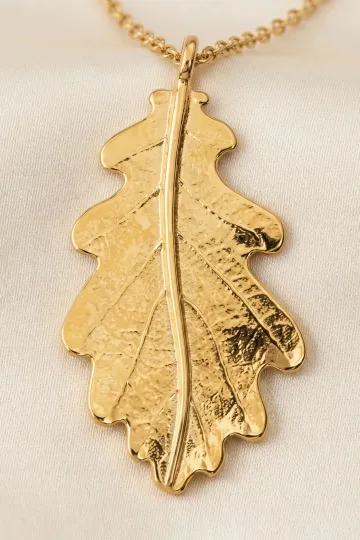
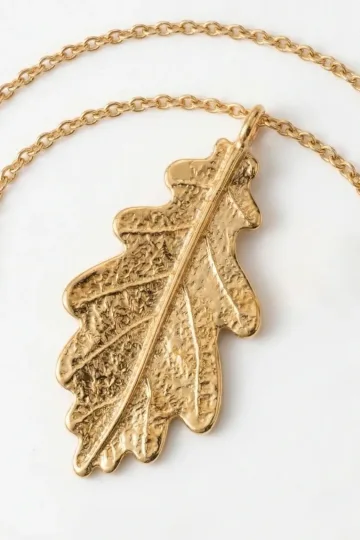
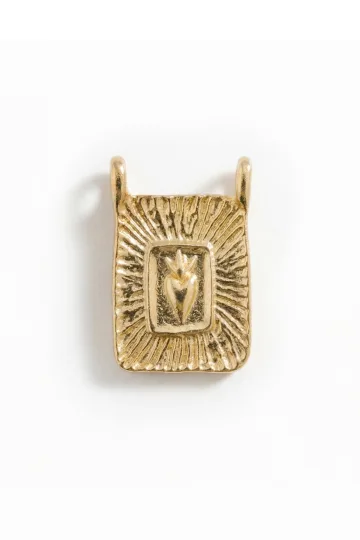
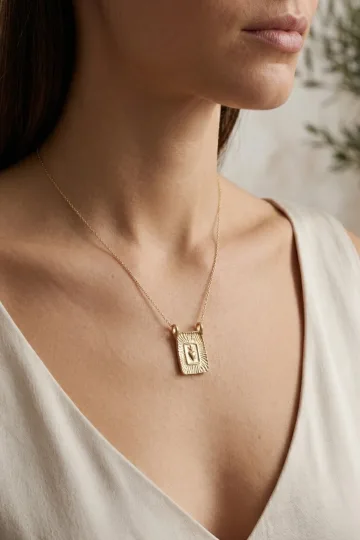
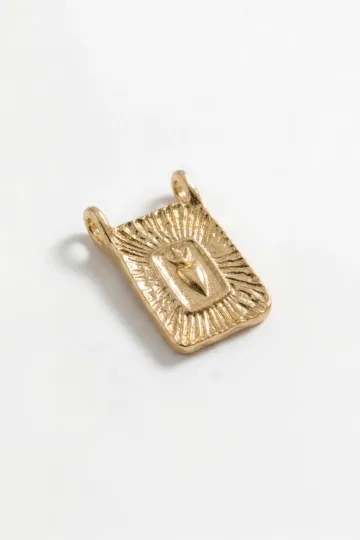
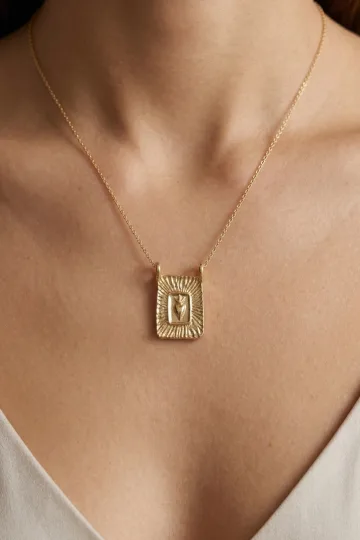
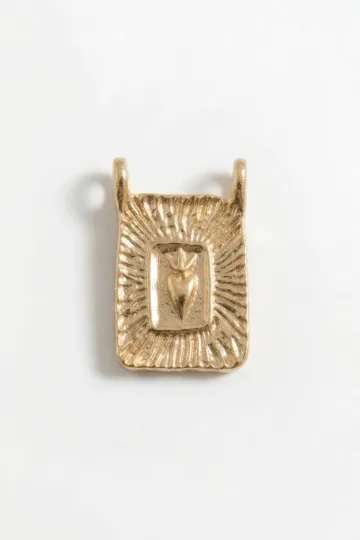
Wear the symbol, don't just read about it. These are in stock:

FAQ: jewellery as a gift for a move and new citizenship
Can you give jewellery to a man moving abroad?
Yes. Men's jewellery in the context of meaningful transitions has a long history, and today men's pieces with symbolism are seeing a clear rise in interest. A bracelet with a compass, a ring with an anchor, a pendant with a labyrinth, all of these work in a masculine register. The key is the material and the form: sterling silver with a matte finish, a leather bracelet with a metal plate for engraving, a large ring with a symbol. Minimalism and a concrete meaning matter more than decoration.
What to engrave on a piece for someone who has received citizenship?
The date received. The coordinates of the city where the ceremony took place. Initials in two languages. A short phrase in the language of the new country. The number "0" as a reference to the Fool of the Tarot, the zero card, the symbol of a new beginning. Navigational data of the new place. Whatever matters to the specific person is the best guide. There is no universal option.
Which piece to choose for parents whose child has left?
For a mother, a locket with the coordinates of the child's new home works well, or a paired bracelet: one stays with the mother, the other leaves with the child. For a father: a bracelet with a compass or a ring with a date. The main thing is that the piece reflects the continuation of the bond, not the separation. The theme should be "we both carry this", not "we have been parted".
Do you need to explain the symbolism when giving it?
A short note explaining the choice makes the gift fuller and more personal. But the piece itself should be beautiful and meaningful enough to work without explanation. If a symbol needs a lecture to be understood, it is probably the wrong one.
How to choose the metal: silver or gold?
Look at what the person wears in everyday life. Sterling silver is versatile and works with any symbolism. Gold (14K) is more solemn and suits a moment you want to mark with weight. A combination of both metals in one piece, for example a gold symbol on a silver background, works well as an image of two worlds, two identities.
When is it better to give: before departure or after citizenship?
It depends on the meaning you want to invest. Before departure: the gift travels with the person from the very first day. After citizenship: it fixes the completion of the path and the victory over uncertainty. Both moments are right, they simply say different things. If you must choose, the naturalisation ceremony is a rarer and more concrete moment to mark.
How to choose a piece for someone who is not in the habit of wearing jewellery?
Start with the minimalist and functional. A bracelet that looks like a bracelet, not like "jewellery" in the classic sense. A thin ring worn constantly and never taken off. A men's engraved plate on a leather cord. A piece with a concrete meaning is easier to accept for someone who "does not wear jewellery", because they see an object with a story rather than a decoration.
Can you give jewellery if you do not yet know the date of departure?
Yes. A piece with the symbolism of a new path is relevant at any point in the process: when the decision is made, when the visa is granted, when the tickets are bought. An engraving with a date can be added later. That is a separate option. Or choose a piece with no tie to a specific date: a compass, infinity, an anchor. These symbols work regardless of the stage the move is at.
What to do if the budget is limited?
A small silver pendant with a personal engraving says more than an expensive, faceless piece with no meaning. The quality of the engraving, the thoughtfulness of the symbol and a warm note create an impression well above the value of the metal. In this genre of gifts, personality matters more than price.
Is jewellery appropriate if we come from different cultural traditions?
The symbols listed in this piece, the compass, anchor, lighthouse, infinity, tree of life, work in practically all cultures without specific national baggage. They are universal enough to be understood from Latin America to Southeast Asia. If in doubt, the simplest choice is a piece with a personal engraving (a date or coordinates): its meaning is clear without cultural decoding.
Conclusion: jewellery crosses borders better than any other gift
There are objects that travel with a person through a whole life. They move in a box of personal things, end up in a new flat on another continent, survive several addresses, several owners in the case of inheritance.
A piece chosen at a moment of meaningful transition is one of those objects. It does not lose its meaning when the place of residence changes. It does not date stylistically if chosen with sense. It is light, needs no explaining at the airport, takes up no room in a suitcase.
But the main thing is something else. Jewellery is a language that works without translation. A compass does not need explaining in a new language. An anchor is understood without a dictionary. A paired pendant says what it says regardless of how many time zones lie between two people.
In a moment when words fail, because emigration is exactly such a moment, jewellery speaks for you. And it goes on speaking every day, whenever the person puts it on. Every morning, when they fasten the chain. Every time someone asks "what is that pendant" and receives a whole story in reply.
A compass pendant tells of a chosen path. An anchor of steadiness in a storm. A lighthouse of those who wait. A labyrinth of a path walked to the end. Paired halves of those on the other shore. Coordinates of two places that are both yours.
There is no better gift to say: you are not alone. You carry something with you. The bond exists.
And this piece will say it again and again, without words, without messages in a chat, with no difference in time between zones. Each time the chain is fastened.
Compasses, anchors, lighthouses, labyrinths, infinity symbols, trees of life, paired pendants. Sterling silver and 14 to 18K gold. Custom engraving: the coordinates of two cities, the date of citizenship, initials, words in the language of the new home.
About Zevira
Zevira makes jewellery in the artisan tradition of Albacete, Spain. Many of the motifs in our collections are especially precise for the moments of transition described in this piece.
What you will find in the catalogue:
- Compass and compass rose: pendants, rings, bracelets with the symbol of direction and a chosen path
- Anchor: a symbol of steadiness and hope in silver and gold
- Lighthouse: a bearing for those out on the open sea
- Paired pendants and halves: one stays, the other leaves
- Labyrinth: a symbol of a hard path walked to the end
- Infinity: a bond that is not broken by distance
- Tree of life: roots and new branches
Engraving: the coordinates of two cities, the date of citizenship, initials, personal words. We work with bespoke orders.