Mother's Day Jewellery Gift: Mothering Sunday, US Mother's Day and When to Order
The woman who won America its Mother's Day was later arrested for causing a scene at a carnation sale held in its honour. Anna Jarvis sent five hundred white carnations to the first service in 1908, then spent decades fighting the people who sold them. Britain, meanwhile, keeps an older day of its own, in March.
Two Mother's Days: the short answer
If you live in Britain, the day is Mothering Sunday, and it moves every year with Easter. If you live in the United States, it is Mother's Day, the second Sunday of May, and it never leaves May. The two dates sit about two months apart, and that gap catches people out every spring: American adverts and social feeds fill up with May gift guides just as British families have already had their lunch, sent their flowers and put the card on the mantelpiece weeks before.
When is Mothering Sunday in 2027?
Mothering Sunday falls on the fourth Sunday of Lent, three weeks before Easter Sunday, so it follows the moon rather than a fixed date. In 2026 it fell on 15 March. In 2027 it comes early, on Sunday 7 March, because Easter itself is early that year, on 28 March. Ireland keeps the same Sunday, and so do some Commonwealth countries. The practical consequence is simple: last year's reminder will not help this year, and a March date means the gift has to be ordered in February, when nobody is thinking about spring yet.
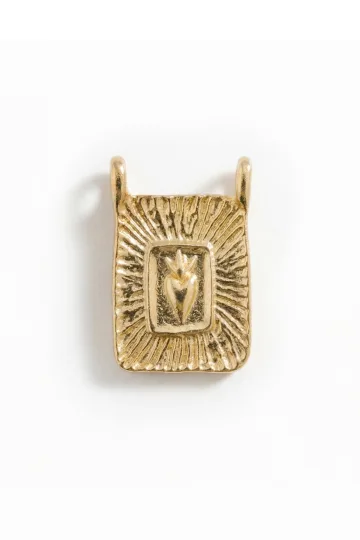
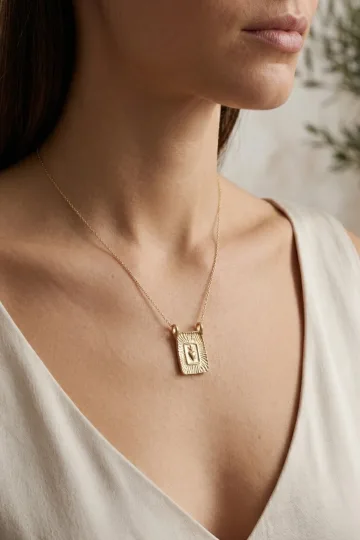
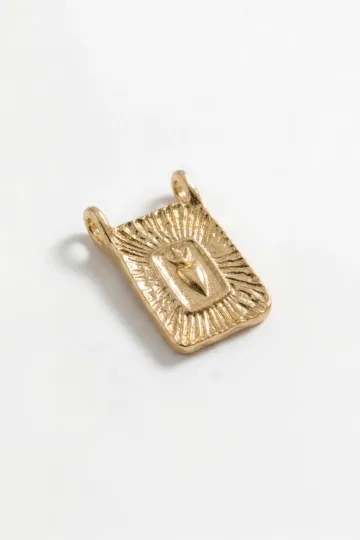
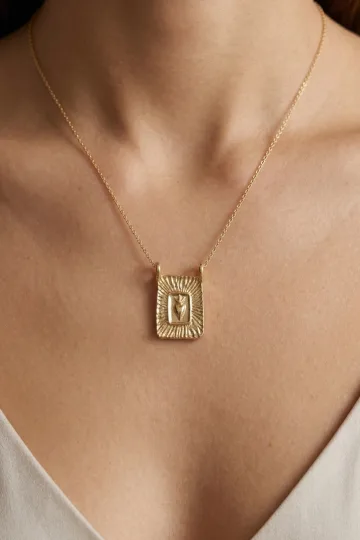
Wear the symbol, don't just read about it. These are in stock:









When is Mother's Day in the US in 2027?
American Mother's Day is the second Sunday of May, fixed by a presidential proclamation in 1914. In 2026 it fell on 10 May; in 2027 it falls on Sunday 9 May. The rule is easy to remember and the date only ever lands between 8 and 14 May. For a family split across the Atlantic, that means two Mother's Days a year: a daughter in Manchester and a mother in Ohio can quite reasonably celebrate in March for one side of the family and in May for the other.
Which date counts if Mum lives somewhere else?
Her date, not yours. The day belongs to the country where she lives and where her friends will be asking what she got. A mother in Madrid celebrates on the first Sunday of May, a mother in Paris at the end of May, a mother in Kraków on 26 May whatever the weekday. The full list with 2026 and 2027 dates, and a sensible order-by date for each, is in the table further down. If what you want is advice on choosing the piece itself, by her style, her metal and her age, that is the job of our guide to jewellery gifts for mum; this page is about the occasion and the calendar.
Mothering Sunday: the British day
Mothering Sunday is the older of the two days, and for most of its history it had little to do with presents. It grew out of the Church calendar, and a good deal of what people say about its origins is guesswork. What is well documented is a short list: the name of the Sunday, the visits home, the flowers and the cake.
Refreshment Sunday in the middle of Lent
The fourth Sunday of Lent has had several names. In Latin it is Laetare Sunday, from the first word of the opening chant of the Mass, "Rejoice". In English it was also called Refreshment Sunday, because the strict Lenten fast was relaxed for the day. That relief in the middle of forty lean days is the background to everything else: a Sunday when people could travel, eat properly and see family was always going to become a family day. The British Library's medieval manuscripts blog traces the name and the custom back to the Middle Ages, and it is careful to say how much of the later story is uncertain. In the Church tradition the day was also associated with particular devotion to the Virgin Mary. None of this involved a gift. It was a pause, a feast and a reason to go somewhere.
The mother church
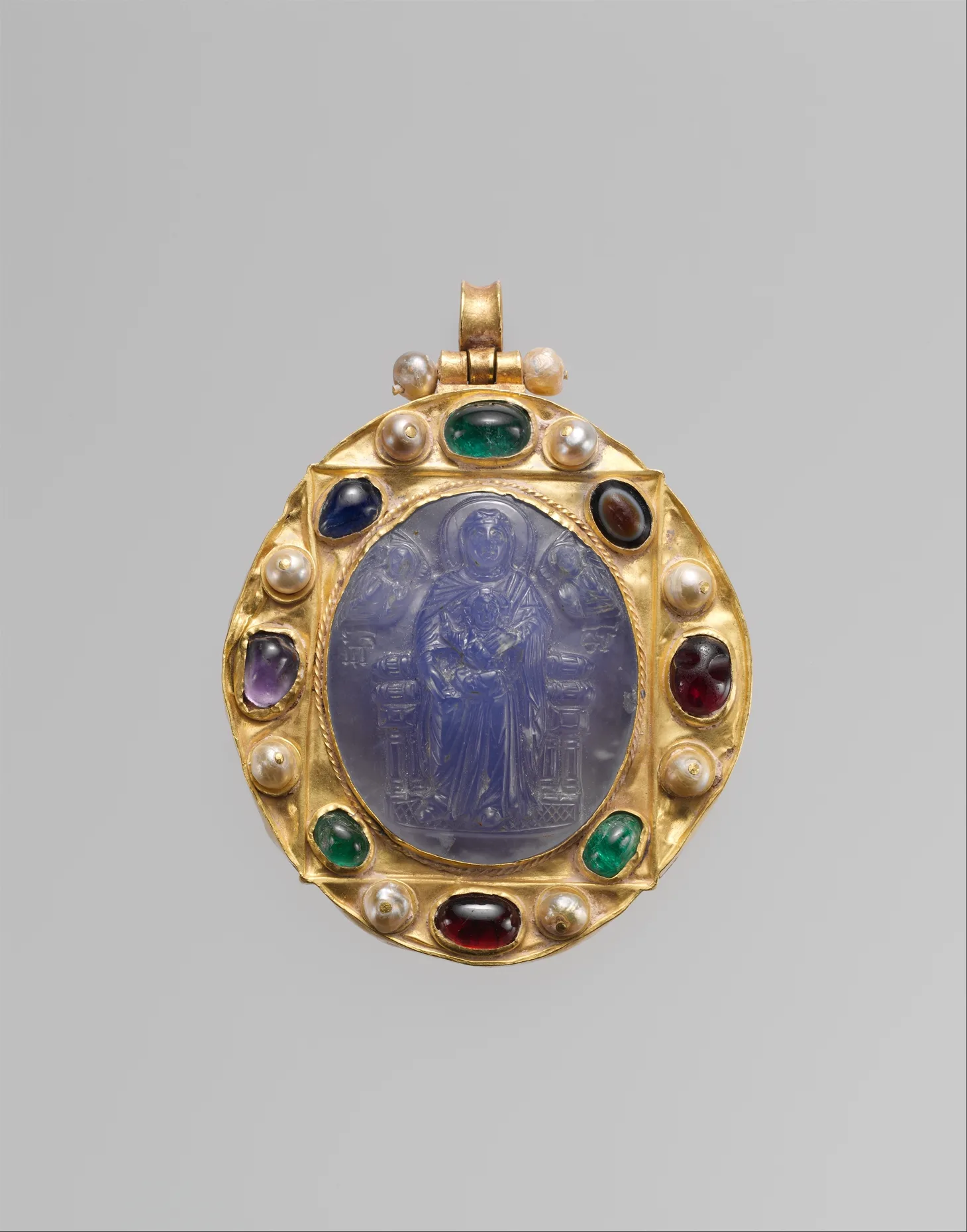
The custom that gave the day its name, according to the British Library, was a procession on that Sunday to one's "mother church", usually the local cathedral, rather than the parish church people attended every week. The pilgrimage took people back to the church at the centre of their region, and later the same Sunday became the day for visiting the mother at home. How and when exactly that shift happened is not documented to anyone's full satisfaction, and it is better to say so than to repeat the tidy version found on greetings card websites. What survives is the double meaning in the name itself: the mother church and the mother in the family share one Sunday.
For a gift-giver the useful part of this history is the tone. Mothering Sunday was never a day for grand gestures. It was about turning up. A small, considered piece of jewellery fits that tradition better than anything loud.
Daughters in service going home
The second strand is social. In the centuries when large numbers of young women worked as domestic servants far from their families, the British Library notes, this Sunday mattered especially to them: it was a recognised occasion to visit their mothers. For a girl in service in a town house, far from her village, that visit was the point of the day. That is where the day's character comes from: a short, precious visit, with something small carried in the hands.
That picture still explains British habits. Mothering Sunday is a lunch, a visit, a phone call if you are far away. The gift travels with the person. A piece of jewellery handed over at the table, rather than delivered to the door, belongs to that older idea of the day.
Violets and posies: the flowers of the day
The flower of Mothering Sunday is not the carnation. Traditionally children gave their mothers violets, and in towns, where no one could pick them by the roadside, churches supplied the violets for the children to hand out. The custom survives in a modern form: in some parishes volunteers still make up small posies, a few daffodils with greenery, hand them out during the service during the service and deliver the rest afterwards to those who could not get to church.
There is a neat coincidence for anyone choosing a floral piece. In the birth flower list the violet belongs to February and the daffodil to March, the months just before and around Mothering Sunday, which usually falls in March. A pendant or brooch with either flower is a quiet nod to the day that needs no explanation. The whole list, month by month, is in our piece on birth flowers and their meanings.
Simnel cake
The edible symbol of the day is simnel cake, a light fruit cake with marzipan. Various cakes and buns were made for Mothering Sunday as gifts to parents, and simnel cake is the one that stuck. In its modern form it carries eleven marzipan balls on top, one for each of the apostles minus Judas. That detail is a fairly late addition: the earliest printed recipe with the marzipan balls dates from the 1920s, and older simnels looked quite different.
Today simnel cake has drifted towards Easter, and people who make or buy one now tend to do so for the Easter weekend rather than for Mothering Sunday. The old link is still a reminder that the day's original present was something made, carried home and shared.
Constance Smith and the revival
By the start of the twentieth century the custom had faded across much of Britain. It was brought back by Constance Adelaide Smith (1878 to 1938), a vicar's daughter who worked in Nottingham. What set her off was American news: in 1913 she read a newspaper article about Anna Jarvis's campaign for a Mother's Day in the United States, and instead of importing the American day she argued for reviving the British one on its traditional Sunday. With a colleague, Ellen Porter, she built a movement around it and published booklets to spread the idea.
So the order of events matters. The Lenten Sunday is centuries older than the American holiday, but its revival as a day for mothers began as a reaction to the American campaign. By the 1950s Mothering Sunday was celebrated across the United Kingdom, and under American influence commerce attached the American name "Mother's Day" to the British date. That is why British shops say Mother's Day in March, and why the two names are now used interchangeably on the high street even though their roots are different.
Customer reviews
Zevira is a real jewellery shop. Genuine payments, deliveries and customer thank-yous.
🥰🥰🥰 gracias
Ok, ¡gracias! 🙂
On Mothering Sunday she keeps her coat on, so the present goes on the lapel or on a long chain over the jumper. A short chain under a roll-neck is a gift nobody sees until April, and I will not budge on that.
How to wear a Mother's Day gift: the stylist answers
I have gathered here the questions people ask once the present is bought and the Sunday is close, when the aim is for her to wear it long after the lunch.
Mothering Sunday lunch is at a pub and she will keep her coat on half the time. Pendant or brooch? The brooch, if she wears one. I recommend pinning it high on the coat lapel, where it is seen at the table and on the walk there. A pendant under a buttoned coat is a present nobody sees until April.
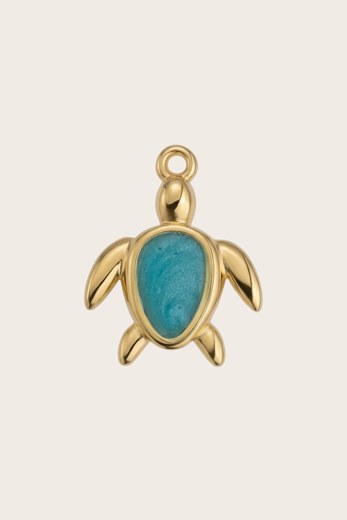
She gets a pendant with blue enamel. What colours does it suit? I advise grey, charcoal, navy and white: on a cool background the blue stays clean. Mustard, rust and camel knitwear swallow it, and in March, when half the wardrobe is still in autumn colours, that is worth mentioning when you hand it over.
The pendant arrived on its own, without a chain. What should it hang on? On a chain she already wears, in the same metal and sturdy enough to carry it without flipping over. I choose a length that lets the pendant sit below the collarbone in March and recommend she shortens it in May, when the neckline opens.
She wears her wedding ring and a watch every day. Can I give a bracelet? Yes, on the other wrist from the watch. I choose a slim, light bracelet that slides under a coat cuff and does not catch on a glove. Two bracelets on the watch wrist is a combination I advise against for daily wear.
When should she open it? In the morning, before lunch, so she comes to the table already wearing it. A present that comes out of a bag between the main course and pudding tends to stay in its box until Monday.

Turn on your camera, pick earrings, a pendant or a ring, and see the piece on yourself in real time.
Switch items in one tap.
Everything runs in your browser: no photo or video is ever uploaded.
Mother's Day in America: from Howe to Jarvis
The American holiday has a clearer paper trail than the British one: a poet's proclamation, a daughter's grief, a state law, an act of Congress and a long, bitter quarrel about money.
Julia Ward Howe's peace proclamation
Almost forty years before Jarvis, the idea of a mothers' day was raised by Julia Ward Howe, the Boston poet who wrote "The Battle Hymn of the Republic". In 1870, shaken by the American Civil War and the Franco-Prussian War, she wrote an appeal to the women of the world that later became known as the Mother's Day Proclamation: mothers whose sons were sent to kill other mothers' sons should gather and demand peace. From 1872, for several years, she organised and paid for a Mother's Peace Day in Boston.
It never won broad support, and today's holiday took neither its date nor its symbols from it. What it shows is how far the meaning travelled. Howe's day was a political call by mothers; the one that survived became a day of thanks to them.
Anna Jarvis and five hundred white carnations
Anna Jarvis of Philadelphia began her campaign after the death of her own mother, Ann Reeves Jarvis, who had organised mothers' clubs in West Virginia. Ann died on 9 May 1905. Three years later, on 10 May 1908, the first services were held, in Grafton, West Virginia, and in Philadelphia. For the Grafton service Anna sent five hundred white carnations to be given to the mothers in the congregation. The white carnation had been her mother's favourite flower, and from that service it became the emblem of the day.
The idea travelled quickly beyond the church. Anna wrote to politicians, newspapers and ministers, and in 1910 West Virginia became the first state to recognise the day officially. Anna herself never married and had no children: the holiday for mothers was won by a woman who was never a mother.
1914: a flag, not a present
The day became national in 1914. On 8 May Congress passed a joint resolution, and on 9 May President Woodrow Wilson signed a proclamation setting the second Sunday of May as Mother's Day. The text reads oddly today. It asks for the national flag to be displayed on all government buildings and invites citizens to fly the flag at their homes, as a public expression of love and reverence for the mothers of the country. There is not a word about presents, flowers or cards.
The second Sunday of May has been the American date ever since, and Germany, Italy and many other countries keep the same Sunday. When people speak of an "international" Mother's Day, they usually mean this May date, not the British one.
The founder who turned on her own holiday
Within a few years of her victory, Anna Jarvis watched her day become a trading season. Florists, confectioners and greeting card firms made it one of their best occasions of the spring. She tried to protect the words "Mother's Day" and the white carnation, went to court, and wrote furious open letters. Her view of the printed card is quoted to this day: "A printed card means nothing except that you are too lazy to write to the woman" who did more for you than anyone else.
At a meeting of the American War Mothers where carnations were being sold for the holiday, she caused such a disturbance that she was arrested for disturbing the peace. She spent her last years in a sanatorium in West Chester, Pennsylvania, and died there in 1948. It is worth keeping her story in mind as a giver. The day was meant as a day of attention; the boxed present came later, and she hated it. A gift that comes with your own words is the version she might have forgiven.
Upload a photo of your pet, someone you love, or an object. We'll build a 3D model and hand-cast it in pewter.



What people give on the day, and why
Each of the classic Mother's Day gifts has its own history, and jewellery has a longer one than the card that usually comes with it.
Carnations: coloured or white
The white carnation Jarvis handed out was a memorial gesture for her mother, and a simple American code grew out of it: on Mother's Day a coloured carnation is worn in honour of a living mother, a white one in memory of a mother who has died. The rule is worth knowing before you choose a flower or a floral piece for an American mother. In that code a white carnation brooch for a mother who is alive and well says something you did not mean.
The code is American. The British day has flowers of its own, violets and the daffodil posies handed out in church, so a carnation is no part of its tradition. If the gift crosses the Atlantic, choose by her side of the ocean: a coloured carnation for a mother in Ohio, a violet for a mother in Yorkshire, and no white flowers for either unless the day is one of remembrance.
A card written by hand
Cards and flowers are still the backbone of the day. In the National Retail Federation's 2026 survey of American shoppers, published in April 2026, 75% of shoppers planned to buy flowers and 74% greeting cards, and 84% of American adults said they planned to celebrate at all. Jarvis lost that argument comprehensively.
Her point still stands, though, and it is easy to honour. A printed card is fine if the inside carries your own lines. Three sentences in your handwriting weigh more than a verse in gold foil. A piece of jewellery with a card works better than either on its own: the piece without words is worn without anyone knowing why it was chosen, and the words without the piece go in a drawer. One line saying why you picked this colour, this flower, this tree turns an object into a message.
Jewellery: where the money goes
The same NRF survey found that jewellery leads American Mother's Day spending: more money goes on jewellery than on any other gift category. Flowers and cards are the most common purchases, but jewellery is where the biggest share of the budget ends up, which makes it the main present of the day rather than an extra.
That has a practical side for the giver. A present that carries that much weight should not depend on a courier's last free day, and jewellery, unlike flowers, cannot be picked up at a petrol station on Sunday morning. The order-by dates further down are there for that reason. In Britain the March date brings the deadline forward to February, right after Valentine's Day, and catches out anyone who assumes Mother's Day is a May thing.
Jewellery in honour of a mother: the Queen Mother of Benin
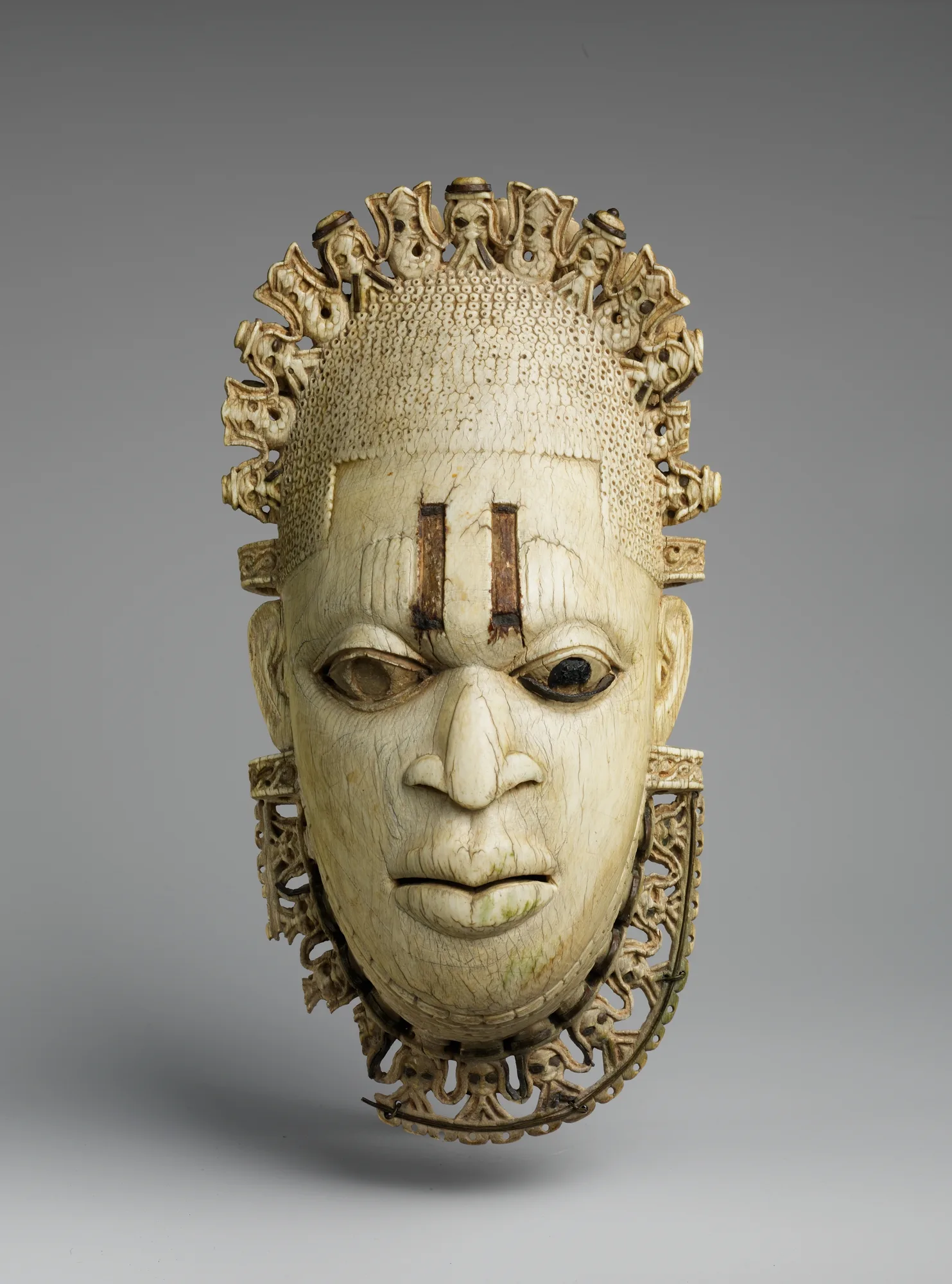
Jewellery made to honour a mother is much older than either Mother's Day. In the early sixteenth century, in the kingdom of Benin, in what is now Nigeria, the ruler Esigie created the title of iyoba, queen mother, for his mother Idia. Idia had raised an army and helped her son win the war for the throne, and her face survives in an ivory pendant mask carved by the artists of the royal ivory and wood carvers' guild.
The Metropolitan Museum of Art dates the pendant to the sixteenth century and suggests it was probably made for Esigie, who may have worn it at rites in memory of his mother. A very similar mask is in the British Museum. In Benin white ivory was associated with ritual purity and with Olokun, god of the sea, so the material was chosen for meaning rather than for value. Five centuries later the logic of a Mother's Day piece is the same: jewellery worn because of one particular woman, which would mean nothing without her. That is a useful test when you choose. If the piece would suit anybody, it is a nice present; if it only makes sense for her, it is a Mother's Day present.
When Mum is no longer here
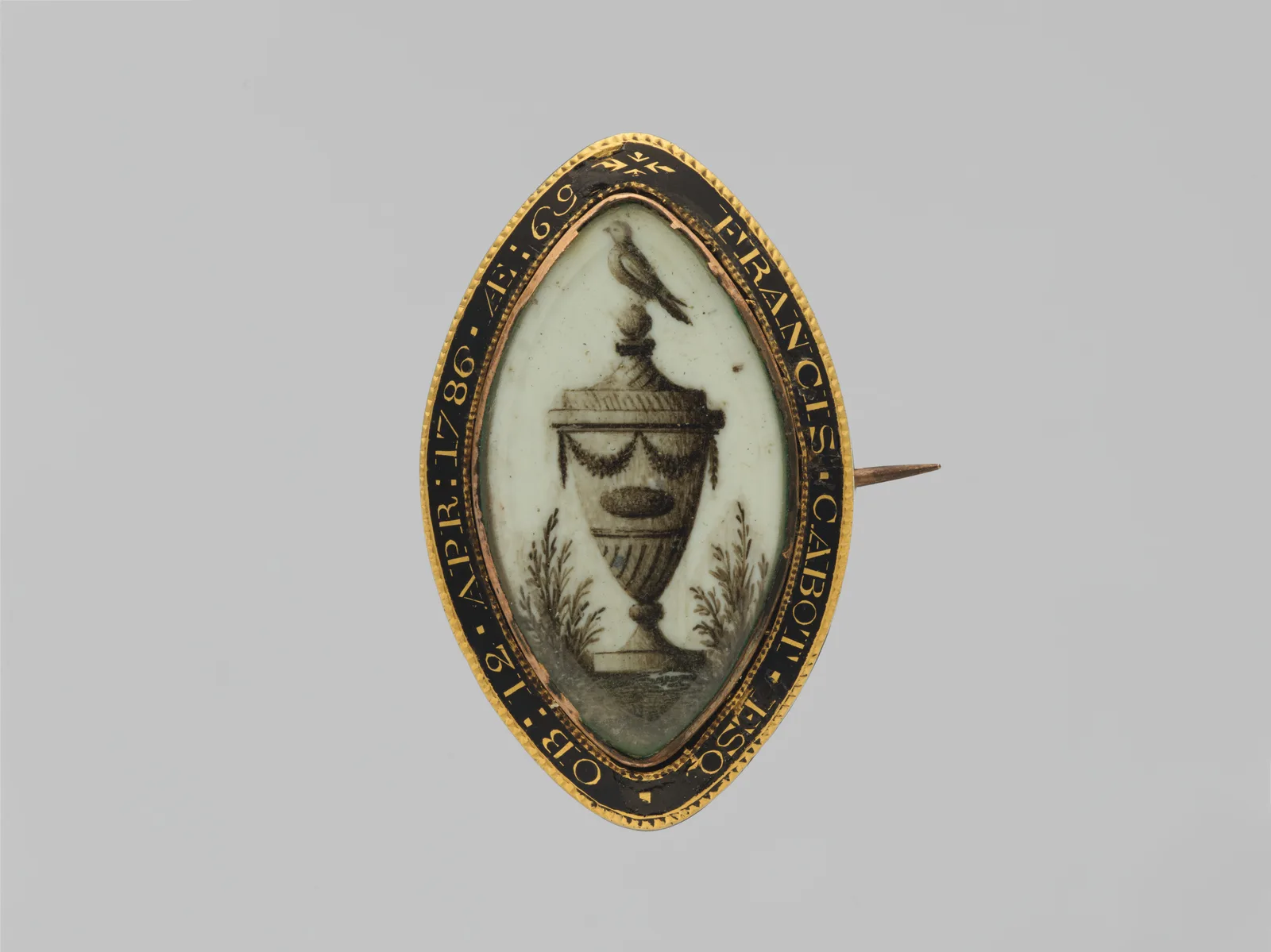
For many people Mother's Day is not a day for a present but a day of remembrance. Jarvis's white carnation was exactly that, and the same gesture in jewellery is much older: mourning brooches of the eighteenth and nineteenth centuries carried a name, a date and sometimes a lock of hair, and were worn for years. The Met's American memorial brooch of 1786 is one of them, with a painted miniature of an urn and a bird and the name and date of death of Francis Cabot set in black enamel around it.
If you are choosing something for yourself in memory of your mother, the old brooches show what works: a name, a date, a sign only you need to understand. There is no etiquette here and no "correct" metal. On a Sunday when every shop window is full of gifts for living mothers, a quiet piece that keeps her close is a perfectly good way to mark the day. How such pieces are chosen, and what can be kept inside them, is covered in our articles on cremation jewellery and on jewellery after the loss of a loved one.



Mother's Day dates in other countries
Families are spread across borders, and the mother you are buying for may live under a different calendar. These are the countries whose Mother's Day has its own rule and its own story.
Spain: the first Sunday of May
Spain celebrates the Día de la Madre on the first Sunday of May: 3 May in 2026 and 2 May in 2027. Spaniards explain the month through the Catholic calendar, since May is the month dedicated to the Virgin Mary. The present May date was fixed in 1965. Portugal, next door, also keeps the first Sunday of May, so a mother in Lisbon and a mother in Madrid share a day. For a British or American giver this is the earliest of the May dates, and a parcel to Spain has to leave a week before anything heading to Italy or Germany.
Italy: the second Sunday of May
Italy keeps the Festa della mamma on the second Sunday of May, the same Sunday as the United States: 10 May in 2026 and 9 May in 2027. It has two birthplaces in the mid-1950s. In 1956 it was organised in Bordighera, on the Ligurian coast, by the town's mayor, Raul Zaccari, together with the Bordighera and Vallecrosia flower market. In 1957 a parish priest, don Otello Migliosi, held a church celebration of mothers in Tordibetto, a village near Assisi. Italy's day grew from two roots at once, one floral and one religious.
Germany: the second Sunday of May
Germany's Muttertag also falls on the second Sunday of May. It was promoted by the association of German florists, which from 1922 put up posters with the slogan "Ehret die Mutter", honour your mother, and in its first years the day was openly presented as a day for giving flowers. Commerce stood at the foundation of the German holiday from the start, and flowers remain its main present; jewellery is an addition to the bouquet rather than a replacement.
France: the last Sunday of May, and the Pentecost rule
In France the Fête des mères is set by a law of 24 May 1950: the last Sunday of May. The law has an unusual clause. If that Sunday coincides with Pentecost, the celebration moves to the first Sunday of June. In 2026 Pentecost fell on 24 May, so the Fête des mères was held on 31 May without a move, and in 2027 it falls on 30 May. The 1950 law repeated an earlier wartime text and added exactly this rule about Pentecost.
Poland: always 26 May
Poland's Dzień Matki is tied to a date, not a weekday: it is always 26 May. The first celebrations are linked to Kraków, but sources give different years, 1914 or 1923, and the only safe statement is that 26 May is the date Poland keeps today. A fixed date is a gift to anyone sending a parcel from abroad. There is nothing to calculate, and the order can be planned a year ahead.
When two dates fall in one family
A British daughter with a mother in Spain, or an American son whose mother has moved back to Italy, will meet the problem every year: the home calendar says one thing, hers says another. The simplest rule is to follow her date for the gift and keep your own date for a call or a card. If both of you are British but she now lives in France, she will hear "bonne fête des mères" from her neighbours at the end of May; a parcel that turned up in March would feel like an oddity rather than a greeting.
Which jewellery suits the date: March or May
Choosing for her taste, her metal and her age is covered in our guide to jewellery gifts for mum, and there is no point repeating it here. The date itself adds conditions of its own: the weather, what she will be wearing, and the symbols of the day.
Mothering Sunday in March: coats and scarves still on
Early March in Britain is coat weather, often scarf weather, and in 2027 the day falls on the seventh of the month. A short chain at the base of the neck spends most of that day hidden under a jumper and a coat, and a present that looked lovely in its box can go unseen until April. For a March gift a length that lets a pendant lie over knitwear, on the breastbone, works better than a short choker length, and earrings of medium length show between scarf and hat.
Earrings in March have their own catch. Long drops tangle in a wool scarf and pull on a roll-neck; tiny studs disappear under hair and a hat. A drop that ends around the jawline, with a fastening that will not come undone when a jumper is pulled over the head, is the safer choice for a cold-weather Sunday.
A brooch for the spring coat
March has one piece that May hardly needs: a brooch for the coat. She will wear that coat from autumn well into spring, and a brooch on the lapel or by the collar is seen every time she leaves the house, in the street, on the bus, in a friend's hallway. Under a scarf and a jumper any necklace hides; on a coat a brooch stays outside. Two things matter. The clasp needs a safety catch, so the piece is not lost in a crowd, and the brooch needs to be large enough to read at a couple of paces. A tiny brooch disappears on dark wool, and a very heavy one drags the cloth. A violet or daffodil brooch on a spring coat is about as close to the spirit of the British day as jewellery gets.
US Mother's Day in May: open necks and bare wrists
In May everything flips. Across most of the United States the second Sunday of May means lighter fabrics, open collars and short sleeves. A short chain and a small pendant show at once, a bracelet is not lost under a cuff, and earrings do not compete with a scarf. A piece chosen for May should suit light clothing, and something that is perfect over a March jumper can look heavy on a cotton dress in May. If you are buying for a mother in Spain, Italy, France or Poland, the same May logic applies.
Signs of the day: carnation, violet, tree of family
Each version of the day has a sign that reads without explanation. For American Mother's Day it is the carnation, coloured for a living mother. For Mothering Sunday it is the violet, or the daffodil from the church posy. And for both, the most natural image is a tree: roots, trunk and branches as a family, with the mother at the base. A blue accent, enamel or a blue petal, is a softer option that suits both dates without pointing to either. None of these needs an inscription, and that is their strength: she understands at once, and the card supplies the words. The tree as a symbol across cultures is explained in our article on the tree of life.
When the gift will not arrive by Sunday
Sometimes the piece is chosen late and delivery no longer fits. The honest fix is a gift certificate handed over on the day itself, printed and tucked into a card with a hint: "towards earrings for your blue dress" or "for a pendant with a violet". She is greeted on time and chooses the piece herself. The other fix is a card with a photograph of the piece you have ordered and a promise that it is on its way. What to do when the day is less than three days off is covered in detail in our piece on the last-minute jewellery gift.
Leave your email, we'll send your discount code. No spam, unsubscribe anytime.
The code arrives by email, valid on your first order.
Ordering in time: delivery to the UK and the US
Our delivery page is plain about timing: orders to the United Kingdom and the United States usually receive the order within 7 to 10 business days, and remote areas can take longer depending on the courier. Ten business days is two calendar weeks, so the working rule for both countries is to order three weeks before the day.
A countdown for Mothering Sunday 2027
Mothering Sunday 2027 is on 7 March. Three weeks before that is Sunday 14 February, Valentine's Day, which makes the deadline easy to remember: order her present on the same day you sort out your partner's. Six weeks out, in late January, is the moment to decide what she is missing: look at what she wears every day on your next visit, ask a sibling or your father, think about what she reaches for. In the first week of February, choose the piece and check everything on the product page that affects the purchase: the material, whether a chain is included, the type of fastening. By 14 February, place the order. In the last week of February, the parcel arrives and you check and wrap it. On the Saturday before the day, write the card.
It sounds like a lot of steps, but none is wasted. People rarely miss Mothering Sunday because of the courier; they miss it because the date moved and they made the decision in the final week.
A countdown for US Mother's Day 2027
US Mother's Day 2027 is on 9 May, and three weeks before is Sunday 18 April. Late March is the time to decide, early April to choose and check the product page, and 18 April the date to order by. Standard shipping to the United States is free, and once the parcel is handed to the carrier, a tracking number is provided when available, so you can follow it on the carrier's own website. If you are ordering for a mother in Spain, the EU timings are shorter, usually 2 to 7 business days from dispatch and within Spain usually 24 to 72 business hours, but her day is a week earlier than the American one.
Sending it straight to Mum
You can have the order delivered straight to her address, and both options have a drawback. A parcel sent to her arrives in her hands at once, but the surprise is spoiled as soon as the courier messages her about the delivery. A parcel sent to you gives you time to check it and wrap it your way, but then it has to travel a second time. If you are going home for the day, the second option is safer. If you are celebrating from a distance, the first one is better, and it is worth warning her that a parcel is coming which is not to be opened until Sunday. For addresses outside standard routes, such as islands and remote areas, a surcharge may apply, and it is shown before you confirm the order.
Returns after the day
Under our returns policy, which follows EU consumer law, you can withdraw from an online purchase within 14 calendar days of receiving the goods, without giving a reason. The item must be unused and returned with its original packaging and labels. Two details matter for a Mother's Day gift. The 14 days run from delivery, not from the day itself, so a piece bought in February and kept in a drawer until March should be checked as soon as it arrives. And the clock starts when the person you named as recipient receives it, so a parcel sent straight to your mother starts counting from her doorstep. Items made to the customer's specification or clearly personalised are excluded from withdrawal, which is one more reason to buy with time to spare. The full conditions are on our returns page.
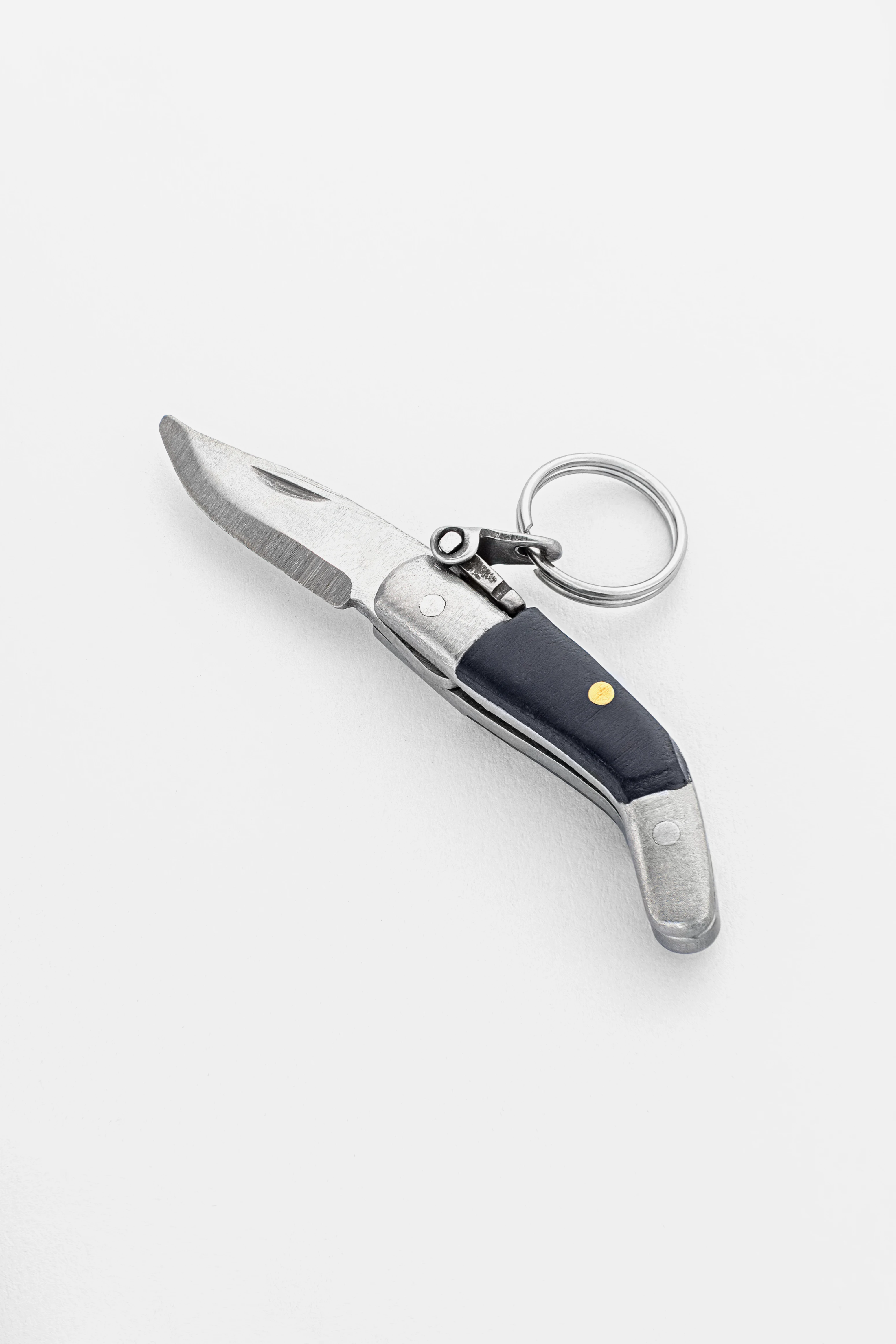
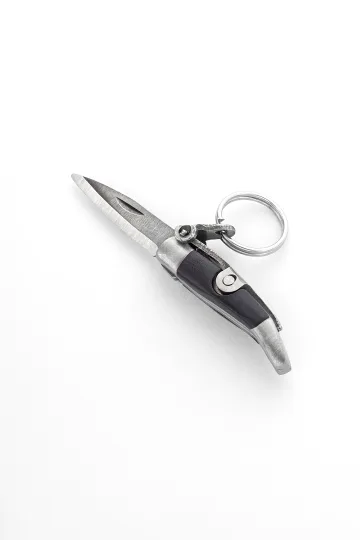
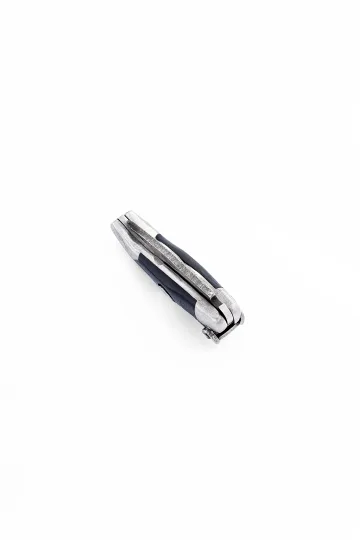
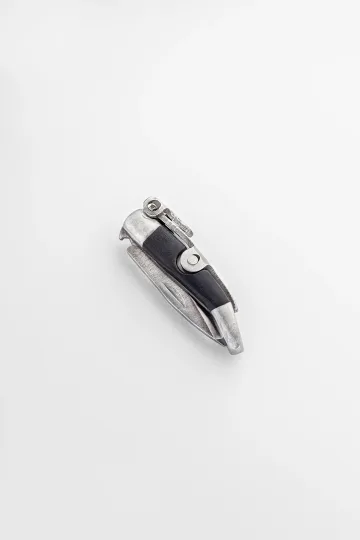
CAPAORA mini knife pendant
The 18th-century Spanish navaja in miniature: 40 mm of stainless steel, a real folding mechanism and a Palanquilla lock that clicks. An affordable gift to remember.
Authentic · Ships from Spain · 14-day returns
What Zevira has for Mother's Day
For both dates three lines in our catalogue fit the occasion: the tree of life, blue in sterling silver, and the gift certificate.
Tree of life: pendant and family charm
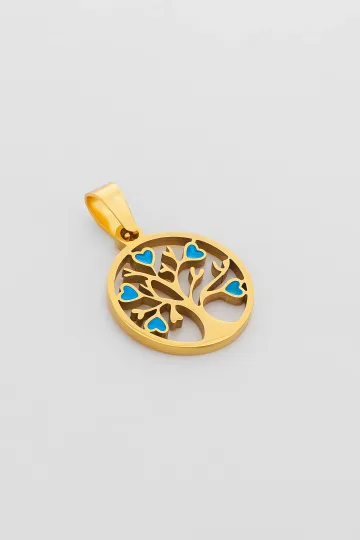
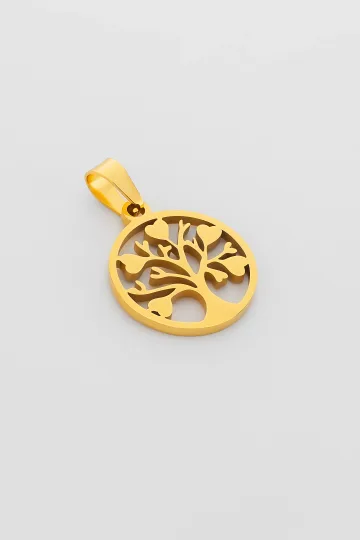
The Tree of Life pendant is a round pendant in gold-plated stainless steel with a tree inside the circle; it comes in a fully golden finish or with blue enamel hearts on the branches, and the blue picks up the colour that suits both versions of the day. It is a pendant for a mother who wears warm metal. The listing does not describe a chain, so check what is included before ordering and plan to hang it on a chain she already owns.
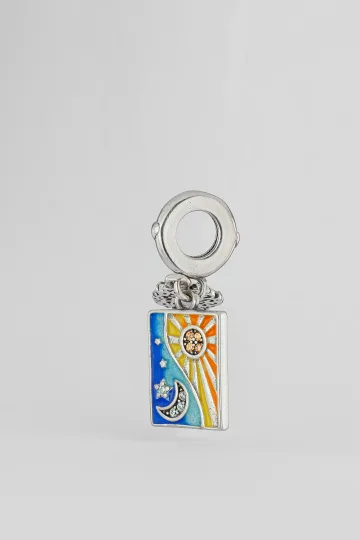
The Tree of Life and Family charm is a bracelet charm with a silver finish: a silver tree set with green cubic zirconia on an enamelled background of a celestial landscape. The back is engraved with a phrase about family: "Like branches on a tree, we all grow in different directions, but our roots keep us all together." The inscription for the day is already there, so the card only needs your signature. According to the listing it is a charm that can also be worn as a pendant.
Blue in sterling silver
The sterling silver pieces of the Acosta en Plata line, from Rodrigo Acosta's workshop in Valencia, often work with a blue element, and for Mother's Day that gives the colour of the day without a literal flower. The Pétalos LG necklace has two discs like petals, one matt silver and one blue, on a fine chain with a clasp. The Arce en Flor earrings are long drops: a textured silver stud, a fine chain and an angular blue flower at the end. Because they are long, they suit a mother who wears her hair up, and they are better for an outing without a scarf, or for May, than for a March day wrapped in wool.
A gift certificate in the card
The gift certificate is electronic, has a single fixed value and is valid for 24 months. For the day, print it and slip it into the card with a hint about what you would have chosen for her. If several children are giving together, their contributions pay for the certificate and all their names go in the card.
A present for her Sunday
Tree of life pendants, blue in sterling silver, an electronic gift certificate. Order three weeks ahead: by 14 February for Mothering Sunday 2027, by 18 April for US Mother's Day 2027.
Facts that surprise
Until 1965 Spain celebrated Mother's Day on 8 December, the feast of the Immaculate Conception, so the Spanish day was once a winter holiday.
Germany's first Muttertag was held on 13 May 1923, and the florists who promoted it called it a day of flower wishes, "Tag der Blumenwünsche".
France's Pentecost rule is not theoretical: in 2023 Pentecost fell on the last Sunday of May, the 28th, and the Fête des mères moved to 4 June.
In 1912 Anna Jarvis incorporated the Mother's Day International Association to promote the day beyond the United States.
Constance Smith's best-known booklet, "The Revival of Mothering Sunday", appeared in 1921 under the name C. Penswick Smith.
Victorian jewellers made forget-me-nots out of turquoise: the Bard Graduate Center in New York holds a ring of around 1860 in which turquoise forget-me-nots sit beside a heart and a knot. The flower's history in jewellery is told in our article on forget-me-not jewellery.
Send a friend a discount code, they save on their first order.
Frequently asked questions
Is Mothering Sunday the same as Mother's Day? Not in origin. Mothering Sunday is a British church tradition on the fourth Sunday of Lent; American Mother's Day was created by Anna Jarvis's campaign and fixed on the second Sunday of May in 1914. In Britain the two names are now used for the same March Sunday.
When is Mother's Day 2027 in the UK? Mothering Sunday 2027 is on 7 March. It is always three weeks before Easter Sunday, which is why the date changes every year.
When is Mother's Day 2027 in the US? Sunday 9 May 2027, the second Sunday of May, as it has been since 1914.
Why is Mother's Day different in the UK and the US? Because they are two different days. The British one follows the Church calendar and Easter; the American one was set by a presidential proclamation on a fixed rule in May.
What jewellery should I buy my mum for Mother's Day? A piece with a sign of the day, such as a tree, a flower or a touch of blue, chosen for the season: something that shows over a coat or jumper in March, something light for an open neckline in May. Choosing by her style and metal is covered in our guide to jewellery gifts for mum.
What is the flower of Mother's Day? In the US it is the carnation: coloured for a living mother, white in memory of one who has died. On Mothering Sunday the traditional flower is the violet, and some churches hand out posies of daffodils.
How early should I order a Mother's Day gift? Three weeks before the day. Delivery to the UK and the US usually takes 7 to 10 business days, which gives a margin for wrapping and writing the card.
What if the gift won't arrive in time? Give a printed gift certificate on the day, or a card with a photograph of the piece and a promise, and hand over the jewellery when it arrives. Being greeted on time matters more than the box arriving on time.
Conclusion
Mother's Day began with five hundred white carnations and a woman who spent the rest of her life insisting it was meant as a day of attention rather than a day of shopping. Britain's Mothering Sunday is older and quieter: a visit home in the middle of Lent, a posy of violets, a cake carried in the hands. Both versions point the same way. The best present for either date is chosen in good time, suits the weather she will be wearing it in, and comes with a few lines in your own handwriting. If you are choosing for her taste on any other day of the year, our guide to jewellery gifts for mum takes it from there.
Buying it as a gift? Each one arrives ready to give.
 A branded Zevira box and a little card come with every order.






About Zevira
Zevira builds its jewellery around symbols and their histories: protective, seasonal, and the ones carried on a journey. We explain where a sign came from before offering a piece that carries it, because a present with a meaning behind it outlives a present with a pretty picture on it.