Forget-me-not in jewellery: a symbol of memory, faithfulness and the words "remember me"
A flower that says its own name
A medieval legend tells how a knight walked along a river with his lady and bent down for a cluster of blue flowers right at the water's edge. His heavy armour pulled him under. As he fell, he tossed the picked stems to his lady and managed to call out one thing only: "Forget me not." Ever since, the story goes, the flower has carried that name.
The name really is the same across dozens of languages. The English say forget-me-not, the Germans Vergissmeinnicht, the French ne m'oubliez pas. Nowhere is it a description of colour or shape. It is a short plea sewn straight into the name. Few flowers carry a whole sentence on themselves, and almost none turned into jewellery so naturally: for centuries the blue forget-me-not has meant memory, faithfulness and a quiet "I will not forget you".
In jewellery this motif lives in two registers at once. One is bright: engagements, lovers, keepsakes of good times. The other is quiet: memory of those who are gone, mourning pendants, a sign worn when speaking aloud is hard. Below we cover both, tell where the name came from, how the forget-me-not was rendered in enamel and stone, and why such a small flower became one of the strongest symbols in the language of jewellery.
Wear the symbol, don't just read about it. These are in stock:




What the forget-me-not means: four sides of one symbol
The meaning of the forget-me-not seems simple until you start to take it apart. Inside one blue flower hide four different senses, and a piece of jewellery usually sounds out just one of them.
Memory
The main meaning is obvious from the name. The forget-me-not is a plea not to forget, made into a thing you can hold. In jewellery it works like a quiet knot tied for remembrance: while the piece is on you, you keep someone or something in mind. This is where the forget-me-not differs from flowers that stand for feeling in general. A rose says "I love", a lily says "I am pure", and the forget-me-not says something more exact: "remember me". It is a directed symbol, addressed to someone, always pointed at a particular person.
Faithfulness
Faithfulness grows straight out of memory. If you hold a person in mind while you are apart, then you stay true to them. In the old European tradition the forget-me-not was given before a long road, before war, before years of separation. The flower became a promise: distance will not erase us. That is why the forget-me-not so often appears in paired pieces and in gifts sent over a distance, when two people live in different cities or countries.
Lasting love
The third sense is romantic. The forget-me-not is not a flash of passion but a love that is long, steady, the kind that outlives separation and time. In the Victorian era it went into bouquets and lockets as a promise to love even many years on. That brings it closer to golden weddings than to first dates: a symbol of duration, not of beginnings. There is more on the language of feeling in jewellery in our piece on love symbols.
"Remember me" as a direct message
The fourth side is the most literal. Sometimes the forget-me-not stands for nothing abstract and simply carries the phrase from its own name. It is a sign for the one who is leaving or going away. The giver seems to say: wherever you are, keep me in mind. In this sense the forget-me-not is close to words engraved inside a ring, only spoken not in letters but in the shape of a flower.
A forget-me-not wants cool silver and a bare collarbone, never yellow gold at the throat. Warm metal murders that blue. Don't argue.
How and with what to wear the forget-me-not
After years around shoots and shop windows I have styled the forget-me-not in dozens of looks, from a quiet mourning pendant to a brooch on a lapel. Here is what actually works, sorted by occasion.
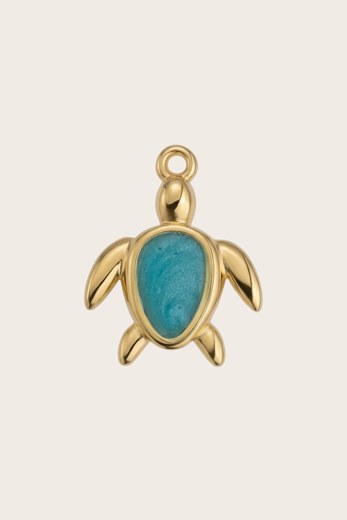
How do I wear a forget-me-not every day? For daytime I suggest a thin enamel or turquoise pendant over a light top: a white shirt, grey knit or navy cotton give the flower a clean background. Under a roll-neck it sits on the fabric, under a shirt it slips to the first button. I steer clear of loud warm shades, orange and mustard, since the blue dies next to them.
Which metal should go with the blue flower? I almost always choose silver or white gold. Cool metal keeps blue enamel and stones reading clean, while warm yellow gold quarrels with icy blue and muddies the flower. If you really want gold, I pick a softer stone: matte turquoise instead of a sparkling topaz.
How do I wear it as a sign of memory without putting it on show? When the memory is private, I hide the flower: a narrow pendant under clothing, a slim ring, a discreet brooch right at the collar. Only you know it is there, and that is enough. When the memory is bright and open, I bring it out: a brooch on the lapel, studs by the face, a pendant over a jumper.
What should I wear so the forget-me-not speaks instead of vanishing? I leave the flower silence around it. One forget-me-not on a smooth chain says more than five pendants crowded together. I take off any heavy, glossy neighbours, they pull the eye and rub out the quiet meaning. A thin chain, small studs, a plain ring, and nothing more.
Whom does the blue flower suit by colouring? I recommend a pure icy blue to people with cool colouring: fair or rosy skin, grey, blue or green eyes, light-brown hair. Beside such a face the flower echoes the eyes. For warm colouring I suggest the softer versions, muted aquamarine or matte turquoise instead of a sharp topaz, and then the forget-me-not suits any face.

Turn on your camera, pick earrings, a pendant or a ring, and see the piece on yourself in real time.
Switch items in one tap.
Everything runs in your browser: no photo or video is ever uploaded.
Where the name came from: one phrase across all languages
The most surprising thing about the forget-me-not is that its name is almost identical right across Europe, and everywhere it is a verb in the imperative.
Forget-me-not, Vergissmeinnicht and the legend of the knight
The German version is considered the oldest in writing: Vergiss mein nicht, "do not forget me". The English forget-me-not is a direct calque from the German, which entered the language early in the nineteenth century. The French say ne m'oubliez pas, the Italians nontiscordardimé, which literally builds up from "do not forget me". Wherever you look, the name of the flower repeats one plea, as if it were spoken all at once across the whole continent.
The legend of the knight at the river explains the name beautifully, but it is exactly that, a legend rather than history. It took shape in the romantic era, when Europe fell in love with sentimental tales of love and death. By then the flower was already called "forget me not", and the story of the drowned knight came along to explain that name, not the other way around.
The botanical name against the folk name
Scholars see it their own way. The Latin name of the genus, Myosotis, translates as "mouse ear": that is how the Greeks saw the plant's small downy leaves. The result is a rare case where the dry scientific name speaks of the shape of a leaf, while the folk name across Europe speaks of feeling. In jewellery, of course, the folk name won: nobody wears a "mouse ear", everybody wears "forget me not".
Why one name for all of Europe
The most interesting thing is not the legend itself but that the plea "forget me not" took hold as a name in many languages at once. Usually plants have different names: somewhere for colour, somewhere for scent, somewhere for the place they grow. With the forget-me-not it went differently: the German Vergiss mein nicht spread to neighbouring languages as an almost word-for-word translation rather than a retelling. The English and the French did not invent their own word but took the same phrase and carried it over into their own tongue. So a rare thing happened: one and the same verb-plea settled across half the continent, and that very shared meaning made the flower clear to any European without translation.
The flower by the water as part of the legend
The legend of the knight has one detail that recurs across retellings: the flower grows right at the water, and it is the water that kills the hero. This is no accident. The real forget-me-not does love damp ground and often settles along the banks of streams and ditches. The folk story picked up a real botanical trait of the plant and built it into the plot: the hero reaches for the flower toward the water and drowns. So the legend turns out to be not an invention out of nowhere but a poetic explanation of where this flower is met in nature.
The forget-me-not as a flower of memory: a quiet sign for those who are gone
The most tender side of the symbol is tied to the memory of those who are no longer here. Here the forget-me-not works differently than in romance: not as a promise but as a continuation of a bond.
Why the forget-me-not became a mourning flower
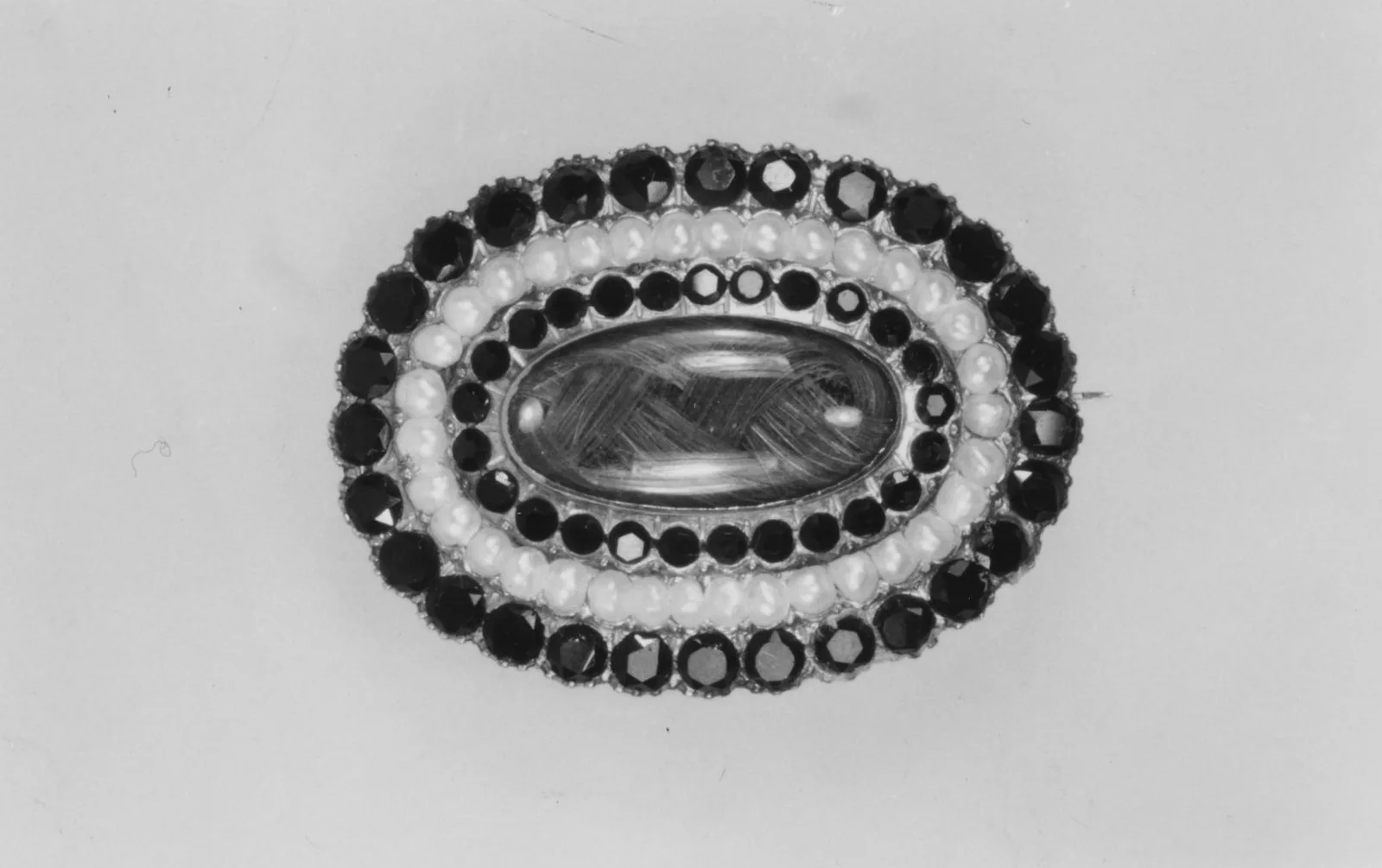
The logic is direct. If the name of the flower is "forget me not", it naturally becomes a sign of memory for someone who has died. To wear a forget-me-not is to hold a person in living memory, to keep them from slipping into oblivion. Unlike the black of mourning, the blue forget-me-not is not about grief but about continuation: the person is not near, yet they are not forgotten, and that is said quietly, without strain.
Memorial and mourning jewellery
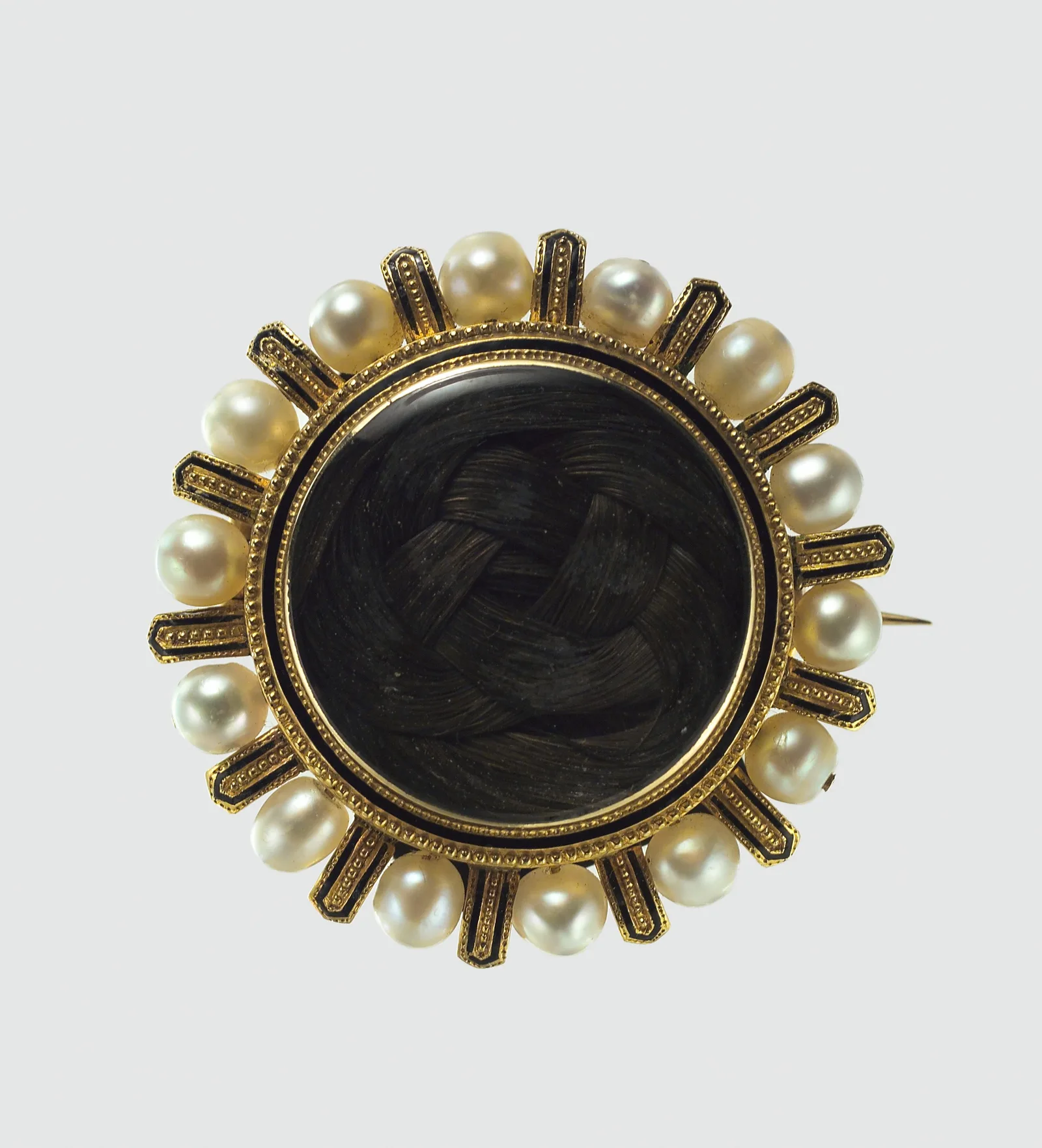
In mourning jewellery the forget-me-not appears on pendants and brooches worn in memory of someone close. Such a pendant is often made with an engraved date or name, sometimes with a place for a lock of hair or a pinch of memorial earth, as old lockets used to hold. This piece is not meant to show grief to others but to let the wearer feel the closeness of the one who is gone. We say more about modern keepsake jewellery in our piece on memorial jewellery after the loss of a loved one.
Memory of a pet
The same motif works beyond the family too. The forget-me-not is chosen as a sign of memory for a pet who is no longer here: a blue flower beside a paw print or a pet's name. It is a soft way to carry with you the one who was part of the home for many years. There is a separate look at this genre of jewellery in our piece on memory of a pet.
Memory of a place and a time
The forget-me-not keeps memory of people and of places alike. Sometimes it marks a place that cannot be returned to: a childhood home, a city one had to leave, a country left behind. The blue flower becomes an anchor for a whole stretch of life rather than for one person. For those far from where they come from, such a forget-me-not reminds them of their roots and holds a link to a past that cannot be touched by hand. In this the symbol is close to the old travelling charms taken along on a long journey.
How a sign of memory is worn
Memory does not like loudness. So the mourning forget-me-not is usually worn small and close to the body: a pendant under clothing, a thin ring, an unobtrusive brooch at the collar. The point is not for everyone to see the piece but for the wearer to know it is there. The blue colour helps: it is calm, it does not pull the eye, it does not look like jewellery worn for show.
Customer reviews
Zevira is a real jewellery shop. Genuine payments, deliveries and customer thank-yous.
🥰🥰🥰 gracias

Ok, ¡gracias! 🙂

The forget-me-not as an emblem of memory in history
Beyond personal memory, the forget-me-not has more than once become a shared sign that drew people together around the idea of "not forgetting". We give this as a set of episodes, plainly, without judgement.
A flower of memory as a symbol of unity
The blue forget-me-not has been chosen many times by organisations and communities precisely because of the plain sense of its name. When a sign is needed that already says "remember", the forget-me-not turns out to be a natural candidate: it needs no explaining, the phrase is already built into the name. So a small field flower turned from a garden plant into a wearable emblem.
A Masonic tradition
One of the well-known stories is tied to twentieth-century Freemasonry. In that setting the blue forget-me-not was used as a quiet sign of recognition and a symbol of memory for brothers who could not be named openly. A small badge with the flower was worn on the lapel as a restrained mark of belonging and of faithfulness to memory. It is a classic example of how the forget-me-not works not through words but through the simple fact that those in the know recognise it.
The forget-me-not in charity and health
In recent decades the blue forget-me-not has become a symbol of a number of causes tied to memory in the direct, medical sense: it is used as an emblem of support for people with illnesses that affect memory. And again the same logic worked: a flower whose name means "forget me not" fits perfectly onto the theme of keeping memory. To wear such a badge is to stand with those for whom memory has grown fragile.
Upload a photo of your pet, someone you love, or an object. We'll build a 3D model and hand-cast it in pewter.



The Victorian language of flowers and memory
To understand why the forget-me-not took root in jewellery so firmly, recall the nineteenth century, when flowers were a full language.
What the language of flowers is
In the Victorian era a whole system took shape where each flower stood for a word or a feeling, and a bouquet could be read like a letter. This let people speak of love and longing without breaking the strict manners of the time. On how that language passed into jewellery motifs, we write in a large piece on flowers in jewellery.
The place of the forget-me-not in this language
In the floral dictionary the forget-me-not held a clear place: true love and remembrance. It was tucked into letters, pressed in books, embroidered on handkerchiefs. And almost at once the motif passed into jewellery: in an age obsessed with sentimental pieces, a flower named "forget me not" was bound to become jewellery. The Victorians made brooches, rings and lockets with enamel forget-me-nots, often with a lock of hair inside, and gave them as a promise to remember.
Sentimental jewellery of the era
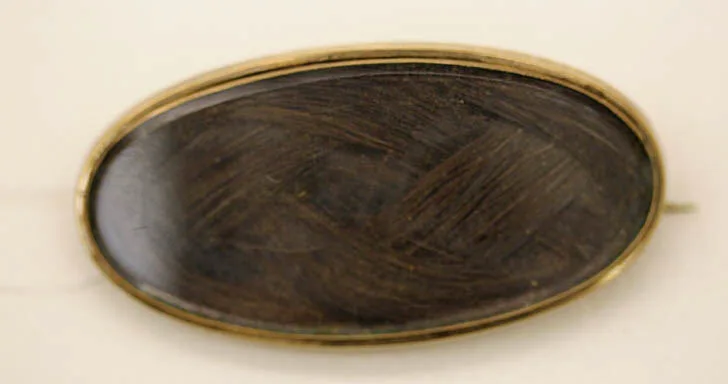
The nineteenth century loved jewellery with a hidden side: acrostics of stones, where the first letters of the names spelled out a word, lockets with hair, flowers with a secret meaning. The forget-me-not fit perfectly, because it needed no cipher: its name was already a message. So it outlived the fashion for acrostics and stayed clear to this day, when the language of flowers has long been forgotten.
The forget-me-not in jewellery across the eras
The flower made a long way from a garden plant to a settled jewellery motif, and in each era it sounded a little different.
Medieval roots
The earliest traces of the symbol lead back to the late Middle Ages, to chivalric culture and the cult of the fair lady. The blue flower was then tied to faithfulness to one's given word: it was worn as a sign that a promise was remembered. Written mentions of the name "forget me not" in the German lands belong to these centuries, and even then the flower was a wearable promise rather than a garden plant.
The sentimental eighteenth century
By the eighteenth century Europe had fallen in love with things of personal meaning: miniature portraits, lockets, rings with a secret sense. The forget-me-not fit this fashion as a symbol of tender attachment, given before a parting. Blue enamel was already a favourite way to render the flower in metal, because it gave a clean and lasting colour.
The flowering of the nineteenth century
The Victorian era became the golden age of the forget-me-not. The flower appeared on brooches, rings, lockets and bracelets, often together with a lock of a loved one's hair. It was given to lovers, to family before a long road, and in memory of the dead. It was then that the whole range of meanings we use today took shape: from love at a distance to quiet remembrance.
The twentieth century and the badge
In the twentieth century the forget-me-not stepped beyond personal jewellery and became a wearable emblem of communities and causes tied to memory. A small badge with a blue flower on the lapel said "remember" without a single word. So the flower moved from the jeweller's window into the public language of signs.
The forget-me-not today
Today the forget-me-not lives in all its roles at once. It is made as a realistic enamel flower in the spirit of old brooches, as a minimalist outline in modern pieces, and as a stone in a ring. Memory, faithfulness and love at a distance remain its core, while the formats have grown freer: from thin earrings to paired pendants.





The forget-me-not in love and engagement
The bright side of the symbol sounds out in romance, and here the forget-me-not plays a special part, different from the usual wedding flowers.
Why the forget-me-not is given to lovers
The forget-me-not is love not at its peak but over the long run. It is given not to flare up but to say: I will keep you in mind even years from now, in separation, over a distance. That is why it sits well on relationships tested by time and on couples whom life has sent to different cities.
The forget-me-not and engagement
In engagement symbolism the forget-me-not appears less often than the diamond, but it carries its own sense. The blue flower adds to a ring or a gift the idea of faithfulness and memory: beside a promise of the future stands a promise not to forget what was between two people. Sometimes the forget-me-not is chosen as a stone or enamel in a ring instead of the classic clear stone, so that the piece speaks of their own story rather than following a common template.
A gift across a distance
A separate theme is love in separation. The forget-me-not is given before a long road, before a move, before years apart. Paired pieces with this flower become a quiet pact: while the piece is on you, you remember me. One flower stays with the one who leaves, the other with the one who waits.
Leave your email, we'll send your discount code. No spam, unsubscribe anytime.
The code arrives by email, valid on your first order.
The blue colour: which stones and enamel give the forget-me-not
The forget-me-not is unthinkable without its colour: a clean, cool blue leaning a little toward deep blue. In jewellery this shade is given by several materials, and each sounds a little different.
Blue enamel
The most exact way to render the flower is enamel. Hot enamel gives an even, saturated blue and lets the petals be shaped tenderly with a yellow centre, just like a real forget-me-not. That is exactly how Victorian brooches were made, and today enamel remains the main material for a realistic flower. Enamel has a character and rules of care worth knowing in advance: details are in the guide on enamel and its care.
Turquoise
Turquoise gives a soft, slightly matte sky blue, warm and calm. It sits well on the theme of memory, because it looks old, lived-in, never loud. A turquoise forget-me-not looks like a piece with a history rather than a brand-new trinket, and so it is often chosen for memorial and keepsake jewellery.
Topaz
Blue topaz gives a clear, light, sparkling blue, lighter than turquoise and cooler. It is a stone for a bright, romantic forget-me-not: it plays in the light and looks festive. If turquoise is about quiet memory, topaz is more about living love and a gift for joy. A detailed look at shades and properties is in the piece on topaz in jewellery.
Aquamarine
Aquamarine is the tenderest blue with a greenish sea sheen. It is quieter than topaz and clearer than turquoise, and it looks fragile and pure. An aquamarine forget-me-not comes out airy, almost like watercolour, and suits thin, minimalist pieces well.
Sapphire
Blue sapphire takes the flower into a deep, saturated blue, darker than the real forget-me-not. It is the choice for those who want not an exact copy of the field flower but its precious, ceremonial version. A sapphire forget-me-not sounds richer and more serious, closer to a symbol of lasting love than to a light summer motif.
Formats: in what shape the forget-me-not is worn
One symbol lives in different pieces, and each format brings out its own side of the meaning.
The keepsake pendant
The most common format is the pendant. A blue flower on a chain hangs near the heart and keeps memory close to the body. The pendant is handy because it is easy to hide under clothing if the sign is private, or to show if you wish. It is the base form for the forget-me-not in all its senses: from romance to memory of someone gone.
With an engraved date or name
The forget-me-not is strengthened when a few words are added to the flower. An engraved date, a name, a short phrase turn a general symbol into a particular story: instead of a vague "remember", you get "remember this person and this day". This is done in both love gifts and memorial pieces. There is a separate look at what is engraved and how in the piece on engraving on jewellery.
Paired pieces
The forget-me-not lives well in a pair. Two identical flowers, one for each of two people, turn the jewellery into a pact about memory over a distance. This works especially for couples in separation, for a mother and a grown child living in different cities, for close friends whom life has sent apart.
Ring and brooch
In a ring the forget-me-not becomes a constant companion: the flower is always on the hand, always in the wearer's own view. The brooch points straight back to the Victorian tradition, the most "historical" format, the one in which the forget-me-not was worn a century and a half ago. The brooch is good because it can be pinned to different clothing and worn as a quiet sign at the collar.
Earrings
Forget-me-not earrings are the lightest, most everyday format. Here the flower sounds not like a heavy symbol of memory but like a tender ornament with a pleasant meaning. Small blue flowers near the face freshen a look while still carrying their quiet story for those who know it.
Bracelet and charm
The forget-me-not lives on a bracelet too, especially as a charm. A blue flower among other charms becomes one chapter of a personal story on the wrist: beside an initial, a date or another symbol. A charm is handy because it is easy to add to a bracelet you already love, without buying a new piece. So memory is built into jewellery the person already wears every day.
A locket with the flower
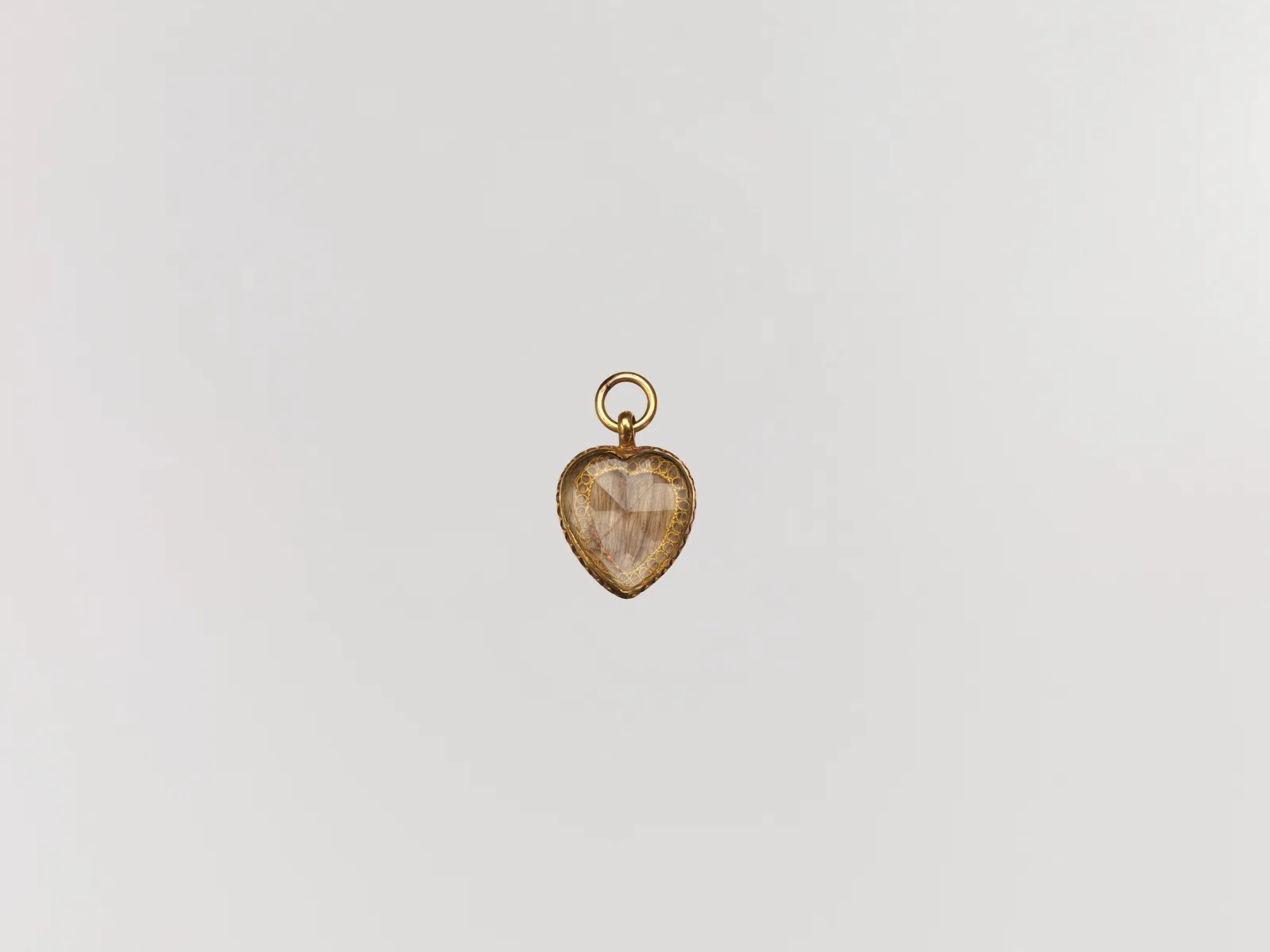
A format of its own is the locket, with a forget-me-not on the lid and a photo or a lock of hair kept inside. It is a direct continuation of the Victorian tradition: the flower outside says "remember", the contents inside hold the one in question. The forget-me-not locket remains one of the strongest keepsake pieces, because it joins the symbol and the real memory of a person in a single object.
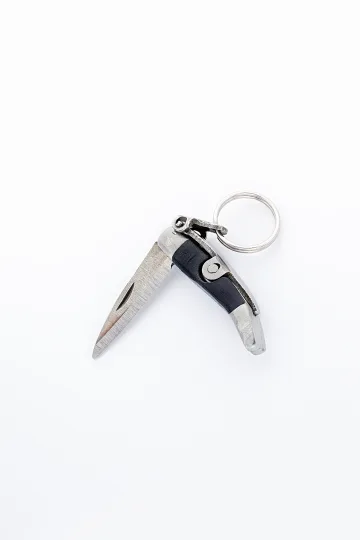
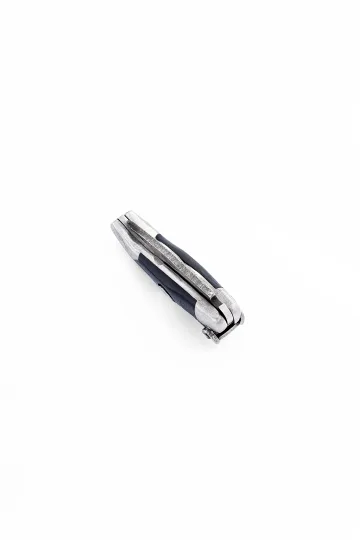
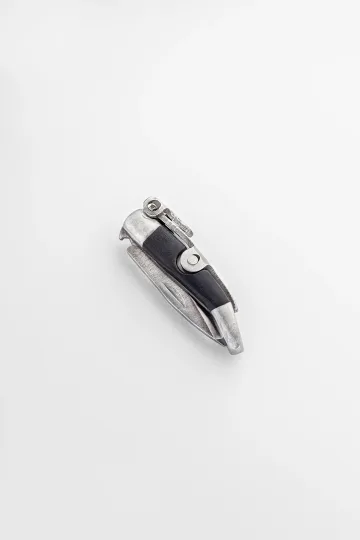
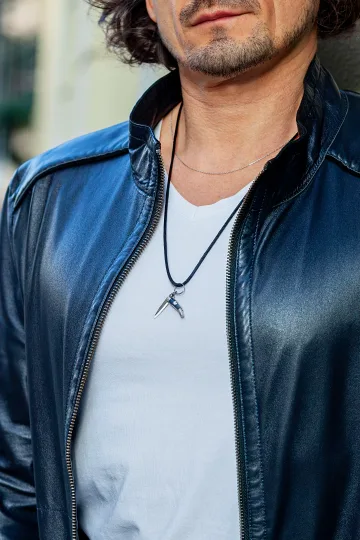
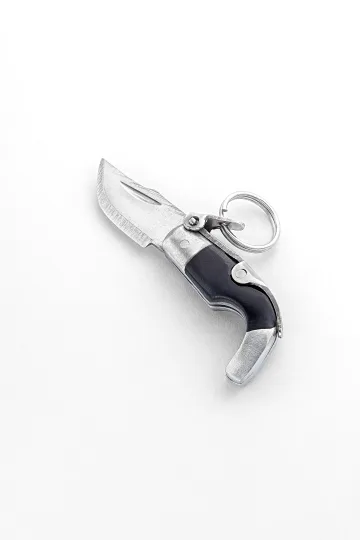
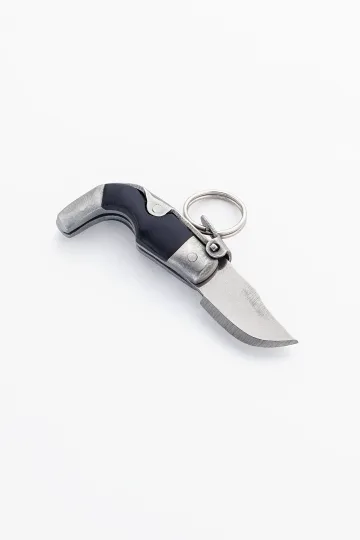
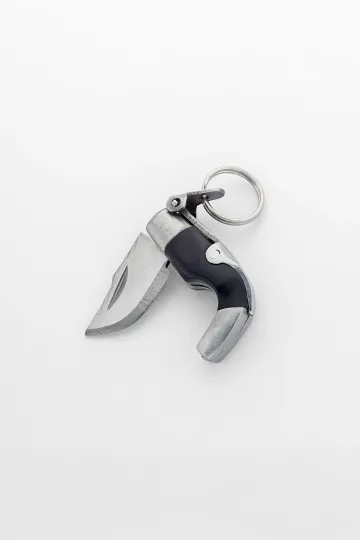
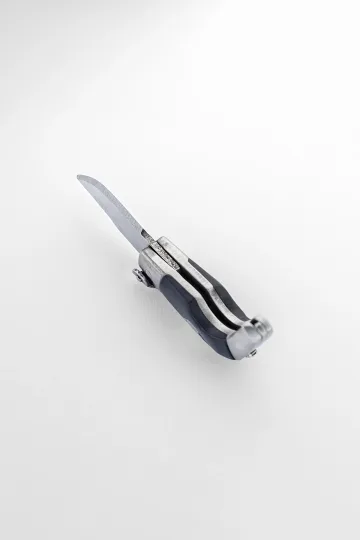
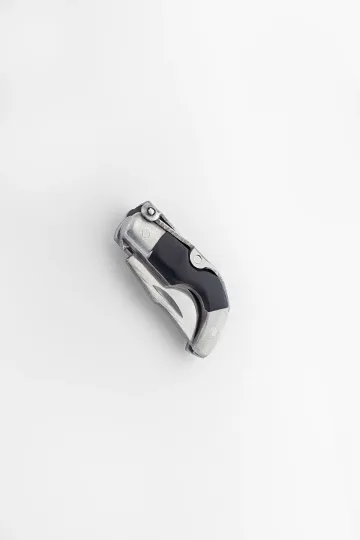
CAPAORA mini knife pendant
The 18th-century Spanish navaja in miniature: 40 mm of stainless steel, a real folding mechanism and a Palanquilla lock that clicks. An affordable gift to remember.
Authentic · Ships from Spain · 14-day returns
To whom and how the forget-me-not is given
Since the symbol has two sides, bright and quiet, it is worth deciding in advance when the forget-me-not is fitting and what it will say for you.
For the memory of something good
The forget-me-not is given when you want a person to remember something pleasant: a trip together, an important day, years of friendship. Here the flower sounds warm and light. Topaz and aquamarine suit well, bright and joyful, in the form of earrings or a thin pendant.
As consolation
When someone close is grieving, the forget-me-not becomes a word of support without extra words. To give a blue flower is to say: I am here, and I remember alongside you. Here turquoise or enamel are more fitting, calm and quiet, in the form of a small pendant or brooch. Such a gift is not joyful but careful, and that is fine.
To lovers and to those apart
A couple is given the forget-me-not as a promise of faithfulness and memory over a distance. Paired pieces or matching pendants work best, sometimes with the engraved date when it all began. This is a gift not for a first date but for relationships that must endure time or distance.
To oneself as a sign of memory
The forget-me-not is bought for oneself too: as a quiet anchor that keeps an important person in mind, a promise to oneself, or a path already walked. Here there is no addressee but one's own memory, and the format chosen is the most private: a ring or a pendant under clothing that only you see.
To a child and from a child
The forget-me-not sits well on family ties between generations too. It is given by grown children to parents and grandparents as a sign that a loved one is held in memory and loved over a distance. And the other way around, a small blue flower is given to children as a tender reminder of home. In both cases the forget-me-not sounds soft, without pomp, and so it suits relationships where loud words are not needed.
How to choose the format for the recipient
Before buying, it is worth deciding who will wear the piece and in what circumstances. For someone who loves jewellery on show, a bright brooch or earrings will suit. For a reserved person, a thin pendant under clothing or a narrow ring is better. For a couple apart, paired pieces are chosen; for memory of someone gone, a small pendant in a calm colour. One and the same symbol reads quite differently in different forms, and guessing right matters more here than with an ordinary gift.
Care for enamel and blue stones
The blue forget-me-not is most often made of enamel or soft stones, and these need care. A few simple rules will lengthen the life of the flower.
Enamel
Enamel is, in essence, glass fused to metal. It is beautiful and holds its colour well, but it fears knocks and sharp changes: a strong blow can chip it, and hot water with sudden cold can crack it. Take off an enamel forget-me-not before sport, cleaning and a hot shower. It is best cleaned with a soft dry or slightly damp cloth, with no abrasives or harsh chemistry. A detailed look is in the guide on care for enamel.
Turquoise
Turquoise is porous and soft, it soaks up water, oils, perfume and cosmetics, from which it turns green and dark over time. Put on a turquoise forget-me-not last, after perfume and cream, and take it off first. Do not wash it under water, wipe it with a dry cloth. Direct sun and heat fade turquoise too, so do not leave it on a windowsill.
Topaz and aquamarine
These stones are harder and stronger, but they still dislike knocks on their facets and sharp temperature changes. They can be washed with warm water and a mild soap and wiped dry. Guard them from long bright sun: topaz can fade a little over time. Store them separately, so that harder stones do not scratch the surface.
The general rule
Any forget-me-not is best kept apart from other jewellery, in a soft pouch or a compartment, so the flower does not rub against metal and stones. Memory deserves a wearer who does not get scratched in a shared box.
The forget-me-not and other signs of memory
The forget-me-not is not the only symbol that speaks of memory and attachment. It helps to see how it differs from its neighbours, so you can choose exactly what you want to say.
The forget-me-not against the rose
The rose is a symbol of feeling as such: passion, admiration, declaration. It sounds bright and in the moment. The forget-me-not is quieter and more addressed: it is less about the strength of feeling than about its duration and faithfulness. If the rose says "I love you now", the forget-me-not says "I will always remember you". So the rose is more for dates, the forget-me-not for anniversaries and for separation.
The forget-me-not against the pansy
The pansy in the old language of flowers is also tied to the thought of another person: its French name comes from the word "to think". But while the pansy is about "I am thinking of you" right now, the forget-me-not is about "forget me not" for the future. One flower is about the present thought, the other about long memory. Both are tender, but they point to different times. On how various plants turned into signs, there is a large look at nature symbols.
The forget-me-not against evergreen motifs
Ivy, cypress, evergreen branches have long meant eternal memory and constancy, especially in mourning culture. They are heavier and more ceremonial than the forget-me-not. The blue flower is gentler: it speaks of memory not strictly and grandly but in a homely, warm way. So the forget-me-not is chosen when you want a sign of memory that does not press but warms.
When to choose the forget-me-not exactly
The forget-me-not suits better than others when you need to say two things at once: "remember" and "I am here, even at a distance". Its strength is in its directness: the name itself carries the message, no decoding needed. If a private, warm, quiet memory of a particular person, place or time matters, the forget-me-not will say it more exactly than any other flower.
Send a friend a discount code, they save on their first order.
Facts that surprise
The forget-me-not seems a simple field flower, but plenty of curious things have gathered around it.
A tiny, creeping flower
In life the forget-me-not is nothing like how it is drawn in jewellery. The real flower is very small, the size of a little fingernail, and grows low, creeping along damp spots by the water and on wet meadows. Jewellers usually enlarge it several times over, or the symbol would be impossible to make out. So the worn forget-me-not is almost always larger than the living one.
A yellow eye at the centre
The real forget-me-not has blue petals and a bright yellow or white centre. This contrast is no accident: the yellow eye serves insects as a marker for where to fly for nectar. In a good jewellery forget-me-not this yellow centre is always rendered, or the flower looks lifeless. By it you can easily tell thoughtful work from careless.
A name older than the legend
The romantic story of the drowned knight looks like an ancient tale, but it took shape rather late, in the era of romanticism. The name "forget me not" itself, though, is much older: it existed before anyone thought to explain it with a drowned knight. The legend came to fit a ready name, not the other way around.
A mouse ear to the Greeks
Scholars still call the forget-me-not a "mouse ear", Myosotis, for the shape of its small downy leaves. So in science a mouse's ear is what is left of the flower, while in folk culture a whole sentence about love and memory. One and the same flower is seen in completely different ways.
A long-lived flower in jewellery
Many sentimental motifs of the nineteenth century have long gone out of fashion: acrostics of stones, lockets with hair, ciphers in jewellery are now clear only to historians. The forget-me-not outlived them all. The reason is simple: its meaning needs no decoding, the name says it all, and so the flower stays clear a century and a half on.
Frequently asked questions
What does the forget-me-not mean in jewellery?
The forget-me-not means memory, faithfulness and lasting love, and in the most direct sense it carries the phrase from its own name: "forget me not". Depending on the context, it sounds now like a promise of love, now like a quiet sign of memory for someone gone. It is always an addressed symbol, pointed at a particular person.
Can the forget-me-not be given as a symbol of mourning?
Yes, the forget-me-not often becomes a sign of memory for someone who has died. It does not express grief directly, as black does, but speaks more gently: the person is not near, yet they are not forgotten. For such a gift one usually chooses calm materials, turquoise or blue enamel, and a small pendant or brooch worn close to the body.
Why is the forget-me-not called the flower of memory?
Because its name in all European languages literally means "forget me not". This plain sense made the forget-me-not a natural emblem of memory: it was chosen both by individuals for personal jewellery and by whole communities as a shared sign. The flower needs no explaining, the phrase is already built into the name.
Which stones render the colour of the forget-me-not?
The blue of the flower is given by several materials: hot enamel for the most exact copy, turquoise for a soft matte sky, blue topaz for a clear sparkling blue, aquamarine for a tender sea shade, and blue sapphire for a deep precious version. Enamel comes closest to the living flower, the others each sound in their own way.
What is the difference between the forget-me-not and the rose as a symbol of love?
The rose speaks of passion and of feeling as such, the forget-me-not of a long and faithful love tested by time and separation. The rose is fitting at the start of a relationship and at the peak of emotion, the forget-me-not is closer to anniversaries, to separation and to the promise to remember years on. It is a symbol of duration, not of a flash.
What to give with a forget-me-not to a couple in separation?
Paired pieces or two matching pendants work best: one with the one who leaves, the other with the one who waits. An engraved date or a short phrase is often added to the flower. Such a gift becomes a quiet pact about memory over a distance and suits relationships that must endure time apart.
How to care for an enamel forget-me-not?
Enamel is glass fused to metal, it fears knocks and sharp temperature changes. Take off an enamel forget-me-not before sport, cleaning and a hot shower, wipe it with a soft dry or slightly damp cloth without abrasives or harsh chemistry. Keep it apart from other jewellery so the flower does not get scratched.
Does the forget-me-not suit an engagement ring?
Yes, though it appears less often than the classic stones. The blue forget-me-not adds to a ring the idea of faithfulness and memory on top of the promise of the future. It is chosen by couples for whom their own story matters more than a common template, often as an enamel flower or a blue stone in place of the usual clear one.
In short
The forget-me-not is a flower that carries a whole sentence on itself: "forget me not", and it sounds almost the same across all the languages of Europe. From this come its four meanings: memory, faithfulness, lasting love and a direct plea to remember. The forget-me-not is equally natural in bright romance, in quiet memory of those who are gone, and in shared emblems of memory, from the Victorian language of flowers to the badges of the twentieth century. Its blue is given by enamel, turquoise, topaz, aquamarine and sapphire, and each sounds in its own way. It is worn as a pendant, a ring, a brooch, earrings, in a pair and with an engraving, with care taken for the enamel and the soft stones. And the main thing: the real flower is tiny and creeping, while its name is older than all the lovely legends.
Silver, blue enamel, coloured stones, the symbolism of memory and paired sets.
Buying it as a gift? Each one arrives ready to give.
 A branded Zevira box and a little card come with every order.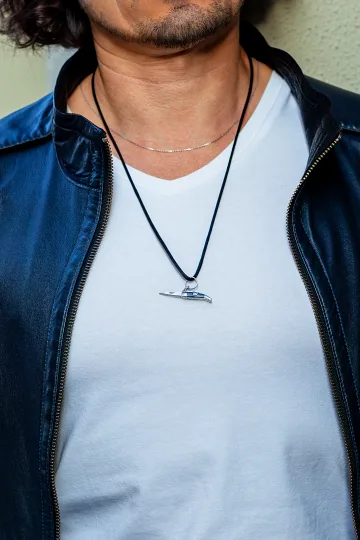




About Zevira
Zevira is a Spanish brand from Albacete, a city of metalworking masters. We love things with character and meaning: symbolism with a history, warm enamel, coloured stones and jewellery that means something to its owner. If you are choosing a sign of memory, start with the look at memorial jewellery after the loss of a loved one, and the language of floral motifs is covered in the large guide on flowers in jewellery.