Name Jewelry: Script Necklace, Ring and Bracelet With Your Full Name
A name on a piece of jewellery is not a modern invention. In ancient Egypt a cartouche holding a name was worn on the chest as protection for the soul: people believed that as long as the name survived, the person stayed alive in this world and the next. Erasing a name meant killing twice. So when you order a necklace with your own name, you repeat a gesture more than three thousand years old.
Today this piece goes by several names: nameplate, script necklace, name pendant. The idea is the same: a whole word, usually a name, shaped in metal and hanging from a chain. Not a single letter, not woven initials, but a name that reads at a glance. Below we trace where the tradition came from, how a name necklace differs from a monogram, what types exist, how to choose a font and a length, which alphabet to use, and how to care for thin letters so the script does not bend within a month.
What name jewellery is and where it came from
Name jewellery is any piece where a name or word is the main element rather than a small engraving hidden inside. Most often it is a necklace where the letters are cut or built from metal and form the pendant. But a name lives on a ring, a bracelet, and earrings too. The key difference from ordinary engraving: the name here is visible on the outside, it is the ornament itself, not a private note for insiders.
The name cartouche in ancient Egypt
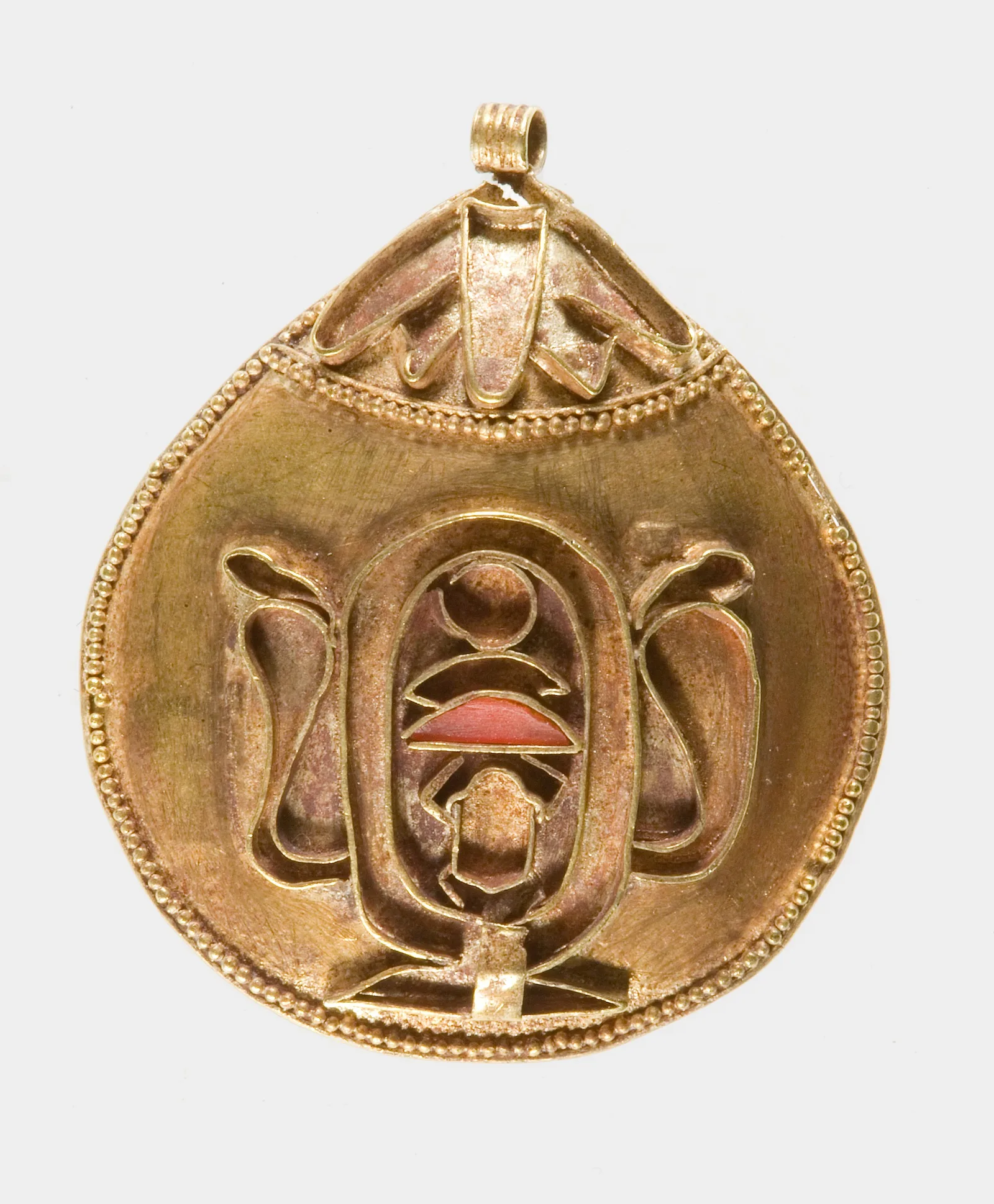
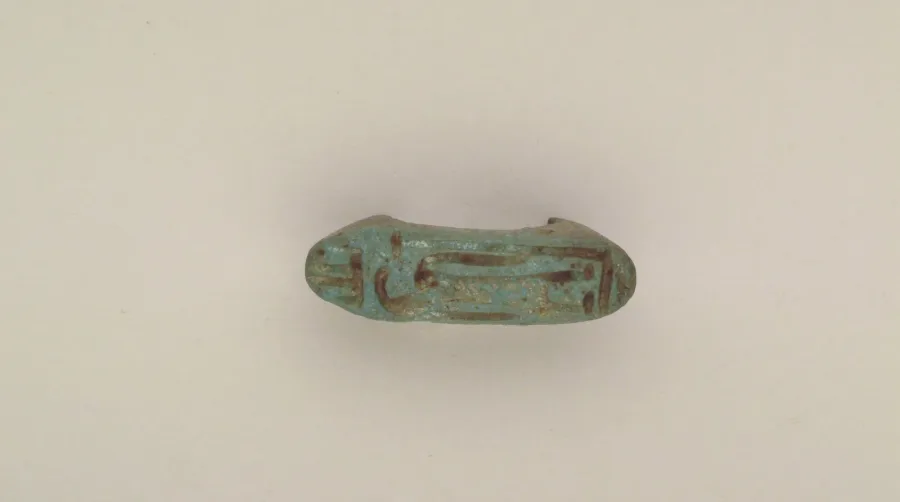
The oval frame around a ruler's name is called a cartouche. Egyptians enclosed the name in a closed loop of rope to shield it from evil forces on every side. Cartouches were carved on temple walls, but they were also worn: gold cartouche pendants went into tombs so the soul would not lose its name in the afterlife. The logic was literal. The name counted as one part of a person, equal to the body and the shadow. Destroying an enemy's name by chiseling it off every monument meant erasing that person from eternity. So the first name pendant in history was not an ornament but a charm for the soul.
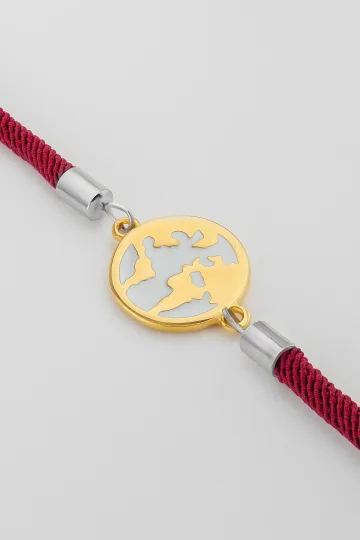
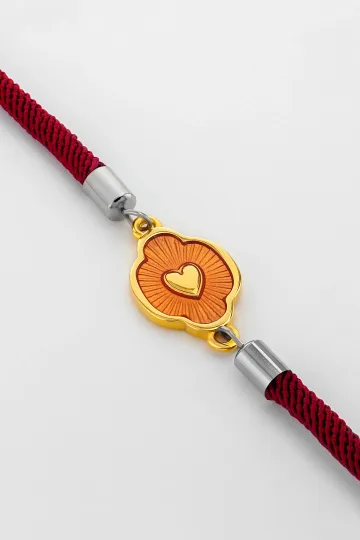
Wear the symbol, don't just read about it. These are in stock:


Victorian name brooches and lockets
In the nineteenth century the name on jewellery was reborn. Brooches came into fashion that spelled a loved one's name in gold wire over enamel, along with lockets that hid a lock of hair and an engraved name inside. A genre of its own was mourning jewellery: after a death people wore a brooch with the lost name and dates, sometimes in black jet. Carrying a name on the body became a way to keep a person close, exactly as in Egypt, only the motive shifted from protecting the soul to keeping the heart's memory. The same years brought posy rings with a name inside the band and lockets that paired a name with a tiny portrait.
Signet rings and the name as a signature
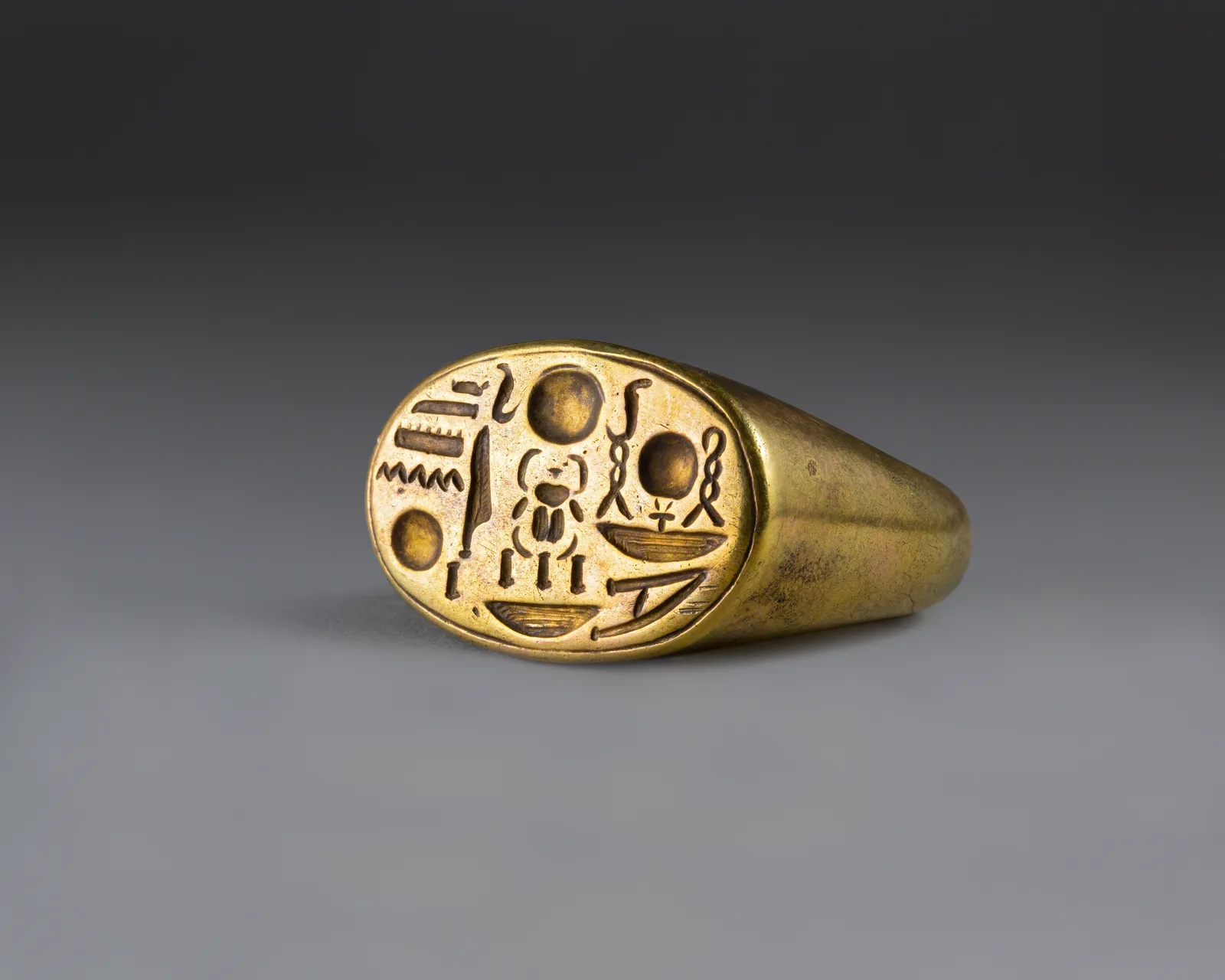
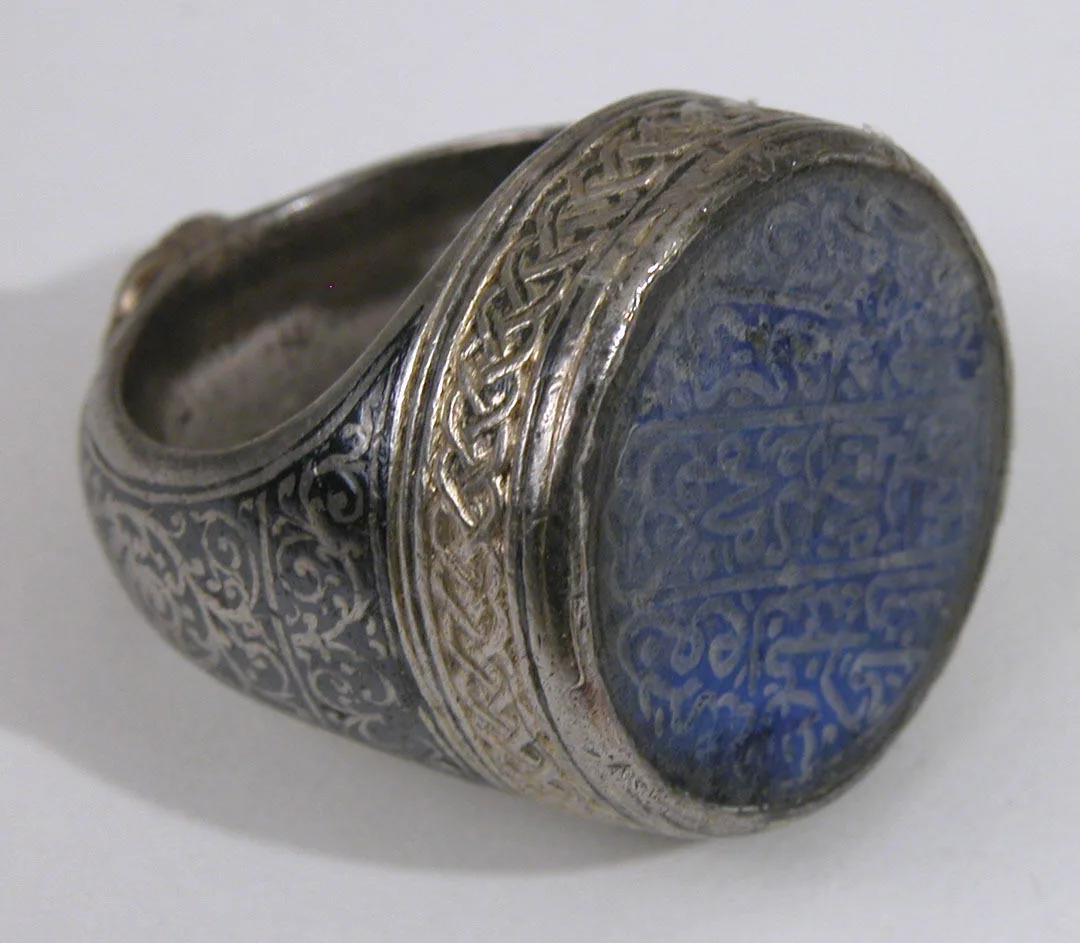
Between Egypt and the Victorians, the name in metal passed through another important age. In antiquity and the Middle Ages a ring carved with the owner's name served as a signature: it stamped a personal seal in wax, sealing letters and contracts. A name on a ring was a legal tool, proof that a document came from this specific person. Here the name turned from a charm into an identifier, an early form of the personal signature. People wore the name ring at all times, because without it no paper could be validated, and losing such a ring risked a stranger forging your will.
The surge of the trend in the late twentieth century
By the end of the twentieth century the necklace with a name spelled in cursive gold went from a one-off piece to a mass phenomenon, especially in big cities. Jewellers began bending the name from a single wire, copying a living handwritten hand, and such a pendant became a marker of a neighbourhood, a family, an identity. Wearing your own name around your neck meant declaring: this is who I am, no explanations. From a subcultural sign the piece moved quickly into mainstream fashion and has not disappeared since: every few years the wave returns, only the fonts and metals change.
Why the name comes back every decade
The fashion for the name runs on a cycle, and the reason it endures is deeper than a seasonal whim. A name is the most personal object a person can wear, and demand for the personal never falls, only its shape changes. Some years favour a massive gold name on a thick chain, others a thin minimalist stroke with almost no weight, then gothic blackletter or block capitals come back. But the basic wish to wear your own name or the name of someone dear stays constant, which is why the piece outlives any shift in style.
How a name necklace differs from a monogram and initials
These are different things, though people often confuse them. A name necklace shows the whole word, you can read it aloud to a stranger. A monogram or initials are a compressed code of one to three letters, legible first of all to the owner and to those close. In short: a name says "my name is Anna," a monogram hints "A.K." and invites you to guess.
A name reads, a monogram needs decoding
A full name on a pendant needs no explanation. Anyone will read "Maria" and understand. A monogram works like a personal seal: the woven letters form a handsome pattern, but who stands behind it is unclear from the outside. So a name is about openness and recognition, while a monogram is about privacy and a family cipher. If you want exactly that encoded sign, there is a detailed breakdown in the guide to initials and monograms.
Different visual weight and length
A name takes up more room: five to seven letters stretch across the collarbones in a horizontal line. A monogram is compact, it fits in a round or oval medallion and reads as a single badge. This affects the choice: a name needs a longer pendant and a well-judged chain, while a monogram is happy on a small pendant. A name is harder to make, because each letter is a separate point of attachment and a potential break.
When to choose a name and when a monogram
People choose a name when they want something personal, warm, and obvious: a gift for a mother with her child's name, a couple's necklace, a piece for yourself. A monogram is chosen for restrained elegance, family continuity, a business look where a loud name on the neck would be out of place. Many end up with both over time: a name for every day and a monogram on a signet for formal occasions.
A name and an engraving are also different things
A name as a pendant and a name engraved inside a piece solve opposite tasks. The name pendant shows the world; the engraving hides for yourself. A concealed inscription inside a ring band or on the back of a locket is an intimate message that only the owner sees when the piece comes off. An open name on the front is a statement outward. The two are often combined: a child's name on the front, the birth date in tiny type inside the pendant. What to engrave and how to do it cleanly is covered in the engraving guide.
A name rides a bare collarbone and gets read aloud. Hide it under a turtleneck and you may as well go by nothing.
How to wear name jewellery
A name on the neck has been through dozens of my shoots and fittings. Here is what actually works, sorted by length, font and occasion rather than by pretty words.
How do I wear a name every day? For an everyday look I recommend a fine cursive or a clean block name on a mid-length chain over a plain top with an open neck. A light background lifts the letters, a dark one turns the name into a contrasting accent. Skip a busy print under the name, the letters drown in the pattern. One script on bare skin reads better than any crowded stack.
How do I layer so the name does not get lost? I always set the name as the lowest, longest tier, with shorter chains above carrying small pendants or none. The gap in length between tiers has to be clear, or the chains merge and tangle. I would not hang a second loud element next to the name, two accents split the look. The pair "name plus a modest symbol" works, two names side by side is already too much.
Is a name right for the office? It can be, if you keep it restrained. For a strict dress code I choose a fine, small stroke that only reads up close, or I move the name to a modest ring. Silver and steel sit quietly under a business shirt and draw no extra attention. A big block plate in all caps does not belong in a meeting room, save it for going out.
What length and neckline suit a name? A horizontal name I recommend sitting just below the hollow between the collarbones: too short crowds the letters at the throat, too long sinks it into the neckline. Under a high collar I take a shorter chain so the name stays above the collar line and does not catch threads. Under a deep neckline I suggest the vertical format, it runs along the neckline instead of fighting it.
Gold or silver, cursive or block? Warm gold and an airy cursive I choose for a romantic, personal look. Bold block letters and a heavy chain I suggest for those who want to speak up. Silver, steel and a fine stroke I recommend for daily wear you never take off and for a strict style. You match length and font to the neckline and the person, not the other way around.
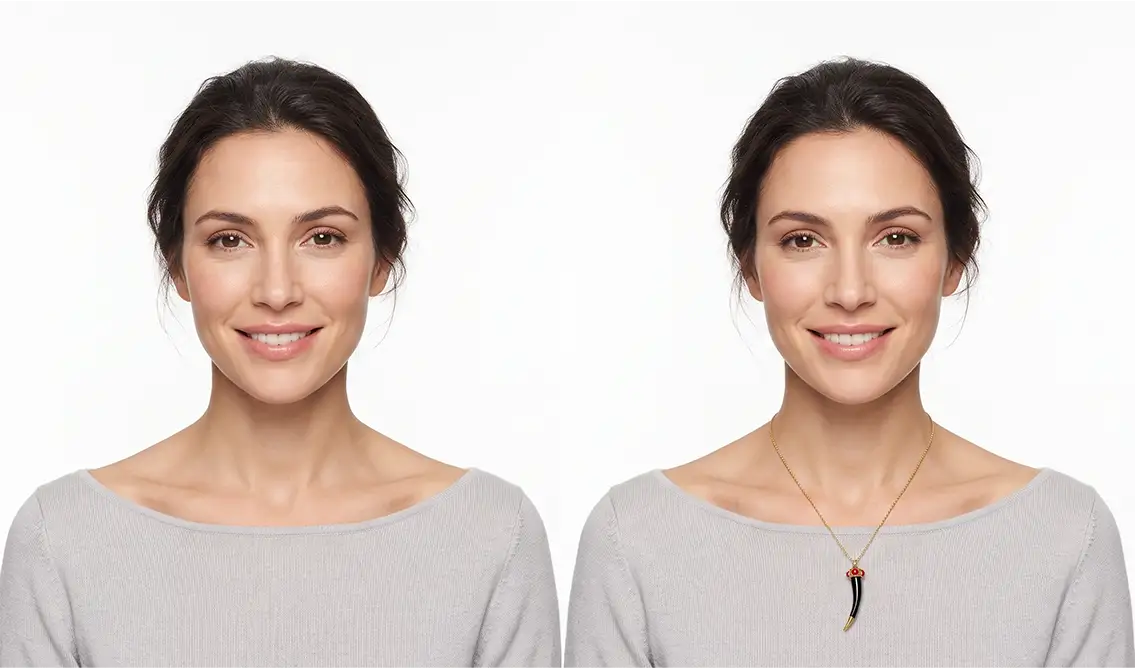
Turn on your camera, pick earrings, a pendant or a ring, and see the piece on yourself in real time.
Switch items in one tap.
Everything runs in your browser: no photo or video is ever uploaded.
Types of name jewellery
A name can be set on almost any object. The shape changes both the character of the piece and how visible the name is. Here are the main options, so you can see what suits you.
The horizontal script necklace
The classic of the genre. The name is written in joined cursive and sits horizontally along the collarbones, the letters linked in one line like a stroke of the pen. The pendant attaches to the chain at two points, at the ends of the name, so it hangs straight and does not flip. This is the most recognisable format: the name reads left to right, as on a page. It suits short and medium names; long ones have to be shrunk in size.
The vertical name necklace
Here the letters stack one under another, and the name runs down the chest like a column. The vertical line visually lengthens the neck and looks good under a deep neckline. This format is handy for long names that would stretch too wide in a horizontal layout. The downside is that a vertical name reads a touch slower; the eye is used to a line, not a column.
The name ring
The name wraps around the finger on the outside of the band or sits on the flat top plate of a signet ring. A name ring is worn every day, it is quieter than a necklace and does not draw as much attention. A name on a ring is short by necessity: five or six letters fit comfortably on a band, the rest crowd together. People often choose a short form of the name or a single word instead of the full one.
The name bracelet
The name is fixed as a central plate between two lengths of chain, or engraved on the flat bar of a bar bracelet. A name bracelet beats a necklace in one way: it is always in front of the owner's own eyes, visible while you write or hold a cup. That makes the bracelet a popular gift, one a person keeps glancing at through the day.
A necklace with a child's name for a mother
A separate and very warm genre. A mother wears her daughter's or son's name on her neck, sometimes several children at once, set in a row or on separate bar pendants. When there are several children, the names are often made as removable links, so a new one can be added with the birth of each child. This piece is rarely taken off, it becomes part of the look for years.
Two lovers' names on one pendant
Two names are interwoven or set side by side, sometimes joined by a heart or an infinity sign between them. There is also a paired version: each partner has a pendant with the other's name, so the names are worn on each other. This is a close relative of matching jewelry for couples, only instead of a shared symbol a specific name goes into the metal.
Earrings and midi rings with a name
A name lives on small formats too. On earrings it is set as a pair: one name on each earring, or one name split in two, left and right. This is a rare and delicate genre, because the letters here are tiny and the font has to be as simple as possible. Midi rings for the upper knuckle sometimes carry a short name or a single meaningful letter. The smaller the format, the stricter the demand for legibility: on a centimetre-wide earring an ornate cursive turns into an unreadable squiggle.
A name as a word, not a person
A name on jewellery does not have to be a person's name. A pendant often spells a motto word: "faith," "strength," the name of a place, a date written out, a pet's name, a name a person chose for themselves. Technically it is the same name necklace, and all the rules of font, length, and strength work the same. A motto word is popular with those who want to wear meaning openly without their own personal name. The line between a name and a word is loose here: for the jewellery all that matters is that it is a whole piece of text, not an encoded single letter.
Customer reviews
Zevira is a real jewellery shop. Genuine payments, deliveries and customer thank-yous.
🥰🥰🥰 gracias
Ok, ¡gracias! 🙂
Fonts for a name and legibility
The font decides almost everything. The same "Alexander" in different styles will be either a tender stroke, a strict nameplate, or gothic blackletter. And not every beautiful font is equally easy to read in metal, especially small metal.
Handwritten cursive
The most popular choice for a necklace. The letters merge into a continuous line, the name looks like a living signature. Cursive is romantic and feminine, but that very joining creates the technical trouble: the thin connecting strokes between letters are the most fragile spots of the pendant. The airier the hand, the more delicate the piece, and the more carefully it must be handled.
Sans-serif block lettering
Straight, separate letters, as in set type. Block lettering reads instantly and from any distance, and looks modern and restrained. The letters stand apart, so the pendant is built on a common bar or backing rather than from a single wire, which makes it sturdier than cursive. A good choice for long names and for anyone who values clarity over the romance of a stroke.
Gothic blackletter
Angular letters with breaks and serifs, dense and dark to the eye. Gothic gives a name drama and character and pairs well with dark metals and black patina. It is harder to read: an unfamiliar eye trips on the complex letterforms. So gothic is for when mood matters more than instant legibility, and when the name is short.
Rounded and calligraphic serif fonts
Between pure cursive and strict block lettering lies a middle world: rounded fonts with soft drops at the ends and calligraphic styles with fine serifs. They give a name weight and a classic look, like an old calling card. Serifs are beautiful, but they are extra thin tabs that snap off and catch on clothing more easily. A rounded font with closed letter loops is stronger than an airy stroke, because it has fewer long thin strokes floating in empty space. For an everyday name this compromise often works out better than the extremes.
Capital or lowercase at the start
A small but important detail: a name can start with a capital and continue in lowercase, as in ordinary writing, or be set entirely in capitals. A name with an initial cap and lowercase looks softer and reads like a natural word. A name in block capitals looks stricter, more graphic, and more visible from a distance, often chosen for short names and mottos. All caps is also stronger: capital letters are usually larger and lack the long thin tails of lowercase letters like "y" or "g."
How not to lose legibility
Three rules. First: the longer the name, the simpler the font should be, or the letters blur into mush. Second: a small size and a complex font do not mix, on a small pendant go for block lettering. Third: check the whole name in your chosen style in advance, individual letters such as a lowercase "l" or "i" in cursive are easy to confuse. Better to see a mock-up of your name before ordering than to guess.
Upload a photo of your pet, someone you love, or an object. We'll build a 3D model and hand-cast it in pewter.


Name length and choosing a chain
The name and the chain work as a pair. A mistake with length turns an elegant piece into an awkward one: the pendant either gets lost below the collarbones or dangles too high.
Short and long names
A short name of three or four letters sits compactly and hangs straight on almost any chain. A long name of eight or more letters stretches wide, and here there is a choice: shrink the letter size, switch to a vertical layout, or use a short form. Very long names in a horizontal layout look like a stretched line and can run onto the shoulders, worth thinking about in advance.
What chain length suits
For a horizontal name take a chain on which the pendant lands just below the hollow between the collarbones, usually a mid length. Too short presses the name to the throat and forces the letters to curve; too long sinks it into the neckline. If you plan to layer with other chains, the name is usually made the lowest and longest tier. There is a full chain length guide on choosing length in detail.
Pendant weight and chain tension
The bigger and heavier the name, the stronger the chain needs to be, or a thin link will bend open under the weight. A light name from thin wire lives well on a delicate chain. A massive nameplate hangs on an anchor or curb chain that holds the weight and does not tangle. A mismatch between pendant weight and chain is a common reason jewellery breaks quickly at the point of attachment.
One attachment point or two
How exactly the name hangs on the chain matters more than it seems. If the pendant attaches at a single ring in the centre, the name tilts sideways and tends to turn its face to the body, and all the load gathers in one spot. Attachment at two points at the ends of the name holds the pendant straight and facing forward and spreads the weight, so the letters bend less. For horizontal cursive two attachments are almost essential, or a thin stroke skews over time. A compact vertical name does fine with a single point on top.



Which alphabet to write a name in
A name can be set in any alphabet, and the choice of script is both practical and cultural. Different writing systems give the very same name a completely different look.
The Latin alphabet and accented letters
The Latin alphabet gives the familiar joined strokes, and more cursive fonts are worked out for it than for any other. Names with accents and diacritics, such as José, Zoë, Chloé, or François, need extra care: the accent mark is a tiny separate element that can snap off or read as a smudge if the font is too thin. A clean style keeps a diacritic legible, while an airy cursive can swallow it. Many people choose their native spelling on principle: a name with its proper marks is more honest than a stripped-down version. Dropping the accents is fine when the piece travels to a country where locals would not recognise them anyway.
Arabic script
In Arabic writing the letters join naturally, so the name forms a smooth continuous line on its own, without artificial merging. A name in Arabic script on a pendant looks like ready-made calligraphy, flowing and ornamental. This is an art tradition in its own right: Arabic calligraphy was for centuries the leading visual art of the region, and a name set in it reads as a work of calligraphy rather than a plain inscription.
Hebrew and other writing systems
Hebrew is written right to left, the letters stand apart and square, and the name comes out strict and rhythmic. Names with a religious or family meaning are often ordered in Hebrew. Beyond these systems a name is also set in characters such as Chinese, in Devanagari, and in Georgian script, each with its own character. The key point for a cross-cultural order: check the spelling with a native speaker, because one wrong letter or direction completely changes the word.
A name in two alphabets at once
A special order for families and couples from different cultures: one name in two scripts, for example Latin on one side of the pendant and another alphabet on the other, or a name and its translation. It also works for those who live between two countries and want the name read in both. Technically such a piece is harder: either a two-sided pendant or two pendants side by side, and here it matters that the lengths of the two versions are balanced, or the composition will tilt.
Common mistakes in writing a name in a foreign script
A name in an unfamiliar alphabet is a field for costly errors that only a native speaker spots. People confuse similar letters, lose diacritics, set Arabic script mirrored, type Hebrew left to right instead of right to left, lay out isolated forms of Arabic letters where they should join. A finished metal name cannot be redone, so the spelling is approved in advance and always shown to someone for whom that alphabet is native. A screenshot from a translator is no safeguard here, machine transliteration regularly gets names wrong.
Leave your email, we'll send your discount code. No spam, unsubscribe anytime.
The code arrives by email, valid on your first order.
Material and the strength of thin letters
A name in metal is always a compromise between the beauty of the hand and the survival of the piece. A thin letter is beautiful, but the thin part is the first to bend and break. So material here is not cosmetics, it is engineering.
Silver
Sterling silver, 925, is soft and pliable, renders the fine curves of cursive well, and sits pleasantly on the skin. The flip side of that softness: a thin silver stroke is easier to deform if you catch or squeeze it. Silver darkens over time, but that is fixed with cleaning, and many even like a light patina in the grooves of the letters, it adds depth. There is a breakdown of the metal itself in what 925 means.
Steel
Jewellery steel is stronger than silver and barely fears scratches or bending, so thin letters in steel last longer without deforming. Steel does not darken and needs no cleaning, it is easy to wear every day and never take off. The price for that strength is a slightly cooler shine and the fact that steel is harder to work finely, so the most delicate strokes appear on it less often than on silver.
Gold plating
The gold color of a name comes from a coating over silver or steel. This gives a warm tone without the cost of solid gold, but the coating wears off over time on the raised parts of the letters, especially if the name rubs against clothing. On ornate cursive with many thin facets the coating lasts less than on a smooth plate. There is detail on durability in the gold plating guide.
Will the script bend
The main fear of a cursive necklace buyer: the thin connections between the letters will bend open and the name will "drift." The risk is real but manageable. You lower it like this: choose a slightly thicker wire for the connecting strokes, add a second attachment point of the pendant to the chain, do not wear the name to the gym or to bed, take it off before the shower. Block lettering on a backing is stronger than cursive in the air, and steel is stronger than silver. If the piece is treated gently, the script holds its shape for years.
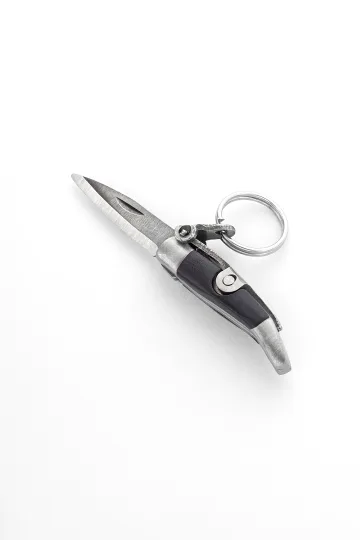
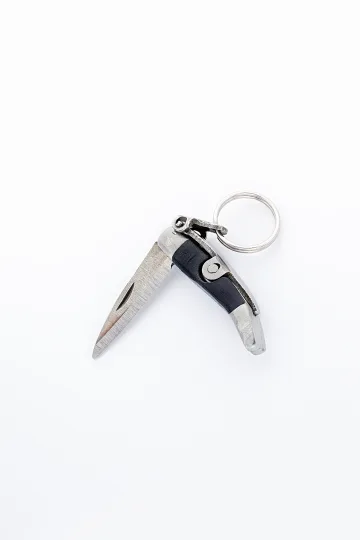
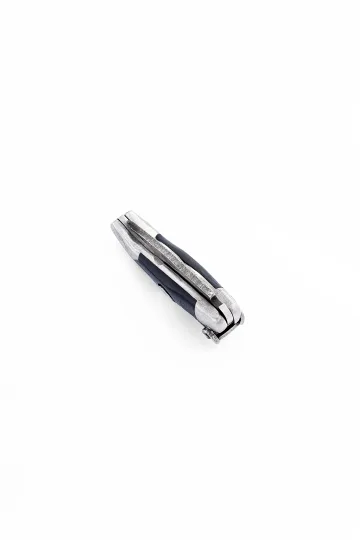
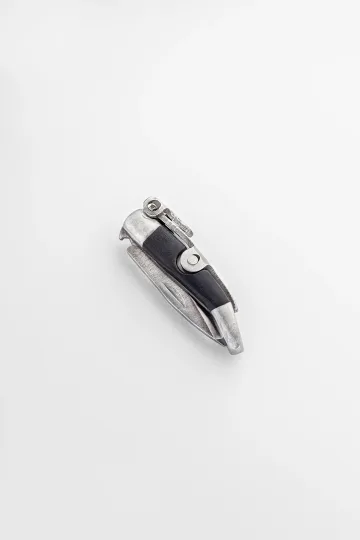
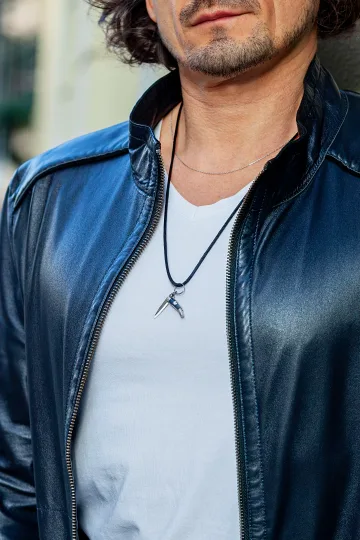
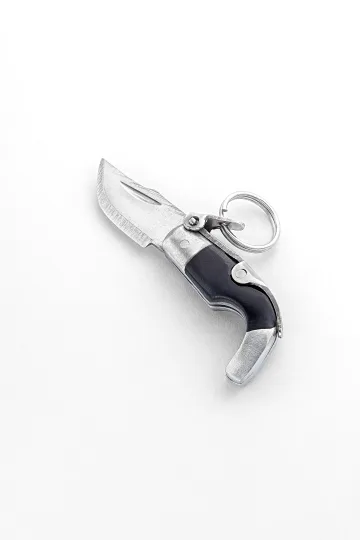
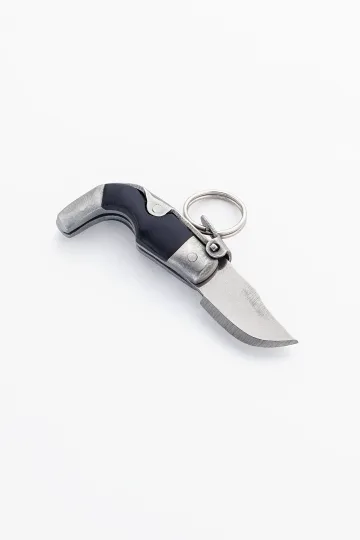
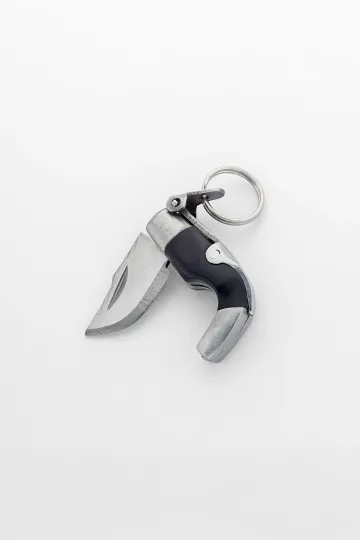
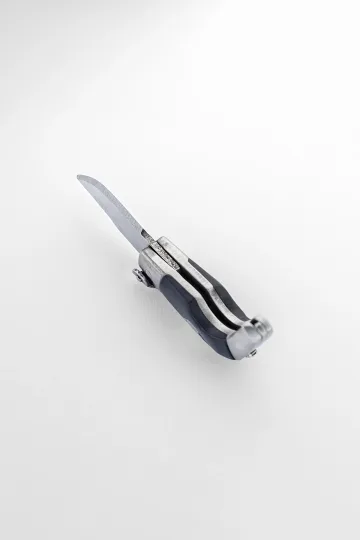
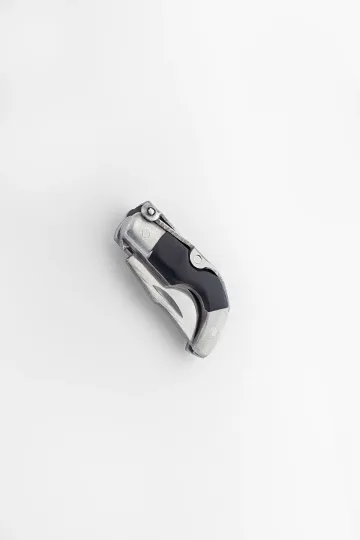
CAPAORA mini knife pendant
The 18th-century Spanish navaja in miniature: 40 mm of stainless steel, a real folding mechanism and a Palanquilla lock that clicks. An affordable gift to remember.
Authentic · Ships from Spain · 14-day returns
Who name jewellery is given to
A name on jewellery is a targeted gift: it is made for one specific person and suits no one else. That is exactly why it is so valued, it cannot be resold or passed on.
For a newborn and as a christening gift
A child's name on a tiny pendant or bracelet is a classic gift for a birth and a christening. Often such a piece is not worn at once but set aside as the first treasure a person will receive as an adult. A name with a birth date turns the jewellery into a family time capsule.
For a mother
A mother is given her child's name or the names of all her children. It is one of the safest choices: the piece speaks of what matters most to her, and it is worn for years without coming off. When a new child arrives, another name is added to the necklace, and the jewellery grows along with the family.
For a couple
Lovers are given two names on one pendant or a paired set where each wears the other's name. It is an emotional gesture with a direct message, no hints, no riddle symbols. A partner's name on you reads unambiguously, so such a gift is made at a serious stage of a relationship.
For yourself
People buy a name for themselves more and more, and it is not selfish but self-affirming. Your own name on your neck is a way to declare yourself, to mark an identity, sometimes to note a personal milestone: a new name after a change of surname, a name you chose yourself. A gift to yourself needs no occasion and depends on no one, there is a separate guide to buying jewelry for yourself.
A name in memory of someone gone
The name of a dear person who is no longer here is worn as quiet memory. It is a direct continuation of the Victorian tradition of mourning jewellery: a name in metal keeps a person close every day, without words or explanations. Sometimes a meaningful date is added to the name, sometimes the pendant is bent from the real handwriting of the one gone, so it is literally their hand in metal. Unlike a loud look, such a name is usually kept under clothing, closer to the body. It is the most personal of all the reasons and the most silent.
Why a name cannot be regifted
A name piece is the one gift that physically cannot be handed to another or resold secondhand, because it carries someone else's specific name. That "untransferability" is its value: the piece was made for one person and says that they were thought of separately, not pulled off a shelf as a generic souvenir. The flip side is the same: you cannot get the name wrong, a typo in metal is irreversible, and the wrong form of the name spoils even the most expensive gift.
Caring for openwork letters
A name with its thin elements needs a bit more attention than a smooth pendant. The good news: the care is simple if you know the weak spots.
Cleaning without damaging thin strokes
Openwork letters are cleaned with a soft brush and warm soapy water, working gently between the strokes, then patted dry with a soft cloth. Hard brushes and abrasive pastes wear off the thin facets and strip the plating, so they are avoided. A silver name is freshened with a special silver cloth, without pressing on the thin connections. The complex curves of cursive are convenient to clean with the same kind of brush you use for teeth, only a new and soft one.
How to store it so the name does not catch
A thin name easily catches on other chains and on fabric, and that is most often how it bends and tears. Store it separately: in a soft pouch or its own compartment of a box, not tossed into a common heap. If the chain with the name tangles, do not pull by force but untangle it with a needle on a flat surface. There are separate tricks for untangling in the chain care guide.
When to take it off
The name comes off before sleep, the shower, sport, and cleaning with chemicals. Sleep crushes thin letters against the pillow, water and sweat speed up the darkening of silver and the wear of plating, knocks during sport bend the strokes. A simple rule: a name is jewellery for "going out among people," not for physical exertion. Taken off in time, it lasts many times longer.
Facts about name jewellery that surprise
A few things about a name on jewellery that people usually never consider.
Erasing a name meant killing
In ancient Egypt the name counted as part of the soul. That is why pharaohs ordered the names of their predecessors chiselled off walls and statues: destroying a name meant erasing the person from eternity, denying them an afterlife. A name pendant in a tomb was the soul's insurance against such a "second murder."
A name as protection, not ornament
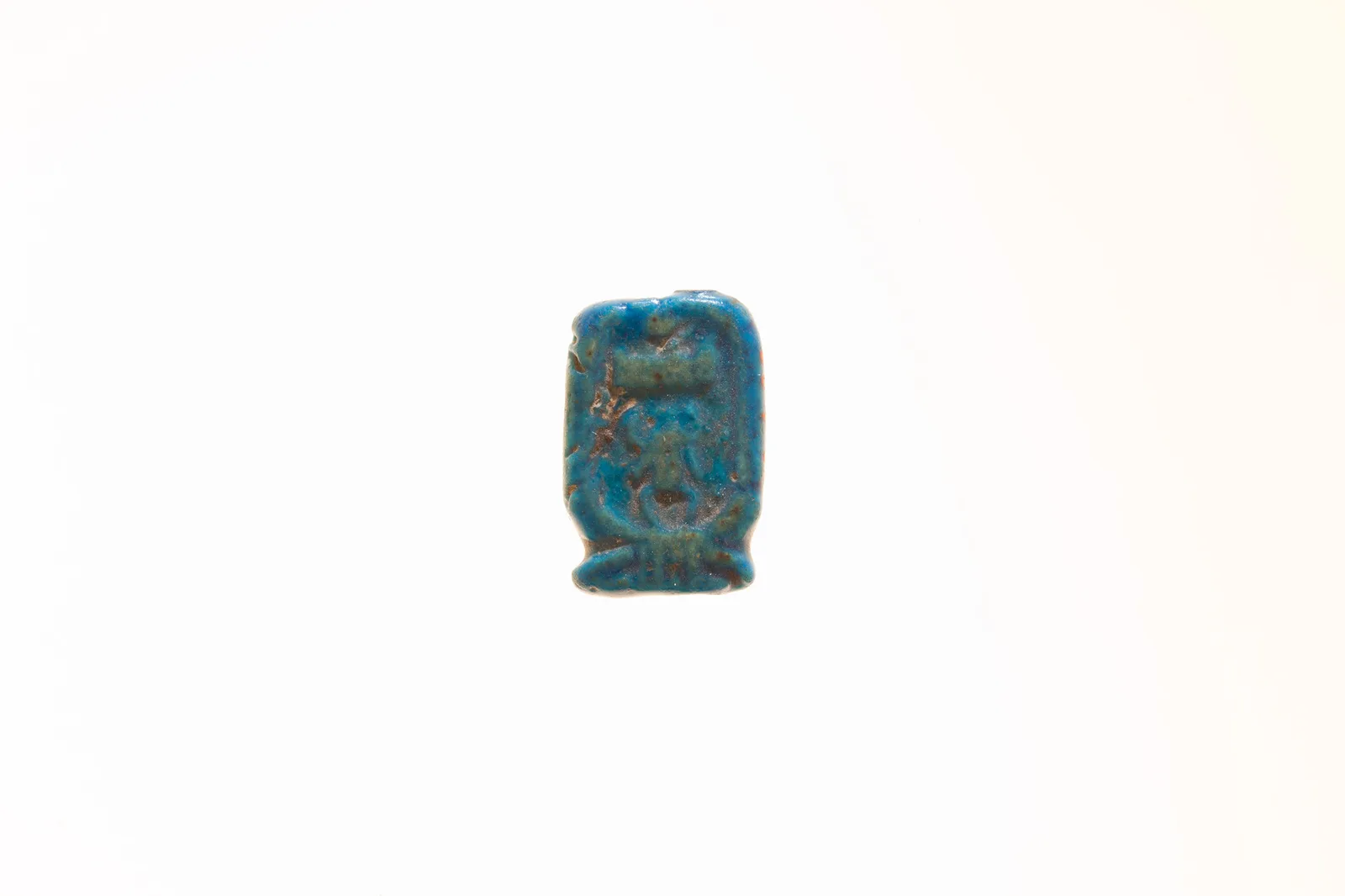
The earliest name pendants were charms. The cartouche closed the name in a protective loop of rope, walling the owner off from evil on every side. The idea that a spoken or written name has power is alive today: in many cultures the true name was guarded while an everyday name was used, so that evil forces could not reach the essence of a person.
Cursive on a pendant is someone else's hand
Most cursive names on a necklace are not set in your own handwriting but drawn from a standard calligraphic font. At the same time there are workshops that bend a name from your actual signature or from a loved one's handwriting, and then the pendant becomes literally the stroke of a specific hand. A name written by a grandmother's hand and translated into metal is already an heirloom.
Removable names grow with the family
Necklaces with children's names are often made on removable links for a reason. This lets you add a name with each new child without remaking the whole piece. The result is jewellery that physically grows with the family, like growth rings on a tree.
A name in jewellery is older than writing names on paper
Names were set in metal and stone earlier than cheap paper for everyday notes existed. That is, a name as ornament and charm existed in eras when an ordinary person could go a whole lifetime without once writing their name on anything but their own amulet.
Send a friend a discount code, they save on their first order.
Frequently asked questions about name jewellery
How does a name necklace differ from a monogram?
A name necklace shows the whole word, read aloud at first glance. A monogram is a compressed pattern of one to three letters, legible first of all to the owner. A name is about openness and recognition, a monogram about a private family cipher.
Will thin cursive bend?
With careful wear, no. The weak spots are the thin connections between the letters. You lower the risk with thicker wire for the strokes, a second attachment point to the chain, and the habit of taking the name off for the gym, the shower, and sleep. Block lettering on a backing and steel are stronger than airy cursive on silver.
Which font should I choose for a long name?
For a long name go with a simple block font or a vertical layout. Joined cursive on a long name blurs into an unreadable line and runs onto the shoulders. Before ordering, be sure to look at a mock-up of your whole name in the chosen style.
What chain length do I need for a name?
For a horizontal name a mid length suits, on which the pendant lands just below the hollow between the collarbones. Too short presses the letters to the throat, too long sinks the name into the neckline. When layering, the name is made the lowest, longest tier.
Can a name be made in a non-Latin script or Arabic?
Yes. A name is set in any script: Latin, Arabic, Hebrew, and others. In Arabic the letters join naturally and give ready-made calligraphy. When ordering in a foreign alphabet, check the spelling with a native speaker, one letter changes the word.
Which material is best for an everyday name?
For daily wear without taking it off, steel is the most durable: it does not darken and does not fear scratches or bending. Silver is softer and more beautiful in fine cursive but needs cleaning and care. Gold plating gives a warm colour, but the coating gradually wears off the raised parts of the letters.
What should I give a mother with a name on it?
A mother is given a necklace with her child's name or the names of all her children, set in a row or on removable links, so a new name can be added with each birth. It is a targeted gift, worn for years without coming off.
How do I clean openwork letters?
With a soft brush and warm soapy water, working gently between the strokes, then pat dry with a cloth. Abrasive pastes and hard brushes wear off the thin facets and the plating. A silver name is freshened with a silver cloth, without pressing on the connections. Store it separately so it does not catch on other chains.
The short version
A name on jewellery is an ancient tradition, not a fresh trend: from the Egyptian cartouche charm for the soul to Victorian brooches of memory and the cursive necklaces of big cities. It differs from a monogram in that it reads in full and speaks directly, without a cipher. A name lives on a necklace, a ring, a bracelet, and earrings, set in cursive, block lettering, or gothic, written in any script from Latin to Arabic. The main concern is the strength of thin letters: material matched to the load, careful wear, separate storage. Made and worn with sense, a name piece serves for years and stays the most personal thing in the box, because it fits only one person in the world.
Silver, steel, warm metals, coloured stones, symbolism, matching sets and personalisation.
Buying it as a gift? Each one arrives ready to give.
 A branded Zevira box and a little card come with every order.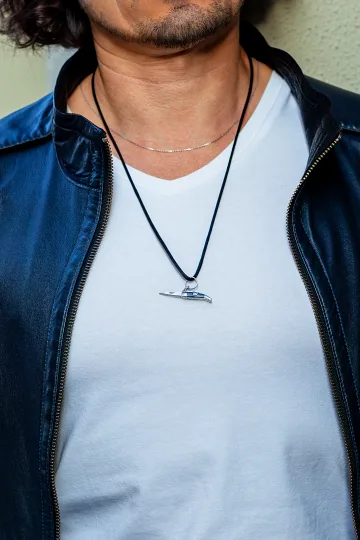




About Zevira
Zevira is a Spanish brand from Albacete, a city of metalworkers. We love pieces with character and meaning: silver and steel, symbols with a history, personal details. If you want an encoded sign instead of an open name, look at the guide to initials and monograms, and how to match a length to a pendant is covered by the chain length guide.