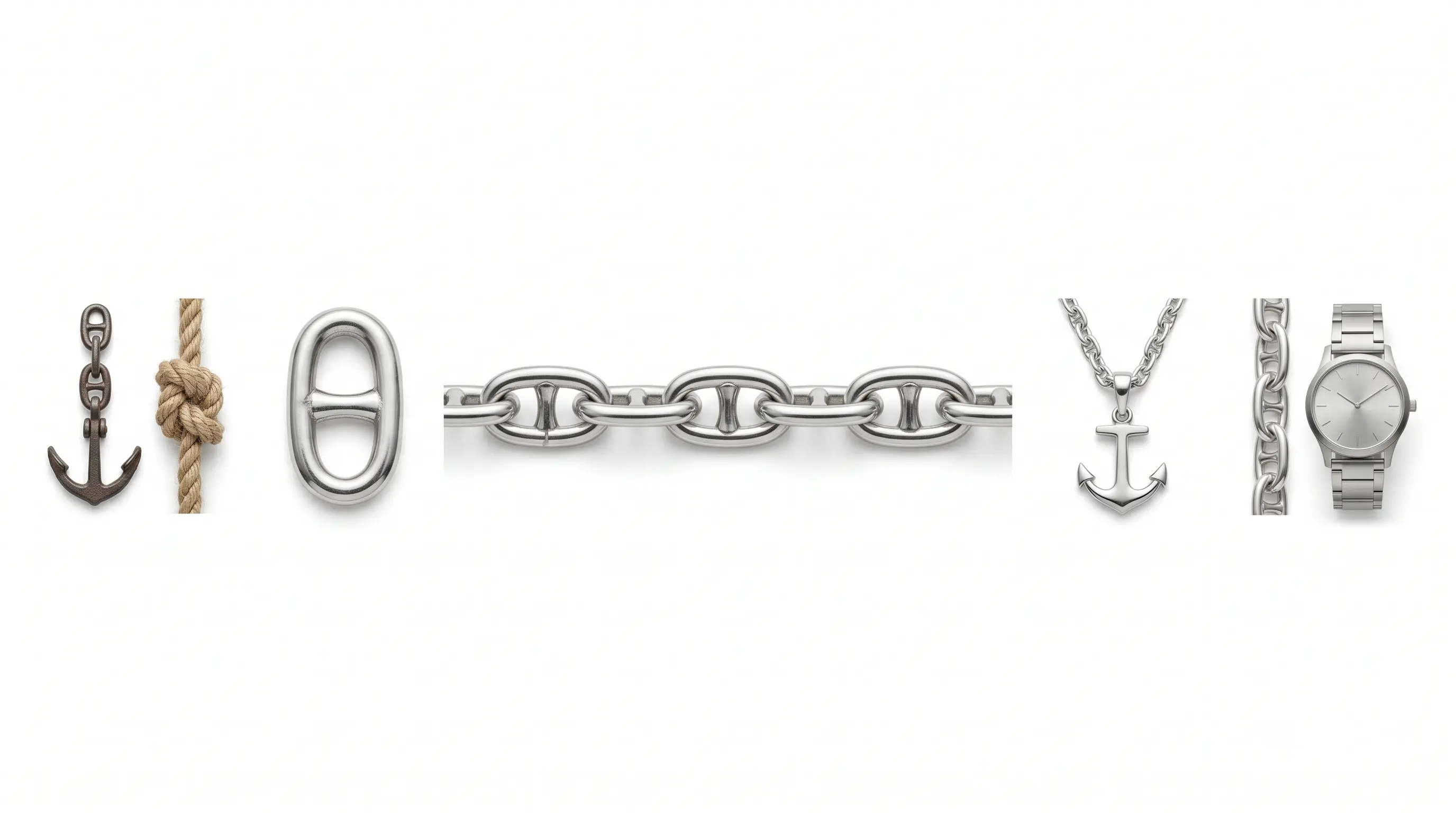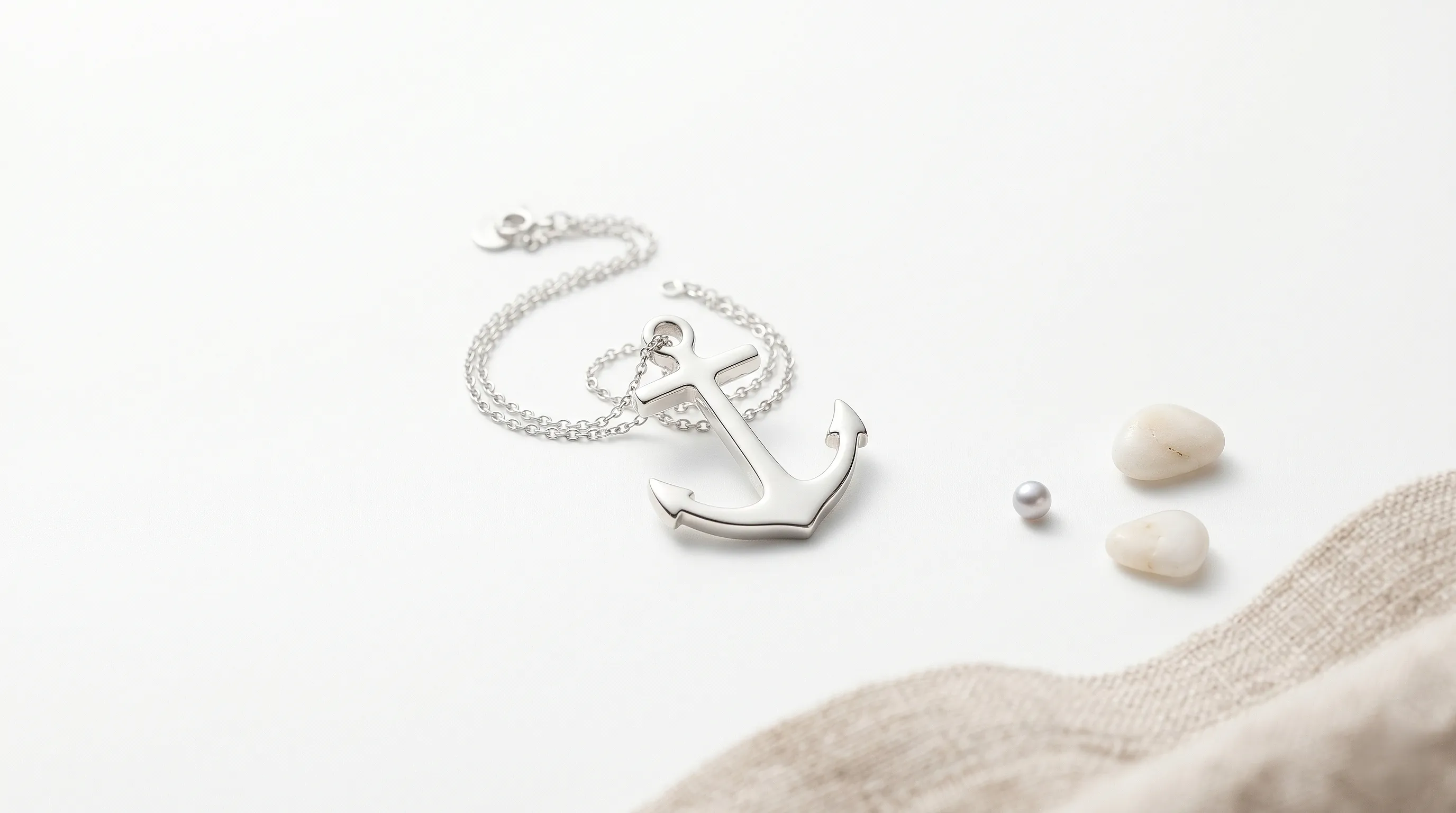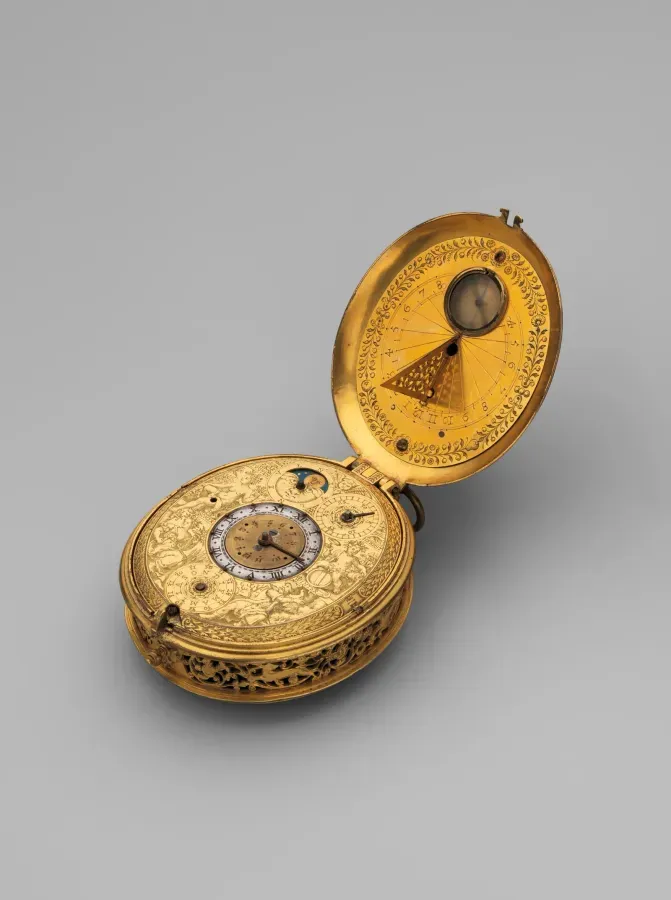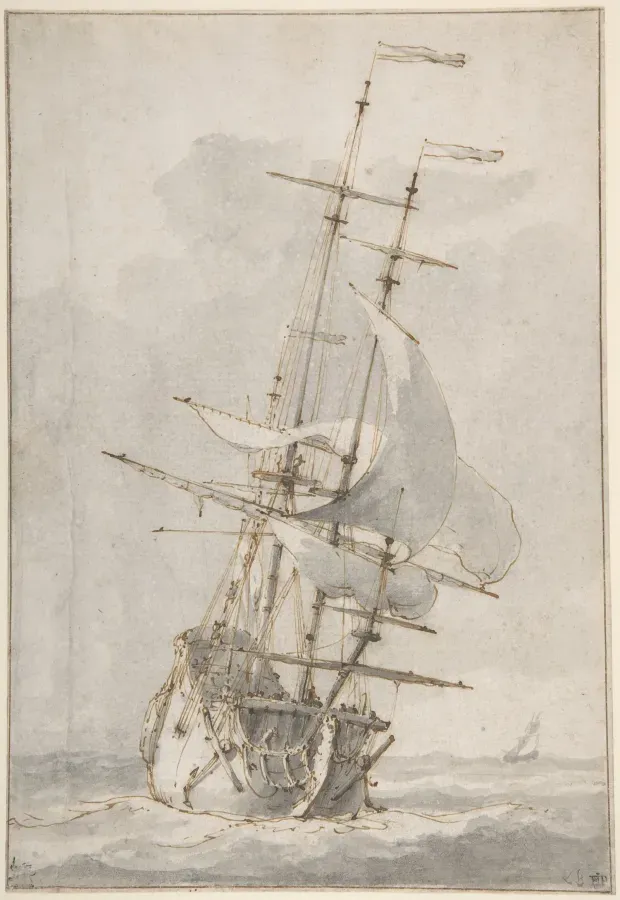
A Gift for a Sailor: Jewellery for People Who Live Between Ports
The small gold hoop in a sailor's ear, the one you see in old portraits from the 1500s onward, was never fancy dress. The story goes that it was funeral insurance: drown in a foreign port, and someone would take the gold to pay for a proper burial. Merchant crews still rotate four months at sea, two at home. Over twenty years that adds up to thirteen years on open water. An anchor here is not decoration. It is a working fact of life.
Life at Sea: Not a Job, a Way of Being
Long absences and a different kind of family
A merchant sailor signs on for three months. Sometimes five. Sometimes eight. This is not a business trip that ends on a Friday evening. It is a particular shape of life: half the year on the ocean, half at home. Or a third at home, two thirds away.
In sailing families there is a state people describe quietly, half married and half alone. The partner runs the household alone, raises the children alone, makes the decisions alone. And yet he exists. Just very far away, with patchy signal and the wrong time zone.
When he comes back, both sides have to relearn how to live together. That takes time. The first week he cannot work out why everyone talks so much. She cannot work out why he keeps staring into the middle distance again. This is normal and it passes. Rituals of leaving and returning carry real weight in these households. A gift handed over at the moment of parting, or waiting at home for the moment of return, says something plain: I remember you exist. I thought about you out there.
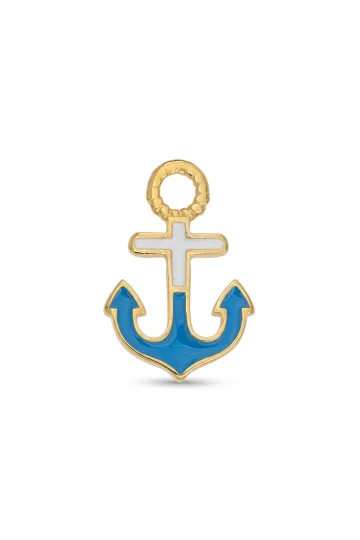
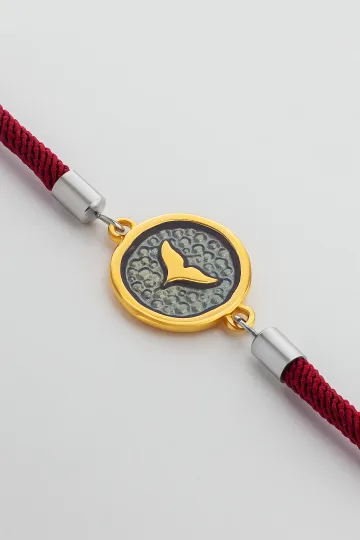
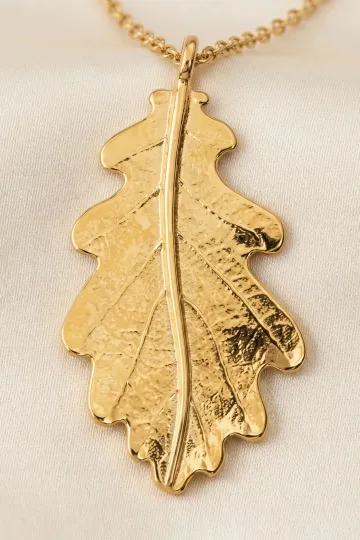
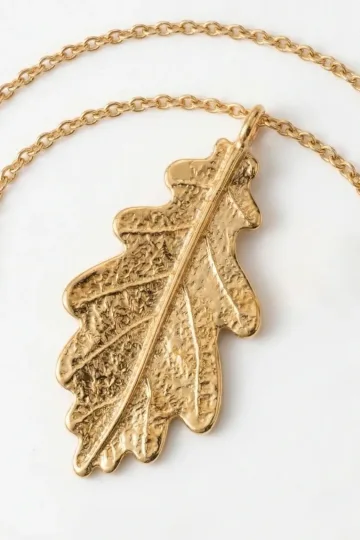
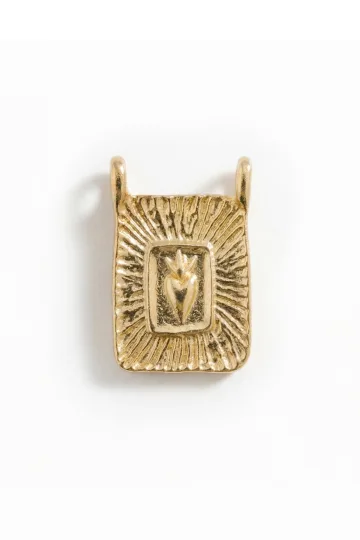
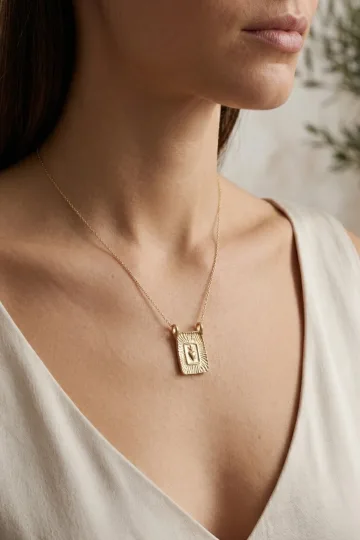
Wear the symbol, don't just read about it. These are in stock:


The rituals of goodbye and homecoming
In harbour towns there are invisible ceremonies. The partner walks the sailor to the gangway. She waits until the ship slips behind the bend of the channel. In some families this is an unshakeable habit: do not leave until it is out of sight, as if the watching itself were part of the protection.
The return is ritual too. Children on the quay. Flowers. An embrace that lasts longer than usual, because the body has forgotten how to take closeness. A gift at that moment, brought back from a port of call or waiting at home, slots into the ceremony without forcing anything.
Jewellery works especially well right here, because it gets worn. Not parked on a shelf. Not buried in a drawer. It stays with the person every day and keeps reminding them. A small anchor on a chain tucked into an apron pocket while supper cooks. A compass under a shirt on the night watch. The presence of an absent person.
Why jewellery outlasts other gifts
A gadget goes out of date. A book gets read. Clothes wear out. A piece of jewellery with a symbol stays. It does not fall out of fashion, because it carries meaning rather than a function. Ten years on, the anchor pendant given on the day of a first voyage means more than it did when it was handed over, because ten years of a life at sea have been added to it.
This is not a clever marketing line. It is what sailors themselves say when you ask them what they take aboard.
Who Counts as a Sailor: The Maritime Trades
Before choosing a gift, it helps to see that the word "sailor" is not a single job. It is a whole continent of occupations, each with its own values, its own symbols, and its own relationship to jewellery.
The merchant fleet
This is the largest seafaring profession on the planet. Officers and ratings of the merchant fleet run container ships, tankers, bulk carriers, ferries, gas carriers, car carriers. They see every port in the world: Singapore, Rotterdam, Shanghai, New Orleans. Yet they rarely get past the dock gate to sightsee. Voyages last three to eight months, and shore leave runs the same.
Merchant sailors are licensed professionals under the STCW convention, often with a degree behind them. The master of a merchant ship runs an asset worth hundreds of millions. It is a technically demanding, deeply responsible trade, and almost invisible to the wider public.
For them a piece of jewellery with an anchor or a compass is a professional identity. They often wear something against the skin: a token from a partner, something bought in a foreign port, something passed down from a father or grandfather who also went to sea. Continuity runs strong in the merchant fleet, and seafaring dynasties are common.
The navy
Sailors in uniform answer to regulations. In dress, jewellery is restricted or banned outright. Off duty, in the reserves, in retirement, it is a different story entirely. A naval officer in civvies can wear what he likes, and an anchor or a compass rose carries a double meaning: the trade, and belonging to a brotherhood.
A retirement gift from the navy is its own situation. The person is saying goodbye to part of who they are. Many naval sailors, leaving the service, describe it as a loss, even when they chose the decision themselves. A piece with a maritime symbol says: what you were does not vanish. You will always be a sailor.
A concrete idea for a naval gift: an anchor with an admiralty silhouette, a compass engraved with the years of service and a fleet badge, a ship's wheel with a date. Heavy silver, nothing thin. The character of someone who served twenty years asks for an object with weight.
The fishing fleet
Deep-sea fishermen work the Bering Sea, the North Atlantic, the waters off Antarctica. It is brutal physical labour in extreme conditions, one of the most dangerous jobs in the world by injury statistics. The deck heels forty degrees, the temperature reads minus twenty, a cable under load can part.
Jewellery in this world tends to be practical and tough: stainless steel or plain silver with no fuss. No fretwork. A gift for a fisherman should be built for years, with strength to spare.
Research and special-purpose vessels
Oceanographers, hydrographers, subsea specialists, icebreaker masters. Well-educated people, often with an academic eye on the world. They sail research vessels into the Arctic and the Antarctic, survey the seabed, lay underwater cable.
For them a maritime symbol works differently, more as a metaphor, a sign of belonging to the circle of people who understand the ocean professionally. A compass or a seahorse on an oceanographer carries an intellectual layer that the same piece on a fisherman does not.
The cruise fleet
Cruise-ship crews are a maritime culture of their own. Thousands of people on one hull, passengers cycling through constantly, hospitality work carried out at sea. Their rhythm is different: a port every two or three days, tourists changing weekly. But the sea is the same sea.
For a cruise crew member, a maritime symbol means belonging to the sea, not to the holiday trade. That distinction matters to them.
The racing sailor
Keelboat racers, regatta crews, yacht-club members. For them the sea is not work but a passion. They pay to enter regattas, buy and maintain boats, take leave for a race. A maritime symbol in this world reads as a declaration: I belong to the sea by choice.
Sailing has its own vocabulary of symbols. A sail, a wheel, a compass, a knot, an anchor. All of it understood without explanation. A racer handed an anchor pendant after winning a regatta has been given something precise.
The circumnavigator
A category of its own. People who walked away from ordinary life for a year or several of sailing around the planet. Or who made a single round-the-world passage. Often middle-aged, with a working life that had nothing to do with the sea, but who decided to go anyway. An engineer, a lawyer, a doctor who bought a boat at fifty and sailed off.
For them a piece that marks the passage is a monument to personal nerve. Not a medal from an organisation. A personal object, chosen alone or given by the people who understood what the act meant.
An anchor wants salt air and an open collar, not a boardroom tie. Wear it under a suit and you have missed the point entirely.
What to Wear It With
Over years on set I have put maritime symbols into dozens of looks, from a working deck to an evening out. Here is what actually holds up, sorted by the occasion.
What do you wear an anchor or compass with every day? For daytime I recommend silver or steel on a sturdy chain or a leather cord over a plain tee, a henley or heavy flannel. Maritime symbolism likes a restrained palette: grey, navy, khaki, white. The pendant settles into an open collar, so I suggest a couple of buttons undone rather than a closed neck.
Does a maritime symbol work at the office? It does, as long as it tucks under a shirt or a thin jumper. That way the symbol stays personal instead of on show. For a man I suggest cufflinks with an anchor or a ship's wheel and one clean bracelet, nothing crowded. I keep the metal tone consistent: silver to the steel of a watch, warm gold to gold fittings.
How do you bring the piece out for evening? For evening I choose a shorter chain: a compass or anchor at the throat reads at once. Dark smooth fabric, a contrasting background, and silver starts working as an accent. On a woman I recommend a maritime symbol under a light dress with an open neck, in fine layers of different lengths: a lighthouse or seahorse on top, a discreet chain beneath.
How many pendants at once? One with meaning. A single anchor on a clean chain always beats five random charms: a maritime symbol is strong when it is seen. If you build layers, keep one metal and vary the length so the eye travels top to bottom rather than getting lost.
Who does a maritime symbol actually suit? Calm, collected people drawn to the idea of a bearing and a return. I suggest choosing length by occasion: short, up to forty centimetres, for evening and an open collar; long, fifty to sixty, for everyday wear on the chest.

Turn on your camera, pick earrings, a pendant or a ring, and see the piece on yourself in real time.
Switch items in one tap.
Everything runs in your browser: no photo or video is ever uploaded.
Sailors' Superstitions and Jewellery: A Tradition Thousands of Years Old
Among sailors, especially the older generation, superstition is alive and well. Much of it looks strange from dry land. But at sea, where life depends on weather, machinery and luck, superstition turns into a way of managing fear. It is not naivety. It is an attempt to find some control where there is almost none.
What you must not do aboard
You must not whistle on deck: you will call up a storm. You must not rename a ship without the proper ceremony of striking the old name, or the luck leaves with it. You must not bring an umbrella or cut flowers aboard. In the British tradition you must not say the word "drowned" or the word "rabbit". You must not let a red-haired person come aboard first, again a British habit.
Across different fleets and cultures the taboos multiply and contradict each other, yet each one lives in its own port and its own tradition. And the very same tradition actively encourages wearing a charm. There is no contradiction: the taboos are about actions, the charm is protection against the consequences.
The gold hoop in the ear
One of the best known sailor traditions is the earring. In the historic merchant fleet, from roughly the sixteenth century, sailors wore a small gold hoop as a form of insurance. If a sailor drowned and his body washed ashore, the gold in his ear was meant to cover the cost of a Christian burial. A body with an earring was not buried nameless in a common pit.
By the common account, the gold was a premium a man carried literally inside his own body, enough to pay for a grave in the nearest port. The archives do not confirm the story firmly, but maritime folklore has held onto it for centuries.
Today the tradition has been reimagined. A stud earring with an anchor, or a hoop with a maritime symbol, is both history and something personal. To give a sailor who wears piercings an earring with a maritime symbol is to hand over a piece with a thousand years of history and, at the same time, something thoroughly modern.
Tattoos as a record of a life at sea
Sailor tattoos are a coded system several centuries old. An anchor on the forearm meant you had crossed the Atlantic. By one tradition a turtle marked crossing the equator, and the sailor himself was called a shellback. A dragon meant sailing the waters of the Far East or China. A swallow on the chest stood for five thousand nautical miles travelled. A swallow on each shoulder stood for ten thousand. The pole star, for the navigator, the one who lays the course. A pig on one foot and a rooster on the other, a charm against drowning.
These symbols now migrate from skin to jewellery. When you give an anchor pendant, this tradition stands behind it, even if neither you nor the recipient thinks of it directly. Symbols carry meaning whether or not the wearer knows the whole history.
Charms and talismans on the voyage
In many fleets the tradition of carrying a charm to sea is alive. A cross worn against the skin, a coin given by family, a medallion of Saint Nicholas, the patron of sailors, or of the Virgin Mary. Some sailors carry a small religious image wherever they go.
A piece from a loved one, taken to sea, occupies exactly this place in the mind. A beautiful thing. Protection. A connection. A reason to come back. Sailors say it plainly: I look at it and I think of home.
In Japanese seafaring there was a tradition of netsuke: small figures fixed to the belt, carrying a protective meaning. Sea netsuke in the shape of turtles, fish and waves were popular among fishermen. The principle of a small object with a large meaning in your pocket is universal and alive to this day.
Customer reviews
Zevira is a real jewellery shop. Genuine payments, deliveries and customer thank-yous.
🥰🥰🥰 gracias

Ok, ¡gracias! 🙂

Jewellery for the Milestones of a Life at Sea
The first voyage
This is the moment of initiation. A young person, fresh from a maritime college or academy, goes to sea for the first time. For the family it is an enormous event: pride and dread mixed in a proportion words cannot describe. The mother who smiles because her son got what he wanted, and at the same moment wants to ring and say, do not go.
A gift for a first voyage should carry symbolic weight without being pompous. The father who hands his son an anchor pendant on the quay is doing the right thing. It is a blessing in the shape of an object.
An anchor pendant, a compass on a chain, a sailor's knot as a bracelet, all of it works here perfectly. The traditional engraving for a first voyage: a name, a date, the words "fair winds" or simply "come back".
The first foreign port
The first foreign harbour, the first international voyage. Another milestone. For someone who grew up inland, the first time you cross a border by ship is a stamp in the passport. It is the world getting larger.
For a regular seafarer that border between ports has worn away, but the psychological weight of the first "other port" stays with a newcomer. A sailor remembers the first place where the language on the dock was not their own, the first time the smell of the air on arrival was unfamiliar.
A gift for a first foreign port: a lighthouse pendant (it points the way to an unknown shore), a compass rose (open to all four directions, ready for any course), a seahorse (in the Mediterranean tradition, a patron of seafarers). Engraving: the name of the first foreign port, or its coordinates.
Crossing the equator
Crossing the equator at sea is an old initiation, the "ceremony of the line". Those who cross for the first time pass through a rite and become shellbacks. It is a serious marker in the biography of a maritime professional.
A piece with a turtle, which by one tradition is linked to crossing the equator, or with a seahorse, makes a precise gift for this milestone. The turtle knows its way home across thousands of miles. That is not a random choice of symbol.
Ten years in the trade
Ten years at sea is serious. It is hundreds of thousands of miles. It is several oceans. It is storms you remember by name and calms that dragged on for weeks. It is experience that cannot be described to someone who has never sailed. A different horizon, a different silence.
A gift for this anniversary should have weight and be personal. A good option: a piece with engraving. The date of the first voyage. The name of the most important ship. The coordinates of the most memorable port. Words that only two people understand.
A silver anchor weighing a few grams, engraved properly, will say more than an expensive watch. Because the anchor carries a maritime meaning that only your own people read.
Retirement from the sea
This is a transition that hurts more, for many sailors, than it looks from the outside. The sea was life. Now there is only shore. Not temporarily, the way it always was between voyages. For good.
Many experienced sailors describe the first months of retirement as disorientation. No watch. No horizon. No sense that everything is moving. The shore stands still, and that feels strange.
A retirement gift should say: your past is present. Not "you are home for good now" and not "start a new life". Rather: what you did stays with you.
A heavy silver anchor, engraved with years of service and the names of ships. It is a monument. Small, wearable, but a monument. A compass engraved with a motto. A wheel pendant for a captain. A piece built to be worn for a long time, and passed on.
Upload a photo of your pet, someone you love, or an object. We'll build a 3D model and hand-cast it in pewter.




Symbols for a Maritime Gift: What Each Piece Says
When you choose jewellery for a sailor, a racing sailor or their family, every symbol carries its own meaning. These are not pictures on silver. Behind each one stands a story, sometimes thousands of years long, and a living maritime tradition.
The anchor: the chief maritime symbol
The anchor in jewellery is the most recognisable and the most layered maritime symbol. Its history as a symbol begins in early Christianity, where the anchor meant hope and salvation, an "anchor for the soul", the Latin ancora, the Greek ankura. An anchor holds. It keeps you from being swept away by current and storm.
For a sailor the anchor carries an extra practical meaning, familiar only to someone who has stood watch when the anchor goes down. It is a physical act: the rattle of the chain, the fluke striking the bottom, the check on whether it holds. An anchor pendant carries that experience inside it.
The modern reading of the anchor in jewellery: stability, loyalty, a tie to home. For a sailor at sea, home is the anchor. A pendant with an anchor from a partner says: you are my anchor, and I am yours. Anchor pendant, anchor bracelet, anchor ring, all of it a gift with the right story for the maritime theme.
The traditional admiralty anchor (with the horizontal stock) looks more classic. The modern stockless anchor looks cleaner. Both are correct, and the choice follows the person's style.
The lighthouse: the way to shore
The lighthouse in jewellery stands for a landmark, light in the dark, the way home. Historically lighthouses were built on the dangerous stretches of coast: headlands, reefs, harbour mouths. The places where ships wrecked most often. The light of a lighthouse saved lives, literally.
To give a lighthouse to a sailor or a sailor's family is to say: you are my light, I am your shore. It is a very precise metaphor for a family that waits. A lighthouse bracelet for a sailor's partner is a piece she wears while he is away. She is a lighthouse herself: she stands still and she shines.
For a racing sailor the lighthouse holds another dimension: particular lighthouses become points on a biography. The lighthouse at Cape Race, which means the finish of an Atlantic crossing. The light at Cape Horn, one of the most recognisable in the world, set at the edge of the earth.
The sailor's knot: a bond you cannot cut
The sailor's knot in jewellery is a symbol of a bond you can tighten but cannot sever. Knots in the maritime tradition are functional: each type has its use, and a good sailor knows dozens. The bowline, the reef knot, the clove hitch. Being able to tie the right knot is, quite literally, a professional skill that lives depend on.
The "love knot" is a piece with a story understood best in the maritime world. Lovers tied this knot before a parting: it does not come undone on its own. Now it is a bracelet, a pendant, a ring.
A matching pair of sailor's-knot bracelets for a couple where one goes to sea is one of the most precise symbolic gifts. One knot ashore, one on the ocean. One bond.
The compass and the wind rose: finding your bearings
The wind rose and compass in jewellery mean orientation: knowing where you are, knowing where you are going. The compass is a navigation instrument that became a metaphor for finding your way in life. The wind rose adds detail: knowing both where the wind comes from and where it goes.
To give a compass: you will always find your way home. Especially fitting for a first voyage or a round-the-world passage. Engraving on a compass: a name, a date, the coordinates of home.
Historically the compass revolutionised seafaring. Before it, ships hugged the coast or steered by the stars. The compass opened the oceans. A piece with a compass carries that meaning: the instrument that set sailors free from the shore.
For a navigator the compass as jewellery fits the trade especially well. It is both instrument and symbol at once.
The ship's wheel: control and responsibility
A ship's wheel as jewellery says: you hold the course. It is a symbol of a captain's responsibility, of decision-making, of control over a situation. At sea the wheel is the physical object through which the captain's will reaches the ship.
A gift with a wheel suits a captain, a senior officer, or someone who has just taken the helm in the literal or the figurative sense. A wheel pendant in silver is a piece with status, a little ceremonial. It says: you lead.
Sea creatures: the living ocean
The ocean is water, ships and navigation instruments. But it is also a living ocean, and that is part of the maritime identity for anyone who has spent time in it. Sailors see dolphins off the bow, spot whales on the horizon, meet turtles in warm water. It is part of the experience a photograph cannot pass on.
The seahorse is, in the Mediterranean tradition, a patron of sailors. It is small, yet it swims where it wants, against the current, steering with its tail. In Greek myth seahorses drew the chariot of Poseidon. A piece with a seahorse: gentle but stubborn. Ideal for someone with a determined character.
The whale's tail stands for diving into the depths with the intention of coming back. The whale goes under, flukes raised, and surfaces again. It is a metaphor for the voyage: go deep and return. The dolphin in maritime tradition is a good sign and a joy. Dolphins keep ships company, and their arrival off the bow has long been read as a good omen. To give a piece with a dolphin: light, glad, a fair wind.
The octopus carries the meaning of intelligence, adaptation and doing many things at once. Eight arms solving eight problems at the same time. A sailor running a ship through a storm is engineer, navigator, commander and counsellor in one. The whale is wisdom and the long road. The largest creatures on the planet travel thousands of miles without changing course. For an experienced sailor with years behind him, the whale is a precise metaphor.
The turtle stands for longevity, endurance, a path that runs the length of a life. In the Pacific tradition the turtle is a navigator: sea turtles sense the Earth's magnetic field and, years later, return to lay their eggs on the same beach where they hatched. That is exactly why the turtle is such a precise symbol for a seafarer: an instinctive navigator that always knows where home is.
Metal and sea salt
Sterling silver tarnishes faster than usual in a maritime environment: salt, humidity and sun speed up the oxidation. This is not a flaw, it is a patina, and many sailors take it as part of the piece's history. A piece that has been through several voyages with a person looks different from a new one. If a stable appearance matters, 316L steel will suit: it is used in surgery and shipbuilding precisely because it resists a salt environment. More on how seawater and metal interact in jewellery is in the guide to jewellery and sea salt.
For a gift that will go to sea with someone, choose pieces with the fewest moving parts and no glued-in stones. The marine environment tests jewellery. Silver gains character over time. 14K gold barely reacts to salt water at all. The full catalogue of symbolism in the Zevira maritime collection covers every option that stands up to hard daily wear.
A Gift for a Sailor's Partner: the Jewellery of Waiting
This side of things often gets missed in any talk of maritime gifts. The sailor leaves. The partner stays. And she too needs a ritual, a symbol, a point to lean on.
A piece you give a partner before a voyage is not just "something pretty". It is the jewellery of waiting. She will wear it while he is gone. It will remind her: he was thinking of me when he chose this. He will come back.
The "way home" pendant
In recent years jewellers have noticed a steady demand for pieces aimed at families living apart. Long-haul drivers, rotational workers, soldiers, sailors. People for whom parting and return are the rhythm of life. A compass that "knows the way home". A lighthouse that shines for the one coming back. An anchor that holds where it needs to.
This is not a marketing invention. It is an answer to a real need: to have an object that physically expresses what words cannot. I am waiting. I am here. Come back.
Best options for a sailor's partner
A lighthouse pendant or charm. She is his shore. She is his light. The lighthouse is her, waiting on the coast. It is a piece she wears not because she "loves the sea" but because she loves the person who is in it.
A small, refined anchor on a fine chain. Not a man's anchor, a graceful one. The same symbol, a different execution: stability, reliability, confidence in the return. The anchor says: I am standing here.
Matching pieces: one anchor for her, one for him. One compass for her, one for him. They look the same or alike, and that reads as a sign. The separation is physical, the connection is symbolic.
A bracelet with a sailor's knot: the knot that cannot be untied. That is them. The most direct metaphor for the relationship between the person ashore and the person at sea.
A lighthouse with a dolphin or a turtle: a good sign that the passage will be calm and he will come back.
Jewellery for a sailor's children
Children in sailing families live with this waiting too. They learn the word "voyage" before they learn the word "business trip". They know Dad goes away for a long time, that it is normal, that he will come back and bring something from another port.
A small piece with a maritime symbol, given by a father before he leaves, "so you remember me", is a very powerful childhood experience. A tiny anchor earring. A thin compass bracelet. A dolphin pendant: "Dad sees dolphins at sea". It builds a connection through a symbol that stays with a child for life.





A Gift from the Family to a Maritime Academy Cadet
Getting into a maritime academy is the first serious step for anyone who has chosen the sea as a profession. There are long-established schools across the world: Britannia Royal Naval College at Dartmouth, the United States Naval Academy at Annapolis, the Italian Naval Academy at Livorno, the École navale at Brest in France, and merchant-marine and nautical colleges in nearly every coastal nation.
Getting in means passing examinations. It is a choice of a life path. A choice of a profession that will demand long absences, that will shape character in a particular way, that will open the world but close off the option of "just staying home".
A gift for getting in carries a message from the family: we see your choice. We are with you.
An anchor on a chain that the cadet slips into a uniform pocket or wears under their kit. A compass engraved with "find your own way". A piece with a sailor's knot as a symbol of the tie to the family that stays ashore.
The tradition of giving jewellery at the entry into the sailing life exists in several fleets. In the British tradition, gold cufflinks with an anchor or a wheel are a standard gift from father to son on a first commission. In other seafaring cultures a token worn against the skin, passed from an older sailor to a beginner, carries the sense of continuity.
A category of its own among gifts for cadets: the "first pendant from Mum". Often an anchor or a lighthouse on a fine chain. Plain. No extra detail. "Come back."
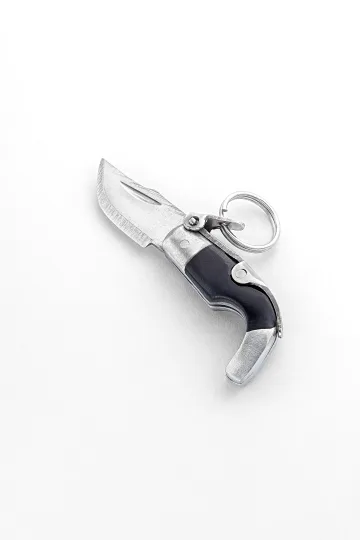
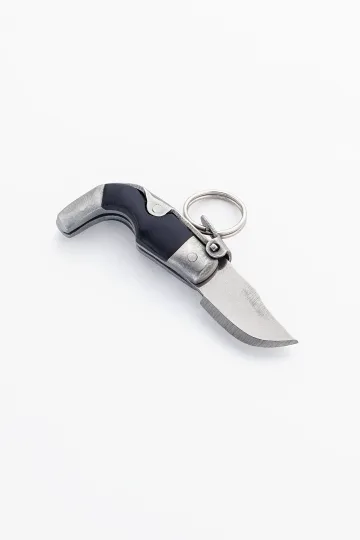
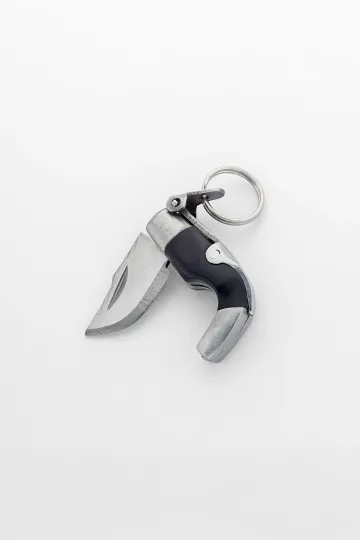
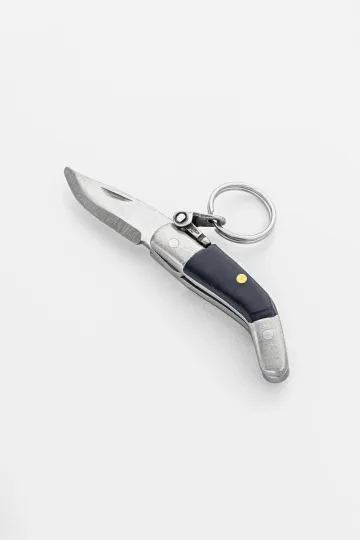
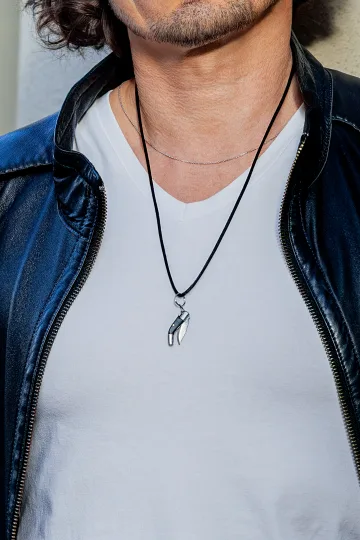
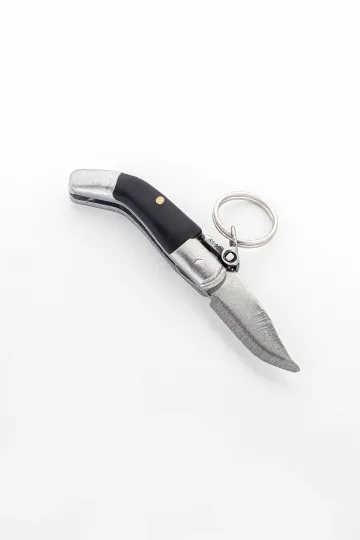
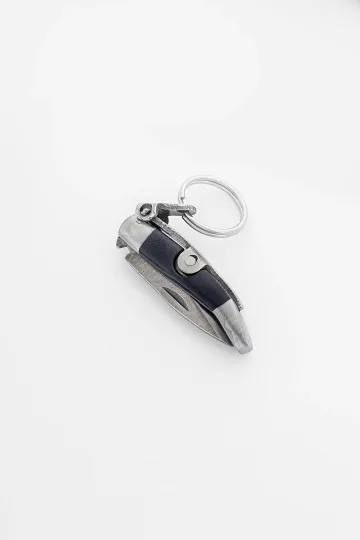
CAPAORA mini knife pendant
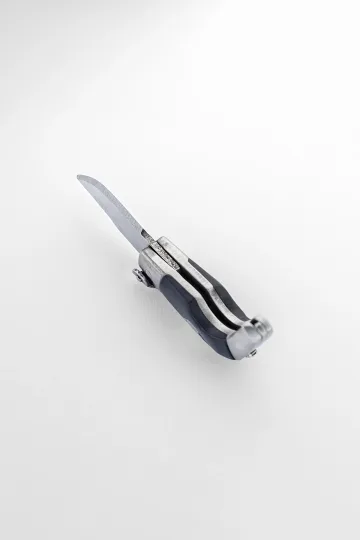
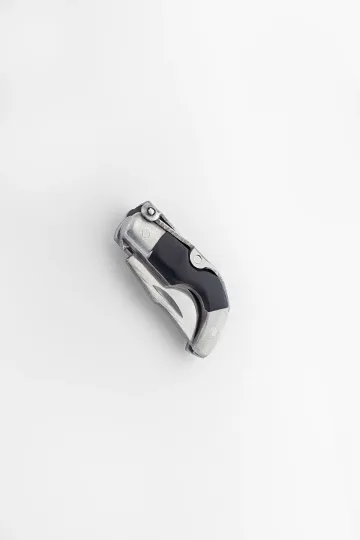
The 18th-century Spanish navaja in miniature: 40 mm of stainless steel, a real folding mechanism and a Palanquilla lock that clicks. An affordable gift to remember.
Authentic · Ships from Spain · 14-day returns
A Gift to a Captain from the Crew
When a captain finishes a long voyage together, retires, or takes up a special appointment, the crew often clubs together for a collective gift. It is one of the durable rituals of life at sea.
The gift has to have weight. The captain is the highest authority on the ship, the person who carries all of the responsibility. A trinket on a chain will not do. You need an object with character.
Best options for a gift to a captain:
A large silver anchor pendant, engraved. On the front: the symbol. On the back: the ship's name, the dates of command, the signatures or initials of the crew. It is an object that will sit on a shelf or in a desk drawer and gets taken out and looked at when someone wants to remember.
A silver wheel pendant with a fitting engraving. The captain holds the wheel. It is a direct metaphor for the role.
A compass with a personal wind rose and an engraving on the lid. Engrave the coordinates of the ports the ship visited under this captain's command and you get a map of his biography in a few points.
An important detail when choosing a gift for a captain: the piece should be true jewellery, not a souvenir. The difference is obvious in the hand: real jewellery is heavier, the detail is worked, the metal is good. A souvenir is easy to spot. For a person of experience and authority, quality of making matters.
Leave your email, we'll send your discount code. No spam, unsubscribe anytime.
The code arrives by email, valid on your first order.
Engraving: What to Write on a Maritime Piece
Engraving turns a mass-produced piece into a personal one. That is the fundamental difference. An anchor without engraving is a handsome object. An anchor with the date of a first voyage and the coordinates of a port is a monument.
Coordinates
The coordinates of the home port. The coordinates of home: the latitude and longitude of the flat where someone waits. The coordinates of the place where something important happened: a first port of call, a meeting place, the place of a first passage sailed together.
Coordinates look beautiful engraved and carry an exact meaning. Anyone who can read coordinates knows at once what the place is. It is their shared code.
Format: 50°22'N 4°08'W (Plymouth) or 51°57'N 1°17'E (Felixstowe). Or simply as decimal degrees: 50.3714 N, 4.1422 W.
A date
The date of a first voyage. The date of a special crossing. The date of a return from a long passage. The date of a wedding fitted between two voyages. A date that only two people know.
Dates on maritime jewellery read with particular precision, because every voyage has a date of departure and a date of arrival. It is not an abstract date. It is a concrete moment: the gangway lifted, the ship pulled away from the berth.
A ship's name
"MV POLAR STAR", "SY ANEMOS", "STS WINDJAMMER", "ICEBREAKER ENDURANCE". The ship's name is part of a sailor's identity. Especially the first ship. Especially the ship on which something important happened: a first storm, a first foreign port, a particular passage.
For a racing sailor, the name of the yacht carries an even more personal meaning: the yacht is often owned outright, with years of work and money poured into it, lived in, with a character of its own.
A motto or words
"Home". "Find the way". "Fair winds". "Per mare ad astra" (through the sea to the stars, the motto of several naval academies). "Vivere navigare est" (to live is to sail). "Return". "Steady as she goes". "Wait".
Just a name. Just the name of a loved one on the back of an anchor. Sometimes that is enough.
The History of Maritime Symbolism in Jewellery: from the Phoenicians to Today
Jewellery with maritime symbols has existed for as long as seafaring itself. It is not a recent trend, not a marketing invention of the past few years. It is a tradition that reaches thousands of years into the past.
The Phoenicians and the first maritime jewellery
The Phoenicians, who lived along the coast of modern Lebanon, were the first great sea-traders of the Mediterranean. They traded purple dye, glass, cedar wood and other prized goods, and their ships were everywhere: in Egypt, Greece, Spain, Carthage. Phoenician seafarers wore amulets of the goddess Astarte and the crescent symbol, patron of night sailing.
Their jewellery has been found in ports right across the Mediterranean. Small pendants with symbols of water, fish and ships. For those who wore them, they were identifying marks of a trade, in a world where most people had never seen the sea.
Greece and Rome: myth under sail
Greek sailors honoured Poseidon, Neptune to the Romans, and his symbols: the trident, the dolphin, the hippocamp (the sea horse). Metal pendants with these symbols have been found in wrecks and in sailors' graves. The dolphin in Greek myth is a rescuer: a dolphin saved Arion when he threw himself into the sea. To wear a dolphin amulet was to have protection.
Roman legionaries of the naval fleet (the classis) wore marks of belonging to the fleet, among them anchor motifs. The anchor became a symbol in early Christianity precisely through sailors: the first Christians used the anchor as a hidden cross, legible only to their own.
The Vikings and navigation by the stars
The Vikings, who crossed the North Atlantic and reached North America five hundred years before Columbus, wore amulets in the shape of Thor's hammer. There is a hypothesis that they used a "sunstone" of Icelandic spar to find the sun's position through cloud, but there is no direct proof of such use.
Scandinavian jewellery of the tenth and eleventh centuries, found in digs in Norway, Iceland and Greenland, shows steady maritime motifs: the wave, the ship, the rayed star. These motifs survived Christianisation and have lived on in Scandinavian jewellery to the present day.
The age of discovery: fifteenth to seventeenth centuries
Portuguese and Spanish navigators, opening new routes, created a new tradition of maritime jewellery. Navigators carried relics and medals with the image of the Virgin Mary, patron of sailors in the Catholic tradition. "Stella Maris", the Star of the Sea, is a medieval title for the Virgin that people wore literally against the skin.
In this period gold anchors spread as ornaments. The opening of new trade routes made maritime commerce the foundation of the European economy, and the symbols of that commerce became prestigious.
The nineteenth century: the merchant fleet and maritime romance
In the nineteenth century the merchant fleet reached its peak. Clippers raced along the world's trade routes: tea from China, wool from Australia, cotton from India. It was an age that romanticised the sea in its culture.
That is when the tradition of sailor tattoos as a coded system took shape. An anchor for the Atlantic. A turtle for the equator. A swallow for five thousand miles. And alongside it, factory-made anchor jewellery spread, the kind you could buy in any port town.
Victorian Britain made maritime symbolism part of official culture. Queen Victoria encouraged the maritime tradition, the fleet was the pride of the empire. Jewellery with the anchor, the wheel and the wind rose became respectable in aristocratic circles too.
The twentieth and twenty-first centuries: tradition and the present
Both world wars reworked maritime symbolism. Navies fought across every ocean, losses were enormous, and the sailor's symbolism took on a new layer: the memory of the dead, the brotherhood of the survivors.
After the Second World War the merchant fleet rebuilt and grew larger still. The container revolution of the 1960s made shipping the backbone of world trade. By most estimates around 80 to 90 percent of world trade by volume goes by sea. The maritime profession turned from romantic to industrial, but the symbolism survived.
Today the anchor, the lighthouse, the compass and the sailor's knot are enjoying a revival. People with no professional tie to the sea wear them as a statement of values: stability, orientation, connection, a path. But for those who do go to sea, behind every symbol stands a living tradition three thousand years deep.
How to Give: Practical Advice
Packaging and presentation
A maritime piece deserves the right presentation. Not a bag with the shop price tag. Not a generic box. What works better:
A box with a handwritten note inside. A few lines by hand: why this one, what it means to you. That simple act turns the piece into a conversation.
If the piece is engraved: give it early, so the person can get used to it before sailing. Not at the last moment by the gangway. Let them wear it and walk around with it for a few days.
If it is a matching piece: put yours on at the moment of giving. It shows that we are both in this: you wear the symbol, and so do I.
Engraving: how to arrange it
Engraving takes time. Usually one to several working days. If the piece is needed for a particular date, order with time to spare.
What gets engraved most on maritime pieces: coordinates in degrees and minutes, a date in DD.MM.YYYY or DD/MM/YY format, a name or initials, a short phrase up to about twenty characters. Very long texts read badly on a small surface.
The best surfaces for engraving: the back of a pendant, the inside of a ring band, the inner face of a bracelet link.
What to check before buying
Before ordering a piece, it helps to settle a few things:
Metal: silver or gold? If the person already wears jewellery, look at what they wear. Mixing metals is fine, but the combination is worth thinking through.
Length: a pendant on a short chain up to forty centimetres sits at the throat. On a long chain of fifty to sixty it lies on the chest. Which suits this particular person?
Chain or cord: a silver chain is the classic. A leather cord is the more practical choice for wearing at sea.
Engraving: what exactly, in which format. Get it right once, or do not do it at all.
Sizing a piece for a man
Jewellery for men at sea should be noticeable but not loud. Good guides: a pendant of 3 to 5 cm is visible without being pompous. A bracelet of steel or silver elements on a leather or braided cord. A ring without large stones.
Small, almost feminine pieces look odd on a man with a life at sea behind him. Big, carnival anchors look just as wrong. Between them there is a right range: moderate weight, clean lines, minimal decoration.
Naval Regulations and Jewellery
A note worth making for anyone choosing a gift for a serving naval sailor: in most navies the wearing of jewellery in uniform is strictly regulated. As a rule, a wedding ring and a religious symbol on a chain under the clothing are allowed in dress uniform. Large pendants over the uniform, earrings and bracelets are usually forbidden by regulation.
This does not mean you cannot give a naval sailor jewellery. It means it will be worn off duty: on leave, in civvies, after leaving the service. Such a piece works beautifully as a symbol of identity precisely because it is absent from the uniform. It waits for the uniform to come off.
Send a friend a discount code, they save on their first order.
Circumnavigation and Cruising: a Piece for Every Latitude
In the world of cruising yachts there is a tradition of marking the great geographical thresholds. Crossing the equator, the ceremony of the line, initiation as a shellback. Cape Horn, the special club of those who rounded it in the right direction: east to west, against wind and wave. The Strait of Magellan. The Cape of Good Hope. The Bab-el-Mandeb.
Each of these thresholds has its own meaning in cruising culture. Cape Horn is a category apart: among sailors who have rounded it under sail there is a brotherhood that recognises only a true rounding, not a motor passage. It is one of the last genuinely difficult navigational thresholds left on the planet.
In this world a piece often takes on the role of a commemorative medal without the pomp. Not an official badge, not a diploma on the wall. A personal object you wear. Bought in the port of Horta in the Azores, where Atlantic crossings traditionally finish. Given by the crew after a storm in the Bay of Biscay. Chosen for yourself after the finish of a circumnavigation.
A compass with a personal engraving of the finish coordinates, or the coordinates of Cape Horn, reads well here, a tradition of its own in this world. The whale and the whale's tail, covered above, also suit someone who went a long way and came back.
For a sailor still preparing for a big passage, a piece of encouragement with an anchor (find a safe anchorage) or a compass (know where to go) works as a blessing in the shape of an object. It is what they take with them, and what will be with them when it is frightening and when it is glorious.
Buying it as a gift? Each one arrives ready to give.
 A branded Zevira box and a little card come with every order.








Sailing Families: Waiting as a Way of Life
There is a separate audience rarely noticed in talk of maritime gifts: the families. Partners, children, parents who wait ashore.
For them the sea is neither a profession nor an adventure. It is long months without calls on time, without dinners together, without anyone there beside them. It is anxiety at every report of a storm on the news. It is a life organised around an absence.
When people talk about "sailing families", they often mean only partners waiting for husbands. But it is wider. Children grown up with a constantly absent father. Parents seeing a son or daughter off on a voyage. Partners and fiancées. They all live in waiting.
Jewellery as a ritual of waiting
A piece for a sailing family can go in two directions. First: jewellery as a sign of waiting, which she wears while he is at sea. Second: jewellery from him to her, brought back from a voyage, as a gift for the waiting.
Both traditions are alive and run in parallel. In the first case the one who stays chooses: she picks for herself an anchor or a lighthouse to wear while he is gone. It is her own ritual of waiting. In the second the one who leaves chooses: he buys her something in a foreign port or prepares a surprise in advance.
Both stories work. Both say the same thing by different means.
The symbols here are the same as for a sailor's partner: the lighthouse as the shore, a small graceful anchor, a sailor's knot in a matching pair, the dolphin as a good sign. The difference is not the set of symbols but the recipient: for a parent seeing a son off, and for a teenager growing up without a father at home, what matters is not "what to give" but that the object reminds them of the connection. Here the piece works through a personal story, not through a love of the sea as such.
FAQ
What is the best piece to give a sailor heading off on a long voyage?
The best option is the one he will take with him and wear at sea. An anchor or compass on a sturdy chain of sterling silver or 316L steel. Moderate size, nothing bulky. Engraving is a must: a name, a date, words. That makes the piece personal rather than faceless. The clasp on the chain should be reliable: there is no replacing it at sea.
What to give for a sailor's retirement?
This is a special moment. The person is closing a part of life. The gift should reflect the past rather than open the future. An anchor engraved with years of service and the names of ships. A compass with dates. A wheel, if the person was a captain. A piece with weight, made for years, the kind passed on to children.
Can you wear silver jewellery at sea?
Silver tarnishes faster in a marine environment because of its interaction with salty air. This does not harm the metal, it just changes the look. Many sailors take darkened silver as part of the piece's history. For those who prefer a stable appearance, 316L steel or 14K gold barely react to salt at all.
What suits a young person who has got into a maritime academy?
An anchor on a fine chain engraved with the date of entry, the word "come back", a name. A sailor's knot as a bracelet. A small, discreet compass. The important thing is that the piece can be worn under the clothing: jewellery is usually not welcomed in academy dress uniform, but that does not mean it cannot be owned.
What to give a partner waiting for a sailor to come home?
A lighthouse pendant, a piece with a sailor's knot, a thin anchor bracelet. A symbol of waiting and connection, not a symbol of the sea itself. Her story with the sea is a story of waiting and faithfulness, and the piece should reflect her role. Engraving: the coordinates of home, the date he is due to return.
How to choose a gift for a sailor after a first transatlantic crossing?
This is a personal threshold that asks for a personal object. A compass engraved with the finish coordinates (usually Horta in the Azores or the Caribbean). A turtle or a whale as a symbol of the long road. An anchor with a date. If you know the yacht's name, engraving it turns the piece into a monument to a particular passage.
Which symbol best carries a maritime identity?
The anchor is the most universal: everyone understands it, and it works for every category of the seafaring trade. The compass and the wind rose are more navigational, sharper for navigators and captains. The wheel is for those who hold the course in the literal sense. The sailor's knot is for relationships and connection. The lighthouse is for family and the shore. Choose by the person's story, not by the beauty of the symbol.
What if the piece darkens after a voyage?
Silver can be cleaned with a soft cloth or a silver polishing cloth. For heavy tarnish: a solution of baking soda and water, a few minutes, then rinse and dry. But many prefer to keep the patina: it is history. A piece that went through a voyage with someone looks different from a new one, and that is right.
Is jewellery a suitable gift for a man at sea?
Absolutely. In maritime culture jewellery on men has a tradition centuries deep: the hoop earring, the anchor at the throat, the sailor's-knot bracelet. Maritime professionals are often more open to symbolic jewellery than men in other trades, precisely because in their culture it carries meaning and history.
How to choose a gift for a sailor you do not know well?
An anchor on a chain is the most universal option. Everyone connected with the sea understands it. It is not too personal, and it does not need exact knowledge of taste. Sterling silver without extra detail. Minimal engraving: a date or a name. Plain and right.
Can you give maritime jewellery to someone who has never been to sea?
Yes. The anchor, the lighthouse, the compass and the sailor's knot have become shared symbols beyond a professional context. They carry meanings of stability, orientation, connection and a path that hold true for anyone. Maritime symbolism in jewellery has long belonged to more than those who go to sea.
Wear the symbol, don't just read about it. These are in stock:


Conclusion: the Piece as a Thread Between Sea and Shore
A sailor goes to sea and takes only what is necessary. It is professional discipline. There is no room for surplus at sea. But a piece with the right meaning stops being surplus. It becomes a thread that joins him to the shore while the shore is below the horizon.
That thread is thin. Sometimes it is simply a pendant on a silver chain that he puts on in the morning and never takes off. Sometimes a bracelet she wears while he is gone. Sometimes a grandfather's cufflinks, now the grandson's.
The sea means a long absence. The rituals of leaving and returning are what make that absence bearable. A piece chosen with understanding fits into that ritual. It says something that is not said out loud: that the sea does not break the connection, only stretches it across a distance.
The anchor holds. The lighthouse shines. The knot does not come undone. The compass knows the way home. To an outsider these are symbols on silver. To people who live between ports, they are precise descriptions of what they count on every time the ship pulls away from the berth.
Anchor, lighthouse, sailor's knot, compass, ship's wheel, sea creatures. Sterling silver and 14K gold. Engraving to order: coordinates, a date, a ship's name, words.
About Zevira
Zevira makes jewellery in the artisan tradition of Albacete, Spain. Maritime symbolism is one of the core directions of our collections: anchor, lighthouse, sailor's knot, compass, ship's wheel, wind rose, sea creatures.
What the maritime collection holds:
- Anchor pendants and anchor bracelets in sterling silver and 14K gold, including the admiralty anchor
- Lighthouse pendants: from the minimal to the detailed
- The sailor's knot: pendants, bracelets, matching pieces for two
- Compass and wind rose with the option to engrave coordinates
- Ship's-wheel pendants
- Sea creatures: dolphin, whale, whale's tail, seahorse, octopus, turtle
- Engraving to order: coordinates, a date, a ship's name, a name, a motto
Every piece can be personalised with engraving by a maker. We work in sterling silver and 14 to 18K gold.