Hair combs and pins with stones: hair jewellery that holds the style and draws the eye
A hair comb is older than the earring and the ring. People used combs to gather and hold their hair back in the Stone Age, long before anyone dreamed of metal jewellery: the first combs were carved from bone, horn and wood ages before anyone learned to bend wire. The thing we tend to treat as a trinket at the bottom of a wash bag is in fact one of the oldest objects humans have ever worn on their heads.
And it is still that rare object doing two jobs at once. A comb set with stones holds the bun like a tool and glows at the back of the head like a jewel. An earring only decorates. A ring only decorates. A comb does the work and stays the most visible accent in the whole hairstyle, because it sits right at the eye level of whoever you are talking to.
This article covers the whole family of hair jewellery: combs, decorative combs, hairpins, clips, claw clips, jewelled bobby pins and headbands. Where they came from, how they differ, what they are made of, how they hold in different hair types and how to match them to an outfit without turning your head into a shop window.
Types of hair jewellery: who is who
In everyday speech the word "clip" gets stretched across a dozen different things. There are real differences between them: in shape, in how they hold, and in the occasions they suit. Let us go through the whole family one piece at a time.
The peineta: the tall comb you stand in a bun
The peineta (Spanish for the tall ornamental comb, pronounced "pay-NAY-ta") is a high, curved comb with long teeth that you push vertically into gathered hair, most often a bun at the back of the head. It originally held a lace mantilla veil, but on its own it works like a crown, lifting the silhouette of the hairstyle upward. The teeth are long so they can pass right through a dense knot of hair, while the upper arch stays visible and carries all the decoration: carving, stones, mother of pearl. We covered the Spanish tradition of lace and comb in detail in the piece on the mantilla and peineta.
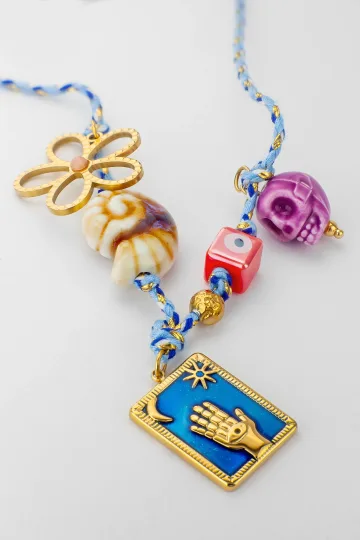
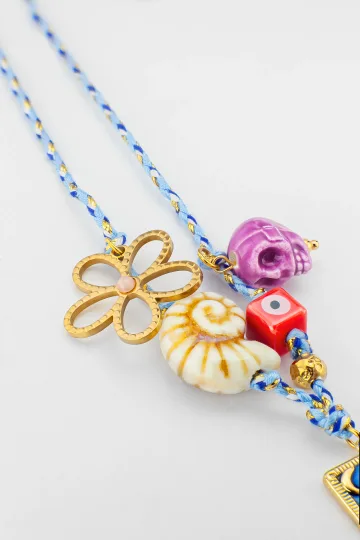
Wear the symbol, don't just read about it. These are in stock:


The decorative comb: an accent at the side or above the bun
A decorative comb is lower and more compact than a peineta. It is a short comb with a couple of centimetres of teeth and an ornate bar across the top, studded with stones, pearls or enamel. You do not hide it; on the contrary, you place it where it shows: at the side above the ear, along the edge of a bun, at the base of a ponytail. It holds because the teeth catch a section of hair and tuck under it, while the weight of the bar presses the comb against the head. This is the most jewel-like of all the options and the most common choice for evening.
The kanzashi pin: a Japanese stick with a dangle
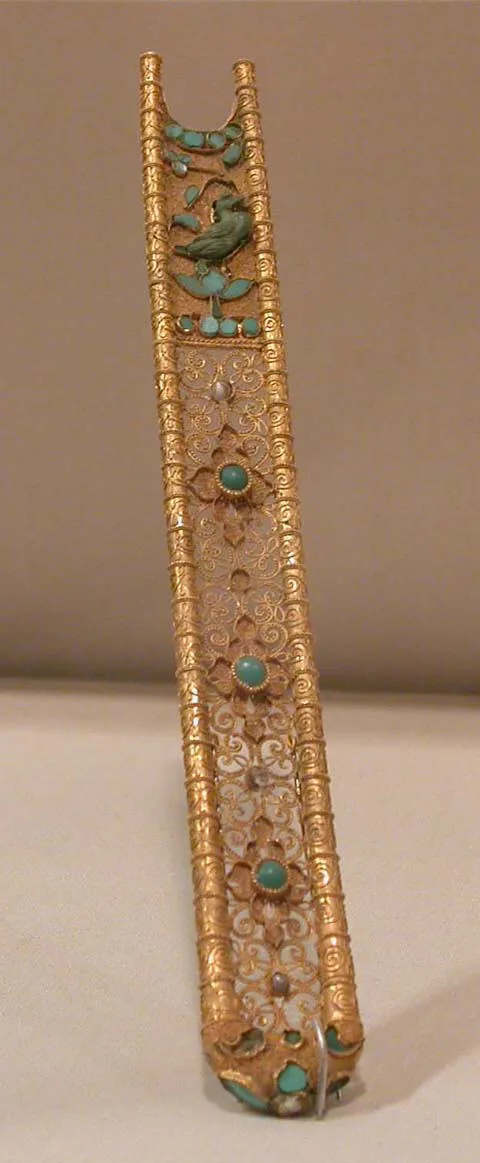
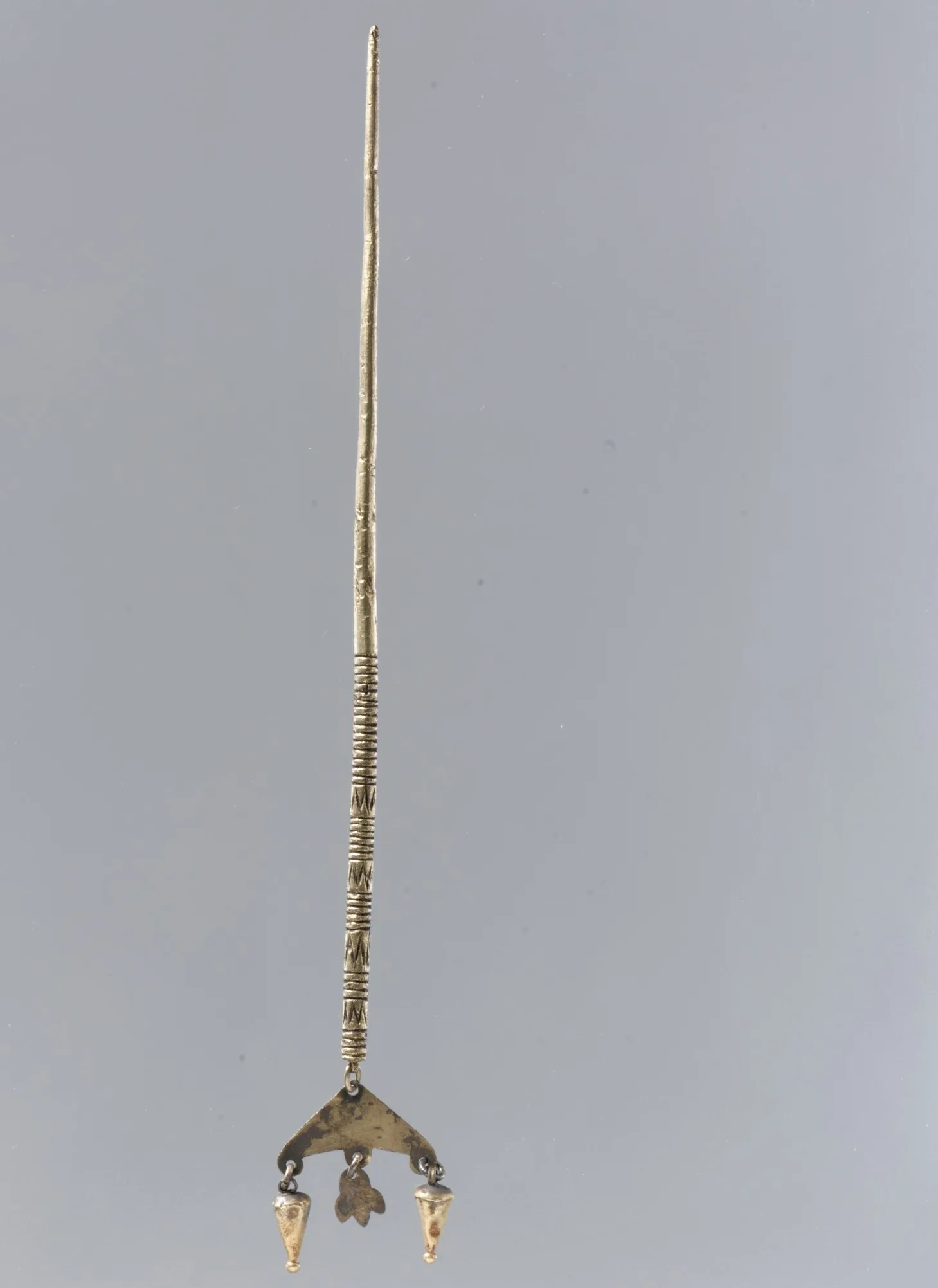
Kanzashi (the Japanese term, pronounced "kan-ZA-shee") are Japanese hair ornaments: sticks, pins and floral dangles used to secure traditional hairstyles. Some are built as a long, sharp pin with a decorated head, some as a comb, some as a hanging cascade of silk petals. A stone or pearl sits on the end that stays outside the hairstyle and sways as you move. Kanzashi hold hair not with a clamp but by being threaded through the knot, so they work better the denser and thicker the gathered hair is.
The spring clip: a hinge that grips a section
The spring clip (sometimes called a click-clack or snap clip) holds hair with a metal spring: press it, snap it shut over a section, let go. This is the most practical everyday format because it needs no styling skill and grips even slippery straight hair. The jewelled version carries stones on the top plate and hides the mechanism inside. You choose the size by hair volume: a small clip on a thick ponytail will simply pop open.
The claw clip: a jaw of teeth for a voluminous bun
The claw clip (named for its jaw shape) is a clip with two toothed halves on a spring that grabs a large mass of hair all at once. It is indispensable for a loose, high, messy bun: twist a rope of hair, fold it, grab it with the claw, done. A decorated claw clip with stones along its spine turns the laziest hairstyle into something dressed up in a single move. The bigger the claw, the more hair it holds, so reach for a large one over a thick mane and a small one for fine hair, or it will slide out under its own weight.
The jewelled bobby pin: a pinpoint of sparkle at the temple
A bobby pin is that flat metal grip pin that disappears into the hair. The jewelled bobby pin flips the idea on its head: instead of vanishing, it carries a stone, a pearl or a small figure on the end and stays in plain view. A few of these are laid in a line at the temple, along the parting or around the edge of gathered hair. This is the most delicate way to add sparkle: pinpoint, with no bulky element.
The headband: an arc across the head
A headband is a rigid arc that sits across the head and holds by resting behind the ears. Stones run along the whole arc or gather into an accent at one side. A headband holds the hairstyle less than it frames the face and clears the hair off the forehead. It is worth not confusing it with a tiara: a headband sits on the crown and behind the ears, while a tiara is set closer to the forehead and reads as a crown. We covered the difference between head ornaments and brow circlets in detail in the article on the tiara and diadem.
History: from the bone comb to Art Deco
Hair jewellery has a long and surprisingly rich pedigree. Whole eras, fashions and even mourning rituals sit behind it. Let us walk through the key points.
Ancient combs: bone, bronze, ivory
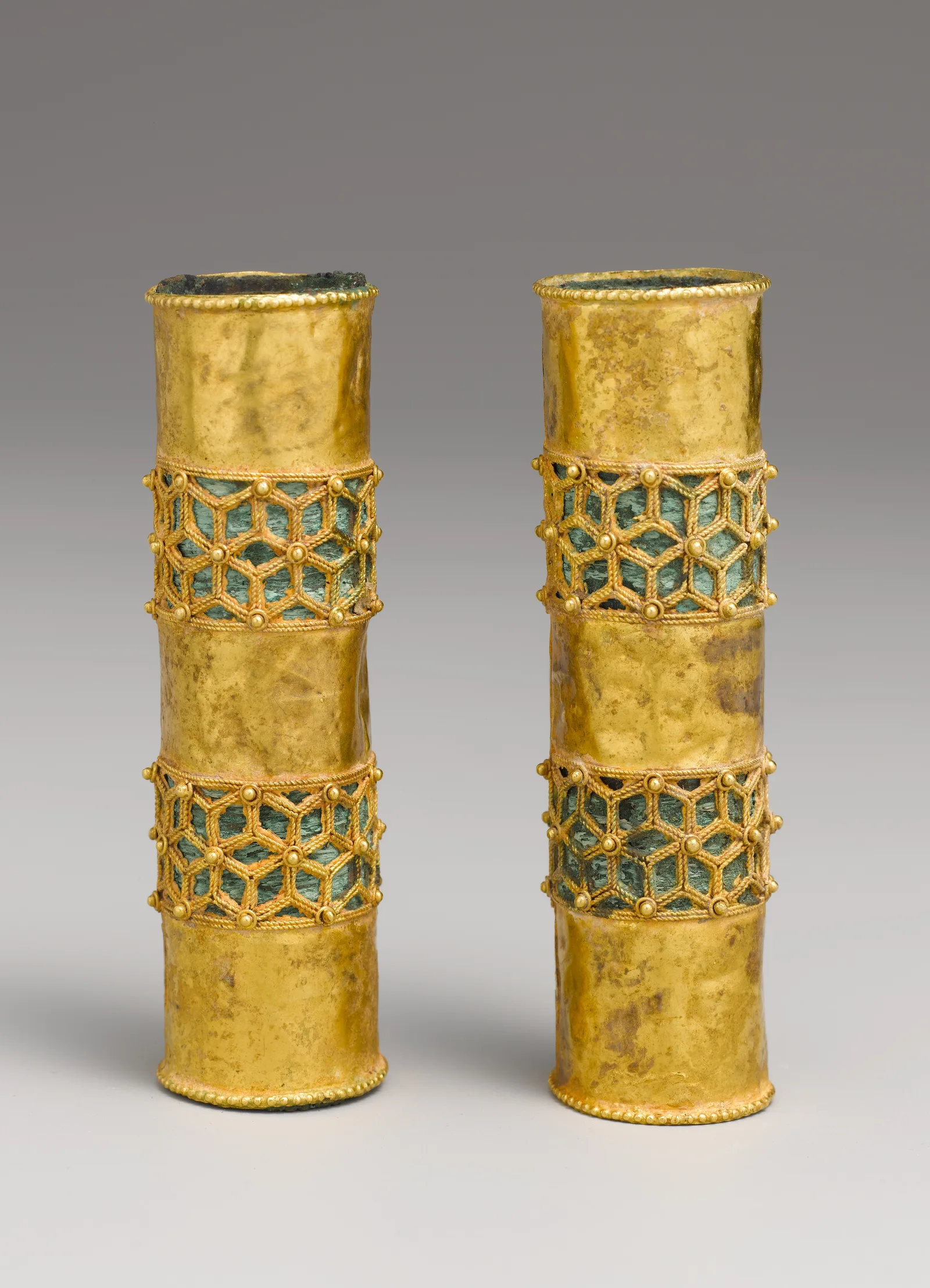
The earliest combs were made from bone, horn and wood back in prehistoric times, and they served both the hairstyle and hygiene: combing out. In Ancient Egypt, combs of wood and ivory were carved with birds and animals and laid in tombs alongside mirrors. The Greeks and Romans wore combs of boxwood, bone and bronze, and women's hairstyles of that era were so elaborate that they simply would not stay up without bone and metal pins. A Roman matron pinned a tower of curls with a dozen bone pins, and some of them were openly decorative.
The Spanish peineta and mantilla: the comb as part of the costume
In Spain the tall comb grew into a thing of its own pride. By the eighteenth and nineteenth centuries the peineta had become the frame over which the lace mantilla was draped, and at the same time a standalone ornament for an aristocrat. They were cut from tortoiseshell, and the taller and finer the comb, the dearer it was. Goya immortalised this look in his portraits of Spanish beauties. To this day the peineta with a mantilla is formal dress for the bullfight, Holy Week and a traditional-style wedding.
Japanese kanzashi: sticks, seasons and status
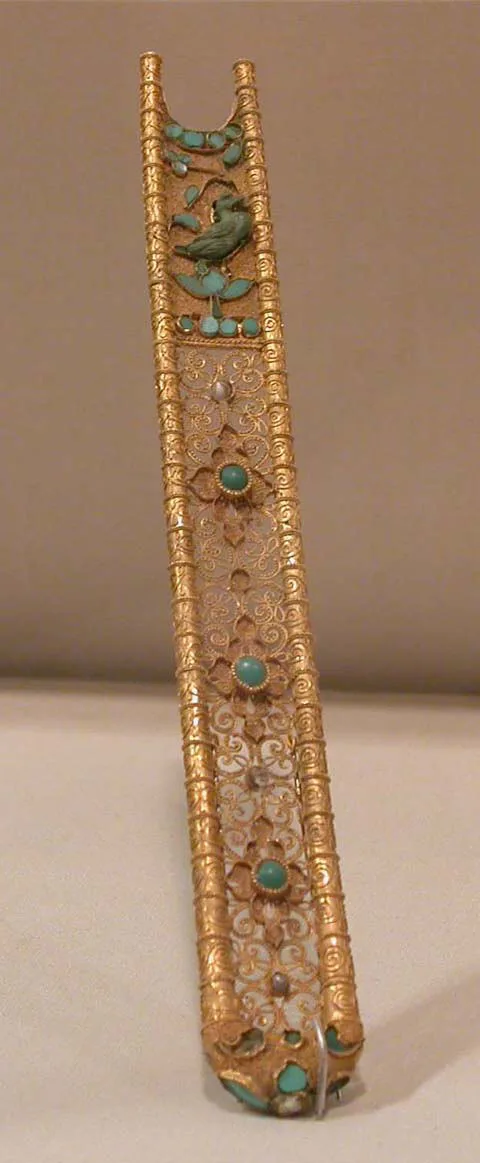
In Japan, hair ornaments grew into an entire language. By the Edo period kanzashi had become a marker of a woman's age, season and standing: a cherry blossom in spring, a maple in autumn, hanging dangles for young girls, plain sticks for married women. Geisha and maiko wore intricate sets of kanzashi that spelled out their status and the time of year. The materials were lacquer, tortoiseshell, silver, bone and silk. This is perhaps the most developed system of hair ornament in the world: beautiful and meaningful in every detail.
Art Nouveau: dragonfly combs of horn and enamel
At the turn of the nineteenth and twentieth centuries the Art Nouveau style fell in love with the comb. Makers bent translucent dragonfly wings, iris petals and women's profiles out of horn, adding enamel, opals, moonstone and mother of pearl. The comb stopped being a mere prop for the hairstyle and became a tiny sculpture at the back of the head. The flowing natural lines of the style sat perfectly on the shape of a comb, and these very years gave us the most famous ornamental combs in history.
Art Deco: geometry, jet and shine
Art Deco followed, with cropped haircuts and strict geometry. Long braids vanished, and with them some of the classic combs, while bandeaus, headbands and brooch clips that you pushed into a short bob or a wave came into bloom. Stones were laid in clean rays and zigzags, the eye loved the contrast of black and white, rock crystal and shine. Hair jewellery became flat, graphic and sparkling, to match the new age of parties.
Victorian mourning combs of jet
A separate and gloomy chapter: Victorian mourning. After the death of Prince Albert, Queen Victoria wore mourning for years, and all of Britain followed her lead. Jewellery made of jet, a light, matte-black fossilised wood, came into fashion. Jet was carved into mourning combs, brooches and pins: dark, without shine, fitting for grief. In Spain a similar role was played by azabache, the same jet, set into peinetas and protective charms alike. A black comb was a way to stay turned out while keeping the rules of mourning.
A jewelled comb wants a sleek bun, not a bird's nest. Sort the hair first, then the diamonds.
How and what to wear hair combs and pins with
Over years on set I have tried combs in every kind of hair and under every kind of outfit. Here is what actually holds and works, sorted by occasion.
What should I wear a comb with every day? For weekdays I recommend a jewelled claw clip or clip: you gather a loose bun in one move, and the hairstyle already looks considered. I suggest matching it to the jewellery already on you, mother of pearl to pearl studs, a golden setting to warm metal. With jeans and a shirt that shine at the back reads richer than it costs.
How do I build an evening look with a comb? For the evening I choose one large comb at the back or at the side above the ear and a sleek base hairstyle. A black jet or crystal comb in a clean bun is a finished look; all that is left is the lipstick. In that case I suggest keeping the earrings quiet so they do not fight the comb for attention.
Which hair type should guide the choice? Fine, smooth hair I steer to a light comb with close teeth, jewelled bobby pins and a small clip; a heavy claw clip just slides off it. Thick, wavy hair, on the contrary, I send to a large claw clip or a long comb with deep teeth, or a small detail sinks into the mass. Short hair and a bob are no barrier: I bet on a side accent and a line of bobby pins at the temple.
How much hair jewellery is the norm? I keep one simple rule: one strong accent up top. One large comb, or one noticeable claw clip, or one clip at the temple. A line of identical jewelled bobby pins is my exception: three or four matching pieces along the parting read as one pattern, not a pile-up. A comb plus a headband plus a clip already break up the hairstyle, and the eye has nothing to hold as the lead.
How do I tie the comb to the earrings? A comb and earrings share one zone by the face, so I let only one of them be loud. If the comb is large, I choose quiet earrings: studs, small drops, smooth silver. The easiest link into a set is a shared stone or material, pearl with pearl, crystal with crystal. On loose hair I like the echo trick: a comb at the temple and an asymmetric earring on the same side pull the look into one line.

Turn on your camera, pick earrings, a pendant or a ring, and see the piece on yourself in real time.
Switch items in one tap.
Everything runs in your browser: no photo or video is ever uploaded.
Materials: what hair combs and pins are made of
The material decides the weight, the shine, the durability and the way the ornament behaves in the hair. Let us go through the main ones.
Acetate: an honest replacement for tortoiseshell
Historically the most expensive combs were cut from sea turtle shell: a warm honey-brown material with veining. Today tortoiseshell is banned, and acetate honestly replaces it, a pressed cellulose plastic that reproduces that very amber-brown pattern. Acetate is light, warm to the touch, does not snag the hair and springs back pleasantly. The "faux tortoiseshell" pattern is not a fake but a classic in its own right: this is exactly how most dressy combs look today, and they look expensive.
Silver: a setting for stones
Sterling silver, 925, is the classic base for jewelled combs and pins: stones are set into it, the openwork bar is bent from it, the teeth are plated with it. Silver is stronger than soft alloys and ages handsomely, taking on a faint patina in the recesses of the pattern. There is one downside: weight. A massive silver bar drags the comb down, so large silver combs call for a dense hairstyle that can carry the weight. If you want to get to grips with the metal itself, there is a separate guide to sterling silver 925.
Mother of pearl: the soft glow of the shell
Mother of pearl is the inner layer of a shell, the same material as the coating of a pearl. It shimmers with a soft, rainbow light without a sharp glare and looks perfect in the hair: it does not sparkle aggressively but glows from within. Mother-of-pearl inlays in combs and clips are loved because they suit any hair colour and any skin tone. Mother of pearl is especially good in bridal jewellery, where you want light rather than the glare of a diamond.
Rock crystal: shine without the price of a diamond
Rock crystal is a clear, colourless quartz cut to a sparkling shine. It gives that very "diamond" effect on a comb without claiming to be a precious stone: an honest, transparent stone with a history thousands of years long. In Art Deco it was laid out in rays; in bridal combs it is set around pearls. Crystal is heavier than glass and clearer-ringing to the touch, does not scratch from cosmetics and holds its facets a long time. We have a separate look at clear and rose quartz.
Pearl: the lead stone of the bridal comb
Pearl and hair jewellery are kin by nature: both grew out of a shell. Pearls in a comb give a soft, warm, unshouting light that especially suits a bride and any gathered, neat look. Pearl fears dryness and likes to be taken out and worn, so a hair ornament with pearls is not a thing for the shelf but a thing worth wearing. Everything on the types and choice of pearl we gathered in the complete guide to pearls.
Enamel: colour that does not fade
Enamel is glass fused to metal at high heat. It gives a rich, deep colour that does not bleach out or rub off: blue iris, green leaf, a black ground under a white flower. In Art Nouveau, enamel on combs was brought to perfection, and today a coloured enamel clip is a way to bring colour into a hairstyle that will outlast decades. On the craft and care of coloured glass there is a piece on enamel.
Jet and azabache: matte black without shine
Jet is a light, black fossilised wood, warm to the touch and matte-dark without any flashes. In Spain the same material is called azabache. A black jet comb is needed where shine is out of place or simply unwanted: a sober evening, a deep dark look, an understated style. Jet is so light that a large comb made from it barely drags the hairstyle down, and that is its big plus. There is one downside: it is soft and fears knocks, so such a comb must not be dropped or thrown into a shared box.
Brass and gold plating: warm shine without the price of gold
Not every dressy clip has to be silver. Brass and a gold-plated base give a warm golden shine that suits warm skin and dark hair, at a far more modest cost. It is worth knowing the difference between real plating and a thin coating that wears off within a season: on the durability of plating by microns we have a detailed look at gold plating. On a clip the coating lasts longer than on a ring, because it hardly rubs, and a good golden comb wears for years.
Customer reviews
Zevira is a real jewellery shop. Genuine payments, deliveries and customer thank-yous.
🥰🥰🥰 gracias

Ok, ¡gracias! 🙂

How the ornament holds in the hair
The most common failure with a beautiful comb: it slips and falls out after half an hour. The fault is almost never the comb but the fact that it was placed in the wrong hair type. Let us look at the mechanics.
Why a comb holds (and why it slips)
Any hair ornament holds through friction and bracing. The teeth lead a section of hair and press it against the head, while the comb itself braces its arch against the mass of hair. It slips for two reasons: the hair is too smooth to create friction, or the comb is too heavy for the volume it is meant to hold. So slippery straight hair and a massive comb are a bad pair, while a light comb sits as if poured into back-combed or textured hair.
Fine hair: light and gripping
Fine hair needs a light comb with fine, close-set teeth and a small area of decoration, or the weight will pull it out. A trick helps: lead the comb in teeth-up, thread it through a section, then turn it down and inward, so it bites into the hair and holds more firmly. A light texture (dry shampoo, a little back-combing at the roots) adds friction. Jewelled bobby pins and small combs work better on fine hair than a heavy claw clip, which will simply slide off.
Thick hair: you can go heavier and bigger
Thick hair is in luck: it holds almost anything. A large claw clip, a massive peineta, a heavy silver comb, all of them will find something to grip. The main problem with thick hair is the reverse: a small ornament sinks into it and does not hold the volume. So over a thick mane reach for a large claw clip or a long comb with deep teeth that will pass through the whole mass. A heavy silver or stone bar is a plus here, not a minus.
Short hair and a bob: bet on the clip and the bobby pin
Short hair and a bob are no death sentence for ornaments, just a different set. You cannot gather a big bun, but a clip at the side, a line of jewelled bobby pins at the temple, a small comb tucked above the ear and a headband all work beautifully. Art Deco was the very thing that invented ornaments for short cuts: a flat brooch clip in a wave at the temple was the headline accent of the era. The shorter the hair, the more you bet on pinpoint sparkle rather than a massive element.
Upload a photo of your pet, someone you love, or an object. We'll build a 3D model and hand-cast it in pewter.




The shape of the ornament and where to set it
You can set the same comb a dozen ways, and the whole look depends on it. A few pointers on shape and placement.
Where to set the comb: the back, the side, the base of a ponytail
The classic spot for a dressy comb is the back of the head, at the upper edge of the bun, where it works as a crown from behind. At the side above the ear a comb reads softer and more feminine, framing the face. At the base of a low ponytail or knot it holds the hairstyle and adds an accent at neck level. The rule is simple: the higher the comb sits, the more ceremonial the silhouette; the lower, the calmer and more everyday.
Arc, fan or cascade: the shape of the bar
The shape of the visible bar sets the character. A straight or slightly curved bar is sober and graphic; it suits smooth hairstyles and minimalism. A fan-shaped or arched bar, spreading upward, lifts the silhouette and reads ceremonially. A cascade shape, where stones hang in a cluster or in chains, adds movement and is good for evening, because it sways as you walk and catches the light. For a messy hairstyle reach for a textured, uneven shape; for a smooth one, clean geometry.
Symmetry or a side accent
A symmetrical ornament at the centre of the back of the head reads classic and calm. An asymmetric accent at the side, by one temple, instantly makes the look more modern and alive. Asymmetry is especially helpful on short hair and on loose hair: one noticeable comb or clip at the temple clears a section away from the face and works as a point of interest without calling for a complex hairstyle. The same trick of asymmetry settled into earrings long ago, and we covered it in the piece on asymmetric earrings.








Bridal and evening combs
There are occasions when a hair ornament becomes the main detail of the look. A wedding and an evening out are exactly those.
The bridal comb: an alternative to the veil and the crown
The bridal comb is the most versatile way to dress a bride's hair. It is lighter and calmer than a tiara, does not press down like a crown, suits loose hair, a bun and a low knot alike, and holds a veil neatly: the veil hooks under the comb, and the comb is set into the hairstyle. The classic palette here is pearl, mother of pearl and rock crystal, a soft warm light without aggressive glare. One good comb often replaces all the other head decoration. What else is worn to a wedding we gathered in the guide to bridal jewellery.
The evening comb: one accent instead of a scattering
For evening the same rule applies as for the whole look: one strong accent beats five weak ones. A large comb at the back or at the side above the ear makes the hairstyle dressy on its own, and then the earrings are worth keeping more modest so they do not fight the comb for attention. A black jet or crystal comb in a smooth bun is a ready evening look, to which all that is left is to add lipstick. The evening comb likes a smooth base: the cleaner the hairstyle, the more striking the shining detail on it.
How to build a set and not overdo it
A comb, earrings and, say, a ring are easy to build into a set if they echo one material or stone: pearl with pearl, crystal with crystal. The beginner's mistake is to put on everything bold at once: a massive comb, chandeliers in the ears and a necklace. The head is overloaded, and the eye has nothing to settle on. If the comb is large, the earrings are kept quiet, and the other way round. Choosing earrings to suit a gathered hairstyle is helped by the guide to earrings and face shape.
Leave your email, we'll send your discount code. No spam, unsubscribe anytime.
The code arrives by email, valid on your first order.
Everyday clips with a stone
A hair ornament does not have to wait for a celebration. The smartest way to wear it is on weekdays, where it works both as a tool and as quiet luxury.
The stone claw clip: a lazy hairstyle in a second
The claw clip is the champion of weekdays. A high, messy bun is gathered with a claw in a single move, and if stones run along its spine, that lazy hairstyle instantly looks considered. A mother-of-pearl or crystal claw with jeans and a shirt looks dearer than it costs, because shine on the head works at eye level and reads at once. This is perhaps the best-value buy of all hair jewellery: maximum effect for minimum effort.
Clips and bobby pins for every day
A clip with a stone clears a section away from the face and at the same time becomes a pinpoint ornament: one such clip at the temple livens up even loose hair. Bobby pins with a pearl or stone are good because you can wear them one at a time as a small detail and not fear overdoing it. A line of three bobby pins along the parting is quiet, almost invisible sparkle that only people up close notice, and that is exactly why it works.
The everyday comb: between casual and dressed up
A small comb with stones is a compromise between "I just gathered my hair" and "I dressed up." It holds a half-up hairstyle (part of the hair pinned, part loose) and adds a neat detail with no occasion at all. Such a comb carries easily from the office into the evening: by day it just holds the hairstyle, by evening it becomes jewellery, and nothing needs changing.
CAPAORA mini knife pendant
The 18th-century Spanish navaja in miniature: 40 mm of stainless steel, a real folding mechanism and a Palanquilla lock that clicks. An affordable gift to remember.
Authentic · Ships from Spain · 14-day returns
How to match it to a look and not overload
The main risk with hair jewellery is not that there is too little of it but that it is easy to gather too much. A few pointers.
The rule of one accent on the head
The head is a small zone, and not many loud details fit on it. A simple rule works: one strong accent up top. If it is a large comb, the earrings are kept quiet. If it is chandeliers in the ears, the comb is kept modest or smooth. When the comb, the earrings and the headband all shout at once, the look falls apart, because the eye has nothing to latch onto as the main thing.
For hair colour and skin tone
Pale stones (pearl, mother of pearl, crystal) glow beautifully on dark hair, creating contrast. On light hair, coloured stones and dark settings read more strongly, or the shine dissolves. Warm skin gets on with golden settings and warm stones, cool skin with silver and clear crystal. This is not a strict law but a starting point: it is easier to begin with contrast and then decide whether you like it.
For the occasion and the hairstyle
The more formal the occasion, the calmer the shine: a small comb or clip for work, a large comb for evening, a pearl or crystal set for a wedding. And the reverse tie to the hairstyle: a smooth bun suits a shining, clean detail, a messy bun a matte or textured comb, loose hair pinpoint bobby pins and clips. When the ornament fights the hairstyle in character, it looks out of place.
How much hair jewellery to wear at once
Here the same restraint works as with the whole look: one strong piece beats three weak ones. A line of identical jewelled bobby pins is the exception, it reads as a single pattern rather than a pile-up. A large comb plus a headband plus a clip at the temple, on the other hand, already fight for attention and break up the hairstyle. If you want several details, keep them in one family: one material, one stone, one size. Then they read as a set rather than a handful gathered by chance.
Care and storage
Hair jewellery has a harder life than earrings: it is bent, pushed in, and hairspray and hand cream settle on it. For a comb with stones to serve for years, there are a few simple rules.
Mind the teeth
The teeth are the most vulnerable part of any comb. They break if you jab the comb into dry, tangled hair or drop it on the floor. Lead the comb in gently, with the run of the hair, not against it. Acetate teeth fear sudden heat (a hairdryer up close, a hot car in summer) and can warp. Never tug a stuck comb by force: untangle the section and slide it out freely.
Clean the stones and the setting
Hairspray, dry shampoo and skin oil settle on the stones and dim the shine over time. After use, wipe the comb with a soft, dry or slightly damp cloth, especially in the recesses around the stones. Pearl and mother of pearl do not like alcohol, perfume or harsh chemicals: wipe them only with a soft damp cloth and dry them at once. Clean a silver setting from time to time separately from the stones, so the product does not get under the pearl.
Store separately and without pressure
Combs and pins must not be thrown into a shared box: the teeth catch, the stones scratch one another, the thin bars bend under another piece's weight. Store each ornament in its own pouch or compartment, lying flat, with no pressure on top. Keep pearl and mother of pearl away from radiators and direct sun, because dryness dulls and cracks them. A comb that lies free and does not rub against its neighbours will outlive several generations.
How a comb differs from a tiara and a diadem
These things are forever confused, although they are worn differently and for different reasons. A short breakdown of the difference.
Where they sit on the head
The main difference is in placement. A tiara and a diadem are set closer to the forehead and on the crown and read as a crown framing the face from the front. A comb, a pin and a claw clip work at the back and the sides: at the back of the head, in a bun, above the ear. A headband runs across the head behind the ears. In other words, a comb is an ornament for the rear and sides of the hairstyle, while a tiara is an ornament for its front.
When each is fitting
A tiara and a diadem are formal, rare, almost ceremonial things: a wedding, a ball, a stage, a photoshoot. A comb is far more democratic: it suits a wedding, an evening, the office as a modest small comb, and weekdays as a claw clip. Roughly speaking, a tiara is put on for a special occasion, while a comb or clip can be worn every day. If you want ceremony at the front, that is a tiara; if you need an accent at the back and versatility, that is a comb. A full breakdown of brow circlets is in the article on the tiara and diadem.
Send a friend a discount code, they save on their first order.
Facts that surprise
To finish, a few things about hair jewellery that even those who wear it every day rarely know.
The peineta raised a woman's height by a hand's width
The tall Spanish peineta was both decoration and an optical trick. Set vertically into a bun and covered with a mantilla, it raised the silhouette of the head upward by a hand's width and more, making the figure taller and grander. At the height of the fashion, combs reached up to thirty centimetres tall, and the taller the comb, the higher the status of its owner. It was a way to rise above the crowd literally, not just figuratively.
Kanzashi read like a calendar
In the Japanese tradition you could tell the season from the kanzashi in someone's hair without looking out the window. In spring people wore cherry and plum, in summer dragonflies and water, in autumn maple and chrysanthemum, in winter sober pine motifs. On young maiko the dangles hung in clusters; on grown geisha the ornaments became plainer. A whole set of information about a woman, her age and the season was read from a single detail in her hair. This is a rare case where an ornament works as a language.
A comb could be a hiding place
In various eras a hollow comb or pin served more than the hairstyle. Inside, people hid notes, keepsake locks of hair, sometimes poison, and a sharp metal pin in an elaborate hairstyle was a very real means of self-defence for a woman who had no open way to protect herself. A harmless detail in the hair turned out to be both a safe and a weapon at once. So a hairpin has a far more adventurous biography than it seems at first glance.
The teeth of a comb could spin and card wool
Before it became an ornament, the comb was a working tool, and not only for hair. The same toothed combs carded flax and wool, preparing the fibre for spinning, and in weaving a comb beat the threads together. The link between the hair comb, the wool card and the dressy comb in a hairstyle is direct: it is all one invention, a row of teeth that separate and hold thin strands, whether hair or fibre. A precious comb at the back of the head is the distant, dressed-up descendant of the most practical tool in the house.
A comb was given at a betrothal and kept as an heirloom
In many cultures a comb was no trinket but a weighty gift. In Japan a decorated comb was given to a bride; in Spain an expensive peineta was passed down from mother to daughter, and a good tortoiseshell comb cost as much as a serious piece of jewellery. To give a woman a comb meant to invest in earnest, and to receive one as an inheritance meant to accept a family heirloom. This thing outlived several generations precisely because it was treasured rather than lost in a hurry, the way today's plastic clips are lost.
Frequently asked questions
How do I keep a comb from slipping out of smooth hair?
Slippery hair holds a comb poorly for lack of friction. A light texture helps (dry shampoo or a pinch of back-combing at the roots) along with the threading trick: lead the comb in teeth-up, thread it through a section, turn it down and inward so the teeth bite into the hair. And reach for a lighter comb: the less the weight, the less it is dragged down.
Which hair ornament should I choose for fine hair?
Something light and gripping: a small comb with fine, close-set teeth, jewelled bobby pins, a small clip. A heavy claw clip and a massive peineta slide off fine hair under their own weight. A light texture at the roots adds grip, and even a small ornament will hold more confidently.
How does a comb differ from a tiara?
In placement and character. A tiara is set closer to the forehead and on the crown, reads as a crown from the front and is fitting for a special occasion. A comb works at the back and the sides (in a bun, at the back of the head, above the ear), is more versatile and suits every day. A tiara decorates the front of the hairstyle, a comb its rear.
What are "faux tortoiseshell" combs made of now?
Of acetate, a pressed cellulose plastic that reproduces the honey-brown pattern of tortoiseshell. Real tortoiseshell is banned, and acetate is light, warm to the touch and does not snag the hair. The "faux tortoiseshell" pattern has long become a classic in its own right rather than an imitation.
Can I wear a clip with stones every day?
Yes, and it is the most sensible way to wear it. A claw clip with stones, a clip at the temple or a small comb work both as a styling tool and as quiet luxury. Shine on the head reads at once, because it sits at eye level, and even the laziest hairstyle with such an ornament looks considered.
How do I clean a comb with pearls?
Only with a soft damp cloth and dry it at once, with no alcohol, perfume or harsh chemicals, which pearl and mother of pearl cannot stand. Wipe off hairspray and dry shampoo after each use, especially in the recesses around the stones. Clean a silver setting separately, so the product does not get under the pearl.
Will a hair ornament suit a short cut?
Yes, the set is just different. You cannot gather a big bun, but a clip at the side, a line of jewelled bobby pins at the temple, a small comb above the ear and a headband work splendidly. The Art Deco era was the very thing that invented ornaments for short cuts: a flat brooch clip in a wave at the temple was its headline accent.
Which holds a voluminous bun better: a comb or a claw clip?
A claw clip. Its two toothed halves on a spring grab the whole volume of hair at once, so a loose, high bun is gathered in one move. A comb holds a bun more neatly and dressily, but it needs the hairstyle gathered and secured first. For lazy volume reach for a claw clip; for a tidy, dressy knot, a comb.
A comb that holds the style and draws the eye
The Zevira catalogue has combs, clips and pins with pearl, crystal and mother of pearl: for a wedding, an evening and every day. Choose an accent that works both as jewellery and as a tool.
See hair jewelleryBuying it as a gift? Each one arrives ready to give.
 A branded Zevira box and a little card come with every order.














About Zevira
Zevira makes jewellery that you wear rather than hide. We believe a piece on the head should do honest work: hold the hairstyle like a tool and shine like a jewel, with no choice between comfort and beauty. In our catalogue, combs, clips and pins sit alongside earrings and pendants in the same silver, pearl and stones, so the look pulls together into a set rather than a handful of random details. We tell the story of each piece, because jewellery with a biography is worn differently from a nameless trinket out of a drawer.