Pendant, Earrings or Bracelet: What to Give When You Don't Know Her Size
Every gift guide says a necklace is safe because it has no size. That is half true. A pendant does have a size, it simply lives in the chain, and a chain can be changed in a minute. Earrings hang on one fact about her ears. A bracelet hangs on a wrist you have almost certainly never measured.
The quick verdict: which piece forgives a wrong guess
If you know nothing about her measurements, the order runs pendant first, earrings second, bracelet third, and the ring stays on the shelf. That ranking is not about which piece is prettier or more romantic. It is about what happens when your guess is off. A pendant on the wrong chain still works once the chain is swapped. Earrings in the wrong style still go in the ear. A bracelet that is too tight does not go on at all, and one that is too loose slides over her hand into the soup.
The ranking also assumes that the only thing you lack is a measurement. In real life you usually know other things: what she wears every day, whether she has a favourite necklace, whether her hair covers her ears. Those small facts can reorder the list, and the sections below show how.
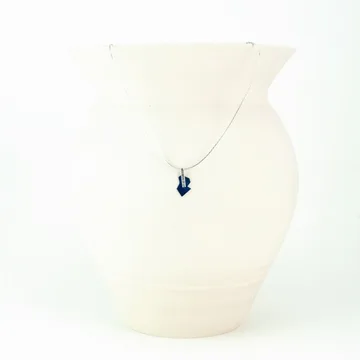
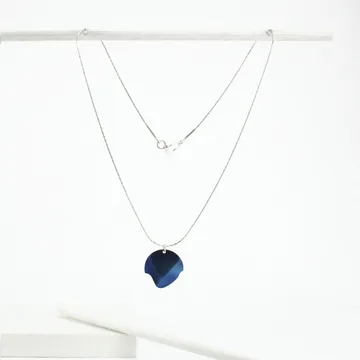
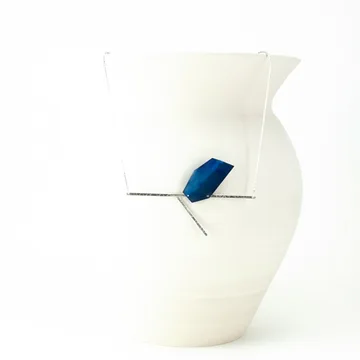
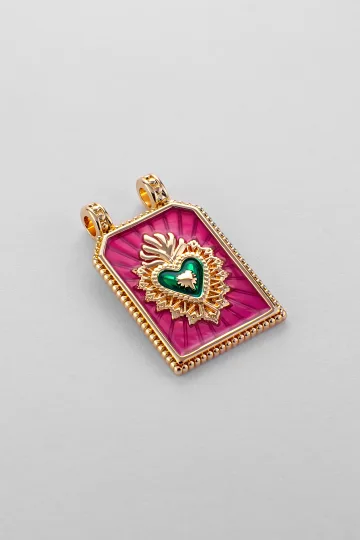
Wear the symbol, don't just read about it. These are in stock:

Ranked by how forgiving each piece is
A pendant forgives most because the part that depends on her body, the chain, can be replaced without touching the part you chose, the pendant. A pendant sold without a chain goes one step further: it hangs on a chain she already owns, at a length she has already approved. Earrings come next. They have no size in the sense a ring has, but they have a gatekeeper question, and if the answer is yes, the remaining choices are about comfort and taste. A bracelet comes last because the wrist is a real measurement. Some bracelets adjust and some do not, and the difference decides whether your present gets worn.
Rings are not on this list at all. Half a size wrong and a ring either pinches or spins, and resizing is not always possible, especially when stones run all the way round.
When earrings beat the pendant
There is a case where the ranking flips. Suppose she has worn the same fine chain with a small cross or a locket for fifteen years and never takes it off. A new pendant would have to compete with that piece for the one spot it has owned for years, and it will lose. In that situation earrings are the more accurate present, provided you know her ears are pierced. They sit beside her favourite necklace without arguing with it, and they show in every conversation and every photo.
The same goes for someone who lives in polo necks and scarves from October to March. A pendant under three layers of wool is a pendant nobody sees, including her. Earrings stay visible all winter.
What "size" actually means for each piece
Shoppers use one word for three different measurements. Which one you are missing decides which present you can buy with confidence.
Necklace: an 18-inch question
A necklace has no body measurement except chain length, and chain length decides where the pendant lands. Too short and the pendant rides up to the hollow of the throat, where it presses against collars and looks like a tag. Too long and it drops under a shirt and disappears. Shops in the United States and Britain often list chains in inches, continental European shops in centimetres, which is why the same chain shows up as 18 inches in one listing and 45 cm in another. The good news is that chain length is the easiest mistake to fix: any jeweller can supply a different chain, and the pendant itself stays exactly as you chose it.
Earrings: a piercing question
Earrings do not depend on the size of an ear the way a ring depends on a finger. There is one question you cannot guess your way around: are her ears pierced, and if so, how many times? Everything after that is about habits rather than measurements. Which fastening she trusts, how much weight she tolerates by evening, whether she likes a drop that moves or a stud that stays put. A pair of heavy chandeliers can "fit" perfectly and still live in a drawer because she takes them off at four in the afternoon. The shapes themselves are covered in our earring types guide; this article stays with the questions that matter when you buy blind.
Bracelet: a wrist question
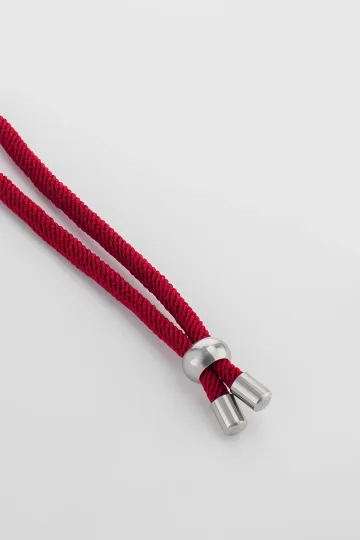
The bracelet is the only one of the three whose size is tied to the body. Wrists vary a lot between adults, and a chain that sits nicely on one arm digs into the next or slips down to the knuckles. How much room it needs depends on the type: a chain bracelet needs a little slack, a closed bangle must pass over the hand, a cord with a sliding knot adjusts itself. The rule follows directly. If you do not know the wrist, choose a bracelet that adjusts. If it does not adjust, find out the wrist. Guessing "medium" is risky, because medium is a statistic and your present goes to one particular person.
Rings: the one to leave out
A ring is the only piece where half a size already makes it uncomfortable, and the systems do not help: American sizes are numbers, British sizes are letters, and continental Europe writes the inside circumference in millimetres. Finding a ring size in secret is possible but it is a separate project, and our ring size guide walks through it in detail. For this article one conclusion is enough. If you wanted to give a ring for its stone or its symbol and you cannot get the size, the same stone or symbol usually exists as a pendant or a pair of earrings. The meaning of the present survives the change; the risk does not.
Customer reviews
Zevira is a real jewellery shop. Genuine payments, deliveries and customer thank-yous.
🥰🥰🥰 gracias
Ok, ¡gracias! 🙂
If she already wears a chain, I recommend the pendant goes on hers, not on one you guessed. A length chosen by somebody else looks borrowed on her neck, and I won't hear otherwise.
How to wear a pendant, earrings and a bracelet together: the stylist answers
These are the questions that come up once the present is chosen and it has to join the jewellery she already owns.
She wears a fine gold chain every day. Does the new pendant go on it, or on a chain of its own? On hers, if the bail allows it. I recommend that because her chain already sits at the length she likes, and the pendant inherits that length for free. If the pendant is heavy and her chain is very fine, I advise a second chain a few centimetres longer, so the new pendant hangs below the old line instead of tangling with it.
A pendant and earrings from the same giver. Should they match? They should share a metal, not a motif. I recommend the same tone at the ears and at the throat, because two different metals that close to the face split the eye between them. Matching shapes are fine for a wedding guest outfit, but for every day I advise one motif and one quiet companion: a blue pendant with small plain studs, or the other way round.
She wears a smartwatch on her left wrist. Where does a bracelet go? On the right wrist if it is metal: metal against a watch case scratches and clicks every time she types. A cord bracelet I am happy to see on the same arm as the watch, but a little higher up the forearm, so it never slides under the strap.
A winter birthday, and she is always in a polo neck. Is a pendant a waste? Only on a short chain. I recommend a long chain that lets the pendant lie over the knit, below the collar, where dark wool makes any metal look brighter. If she would rather keep the neck clean, I move the attention to the ears with a small drop and leave the polo neck alone.
She wants to wear all three on her first evening out. Is that too much? For one evening, I advise choosing two. Earrings and a bracelet when the dress has an open neckline, a pendant and a bracelet when the neck is high. Pendant, earrings and bracelet together on the first outing turn a present into a display, and the piece you chose so carefully stops standing out.

Turn on your camera, pick earrings, a pendant or a ring, and see the piece on yourself in real time.
Switch items in one tap.
Everything runs in your browser: no photo or video is ever uploaded.
Necklaces and pendants: the safest blind gift
A pendant is the first choice when the size is a mystery, but three details decide whether it lands: the chain, the bail and the size of the pendant itself.
Why 18 inches (45 cm) is the default guess
If you know nothing about her neck or her habits, 18 inches, about 45 cm, carries the least risk. On most adult women it lets a pendant rest around the collarbone or just below it, where it shows in an open collar or a V-neck and sits just under the edge of a crew-neck T-shirt. One American jeweller calls it the princess length and describes it as the most popular length for women, and our necklace chain length guide treats 42 to 45 cm, 17 to 18 inches, as the most universal range. The figures here agree with it.
Shorter than about 42 cm, roughly 16 to 17 inches, the chain sits closer to the base of the neck, and that becomes a matter of taste: some people dislike anything touching the throat. Longer than about 50 cm, 20 inches, the pendant drops onto the chest. Under a shirt it hides, over a fine jumper it lies on the knit, and that is a styling decision she should be allowed to make herself. One more detail: on the same chain a tall pendant reaches lower than a small one, because its own height hangs below the bail.
Reading her length from the necklace she already wears
You can get closer than a default without asking a single question. Look at where her current pendant sits: at the collarbone, below it, on the chest. Her habitual length is the best answer you will find, because she has already chosen it for her neck and her wardrobe. If you can hold her necklace for a minute while she is in the shower or getting ready, lay it straight on a table, clasp to clasp, and measure it with a ruler or a tape. Write the number down in centimetres and in inches, because you will meet both when you shop.
Photos help too. A picture from a summer holiday or a wedding, where her neckline is open, shows the length better than any memory. If she wears two chains together, note the shorter one: that is the length she treats as her base.
A pendant without a chain: check the bail
Plenty of pendants are sold without a chain, and for a gift this is more useful than it sounds. The pendant goes on a chain she already wears every day, and the length question disappears: the present lands exactly where she is used to seeing something. A new question appears instead, and people remember it too late. Will her chain pass through the bail, the little loop at the top of the pendant?
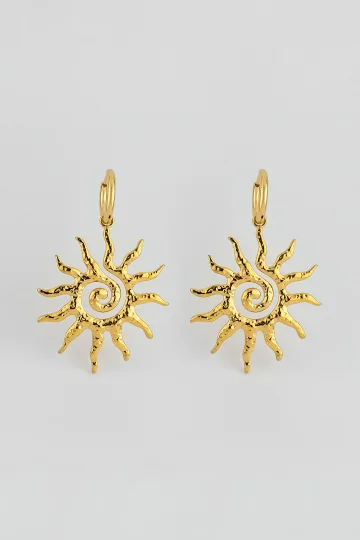
Some of our listings give the opening. The Radiant Sun pendant has a 2 mm hole and the Fishbone pendant a 3 mm inner hole. A fine chain slides through an opening like that easily; a thick rope or curb chain may not, and on a chain with a lobster clasp the clasp itself can be the part that gets stuck. If her chain is heavy or you are not sure, give the pendant together with a fine chain chosen to fit it. Zevira does not sell chains on their own, so that chain comes from elsewhere, picked with the bail size from the listing in hand.
Extender chains: let her choose the link
A necklace that arrives with its chain solves the problem differently: the seller has picked the length for you. The best ones adjust. On our amulet necklaces such as the Guardian Star and the All-Seeing Eye, the chain is listed as adjustable, and the exact range is worth reading in the listing of the piece you choose, since the figures are given there. The mechanism is simple: a short extender of a few links behind the clasp, and the clasp hooks into whichever link she prefers.
For a blind gift this is the closest thing to a guarantee. She picks the length on the day, and you never had to guess. Check one thing before you pay: the longest setting. A necklace that still sits high at its longest position becomes a choker on a fuller neck. If the listing does not give the length at all, ask the seller before ordering, not after the wrapping paper is off.
How big should the pendant be?
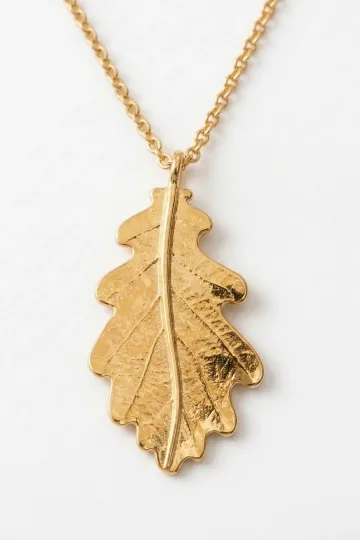
The pendant itself has a size too, a size of taste rather than of body. A tiny pendant under a centimetre, like our mini starfish at 10 by 10 mm, is almost invisible at a distance but goes with any outfit and any other chain. A medium one of two or three centimetres reads at conversation distance and stays easy to wear. A large one, like the Autumn Leaf at 55 by 26 mm, becomes the centre of the outfit, and on someone who wears small things it will stay in its box.
A practical rule for blind buying: choose one step smaller than the size that looks best in the shop. In the display a pendant lies alone on dark velvet. On a person it competes with clothes, hair, earrings and a face, and every pendant looks bigger once it is worn than it did in the case. If you are torn between two sizes of the same design, the smaller one is the safer present.
Upload a photo of your pet, someone you love, or an object. We'll build a 3D model and hand-cast it in pewter.



Earrings when you're not sure about her ears
Earrings look like a risky present until the main question has an answer. After that only comfort is left, and comfort can be found out as quietly as a chain length.
Are her ears pierced? Finding out without asking
The answer is usually in plain sight. Look at her earlobes the next time you see her, or scroll back to a photo where her hair is tied up. If there are earrings in her ears, you have your answer. If there are none, that does not prove she has no piercings: some people wear earrings only for occasions, and an old piercing can be hard to see from across a table. Ask someone who sees her every day, a sister, a flatmate, a colleague at the next desk.
Second and third holes
Count the holes, not just the ears. If she has two or three piercings in each lobe, a tiny pair of studs for the upper hole is a present for a spot most givers never think about, and it does not compete with the earrings she wears in the main hole. If she has a single piercing she has had for years, any earring with a standard post will do. If you are not sure she wears earrings at all, studs are the lightest and least demanding shape; our stud earrings guide goes through the styles, backs and sizes in detail.
No piercings: clip-ons and ear cuffs
No piercings does not close the subject. For unpierced ears there are clip-ons, which hold on the lobe with a clamp, and ear cuffs, which sit on the rim of the ear above the lobe. Cuffs have their own guide, our ear cuffs guide. Clip-ons have one catch worth knowing: the clamp presses on the lobe, and someone who is not used to them may take them off after an hour. For a present, choose light clips with a gentle grip, and keep heavy ones for people who already wear clips and know how long they can bear them.
In our catalogue the Gema de Invierno earrings are listed as clip-on earrings, gold-plated stainless steel with cubic zirconia around a blue stone. If you are buying them for someone without piercings, check the fastening on the photos and with us before ordering. Confirming a clasp costs a message; finding out after she opens the box costs the whole present.
Backs and fastenings she already trusts
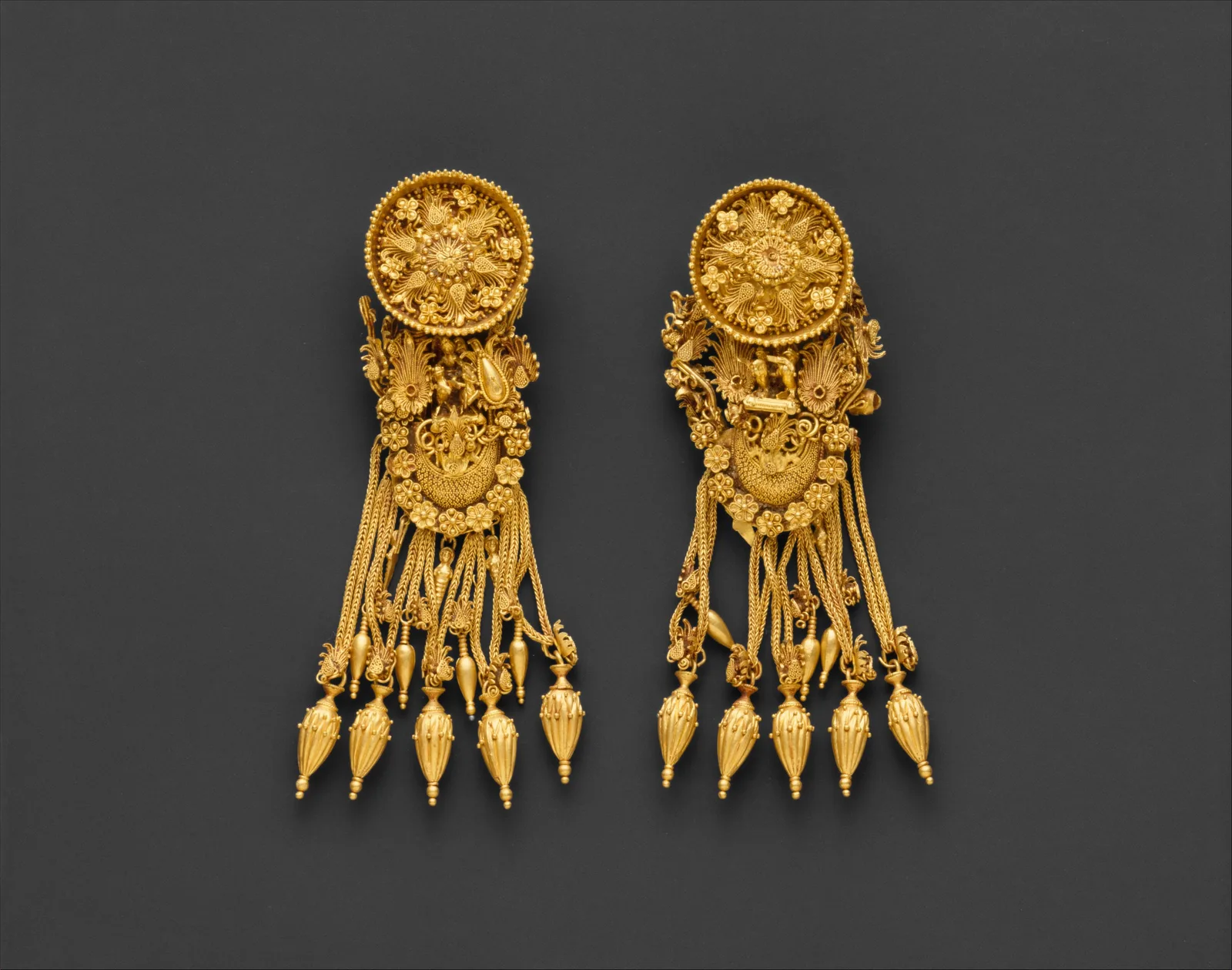
The fastening decides whether a pair gets worn every day. A post with a butterfly back holds only as firmly as the back grips, and small studs are easy to lose in a car or on a pillow. A lever back, a hinged hook that clicks shut, holds securely and goes on with one hand, which is why people in a hurry in the morning like it. A plain hook, the French wire, is the easiest to put in but can slip out without a small rubber stopper. Hoops with a snap closure pass through the piercing and close into a ring.
If you know what she wears every day, repeat the fastening. Someone who has worn lever backs for years is slow to warm to butterflies, and the other way round. It is a detail you can only see from inside the habit, and it decides more than the shape of the drop.
Weight and drop length
Weight is felt more than it is seen. A pair that feels pleasant in the palm can pull at the lobe by the end of the day, and then it comes off before dinner. For a blind present, keep to a drop no longer than the earlobe and to pieces that feel close to weightless in your hand. Long drops and chandeliers are for people who already have some in their jewellery box and wear them.
Drop length also depends on her hair. With short hair the whole earring shows and a long drop becomes the main piece of the outfit. With long hair worn down, a short earring gets lost and a long one peeps out when she turns her head. If you are not sure how she wears her hair most of the time, the middle is safer than either extreme.
Sensitive ears and metal
The ear reacts to metal more than the neck or the wrist does, because the post passes through the piercing and touches skin from the inside. So the choice of metal matters more for earrings than for a pendant. If you know she wears only silver or gold and complains about cheap earrings, that is your answer: sterling silver or a metal whose composition is stated plainly. Coated stainless steel suits many people, but with a known nickel allergy read in the listing what the post itself is made of. Why nickel causes a reaction and how to spot it is covered in our guide to nickel-free jewellery. The working rule here is shorter: when in doubt, choose earrings in the metal she already wears without complaint.



Bracelets without knowing her wrist size
The bracelet is the most demanding of the three, and it still has ways around a missing measurement.
Measuring her wrist in secret
The best source is a bracelet or watch she already wears. Fasten her bracelet, lay it on a table and measure the inside all the way round with a piece of string or a soft tape. For a watch on a strap, note which hole the strap is buckled on and measure from there with a ruler. That gives you not the bare wrist but a length she already finds comfortable, which is even better.
If she wears neither, the wrist is measured with string or a strip of paper wrapped round the narrowest point, just above the wrist bone, without pulling. For a secret gift that needs an excuse. A friend who can measure openly, a shopping trip where she tries something on "for her sister", or a game of friendship bracelets with a niece can all do the job. If none of that works, move on to a bracelet that adjusts.
How much room to add
A wrist measurement is not yet a bracelet size. Some room is added for the fit, and the amount depends on how loose she likes it. Sizing guides commonly add half a centimetre to a centimetre and a half, roughly a quarter of an inch to just over half an inch, for a fine chain that should lie loosely without sliding to the hand. Our bracelet types guide adds 1.5 to 2 cm for chain bracelets, which suits someone who likes a looser drape. Wide or chunky links need more, because a thick link eats into the inner circle.
A closed bangle is counted differently. It has to pass over the hand, so you measure the widest part of the hand with the thumb tucked in, not the wrist. Bangles are covered properly in our bangle guide. If your figure falls between two sizes, choose the larger: a loose chain can have a link taken out by a jeweller, a tight one cannot be worn.
Adjustable, chain or bangle: which survives a wrong guess
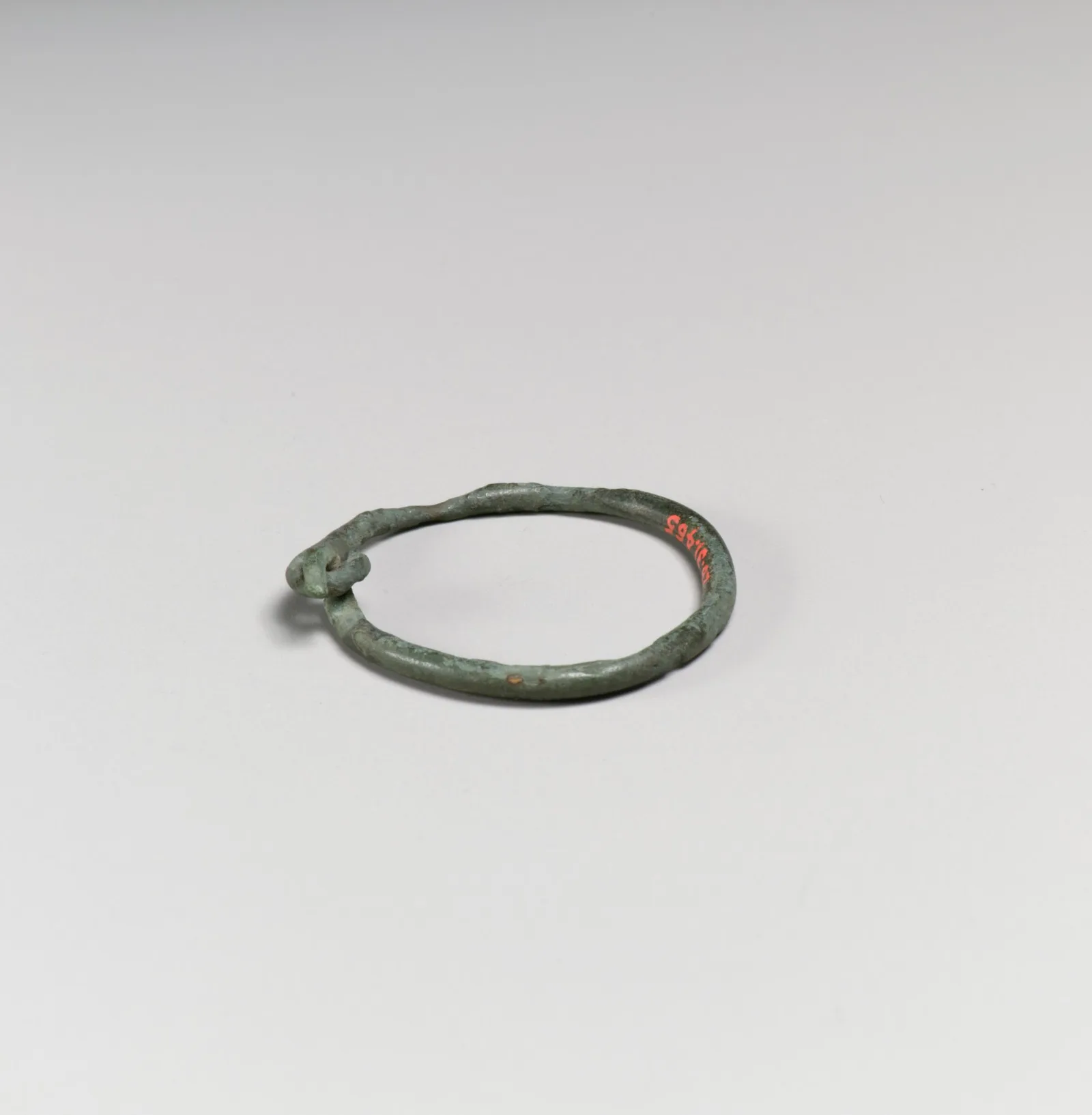
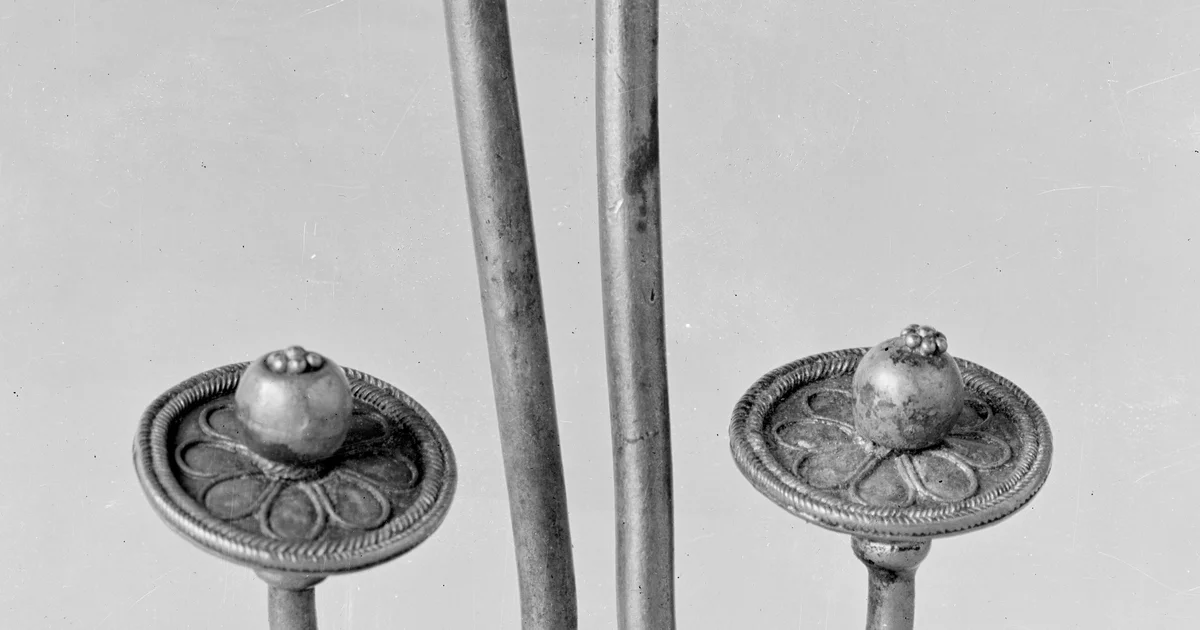
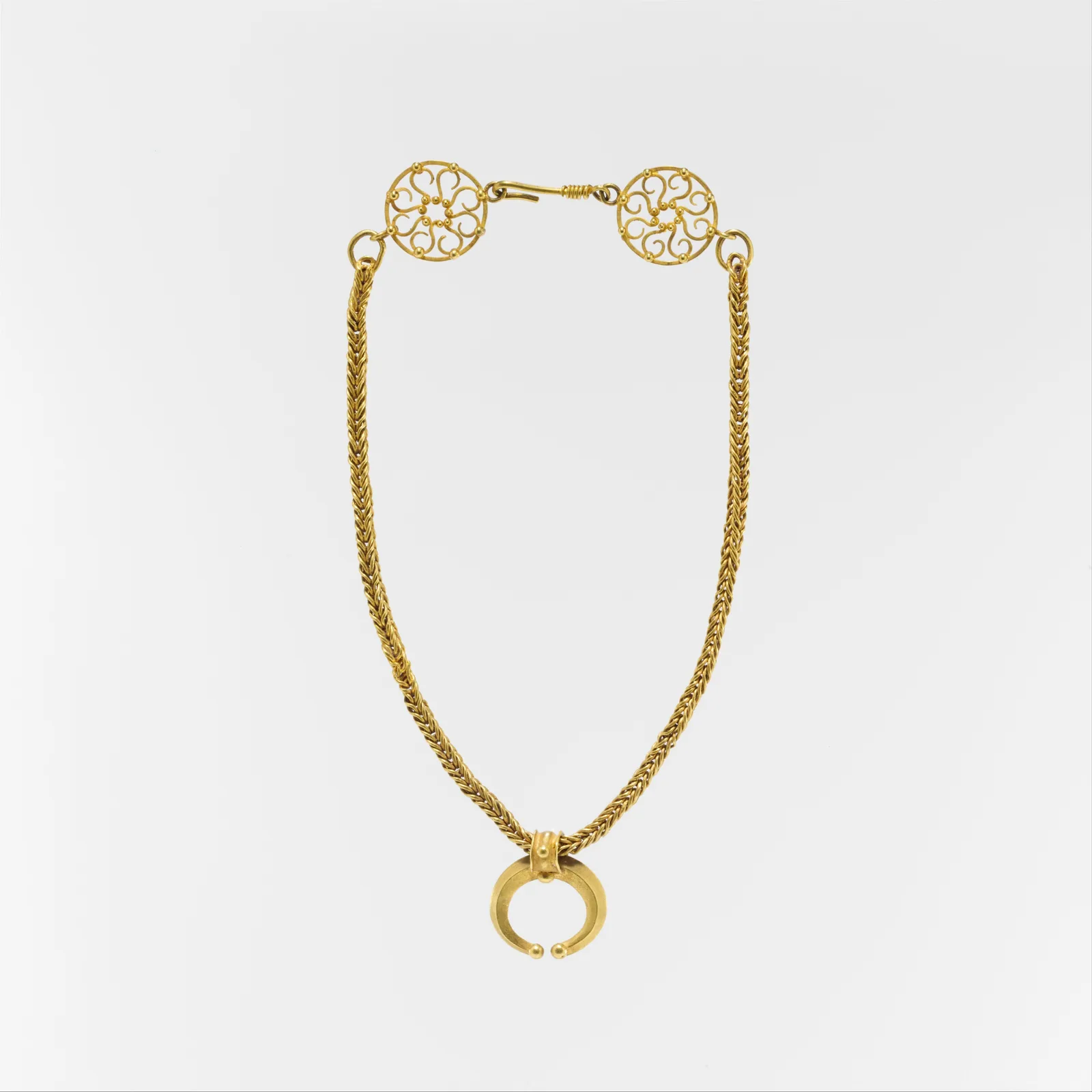
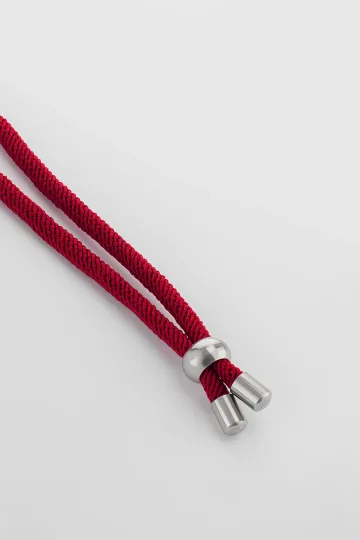
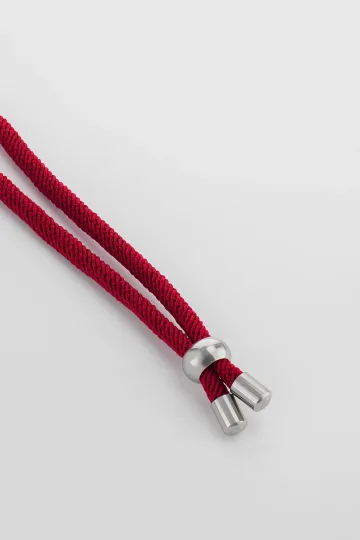
The closed bangle forgives least. It has no clasp and no adjustment, so a centimetre's error makes it either impossible to get on or loose enough to slide around the forearm. The ancient bronze bangle in the picture is the exception that proves the point: it was given a clasp. A chain with a lobster clasp forgives more, especially if it has an extender or a few spare rings to clip into, which give a couple of centimetres of play. A cord with a sliding knot adjusts itself and can be given almost without risk.
One shape handles the size problem more neatly than the rest: the cuff, an open band that is gently squeezed onto the wrist. Our cuff bracelet guide explains how much a cuff can be adjusted by hand and when the job belongs to a jeweller. For a blind present the order runs like this: a cord or an open cuff first, then a chain with an extender, and a closed bangle only when you know the hand measurement for certain.
Zevira's cord and chain bracelets
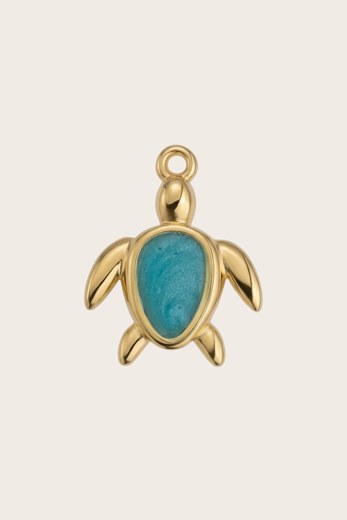
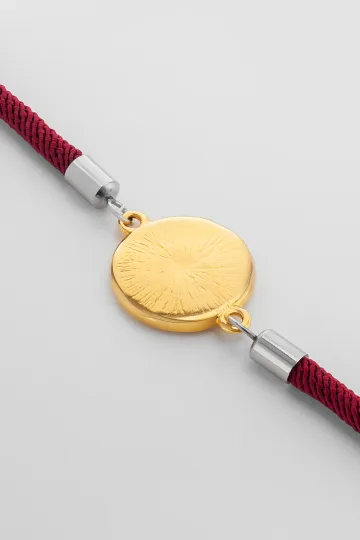
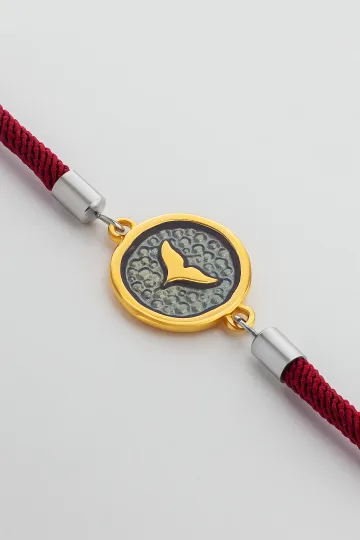
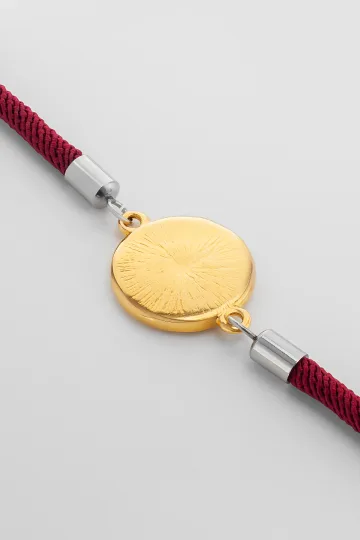
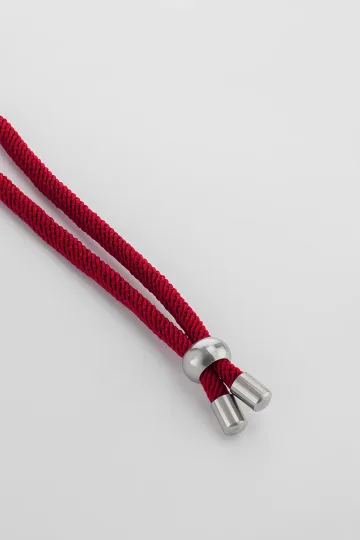
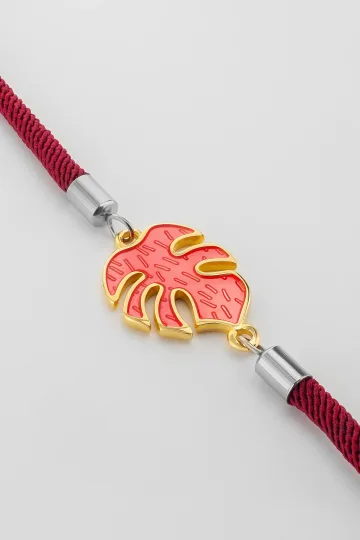
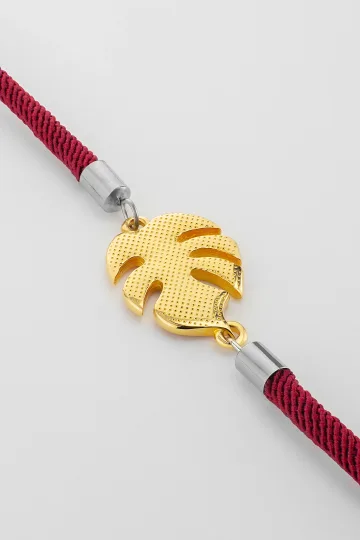
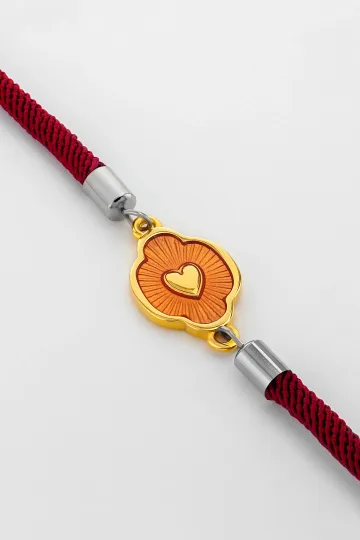
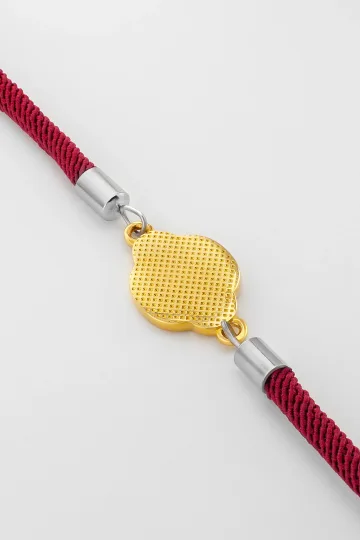
Our catalogue has two kinds of bracelet. The first is a braided rope cord with a pendant in gold-plated stainless steel and enamel: the Aliento de Gaia monstera leaf, the Flaming Heart, the Sea Echo medallion with a whale's tail on rippled enamel, and the World Map medallion. The second is a chain: the Hechizo Arcano snake chain in silver-finish metal, which can be worn alone or used as a base for charms. The bracelet listings do not give a length, so ask us for it before ordering, and ask whether the model you like adjusts. For a present bought without a wrist measurement, that is the main question, and it belongs before the purchase rather than after the gift is opened.
A cord by its nature is kinder to a wrong guess than a metal chain: it follows the arm and does not press the way stiff links do. That makes the cord bracelets a good present for someone whose style you know well and whose wrist you have never measured.
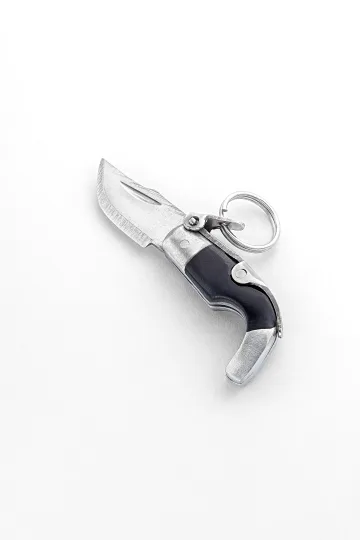
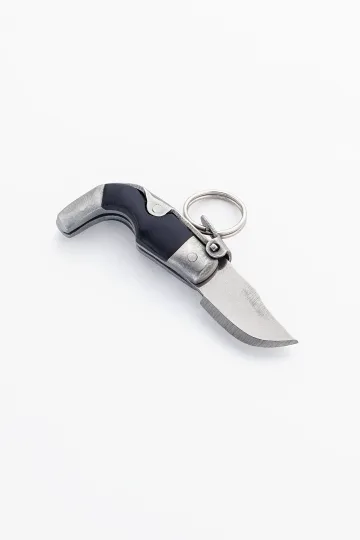
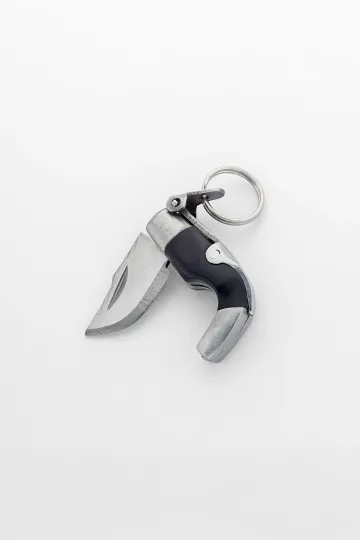
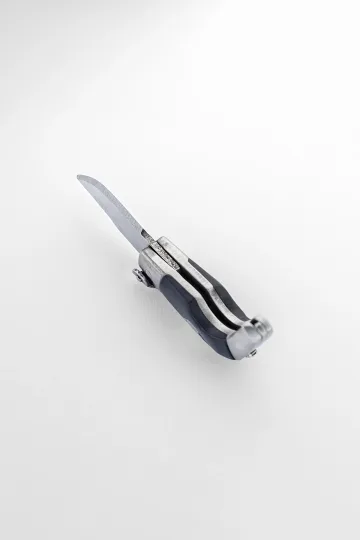
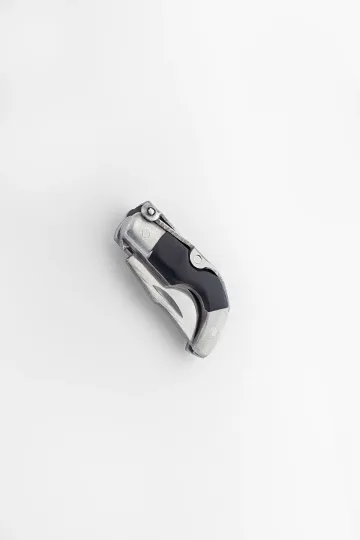
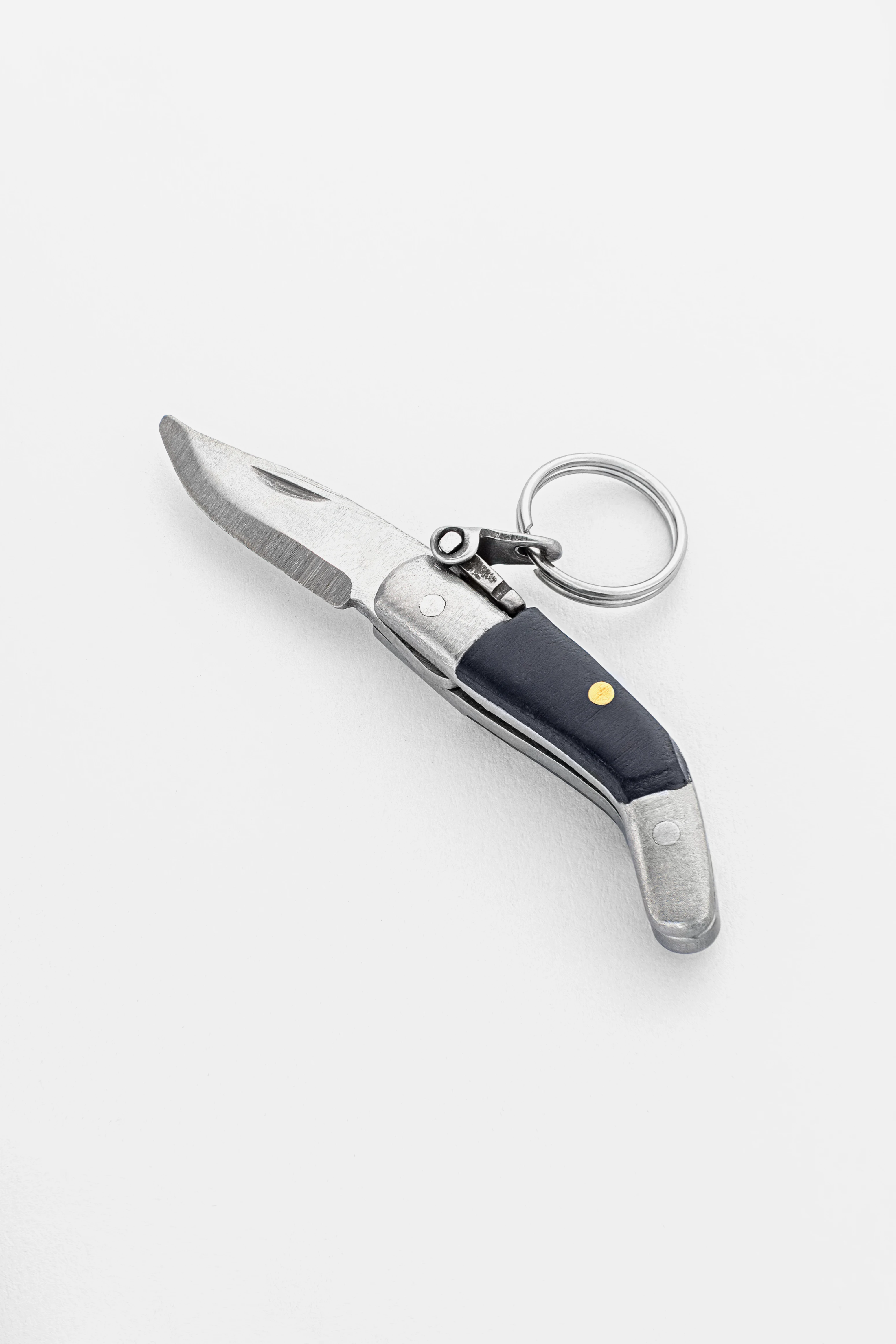
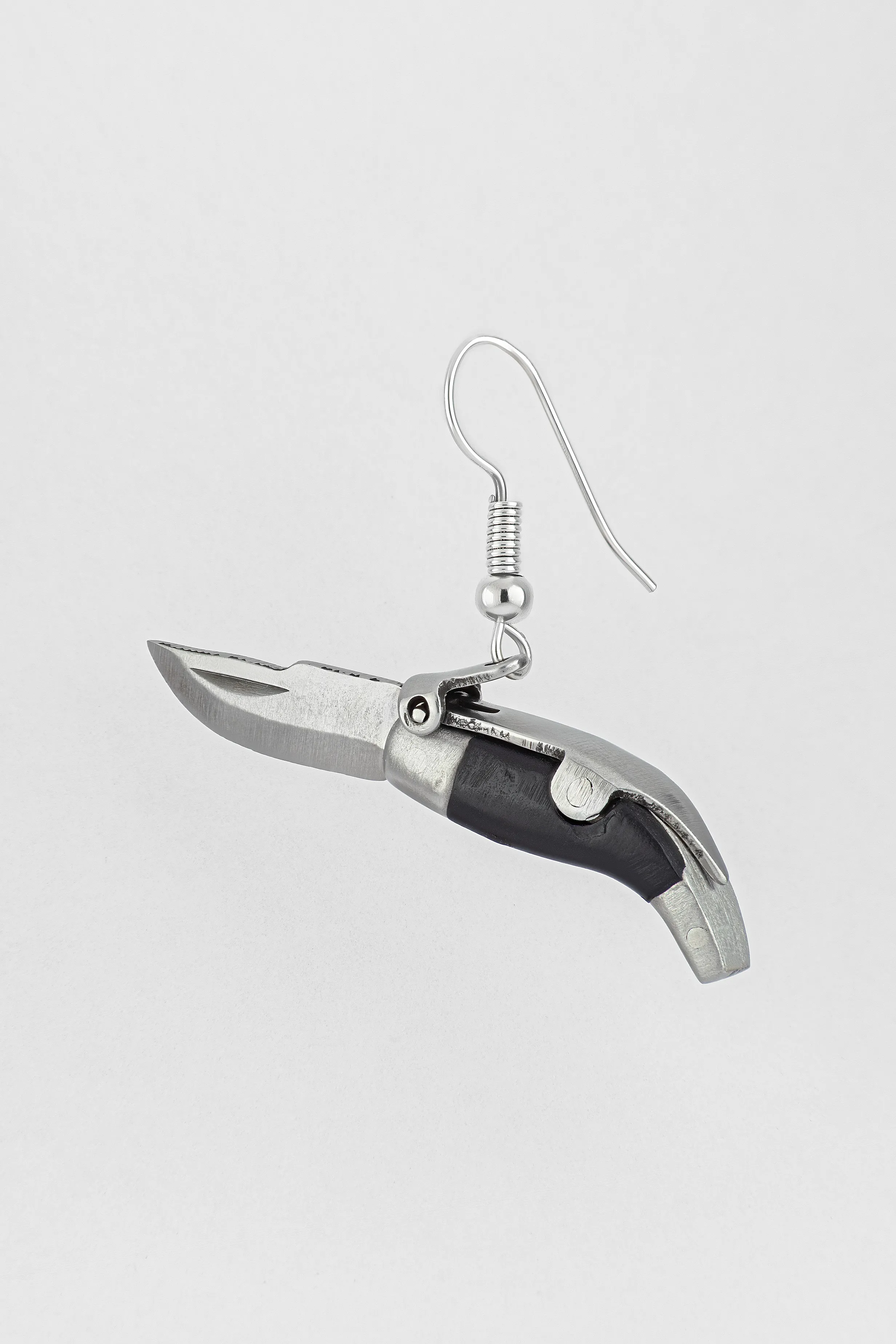
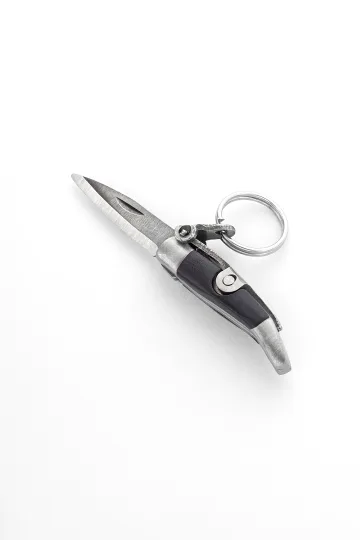
CAPAORA mini knife pendant
The 18th-century Spanish navaja in miniature: 40 mm of stainless steel, a real folding mechanism and a Palanquilla lock that clicks. An affordable gift to remember.
Authentic · Ships from Spain · 14-day returns
Older than shops: jewellery that never needed a size
The problem of giving jewellery without a measurement is older than any jeweller's counter. Here is how it was solved before tape measures.
Twenty-five bangles on one arm at Mohenjo-daro
The small bronze figure known as the Dancing Girl was found at Mohenjo-daro, one of the cities of the Indus civilisation, and is dated to around 2300 BCE. She stands about 10.5 cm tall. Her left arm carries twenty-four or twenty-five bangles, from the wrist almost to the shoulder, and her right arm four. She is kept today in the National Museum in New Delhi.
What makes her useful here is the mechanics. Closed rings like these go on over the hand and then settle at different heights on the arm, each where the arm is wide enough to hold it. A bangle like that has no wrist size: its size is set by the hand it has to pass over, and its place on the arm finds itself. The same principle still governs rigid bangles, which is exactly why a bangle is sized by the hand and not by the wrist.
Temple pendants of Kyivan Rus': ornaments at the face without a piercing
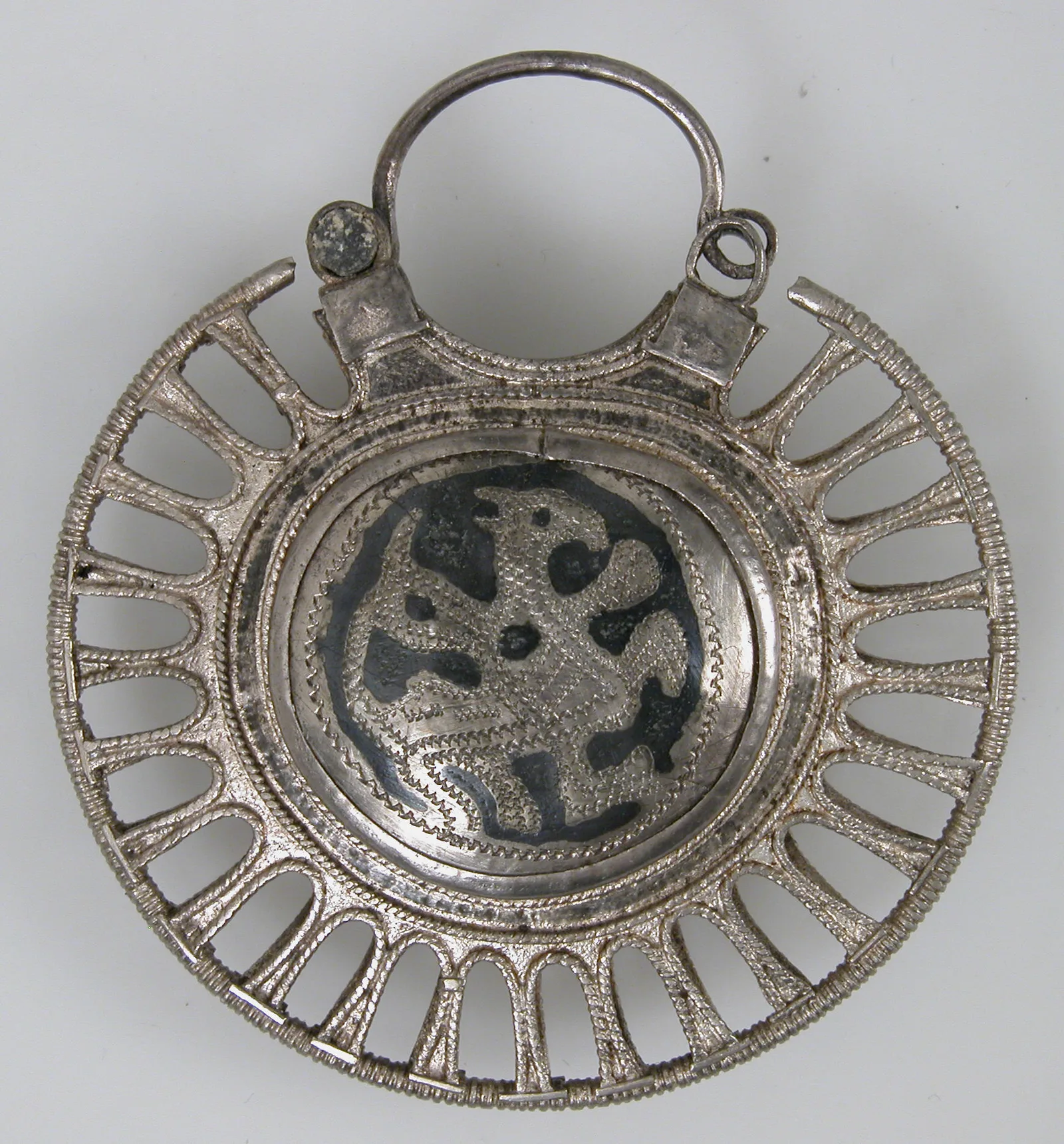
Ornaments that framed the face did not always need a pierced ear. Among the East Slavs of the early medieval period, temple rings and temple pendants were fixed to a headdress or woven into the hair at the temples, and they hung along the cheeks much as earrings hang today. The size of the lobe and the question of a piercing meant nothing to them: the ornament hung from a ribbon, a strap or a lock of hair.
The tradition was so stable that archaeologists can tell different tribal groups apart by the shape of their temple rings. For a present the lesson is simple. An ornament near the face can go to someone without piercings, as long as it is one that does not hang from the lobe. Today that role belongs to ear cuffs, clip-ons and hair slides with a hanging charm.
Screw backs and clip-ons
Towards the end of the nineteenth century earrings with a screw back appeared: a small screw pressed the earring against the lobe, and no piercing was needed. In the 1930s clip-ons with a hinged, spring-loaded back spread alongside the screw, faster to put on and held in place by the spring.
For anyone buying earrings in those years, this was a freedom earlier generations had not had: a pair no longer depended on whether the recipient's ears were pierced. Clip-ons remain the same solution now, with ear cuffs and magnetic backs added to the choice. If you give earrings to someone without piercings, the idea of earrings without a piercing is well over a century old: first the screw, and from the 1930s the clip.
Queen Victoria's bracelet that grew with the family
The Royal Collection holds a gold chain bracelet that Prince Albert gave Queen Victoria in November 1840, three days after the birth of their first child, the Princess Royal; the inscription on the clasp records it. Nine enamel heart lockets of different colours hang from it. With each child, a heart holding a lock of that child's hair, with the child's name and date of birth, was added. The last locket joined it in 1857.
A bracelet with lockets or charms solves the gift problem gracefully. The base is given once, and every later addition needs no measurement and no guesswork. Over seventeen years Victoria's chain turned from a present into a family record, one heart at a time.
Pendant vs earrings vs bracelet: side by side
To choose between the three, compare them by what you need to know and by what happens if you get it wrong, not by which looks best in the window.
Who a pendant suits
A pendant lands best with someone whose neck is free or who wears one fine chain with nothing on it. It is a good choice for people you know less well: a colleague, a cousin, a new friend. A symbol on a pendant speaks without words, and the choice of symbol can carry a meaning only the two of you understand. Do not give a pendant to someone who has worn the same medallion or cross for years and never takes it off: your present would compete with something that has more right to that place.
Who earrings suit
Earrings win when her neck is taken by a favourite chain, when she lives in high necks, polo necks and scarves, and when you know for certain about her piercings. They show in every conversation and every photo, so they work well for an occasion that will be photographed: a graduation, a big birthday dinner, a friend's wedding. Do not give earrings blind to someone whose ears you know nothing about: guessing about piercings is worse than guessing about chain length, because the miss cannot be fixed by swapping a part.
Who a bracelet suits
A bracelet suits people who already wear bracelets or a watch: they are used to something on the wrist, and you have a sample to measure. It suits people whose hands are on show while they work, writing, drawing, playing an instrument, because a bracelet is the one piece of jewellery its owner sees without a mirror. Do not give a non-adjustable bracelet to someone who has never worn anything on her wrist: the size is unknown, the habit is missing, and the present is likely to stay in its box.
Leave your email, we'll send your discount code. No spam, unsubscribe anytime.
The code arrives by email, valid on your first order.
If it doesn't fit: returns, receipts and a plan B
Even a careful guess sometimes misses. The time to think about an exchange is before you pay, not after she unwraps it.
Earrings and the broken hygiene seal
Earrings have a returns quirk the other two pieces do not share. In the United Kingdom, Citizens Advice lists "an item that has a broken hygiene seal, like earrings" among goods that fall outside the fourteen-day cooling-off period for online orders, along with items personalised or made to measure for the buyer. For a pendant on a chain, the ordinary cooling-off rules apply; for earrings, once the seal is broken the legal right goes, and what is left is the shop's own goodwill.
The practical conclusion: if you are not sure about her piercings, do not open the earrings' packaging to check them yourself, and read the shop's policy on earrings before you order. How the cooling-off period works in Britain and why the United States leaves returns to each seller's own policy is set out in our guide to jewellery gifts on a generous budget, so that ground is not repeated here.
What to ask the seller before you buy
Before buying jewellery as a present, ask three questions: can the piece be exchanged if the size is wrong, within what time, and in what condition must it come back? Policies vary from shop to shop, and a shop is free to offer more than the law asks of it. If a seller tells you they will exchange a piece that does not fit, ask for it in writing, in the order confirmation or an email, so the promise survives the person who made it.
Ask also when the clock starts. For an online order in Britain the legal period is counted from delivery, not from the birthday or the anniversary, so a present bought weeks in advance may have used up its window by the time she opens it. Buying closer to the date, or choosing a seller whose own policy is longer, solves that.
Keeping the exchange open without spoiling the surprise
Three things usually block an exchange: a tag cut off, a box thrown away, a receipt lost. Do not cut the tag; tuck it under the insert in the box. Put a gift receipt, or the order email printed out, in a separate envelope and hand it over with the present, saying something like "if it doesn't fit, everything for an exchange is in here". That does not look mean. It shows you chose seriously and want the piece to suit her.
If the present goes by post, keep the shipping box too. For an adjustable bracelet or a necklace with an extender, add one line to the card explaining how the extender works: not everyone notices the extra links behind the clasp straight away, and a necklace that seems too short may simply be on its first link.
A gift certificate with a hint
When doubt about the size is stronger than your confidence in any piece, there is a way to let her choose the size herself: a gift certificate. Ours is digital, with a single value, valid for any product online. To keep it from looking like a cop-out, print it and tuck it into a card with a hint about what it is for: "earrings for your blue dress" or "a bracelet you can size to your own wrist". You set the direction, and the size stays with her. If her taste is as much of a mystery as her measurements, that problem has its own article, on choosing a jewellery gift when you are unsure of her taste.
What Zevira has when the size is a mystery
Most of the Zevira catalogue is pendants and earrings, exactly the pieces that depend least on a measurement.
Sterling silver pendants that come on a chain
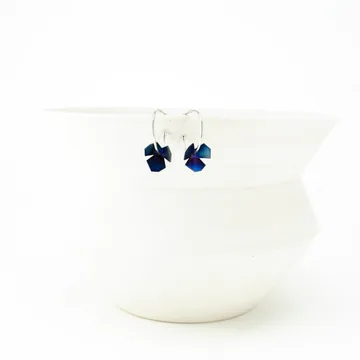
The Acosta en Plata line is sterling silver by Rodrigo Acosta's workshop in Valencia, with a clean shape and a blue accent. The Hojarasca necklace is an angular blue pendant on a long, fine silver chain that lies over a jumper or a high-necked dress. The Gota necklace combines a curved blue plate with a smooth silver disc on a fine chain. Both arrive on their chain, so they can be given without anything else to buy. These two sit at the upper end of our price range; if the budget is tighter, the steel pendants in the next section are the place to look.
Pendants for a chain she already owns
Our pendants in stainless steel with a gold-tone or silver-tone finish are sold without a chain, and this is where the present takes its place on her own chain. For someone who wears a chain every day, it is the most accurate present in terms of size: the Radiant Sun pendant in silver tone, with a 2 mm hole for a fine chain, or the Autumn Leaf pendant in gold tone, 55 by 26 mm, for someone who likes a piece that gets noticed. If her chain is thick, find a fine chain to go with the pendant elsewhere, with the bail size from the listing in hand.
Earrings that only need a piercing
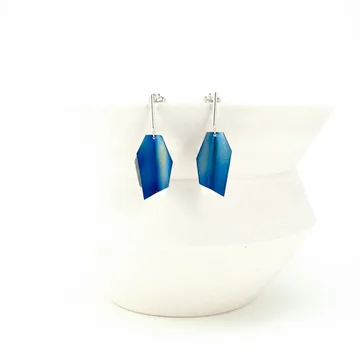
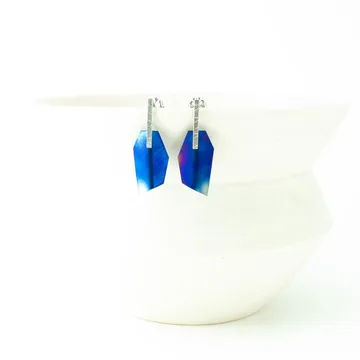
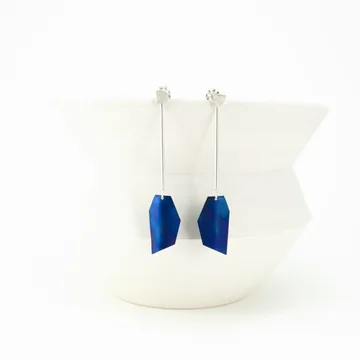
From the same silver line come the Mini Roble earrings, small blue plates crossed by a textured silver bar, studs for every day, and the Hojarasca earrings, with a drop that shows when she talks. The Hojarasca earrings and the Hojarasca necklace share one motif, the angular blue shape, so they work as presents given in turn: the necklace for a birthday, the earrings for the next occasion, and the second piece finds its partner already waiting in her jewellery box. In warm metal there are the Inverted Teardrop earrings, studs in gold-plated stainless steel, 11 by 19 mm. If it has to be a bracelet, look at the cord bracelets with a pendant and confirm the length before ordering.
A present without a size
Sterling silver pendants on their own chain, pendants for her chain, studs and drops, cord bracelets and a digital gift certificate.
Facts that surprise
The English word earring is plain Old English: ēarhring, literally an ear ring. Of the three words in this article's title, it is the only one that did not arrive from French.
Bracelet came into English from French, where it is a diminutive built on bras, "arm". The word itself says where the piece belongs.
The carabiner clasp found on some chains and bracelets is named after a weapon. The German Karabinerhaken was the spring hook that clipped a cavalryman's carbine to his belt, and the shortened karabiner entered English in the 1930s.
In the European Union, posts that pass through a pierced ear have a stricter nickel limit than jewellery that only touches the skin: 0.2 micrograms per square centimetre per week against 0.5. It is tested under the EN 1811 standard by leaving the piece for a week in artificial sweat.
Among the oldest known ornaments are 41 beads made from the shells of Nassarius sea snails, found in Blombos Cave in South Africa and published in 2004. They are about 75,000 years old, and wear around the holes shows they were strung on a cord. Some of the earliest jewellery we know of hung on a thread and needed no size at all.
Send a friend a discount code, they save on their first order.
Frequently asked questions
What jewellery can I buy if I don't know her size? A pendant on an 18-inch (45 cm) chain, ideally with an extender, or a pendant without a chain for a chain she already wears. If you know her ears are pierced, studs or a light drop. A bracelet only if it adjusts, on a cord with a sliding knot or a chain with an extender. If you wanted a ring and cannot get the size, give the same stone or symbol as a pendant.
What necklace length is best for a gift? 18 inches, about 45 cm: on most adult women the pendant rests around the collarbone and shows in an open collar or a V-neck. An extender behind the clasp covers a shorter and a slightly longer setting with one necklace.
How can I find out her bracelet size without her knowing? Measure a bracelet or watch she already wears: the inside of a fastened bracelet, or the strap of her watch at the hole she uses. If she wears neither, choose a cord bracelet with a sliding knot or a chain with an extender instead of guessing.
Can you give earrings to someone without pierced ears? Yes, but not ordinary ones. Clip-ons hold on the lobe with a clamp, and ear cuffs sit on the rim of the ear. Choose light clips with a gentle grip so she can wear them all day.
Is a necklace or earrings a better gift? A necklace if her neck is free or she wears one fine chain without a pendant. Earrings if a favourite necklace already owns her neck, if she wears high necks, and if you know she has piercings. With no information at all, a necklace is safer, because guessing about piercings is riskier than guessing about chain length.
What kind of bracelet works when you don't know the wrist size? A cord bracelet with a sliding knot, an open cuff that can be gently adjusted to the wrist, or a chain with an extender behind the clasp. A closed bangle needs a known size, because it has to pass over the hand.
Can I return earrings if they are the wrong style? Often not by legal right. In the UK, earrings with a broken hygiene seal are excluded from the cooling-off period for online orders, so the return depends on the shop's own policy. Ask before you buy, and do not open the packaging to check them.
Is a pendant without a chain a good present? Yes, if she wears a chain every day: the pendant goes on hers, and nobody has to guess a length. Just check that her chain passes through the bail. Fine chains slip through easily; thick rope or curb chains may not.
Buying it as a gift? Each one arrives ready to give.
 A branded Zevira box and a little card come with every order.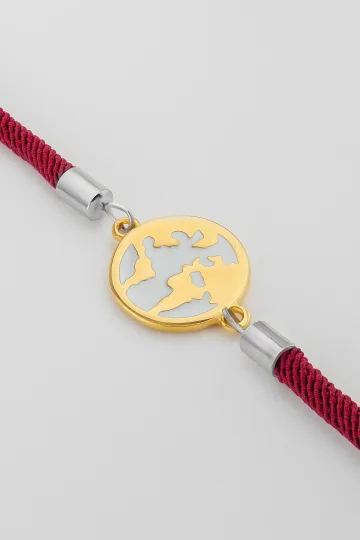
Conclusion
A present without a size is really a choice between three kinds of not knowing. You do not know her neck but you know her taste: a pendant, preferably on an adjustable chain or on the chain she already wears. You know about her piercings: earrings, and the size question disappears altogether. You know she likes something on her wrist: a bracelet that adjusts or one on a cord. And if you know nothing, a pendant on an 18-inch chain is still the steadiest bet. People were giving jewellery without a measurement long before shops existed, from bangles slipped over the hand in the Indus valley to a royal bracelet that took a new heart with every child. For gifts by budget, see our guides to jewellery gifts on a small budget and on a generous budget, and for a milestone, the guide to 50th birthday jewellery for her.
Wear the symbol, don't just read about it. These are in stock:
About Zevira
Zevira is a Spanish brand rooted in the metalworking tradition of Albacete. It brings together sterling silver by the Acosta en Plata workshop in Valencia, gold-plated pendants with symbols, earrings, cord bracelets and knife pendants that recall the blade-making country of Albacete. Most of the catalogue is pendants and earrings, the pieces people give without a fitting, and when nobody knows the size there is a digital gift certificate.