Can You Give an Amulet as a Gift? Luck, Tradition and Choosing the Right Charm
In sixteenth-century England a godparent gave a silver spoon at the christening, and the phrase "born with a silver spoon in his mouth" most likely points back to that present. In Britain the best-known lucky objects, from the christening spoon to the bride's sixpence, traditionally arrive from somebody else's hand.
The question "can you give an amulet as a gift?" tends to come up with the parcel already wrapped and a last-minute doubt: will it bring bad luck, should they pay you a coin for it, does an evil eye "only work" if someone gives it to you, will a hamsa offend a friend who goes to church. The answers are below, in order: what British and American custom actually says, when to think twice, which symbol suits which person and occasion, how to hand it over so it gets worn rather than drawer-bound, and what other cultures do with the same gesture.
The short answer: yes, and it is the oldest way a charm travels
You can. None of the customs covered here punishes the giving of protection, and several prefer it to buying. The godparent's silver, the coin pressed on a newborn, the sixpence slipped into a bride's shoe, the horseshoe handed to a couple at the door: in Britain these came as presents. The reservations that do exist number four, and they concern something else: a symbol that clashes with the recipient's faith, a devotional object given to someone who is not devout, a worn piece handed on without its story, and a pointed shape given to someone who is superstitious about blades.
Is it bad luck to give someone an amulet?
The fear spreads by association. Britain and America share a long list of presents with a bad reputation: the knife that cuts the friendship, the purse or wallet given empty, the handkerchief that promises tears. Anyone who knows that list grows wary of any object loaded with meaning, and an amulet is loaded more than most. Yet in that same body of superstition the amulet sits on the opposite side, among presents nobody objects to, because the object already carries a wish for good. The full list and the ways around it are in our guide to what not to give as a gift.
Wear the symbol, don't just read about it. These are in stock:


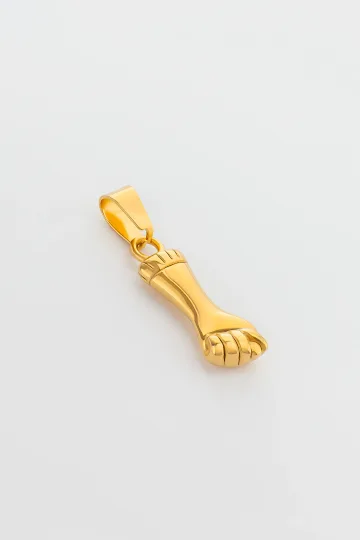


There is a second, subtler worry: that giving an eye or a fist charm amounts to saying "I can see you are in danger" or "somebody envies you". That risk is real and has nothing magical about it. It depends on the words that go with the present, which is why a whole section of this guide deals with what to say. An amulet handed over with "for the new flat" lands like a hug. The same amulet handed over with "you need this, with the people around you" lands like a diagnosis.
Does a charm have to be gifted to work?
You hear "an evil eye has to be given to you" often, and it is half true. It depends on the symbol. The nazar and the hamsa can be bought for yourself without any problem: the guides to the nazar and the hamsa explain both, and in each the gifted one is thought a little stronger without taking anything away from the bought one. With the Neapolitan horn the preference goes up a notch: the tradition of the cornicello counts being given among its conditions, though plenty of Italians buy their own. People say the same of the fist charm, and Brazil has a saying for it, which comes later. The red string is said to hold better when somebody else ties it.
The British Isles add a third route that has nothing to do with shops. The four-leaf clover is lucky for the person who finds it, and the folk wording ties the luck to the finder. So there are three ways in, and none rules out the others: found, given, bought. Only a few customs insist on the gift, like the cornicello and the Balkan martenitsa further down; for the rest, buying your own spoils nothing. What changes with a gift is that the piece arrives with someone's name attached, and that name is the part nobody can buy.
How Britain and America give luck: the local customs
Before looking at Naples or Istanbul, look in a grandmother's jewellery box. You may find an apostle spoon engraved with a date, a horseshoe charm on a faded ribbon, a St Christopher worn smooth, a heart-shaped brooch with a crown on top. They are rarely things somebody bought for themselves. They came from a godmother, from a father on a wedding morning, from someone seeing a traveller off. The English-speaking amulet is less an object of power than an object of family, and its story is told better by who gave it than by what it is supposed to do. The customs below each have their own way of moving from one hand to another: one is engraved, one is pressed into a palm, one goes into a shoe, one is handed over at a door. You do not need to believe a word of the folklore to use any of them. You only need to notice who gives, who receives and on what day.
Apostle spoons and the godparent's silver
The custom has paperwork. A will of 1516 leaves "XIII sylver spones of J'hu and the XII Apostells", and apostle spoons, with a small figure of a saint on the end of the handle, were often made in sets of thirteen, the larger one for Christ. By the sixteenth century they had become a popular baptismal present for godchildren, and it became the custom in England for a godparent to give the child a silver spoon at the christening. The fashion was fading by the 1660s, though in some communities spoons were still given as late as the mid-twentieth century.
A spoon is an odd amulet at first sight. It protects nothing and wards off nobody. But it does the thing every gifted charm does: it ties the child to an adult who has promised to look out for it, and it does so in metal that outlasts the promise. Owning a silver spoon in the sixteenth century was a sign of prosperity, and the idiom about being born lucky most likely grew out of the christening present. The modern version of the present, a cross, a medal or a bracelet for later, is covered in our christening jewellery guide.
Crossing a baby's palm with silver
The second British custom around a birth is even simpler and has never needed a godparent. When well-wishers met a new baby for the first time, they gave it a silver coin, as a wish for wealth and good health through life. It was not limited to the family: the Royal Mint's own account of the custom notes that strangers did it too, on seeing a baby in a pram. In Scotland it is called hanselling, and in Celtic countries "silvering the baby". The Scottish intangible heritage wiki records the coin being placed in the pram or under the pillow when the baby is first met.
There was a small fortune-telling game attached. A baby who kept hold of the coin would grow up careful with money; a baby who dropped it would be more frivolous with its spending. That is the story, and it belongs to the past tense. A coin is the classic thing a small child puts in its mouth, so the modern form of the gesture is the same coin tucked into the card or the keepsake box and handed to the parents. The wish arrives intact, and nothing small and swallowable goes into the pram, the cot or under the pillow.
Coral and bells: the silver rattle
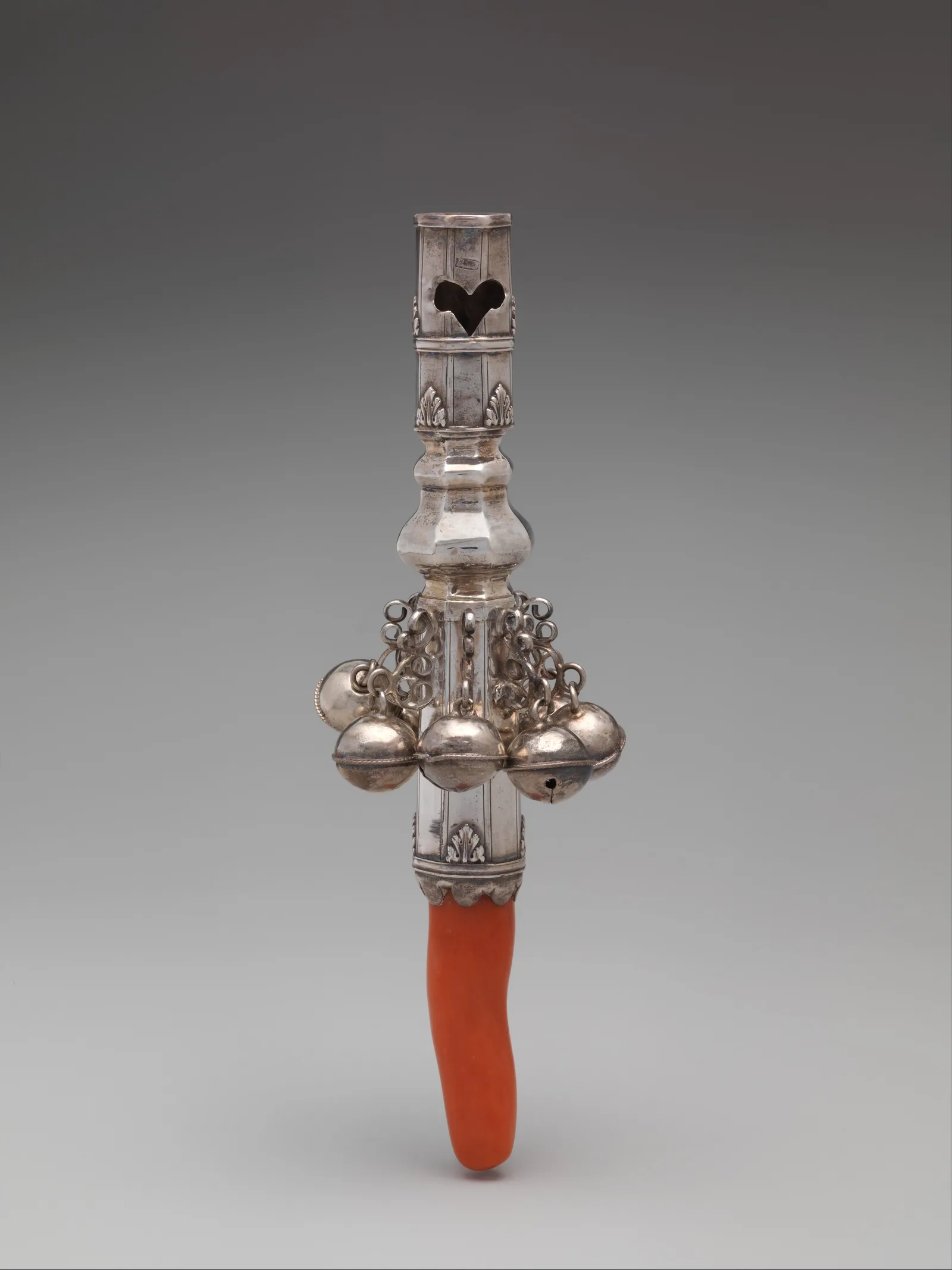
The same thinking produced, in eighteenth-century England and its American colonies, an object that looks like jewellery and was a toy: the silver rattle with a whistle, little bells and a stick of coral at the end. It was a teether, an amusement and an amulet in one. Such rattles were given at christenings and then passed down the family as heirlooms. Coral had been credited since antiquity with protecting children, and the bells were said to drive off harm as well as distract a baby from sore gums. The surviving ones show how seriously families took the present: solid silver, chased and hung with bells, made to be handed down rather than worn out.
Today that rattle lives in a museum case and goes in no baby's mouth, for reasons the section on newborns explains below. Its lesson for a giver is still useful. The present was meant to be kept, and families kept it for generations. A charm given at a birth works best as an heirloom in waiting: something the parents look after until the child is old enough to be told the story and to wear the thing safely.
A sixpence in the bride's shoe
"Something old, something new, something borrowed, something blue, and a silver sixpence in her shoe." The first two lines appear in print in 1871, the full rhyme in its Lancashire form in an 1876 newspaper, and the sixpence line was a later Victorian addition. The coin goes in the left shoe, and by custom it is the bride's father who puts it there, as a wish for her happiness and prosperity in the marriage.
This is the British wedding amulet in its purest form: small, cheap, invisible all day and placed by someone else's hand. Nobody buys their own sixpence for the occasion. It is also the custom with the cleanest answer to the question in the title, because the whole point of the coin is that a parent supplies it. A father who hands one over at breakfast on the wedding day is doing exactly what the rhyme asks of him. For a giver who is not the father, the sixpence makes a good companion to a larger present: tuck it into the card with the last line of the rhyme written underneath.
The wedding horseshoe handed over at the door
In Scotland the luck arrives as the couple leave. The Scottish intangible heritage wiki describes a horseshoe presented to the newly married bride and groom directly after they come out of the wedding venue, as a symbol of good luck. In some families the youngest guest does the presenting. The horseshoe used now is a symbolic one in card, plastic or some other light material, rather than iron from a blacksmith.
Behind it stands the older belief in the horseshoe over the door, with its legend of St Dunstan, the blacksmith who became Archbishop of Canterbury and made the Devil promise never to enter a house with a horseshoe on it. Which way up to hang it is a long argument, told in our guide to horseshoe and clover jewellery. For the present-giver, the Scottish custom settles a practical point: a horseshoe given at a wedding belongs to both of them, so it suits a couple better than a pendant for one.
The luckenbooth: a Scottish love token with a second life
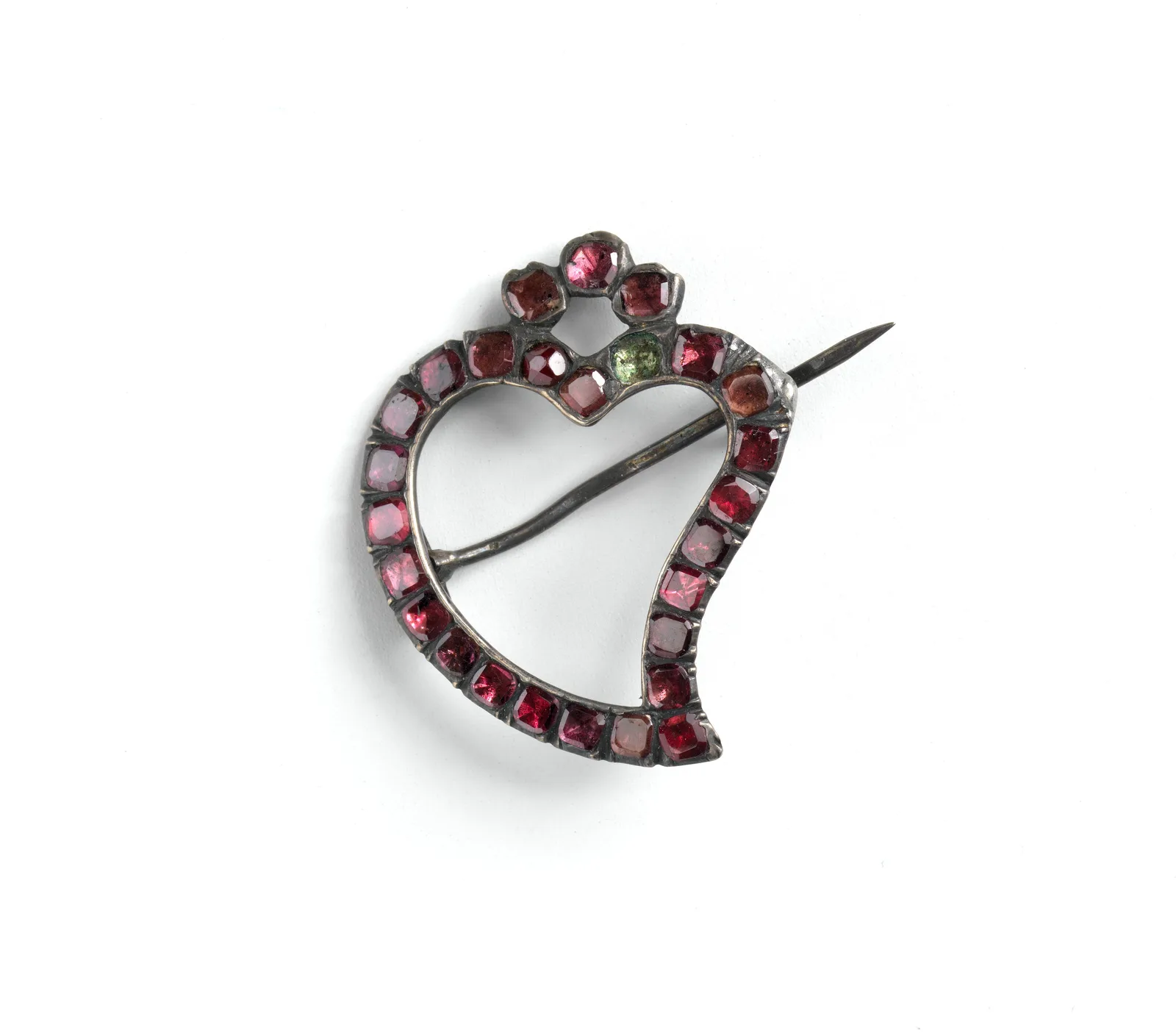
In Scotland the gifted amulet was a brooch. A heart under a crown, or two hearts entwined, usually in silver, given as a token of love and betrothal. Many carry engraved initials, dates and short mottoes, which makes each one a record of a particular couple. The brooch appears in Scotland no earlier than the seventeenth century, and the surviving examples date from the eighteenth to the twentieth.
The curious part came after the wedding. The same brooch was pinned to a baby's clothing to keep misfortune away, and sometimes the mother wore it while nursing as a charm for her milk. Hence its other popular name, the witch brooch, worn against the evil eye. A present with two lives, then: first a sign between two people, then a shield for their child. The second life belongs firmly to history. A pin and a brooch on an infant's clothes are exactly what paediatricians warn against, so a luckenbooth given today goes to the couple, and the child inherits it as a story and, much later, as a brooch.
St Christopher for the road
The giant who carried a child across a river became the patron of travellers, and his small images are worn round the neck, on a bracelet, carried in a pocket or set up in a car. In 1970 his feast was dropped from the general Roman calendar and kept only in particular calendars, which did nothing to the medal. It went on being given to anyone heading far away or spending long hours behind the wheel.
That is the clearest case of an amulet with a ready-made recipient. A St Christopher says one thing: come back safe. It suits a gap year, a first car, a posting abroad, a long-haul job. It is Catholic in origin, and to a committed Protestant or a non-believer it may feel like somebody else's saint; the St Christopher medal guide covers the forms and materials. For someone who would rather not carry a saint, a symbol of direction does the same work without the church, and the occasion section below suggests one.
The four-leaf clover: found, not bought
The clover is the odd one out among British and Irish charms, because its luck belongs to whoever finds it. A letter of 1877 already says simply that a four-leaf clover brought good luck to the finder. The leaves have been read by Christians as faith, hope, love and luck. Rarity does the rest: the figure commonly quoted is one in ten thousand, and a 2017 survey put it nearer one in five thousand.
So can you give one? The custom says nothing against it, and a clover pressed between two pages and handed to a friend is one of the gentlest presents there is. What a jeweller sells is a stand-in for the real find, and it is honest to give it as such: a wish that the other person stumbles on their own luck. A clover pendant is also among the safest choices for someone of any faith or none, since its meaning is luck rather than protection and nobody's religion claims it.
Customer reviews
Zevira is a real jewellery shop. Genuine payments, deliveries and customer thank-yous.
🥰🥰🥰 gracias
Ok, ¡gracias! 🙂
Three amulets on one chain is a key ring. Give one, leave room, and remember someone else's neck is not your display case.
The stylist's rule: an amulet that gets worn, not kept in a box
A gifted amulet rarely fails because of its symbol. It fails because of its form: too big, in a metal the person never wears, on a chain that fits none of their necklines. That piece gets worn once, in front of the giver, and then vanishes.
Where do you start when choosing an amulet as a present?
With what the person already wears. I look at the neck and the wrists: which metal tone, which chain length, whether there is something that never comes off. For someone with a gold chain I recommend a warm-toned charm that can hang from it. For someone who only wears silver, a gold amulet stays in its box whatever it means. A piece that joins what they already wear lasts for years. A piece that forces them to rebuild everything around it lasts an afternoon.
What size do you recommend?
I choose size by the neckline of their clothes, never by how it looks on the display tray. In a shop window, big looks generous. Worn, the neckline decides. For someone who lives in buttoned shirts and roll-necks I advise a small charm, on the order of the 20 by 14 millimetre hamsa in the catalogue, which sits underneath and needs no explaining in a meeting. For someone who wears open necklines I recommend a larger piece on its own chain, because a tiny charm gets lost against skin. The mistake I see most is the big eye given to someone who keeps their neck covered from October to May.
And if you do not know their taste?
I advise a charm without a chain and a note saying "hang it on yours", provided you know they have one in that tone. They decide where it goes, on a chain, a bracelet or a key ring, and the present becomes theirs from the first minute. What I do not recommend is a matching set of earrings, pendant and bracelet with the same symbol: it imposes a whole look, and an amulet has to fit into someone else's style. There are more tactics in our guide to choosing jewellery when you are unsure of their taste.

Turn on your camera, pick earrings, a pendant or a ring, and see the piece on yourself in real time.
Switch items in one tap.
Everything runs in your browser: no photo or video is ever uploaded.
When to think twice, or give something else
The reservations exist and deserve attention even if you believe in none of it, because the present is received by someone else and what counts is what they think. There are four situations, and none forbids the gesture. Each asks you to change the symbol, the piece or the manner.
Someone of another faith, or none
Every amulet carries a symbol, and many symbols point somewhere religious. A cross, a Miraculous Medal, a hamsa, a Star of David or a St Benedict medal is transparent to someone who grew up with it and can make someone from another tradition uncomfortable. The hamsa guide notes that some strands of Islam and Judaism disapprove of amulets altogether, so even the recipient's "own" symbol is no safe bet with a very observant person. The rule is to ask first, in passing, without announcing a present.
When you cannot ask, there are symbols no faith owns: the sun, the compass rose, the horseshoe, the four-leaf clover. The evil eye sits halfway. People of different religions wear it around the Mediterranean and far beyond, but it speaks of envy, and to a very rational person it may read as superstition. For that person a symbol of direction or light works better than one of defence.
Blessed medals and devotional objects
Some amulets pass through a rite before they reach their owner. A blessed medal, a rosary, a scapular: these carry, alongside the symbol, membership of a community, and it makes sense to give them to someone who feels part of it.
To a non-believer a blessed medal poses a problem they did not have before: they do not want to wear it and do not quite dare to throw it in a drawer. The opposite mistake happens too. A believer receives an amulet their own tradition frowns on and is caught between politeness and conscience. In both cases the way out is the same: choose the piece by the faith of the person receiving it, not the person paying. The cross necklace guide is a good place to see how a devotional piece reads to different people. If the doubt remains, a secular symbol says the same thing without putting anyone in an awkward spot.
A charm you have worn yourself
Second-hand jewellery comes with a well-known belief: that it keeps something of whoever wore it. The guide to gift superstitions linked above explains how that is usually handled. For an amulet the question is simpler than it sounds, and it comes down to whether the piece's story can be told.
Great-grandmother's St Christopher can be told: who wore it, on which journey it went, why it now goes to this granddaughter. That piece gains with every handover. An amulet bought at a car-boot sale cannot be told, and for a squeamish person the question "whose was it?" ruins the present. That leaves your own amulet, the one you wear. Nothing stops you giving it to a son or a goddaughter with its explanation. With the Neapolitan horn the custom even recommends passing on one you no longer want rather than throwing it away. For everything else, a new piece avoids the question.
Sharp shapes and the coin
Of all gift superstitions, the one about blades is the one people actually grew up with: knives, scissors and pins "cut" the relationship, and custom disarms them with a coin that the person receiving the present hands back to the giver. How that works, and why a pocketknife can still be a sign of trust, is explained in the gift-superstitions guide.
Some amulets have a point: a horn, an arrow, a miniature knife. They are symbols rather than tools, but the shape is there, and what decides is the belief of the person receiving it. If they are a touch-wood type, tape a coin inside the card with a line saying "this one comes back to me". If they are not, skip it. The gesture has a bonus: it turns the handover into a small game between the two of you, and a person who believes in no omens at all will laugh and hand you the coin anyway.
Upload a photo of your pet, someone you love, or an object. We'll build a 3D model and hand-cast it in pewter.



Who to give an amulet to, and which one
The choice starts with the person, not the symbol: how old they are, what they believe, what they already wear every day. The same blue eye that delights a pregnant friend looks strange on a manager's desk.
A newborn and the new parents
This is the classic occasion and the one that needs most care. Tradition pressed silver into the baby's hand and pinned charms to its clothes; modern paediatrics asks for something else. The American Academy of Pediatrics does not recommend that babies wear any jewellery, and on 20 December 2018 the US Food and Drug Administration warned against teething necklaces and bracelets after reports of choking and the death of an eighteen-month-old child strangled by an amber necklace while asleep. The risks are strangulation and choking, and they rise when the child is asleep or unsupervised, or if a piece breaks and small parts come loose.
So the answer respects both the custom and the paediatricians. Nothing goes on the baby: not round the neck or wrist, not pinned to clothes, not tied to the cot or the pram. The amulet goes to the parents. It can sit in the keepsake box with the hospital bracelet and the first photographs until the child is old enough to wear it, the way an apostle spoon or a coral rattle was once put away for later.
The other route is to give the amulet to the mother or the father to wear. A pendant she wears while the child is small, and hands on when the child is old enough, does the job without putting anything on an infant. Write that plan in the card, and the present becomes a promise with a date on it.
A child at First Communion or confirmation
First Communion and confirmation are the other classic moments for a gifted cross or medal, and here the recipient already has opinions. By that age a child knows whether they like the medal, and will wear it or not depending on how it looks and what the playground says. So choose something small and tough that sits under a school shirt and survives break time.
Thin enamel and glass chip easily, and a present broken at that age hurts more than it would an adult. Plain metal with an engraving on the back is the better choice. If the family is not religious and there is no ceremony, the same role can be played by a symbol with a story the child can tell: a sun, a compass rose, an Eye of Horus. "It's Egyptian" is a better line in the playground than "it's to keep me safe".
A friend, a sister or a partner
With an adult woman what matters is how she wears jewellery. If she has a chain she never takes off, give her a pendant for that chain; it is more tactful than imposing a new length and a new metal. In the catalogue the red hamsa hand pendant is a 20 by 14 millimetre charm with a white enamel palm, a gold-tone outline and a red heart at the centre. It hangs with the fingers pointing down. It comes without a chain, so it suits her if she already has a gold one.
If she wears nothing at her neck and likes colourful jewellery, a complete necklace works better. The Nazaré necklace comes on its own chunky gold-tone chain, with a rectangular pendant whose lower half is fuchsia enamel set with coloured stones around a white eye with a turquoise pupil. It is a bold piece: give it to someone who already wears jewellery people notice and whom you know likes fuchsia. For a friend with quieter taste, the small charm is the safe bet. Between partners an amulet takes an engraved date or a note very well, and that turns a generic symbol into a private one.
A man
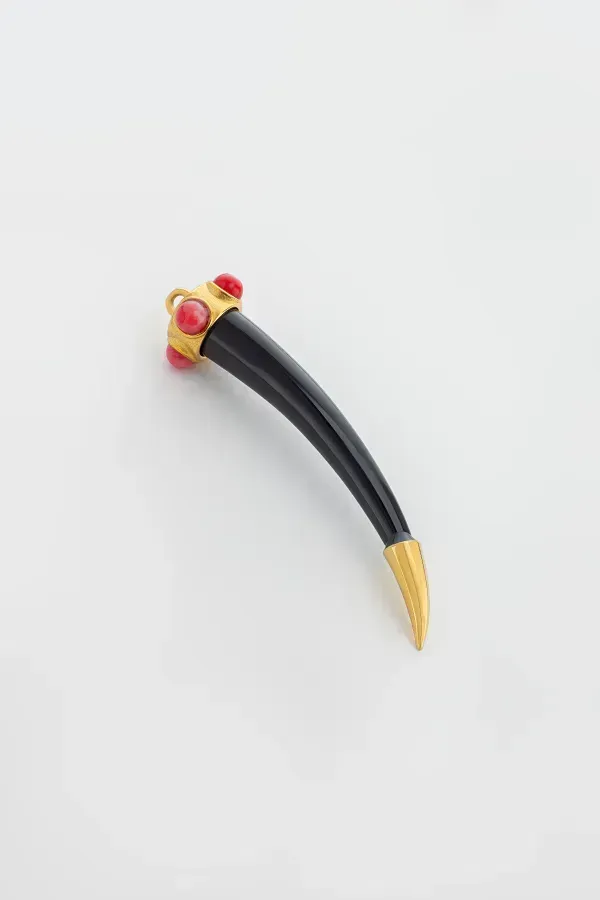
A man who already wears something at his neck, a leather cord or a chain, can take a pendant with some presence. The ethnic horn pendant is just under four and a half centimetres long and gold-toned from top to bottom, with a hammered surface and a small brown stone by the bail. It is a piece of jewellery and it looks like one: it shines. It is sold without a cord or chain, so it is right for exactly that man, the one who already has something to hang it on.
The man who wears no jewellery and calls himself unsuperstitious needs an amulet that looks like an object first and a talisman second, and that need not be worn. It can live in the car, on the key ring or in the desk drawer. A St Christopher on the dashboard is the familiar example. More ideas by type of piece are in our guide to meaningful jewellery gifts for men.
Parents and grandparents
For an older person, think about two things: their faith and their hands. If they are religious, the natural choice is the saint or the image they already keep by the bed. If they are not, family symbols work well: a tree of life, or a plain medal engraved on the back with the grandchildren's names.
The second consideration matters more than the first. A tiny clasp cannot be opened by fingers that no longer cooperate, and the piece ends up in the jewellery box. A long cord that goes over the head, or a large lobster clasp, solves that. For a big birthday there are more ideas in our guide to jewellery for a woman turning fifty.
A coworker
At work the anti-envy amulet is slippery ground: giving an eye to a colleague hints that someone in the team wishes them harm, and you cannot control that reading. The rule for office presents is that the piece says nothing about belief. Symbols of direction and luck work: a compass rose for a transfer, a sun for a project that is starting, a clover for a first week. The full case, Secret Santa included, is in our guide to Secret Santa and coworker jewellery gifts.
A sceptic
Someone who does not believe in amulets accepts one without fuss if it is given as a story rather than a remedy. A sceptic is interested in where the shape comes from and who wore it. The godparent's spoon, the bride's sixpence or the Roman capsule described further down turn the piece into an object with a biography. On the card, swap "amulet" for "symbol" and the present stops sounding like an attempt at conversion.



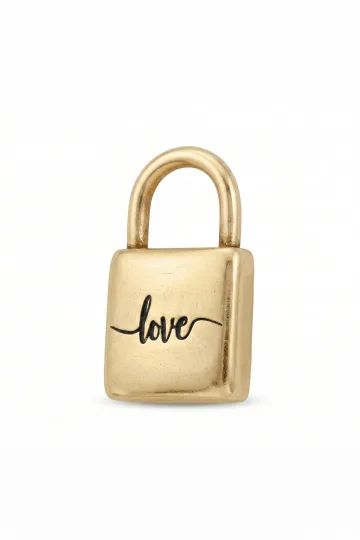
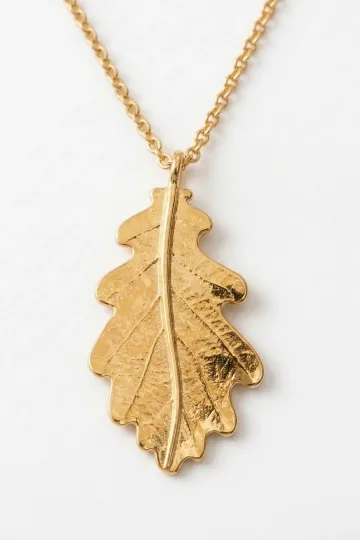
Which charm for which occasion
The occasion sharpens the choice more than the recipient does. The same person needs different things when they move house, sit an exam and come out of a bad year.
A new home
A house is protected separately from a person, and the amulet for a move is hung more often than worn. The horseshoe over the door is the British and American classic, with the St Dunstan legend behind it, and the horseshoe guide linked above has the history. A glass eye by the entrance plays the same part in Mediterranean homes.
If you would rather give something to wear, the open hand is the symbol custom links with the household. And a practical tip: wait until there is a wall to hang it on. An amulet handed over on moving day, between boxes, has every chance of disappearing before it has been unpacked. The housewarming, a few weeks later, is the better moment, and by then you will know which door it is meant for.
Travel, a gap year or a move abroad
The road has a patron, and his medal is a present with an obvious recipient: the St Christopher goes to someone about to spend long hours driving or heading far away. For the giver it is a way of seeing someone off with more than "be careful".
For someone moving abroad who is not religious, the gold-tone compass rose pendant says "find your way" without leaning on any church. It is a round medal of 34 by 38 millimetres with a raised star and the initials of the cardinal points around it. It comes without a chain, so it suits someone who already has one in the same tone. Give it a few days before departure rather than at the airport, so there is time to put it on and get used to it.
Exams, a driving test or a new job
Here the amulet is given as a sign of luck, not defence. What matters is that it does not get in the way in an exam hall or an interview room: something that fits in a pencil case or a jacket pocket, or that stays at home on the desk.
For a student months into revision, an object they can look at while working helps more than one worn only on the day. The sun amulet pendant in the catalogue is a gold-tone disc with ridges radiating from the centre, where it holds a small red stone. It is medal-shaped rather than a tiny charm, and the listing gives no measurements, so expect it to be seen. It comes without a chain. On the card, be specific: "may this be the last hard exam" stays in the memory longer than "good luck".
A wedding
Wedding amulets have two possible recipients: the bride or the couple. British custom already supplies both: the sixpence for her shoe, given by her father, and the horseshoe for both of them at the door. Elsewhere the hand has a long history as a present to a Sephardic bride and the horn as a present to newlyweds in southern Italy; the guides to each symbol cover those cases.
If you want to give something wearable, two matching pieces, one each, work better than a single one. And if either of them is superstitious and the symbol has a point, the coin described earlier settles the question before anyone raises it.
After an illness or a hard year
This is one of the occasions when an amulet is most welcome, because the person is looking for something to lean on. Symbols of light and beginnings fit, like the sun. The eye fits less well, since it talks about a threat from outside when what they need is a sign of their own strength.
Avoid anything that recalls the bad patch. No references to health, no "so it never happens again". The present should look forward: a travel symbol if they are planning a trip to celebrate, a home symbol if they are finally going back to their own. The card can name the plan, which turns the amulet into a ticket rather than a bandage.
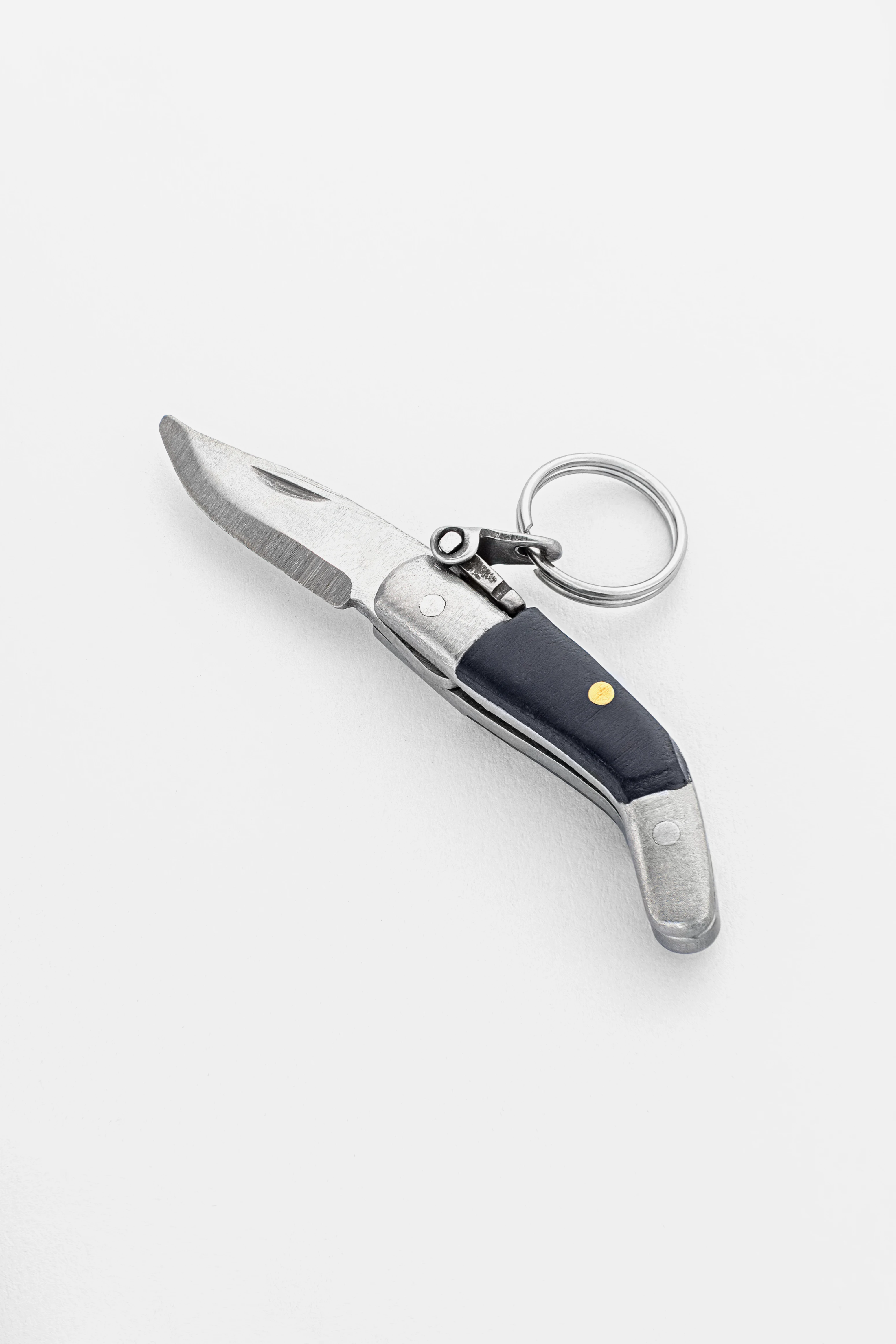
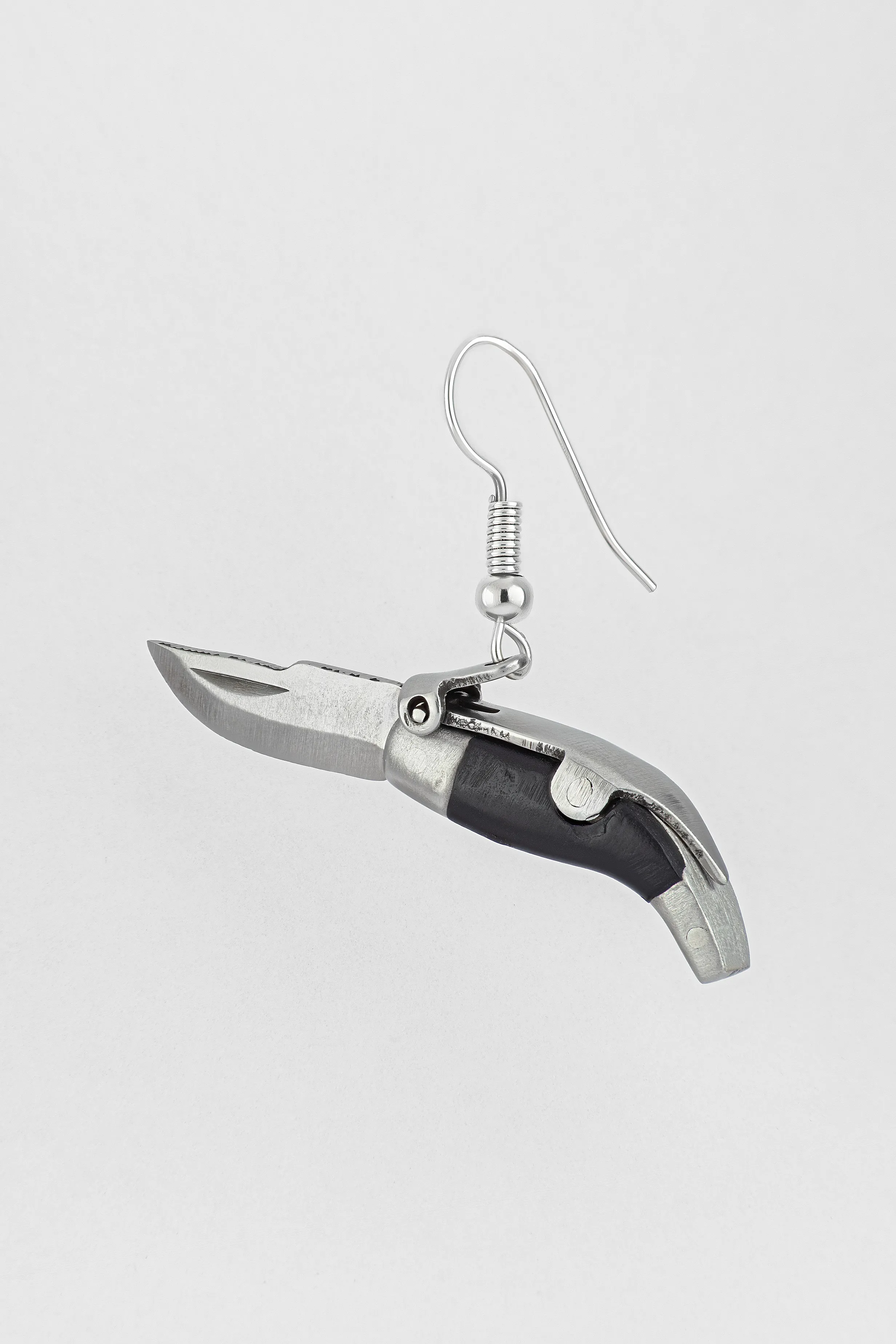
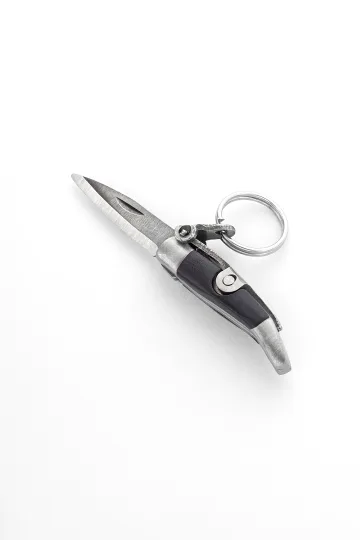
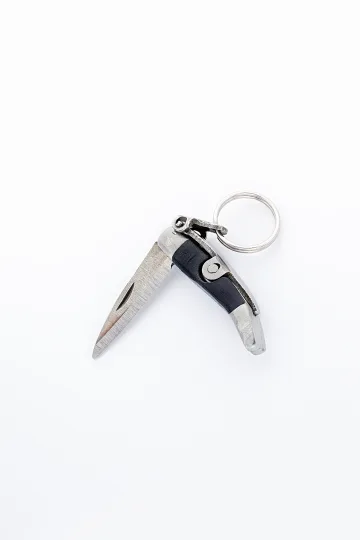
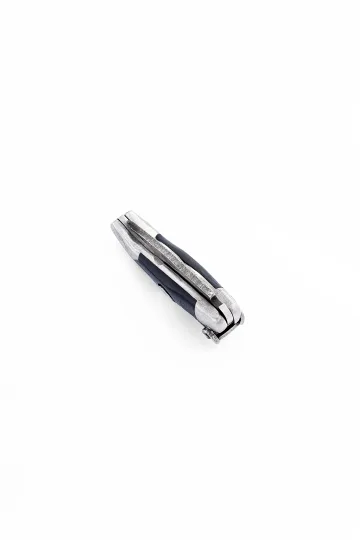
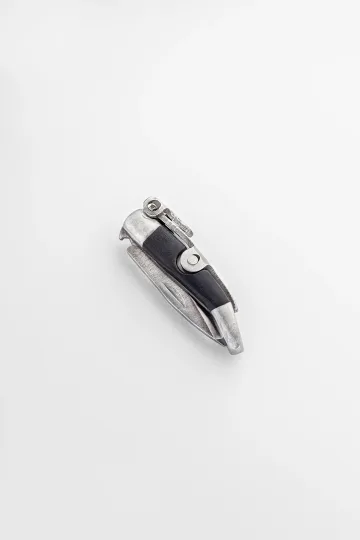
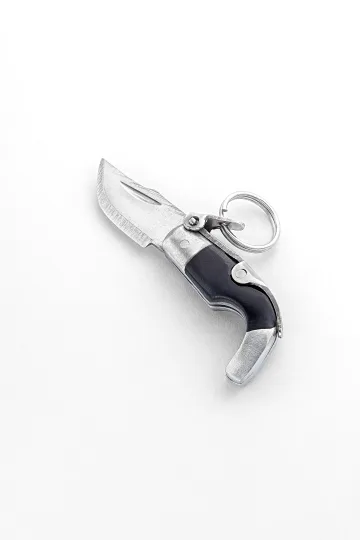
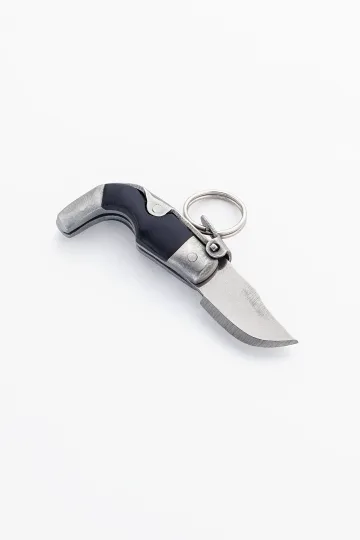
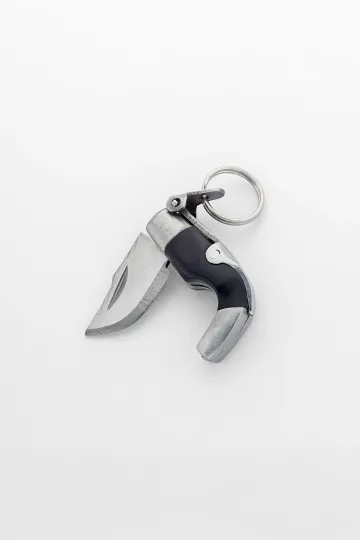
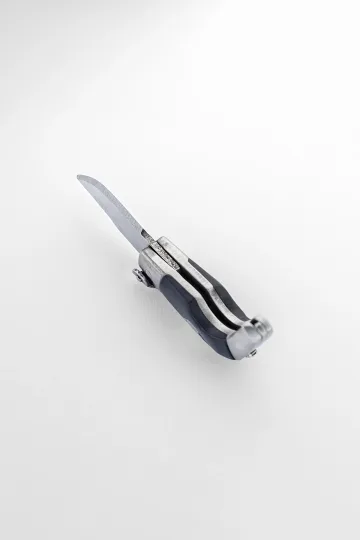
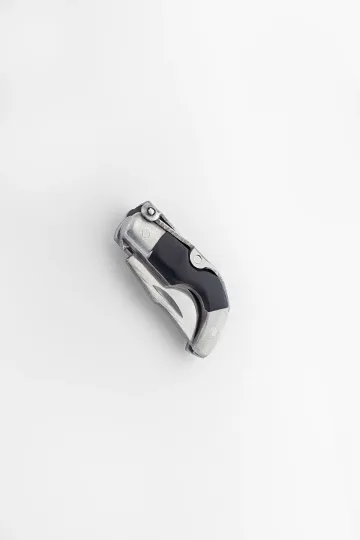
CAPAORA mini knife pendant
The 18th-century Spanish navaja in miniature: 40 mm of stainless steel, a real folding mechanism and a Palanquilla lock that clicks. An affordable gift to remember.
Authentic · Ships from Spain · 14-day returns
How to hand over an amulet
With an amulet the handover weighs more than with other presents, because the object explains nothing on its own: the recipient does not know whether they are holding an ornament or a wish until you tell them.
What to say when you give it
One short, concrete sentence: "for an easy road", "to go with you where I can't", "for Thursday's exam". A long speech about envy and bad energy frightens someone who was not thinking about any threat until that moment, and puts the present on the side of fear.
It helps to name the symbol and where it comes from. "It's a figa, they've been made since Roman times" is more interesting than "it's against the evil eye", and it gives the other person something to say when someone asks about the pendant. Someone who receives a hamsa usually wants to know what it means to be given one, and you are the one with the answer: whatever you are wishing them with it.
The card that goes with it
If you cannot give it in person, the card is your voice. If you can, it is the memory: in a year nobody will remember the exact words, and the card will still be in the box. Three things are enough: which symbol it is, where it comes from and what you wish with it.
Write it by hand. If the piece is engraved, say in the card why that date or those initials. And if the amulet has a point and the person is a believer, the coin goes on the card itself, as described above, so the little rite is ready the moment the envelope opens.
Before or after the day
The travel amulet is given before the trip, the exam one the evening before, the wedding one at the wedding. The logic is simple: company is needed while the test lasts, not once it is over. With a birth the order is reversed. British custom gives the silver when the baby is first met and at the christening, so the natural moment is the first visit to the parents' home.
For a birthday there is no special rule: the day itself is best. And if you are late, it does not matter. An amulet given a week late loses nothing, while one handed over in a rush and without a word loses most of its meaning.
The wrapping
A simple wrapping suits an amulet: a small cloth pouch, a little box, an envelope. An elaborate presentation case turns the symbol into an expensive present, and then the conversation turns to what it cost instead of what it means.
Make the box the right size. A loose charm in a big box arrives scratched. If the present goes by post, send a message or call and say what you would have said in person, and ask them to open the parcel with your card in front of them.
Leave your email, we'll send your discount code. No spam, unsubscribe anytime.
The code arrives by email, valid on your first order.
Beyond Britain and America: four places where protection comes from another hand
Giving protection is not a British oddity. What is a family habit here is, elsewhere, a rule with a name and a date. These four traditions grew up independently: one is Roman and more than two thousand years old, one is Brazilian, one is Chinese and still very much alive, and one is celebrated every 1 March in the Balkans. What links them matters to someone about to give a present: each prefers the protective object to come from another hand, and in China and the Balkans a piece bought for yourself is the weaker option or simply not the custom. Knowing them is practical. If the person you are buying for has roots in one of these cultures, the present already has its day, its form and its phrase, and you do not need to invent anything. If they do not, any of these gives you a story to tell as you hand the piece over, which is half the present. None promises anything that can be tested; what all four show is who took charge of whom.
Rome: the bulla a father hung on his son
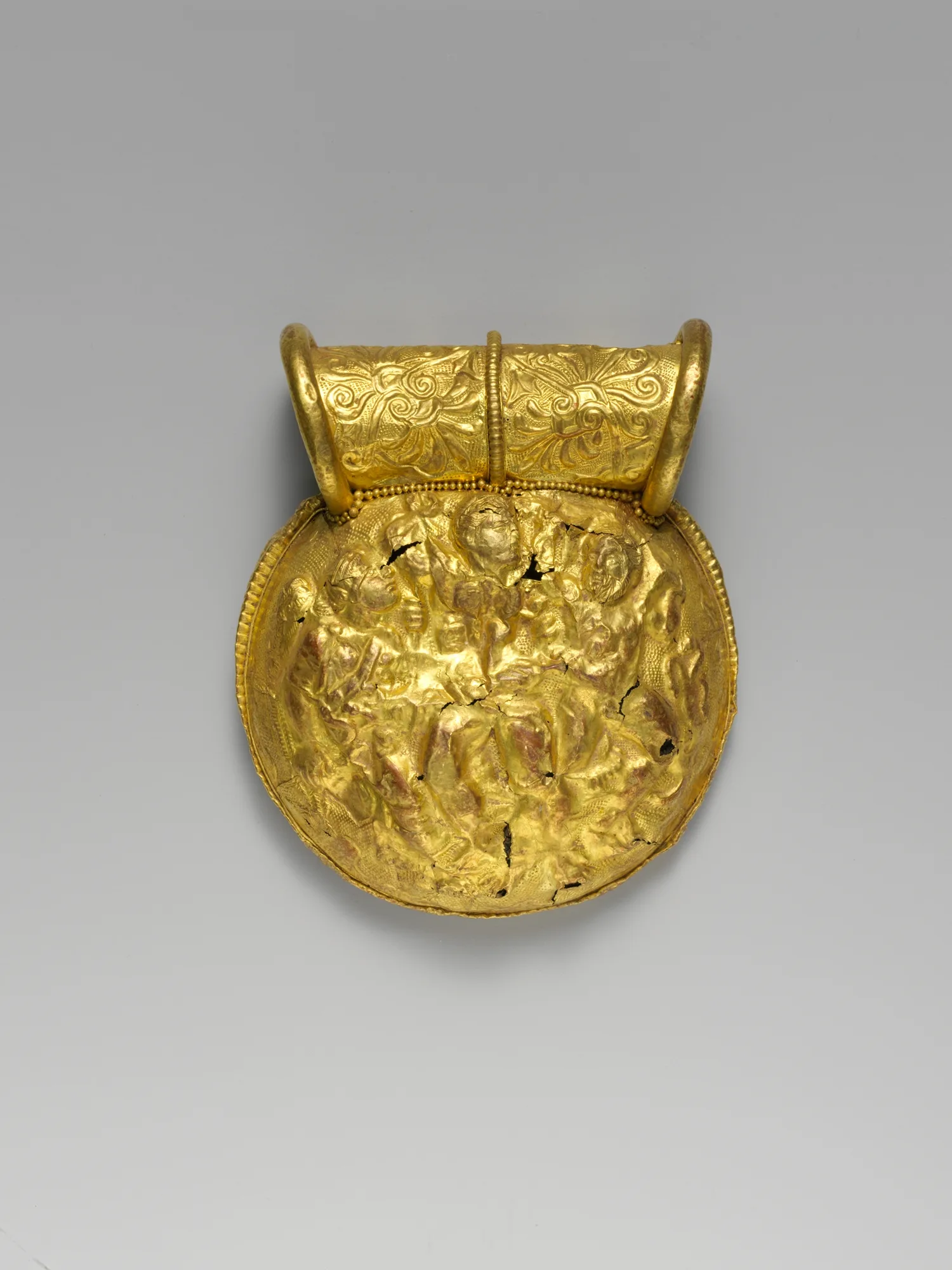
The Roman child received his first amulet on the day he received his name. That day was the dies lustricus, the ninth day of life for boys; girls were named on the eighth. After the purification rite, the father hung round his son's neck the bulla, a rounded capsule with protective objects inside. Surviving bullae are mostly bronze, with gold and silver for the few, and some writers describe a leather strip as the cheaper substitute.
Some Roman authors credited the form to the Etruscans. The boy wore the bulla until he put on the toga of manhood, and on that day he took it off and dedicated it to the lares, the household gods. The child could not choose it or buy it, and that was the whole point: it was the voice of the family hanging round his neck.
Brazil: the best figa is the one you are given
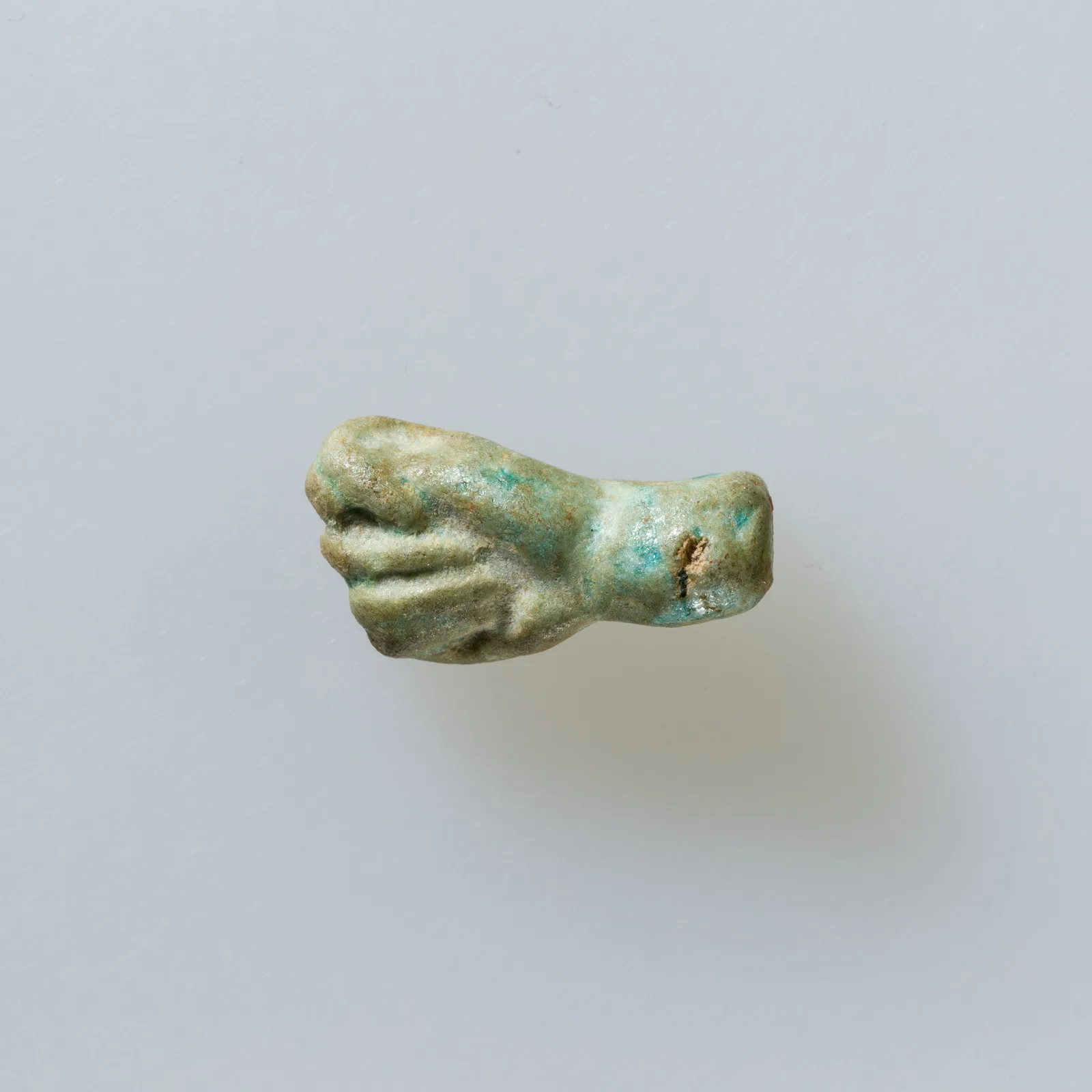
The closed fist with the thumb pushed between two fingers was already worn as an amulet in Roman times. In Brazil the figa settled into Umbanda and Candomblé and found a place in folk Catholicism alongside the medals of the saints. Brazil also has the plainest saying about gifted amulets: "a melhor figa é a ganhada, e não a comprada", the best figa is the one you are given, not the one you buy.
That is a proverb, not a law, and nobody in Brazil is stopped from buying a figa at a stall. But it puts into words what the other customs in this guide only imply. The history and the forms of the charm itself are in our guide to the figa.
China: red for your own year, given by your own people
Every twelve years each person reaches their benmingnian, the year of their own sign in the Chinese zodiac. Tradition treats it as a year of risk rather than luck, and the remedy is to wear red close to the body: underwear, a belt, socks. The condition is that the red items should be given by family or friends. Those you buy for yourself are thought, by the same belief, to work less well.
From that comes a custom that is easy to understand from anywhere: when someone in the family enters their year, parents or friends buy the red. The message needs no translation, because it is the same one as a mother slipping something into a son's suitcase before he leaves. The person who receives it wears red for the whole year, and it is clear to everyone who sent it.
The Balkans: the martenitsa nobody buys for themselves
In Bulgaria, Romania, Moldova and North Macedonia, 1 March begins with a present. People give each other red-and-white twisted threads, the martenitsa in Bulgaria, the mărțișor in Romania and Moldova, the martinka in North Macedonia, worn on the wrist or pinned to clothing. They are kept until the wearer sees a tree in blossom, a swallow or a stork, and then taken off. In December 2017 UNESCO inscribed the practice on its intangible heritage list on a joint nomination from the four countries.
The rule that matters here is blunt: tradition dictates that a martenitsa is always received as a present and never bought for oneself. It passes between relatives, friends and colleagues. If there is a Bulgarian or Romanian colleague in your office, on 1 March they will tell you so themselves, with a thread in hand.
Why the gifted one stays on longer
Strip away the layer of belief and a very ordinary explanation is left. An amulet you buy yourself is your own decision and can be revised: the day you stop believing in it, you put it away. An amulet you were given has a witness. Taking it off is a little like taking off the person who gave it, and so it stays on longer than any faith in what it does. A grandmother who touched her St Christopher before leaving the house was not praying every time: she was checking that what her mother gave her was still there.
There is also a question of timing. Gifted amulets arrive on days the person does not forget: a birth, a wedding, the eve of a journey, the start of a difficult year. The piece stays tied to that day. That is why, of all the rules about gifted and bought, the one that best survives scepticism is the most modest: a gifted amulet reminds you that someone thought of you when it counted. That is an opinion rather than a custom, and it is the one we hold.
If someone gave you an amulet
The person receiving has questions too: what to do if they do not like it, if it breaks, if they do not want to wear it all the time. The customs are more flexible here than people expect.
If it is not your style
A gifted amulet does not oblige you to wear it at your neck. A glass eye can hang by the front door, a medal can live in the car, a small charm can go on a key ring. Many amulets were made to sit in a place rather than on a body.
If you really cannot find a spot for it, keep it somewhere quiet in the house. And if it is a horn, as mentioned above, the Neapolitan custom allows you to pass it to someone who will use it. The lesson for the giver runs the other way: if you are unsure of their taste, choose a piece that can also hang on a wall or a key ring.
If it breaks or goes missing
A broken amulet frightens people more than any other mishap with a present, and tradition reads it exactly the other way round. For the glass eye, the red string and the jet fist charm the reading is the same: a piece that breaks has finished its work, and the thing to do is replace it. The guides to each symbol give the details. What matters for the person who received it as a present is something else: none of these customs blames the giver or sees a bad wish in the break.
For a lost amulet the traditions covered here give no rule. You can buy another, or tell the person who gave it to you, who will very likely want to replace it. A loss confessed in good time is a chance for a second present, and keeping quiet about it for months out of embarrassment is much worse than any omen.
Do you have to wear it all the time?
It depends which one. A scapular is meant to be worn without taking it off, Chinese red is worn the whole year and the red string stays on until it wears through, as the red string bracelet guide explains. Nobody asks that much of an eye, a hand or a sun.
With those pieces the rule is the same as for any jewellery: off for sleeping, the gym, the pool and work with your hands. Silver darkens with time and cleans up without fuss. When you take it off, put it in the same place every time. That way it does not get lost, and it does not slide from symbol to forgotten clutter at the bottom of a bag.
Retiring an old amulet
Every amulet has an end, and the traditions plan for it with some ceremony. The Roman boy dedicated his bulla to the household gods. The Japanese fabric amulet, the omamori, is considered spent after about a year and is returned to the shrine, where it is burned in a rite usually held around the New Year visit; our guide to Japanese talismans has more. And the red string guide tells how in India the sacred thread is returned to a river or to the earth.
At home there are a few routes, and which one fits depends on whether the amulet is whole or broken. A whole one given by someone who matters can be kept as a keepsake. For a blessed medal or cross you no longer want to keep, ask at the parish what is done. A horn can be buried, which is what Neapolitan custom suggests for one you no longer want. A broken glass eye follows the nazar guide: the pieces are discarded and the eye replaced. Whatever the route, an object someone gave you with a wish deserves a considered exit rather than a careless one.
Amulets to give
Eye, hand, horn, sun, compass rose: each listing in the catalogue tells the story of its symbol. Choose the sign for the person and the occasion, and write the card yourself.
Facts that surprise
- In Thailand nobody says they "bought" a Buddhist amulet. The word used is "rent", and the money given to the temple is called the rental fee. Giving one away is considered a courteous way to thank someone for their friendship.
- Pliny the Elder wrote that the god Fascinus guarded infants and generals, and called him the "physician of envy". His image hung beneath the chariot of a general celebrating a triumph, and the Vestal Virgins kept his cult.
- Royal Air Force aircrew have carried silver sixpences as lucky charms, sewn behind the wings or brevet badge on their uniforms.
- From the Victorian era a threepence or a sixpence went into the Christmas pudding mixture, and whoever found it in their slice was promised luck for the coming year.
- The Scottish crowned-heart brooch takes its name from the Luckenbooths, the lockable booths on Edinburgh's Royal Mile. They were demolished in 1817, and the name has outlived them by two centuries.
- In Romania the spring thread was worn for very different lengths of time depending on the area: two or three days around Iași, up to two or three months around Vâlcea. Afterwards it was hung on a branch as a present for the birds, laid under a stone or thrown into water.
- Jewish childbirth amulets carried the names of three angels, Senoy, Sansenoy and Semangelof. In the legend they caught up with Lilith, who swore not to harm a child wherever she saw their names.
- At the Indian festival of Raksha Bandhan, on the full moon of the month of Shravana, it is the sister who ties a protective thread on her brother's right wrist. He answers with a present and a promise to protect her, and the festival's name means "bond of protection".
Send a friend a discount code, they save on their first order.
FAQ
Is it bad luck to give someone an amulet? No tradition says so. In the British and American list of unlucky presents you find knives, empty purses and handkerchiefs, not amulets. One caution is about tact: skip remarks about envy when you hand it over, because then it is the remark that unsettles people, not the piece.
Does an evil eye have to be gifted, or can I buy my own? You can buy your own. The belief gives the gifted one a little extra strength and nothing more. And if someone gives you one when you already have yours, nothing stops you keeping both: one to wear and one by the front door.
What does it mean when someone gives you an evil eye bracelet? That they wish you well and want to keep envy and bad luck away from you: that is the usual reading of the gesture. It does not commit you to believing anything or wearing it every day. If the symbol sits badly with your own faith, say so kindly: whoever gives an eye wants to look after you, not put you in an awkward position.
Can I give away an amulet I have worn myself? Yes, if you tell its story. Say who gave it to you, how long you wore it and why it is passing to this person now. Clean it and replace the cord if it is worn. What to avoid is handing it over in silence, as if it were new, to someone who believes objects keep a memory.
What is a good luck gift for a new baby? In Britain the classic answer is silver: a spoon from a godparent, or a silver coin from anyone who meets the baby for the first time. Today both go to the parents for the keepsake box. A pendant for the mother to wear and pass on later is the other good route.
Do you have to give a coin back when someone gives you an amulet? No. The coin belongs to presents with a blade, and an amulet is understood as a wish for good that does not need one. If the person is very superstitious and the piece has a point, they can hand the coin back even weeks later and it still counts.
What should I do if an amulet I was given breaks? Replace it, without drama. Do not glue it to keep wearing it: cracked glass or jet can finish breaking while you have it on. You can tell the person who gave it to you without embarrassment, since the tradition reads it as a job done, and they may well want to give you the next one.
Can a baby wear an amulet or a charm? Not on the body: not round the neck, the wrist or the ankle, and not pinned to clothes. Paediatricians point to two risks, strangulation and choking if the piece breaks and the child puts the loose parts in its mouth, and both rise when the baby is asleep or unwatched. Give the charm to the parents to keep until the child is old enough to wear it.
Conclusion
Giving an amulet breaks no rule. In Britain it is, in fact, how charms have always moved: the godparent's spoon, the silver coin for a new baby, the sixpence a father puts in the bride's shoe, the horseshoe handed to the couple at the door. The cautions number four and are common sense: consider the recipient's faith, keep devotional objects for the devout, tell the story of a worn piece, and add a coin if the symbol has a point and the person believes in such things.
The rest comes down to attention. The symbol is chosen by what the person believes, the size by what they wear and the occasion by what is happening in their life. If you want to know what each sign means, the complete guide to protection amulets and talismans goes through them one by one. The best gifted amulet is the one the other person puts on the next morning without anyone asking.
Buying it as a gift? Each one arrives ready to give.
 A branded Zevira box and a little card come with every order.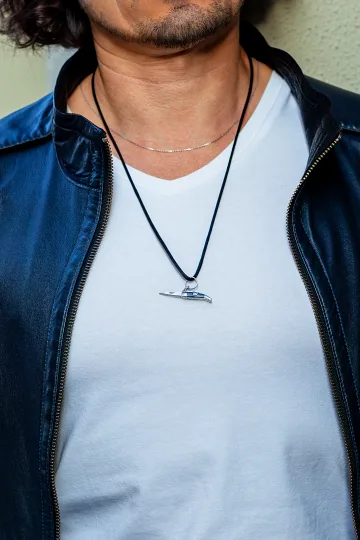





About Zevira
Zevira brings together jewellery with a meaning: Mediterranean protective symbols, signs of good luck, medals and amulets with a history behind them. Each listing in the catalogue explains its symbol, so a present can be chosen for one particular person and the card written knowing exactly what is being given.