First Holy Communion gift: which jewellery to give a girl or a boy
In 1910 a Vatican decree noted that in some places children waited for First Communion until ten or twelve, and in others until fourteen or older. It moved the age to about seven. That is why a First Holy Communion gift goes to a child in Second Class, Year 3 or second grade, and why the clasp matters more than the carat.
This guide covers that one piece of jewellery: the classics, who buys what, metal, size, chain, engraving and how the child wears it on the day. A baby's christening is a different job, with its own guide to christening jewellery; every other date in the calendar is in the jewellery gift guide by occasion.
Once a week: the stone of the week with its story, new articles and what just came back in stock. Nothing else.
Rare letters, one-click unsubscribe.
The short answer: what to give for a First Holy Communion
Give a small piece of faith sized for a seven- or eight-year-old: a cross, a medal or a guardian angel on a fine chain, with a clasp the child can work alone. If the child already wears a christening cross or medal, choose something different rather than a second copy. A girl with pierced ears can be given small earrings, worn on the day and every day after. If you hardly know the family, a gift certificate in the parents' name avoids doubling up on the godparents' present. Leave rings out: a child's finger changes size faster than a ring wears.
Three questions before you buy
Who else is giving jewellery? Nobody writes the rules down, yet the pattern repeats: parents or godparents look after the piece worn to church, grandparents look for something to keep, aunts, uncles and friends bring something smaller. A two-minute call to the parents prevents three crosses arriving for one neck.
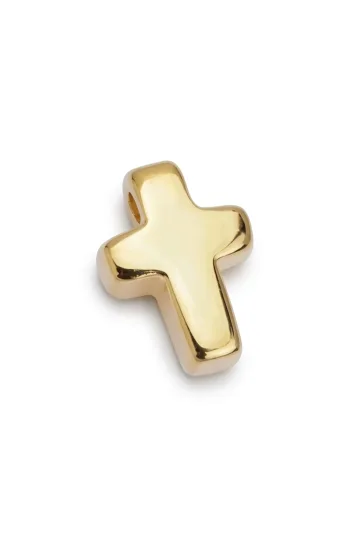
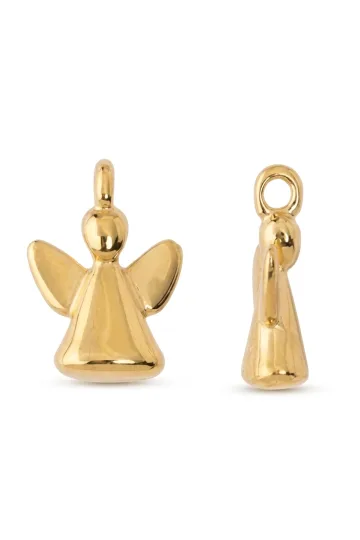
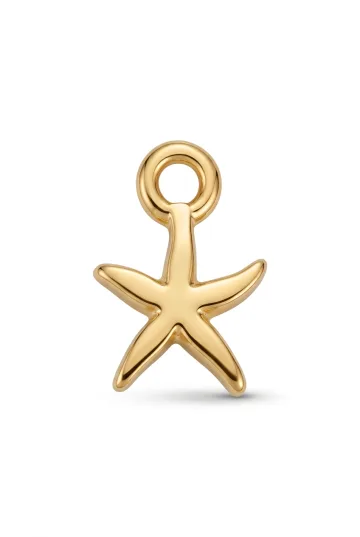
Wear the symbol, don't just read about it. These are in stock:

What does the child wear already? Many children were given a cross or medal at their christening, often engraved with name and date. That decides whether you are buying a companion piece or a first piece.
What happens after the day? A piece that goes to Sunday Mass and under a school jumper becomes the jewellery of a childhood; one kept for photographs ends up in a drawer.
Seven, not seven months: why this is not a christening gift
At a christening the gift really goes to the parents. A baby wears no chain and no pendant, paediatricians advise against any jewellery on an infant, and the christening guide explains why the piece stays boxed for years.
At First Communion the person opening the box has spent a school year in preparation and has views of her own. She puts the piece on herself in front of the whole family, so size and clasp matter more than with a keepsake. She knows whether she prefers gold or silver. And she will wear it, so how the metal survives a playground matters.
When children make their First Holy Communion
Age and date shape the gift, and neither is the same in Ireland, Britain and the United States.
Ireland: Second Class and the month of May
In Ireland the day belongs to Second Class. Parish pages describe children receiving First Holy Communion in Second Class of primary school, at around seven or eight, with celebrations in spring, usually April or May. Liturgical guidelines issued by the Irish Episcopal Conference in December 2010 describe an enrolment ceremony in church for children preparing for First Penance and First Communion, usually held in the first term of second class, which Northern Ireland calls primary four.
Preparation runs through school and parish together, with Grow in Love, the programme built on the curriculum approved by the Irish bishops, carrying the classroom side. For the buyer that means a long run-up: the date is known months ahead, with time to order engraving calmly.
England, Wales and Scotland: Year 3, Year 4 or P4
Britain has no single national year: each diocese sets its own programme. Many Catholic primary schools in England prepare children in Year 3, aged seven or eight; a Birmingham school, for example, lists Reconciliation and First Holy Communion in Year 3 and Confirmation in Year 6. Schools in the Diocese of Leeds follow another rhythm: Reconciliation in Year 3, during Lent, and First Holy Communion in Year 4, after Easter.
Scottish Catholic schools tend to celebrate First Holy Communion in Primary 4, often in May, with Confirmation in Primary 7, though Glasgow and Paisley keep different timetables. The year's gap matters: an angel that delights a seven-year-old can feel babyish at nine.
The United States: second grade
In the United States second grade is the usual year, at seven or eight. Canon law ties First Communion to the age of reason, presumed at about seven, and leaves the judgement on readiness to parents and the pastor, so dioceses differ in detail. Some begin preparation in first grade; others look at the child's readiness more than the school year.
As in Ireland, the recipient is a primary school child, and American Catholic gift guides answer with children's crosses, small medals and first rosaries.
First Reconciliation comes first
In all three countries a child makes First Reconciliation, also called First Confession, before First Communion. Canon 914 asks that children receive Communion after sacramental confession, and parishes schedule it first: in Lent in the Leeds schools, months earlier in some American dioceses. A diocesan guide in Hawaii asks for at least three months between the two.
For a buyer it is a calendar marker: once the class has made it, the Communion date is close and parents know which cross the child will wear. Ask then what is still missing.
The cross goes over the dress, never tucked under the lace. A cross hidden in the photograph at the altar is a present nobody saw, and please don't tell me it stays cleaner that way.
How to wear the Communion cross or medal: dress, suit and chain
On the day the child wears the piece in front of the whole family, in church and in every photograph. These questions come up before every First Communion.
Does the cross go over or under the dress? Over, whenever the dress allows. I recommend letting the cross rest on the chest, on the lace or the bodice, where it shows in the photograph at the altar. A cross hidden under the fabric is a present nobody sees on the day.
And with a suit and tie? I advise the chain over the shirt and under the tie, with the cross just below the knot, or under an open jacket if there is no tie. Gold reads strongly on a white shirt; with a dark suit silver works too, because the fabric frames it.
The christening cross and the new piece together? Yes, if the sizes are clearly different. I recommend one chain only when one piece is much smaller, a tiny cross beside the medal. Two medals of similar size go on two chains of different lengths so they do not knock together.
Gold or silver with the white dress? Gold. On white, gold glows and silver fades. For afterwards, with everyday clothes, I recommend silver, which goes with everything.
Earrings and a cross at the same time? Yes, with small earrings close to the lobe. I recommend making the cross the main piece of the day; large earrings compete with it and with the veil.
And with a veil? I advise a slightly shorter chain, so the cross sits clear of the veil's edge and does not catch in the tulle.

Turn on your camera, pick earrings, a pendant or a ring, and see the piece on yourself in real time.
Switch items in one tap.
Everything runs in your browser: no photo or video is ever uploaded.
Where First Communion jewellery comes from
The cross on a child's chain has a short history as a Communion present and a very long one as an object of faith.
1215: once a year, at least at Easter
The Fourth Lateran Council, opened in Rome in November 1215, laid down in its canon 21, known by its first words, Omnis utriusque sexus, a rule for every believer: whoever had reached the years of discretion should confess at least once a year and receive Communion at least at Easter.
The years of discretion came without a number; the canon fixed only the order, understand first, then receive. Read ever more strictly over the centuries, that demand pushed first Communion deep into childhood and beyond.
1910: Quam singulari and the age of seven
On 8 August 1910, under Pius X, the Sacred Congregation of the Discipline of the Sacraments issued the decree Quam singulari. Its text complains that the age for First Communion had been placed at ten or twelve, and in places at fourteen or more. Its answer is brief: the age of discretion, for Confession and Communion alike, is when a child begins to reason, about the seventh year, more or less.
The decree also names who decides that a child is ready: the father, or the person taking his place, and the confessor. From then on the gift was meant for a primary school child, and every practical question in this guide, from chain length to clasp, follows from that change of hands.
Little Nellie of Cork
Three years before the decree, an Irish child had already made the case. Ellen Organ, known as Nellie, was born in 1903 and lived in the care of the Good Shepherd sisters in Cork. She asked for Communion from the age of three and, with the bishop's permission, received it on 6 December 1907, at about four. She died of tuberculosis in the convent infirmary at Sunday's Well on 2 February 1908.
An account of her life was published in an Italian journal in Rome, and those who keep her memory say Pius X read it before 1910. Cork still calls her Little Nellie of Holy God, and some call her the city's unofficial patron saint.
The pendant that may have held a host
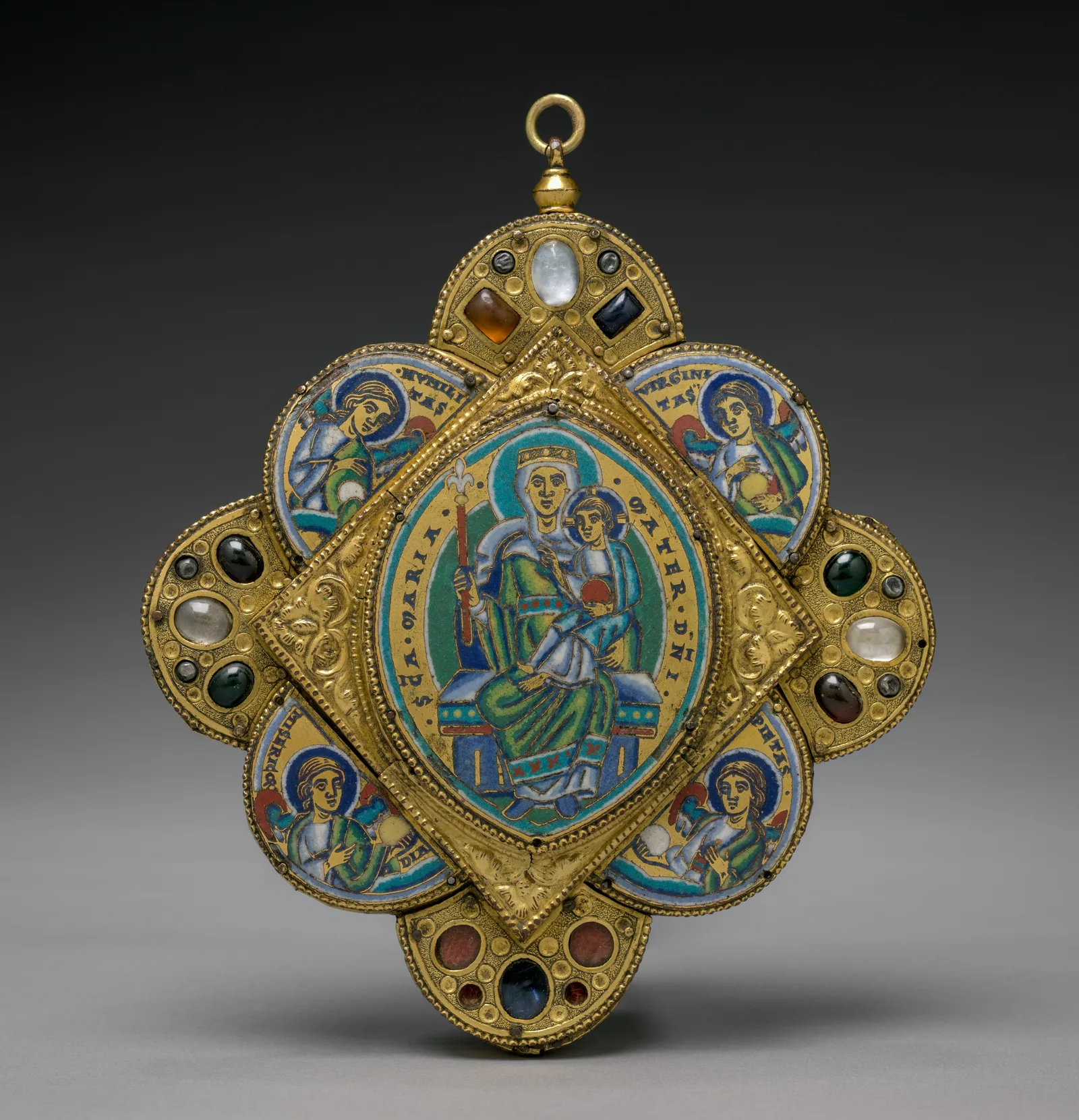
Jewellery tied to the Eucharist is far older than the children's feast. In the Meuse valley, twelfth-century workshops made champlevé enamel on gilded copper, and one of them produced, around 1160 to 1170, the pendant now in the Cleveland Museum of Art.
It is almost twenty centimetres tall, an object for an altar or a procession rather than a neck. At its centre the Virgin sits enthroned with the Child; around her, four angels stand for virtues, each named beside it: Humility, Virginity, Piety and Mercy. The museum notes that it may have served as a reliquary for a consecrated host.
That links it to the Communion medal on sale today. The chalice with the host above it, a motif American and Irish jewellers use on First Communion pieces, puts on a disc two centimetres wide what this gilded pendant held behind its enamel: the Eucharist itself.
Imelda and Tarcisius, the patrons of first communicants
The Church links two figures to children receiving Communion for the first time, and both were children. Imelda Lambertini was born in Bologna around 1322 and lived as a girl in a Dominican convent. Dominican tradition says she asked for Communion long before the usual age, received it at last in May 1333 and died the same day, aged about eleven. Pius X named her patroness of first communicants.
Tarcisius was a Roman martyr known from a fourth-century poem by Pope Damasus, killed by a mob on the Appian Way rather than hand over the Eucharist he was carrying to Christian prisoners. Later legend made him an acolyte, hence his patronage of altar servers and first communicants. A medal of either makes sense when the name or the parish matches.
The white dress and the matching handbag
In Ireland the white dress and veil became the image of the day. The historian Cara Delay, who has studied girls' First Communions in Ireland between about 1920 and 1970, quotes a mid-century recollection of being all got up in a lacy white dress and veil, white patent-leather shoes and matching handbag. Other memories she gathered tell of dresses found second-hand when money was short, while the Church asked parents to see that children were suitably attired.
The outfit still sets the rule, and the rule is contrast. On white lace, gold and coloured enamel stand out in photographs; a small silver medal can get lost against the fabric. On a boy's dark suit the piece sits on a white shirt, where a small gold cross shows clearly.
Customer reviews
Zevira is a real jewellery shop. Genuine payments, deliveries and customer thank-yous.
🥰🥰🥰 gracias
Ok, ¡gracias! 🙂
The classic First Holy Communion gifts
Irish and American gift guides agree on a short list: a cross, a medal, rosary beads, a children's Bible, a watch, and earrings for girls. Each answers a different question.
The cross necklace
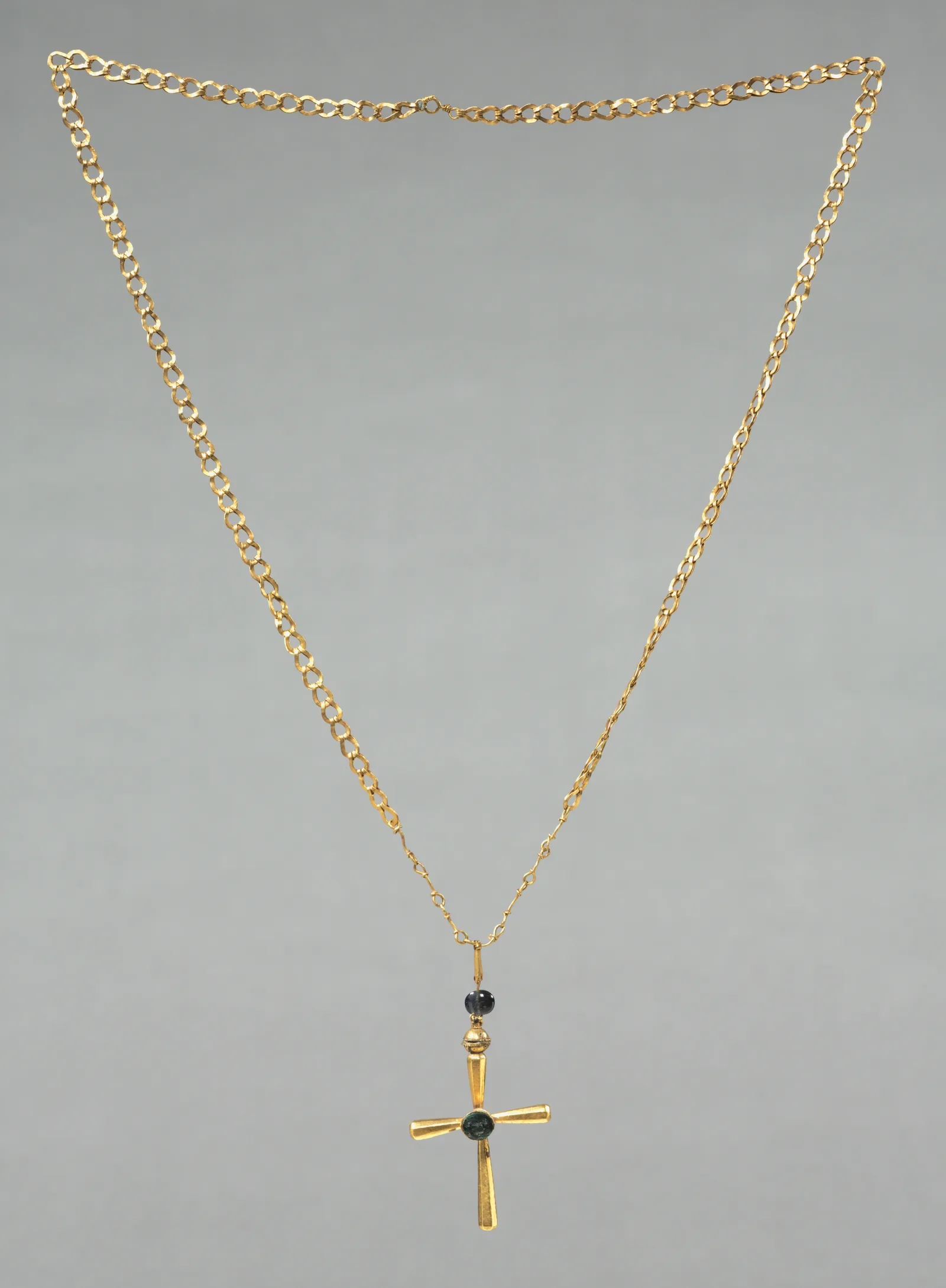
The cross is the classic nobody gets wrong. The one in the photograph is Byzantine, from the sixth century: a gold cross a little under six centimetres tall with a stone at the crossing, hung on a link chain over seventy centimetres long. Fifteen centuries later a cross on a chain is worn exactly the same way, only smaller.
For First Communion it has two strengths. It says nothing about names or particular devotions, so it suits any family. And it shares a chain with a christening medal without competing, because one carries an image and the other does not. American Catholic guides suggest a boy's first crucifix necklace for the day, and Irish jewellers sell sterling silver Celtic crosses, with the ring around the crossing, hallmarked at the Assay Office in Dublin Castle.
In the Zevira catalogue, the small gold cross pendant measures 8 by 11 millimetres in gold-plated stainless steel. It is a pendant only; the chain comes from a jeweller. The history of the symbol is in the guide to the cross necklace.
The Miraculous Medal
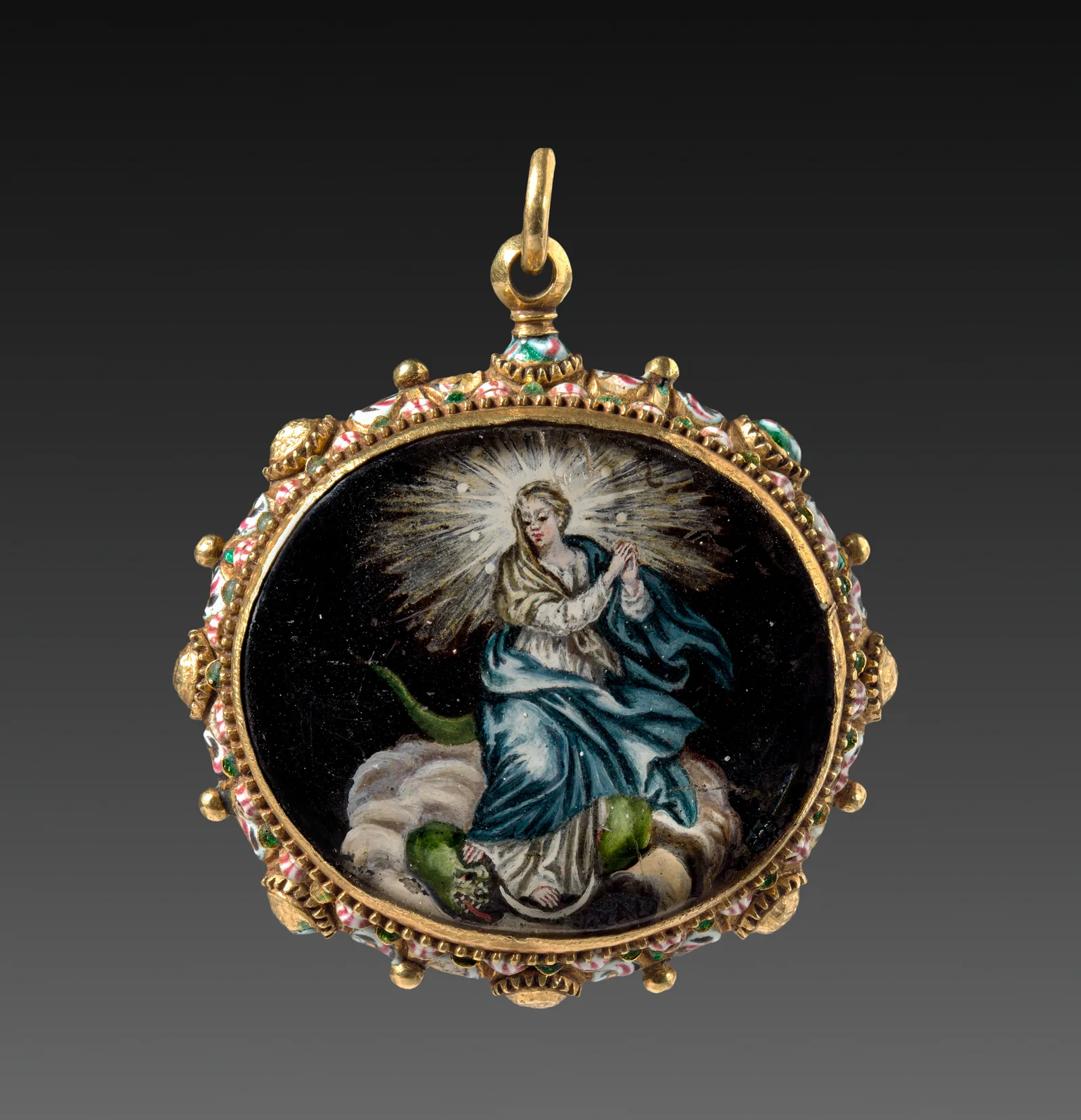
Catholic shops in the United States list the Miraculous Medal as a traditional First Communion gift, on a chain or as the centrepiece of a child's rosary. Its official name is the Medal of the Immaculate Conception: it goes back to the apparitions Catherine Labouré reported in Paris in 1830 and shows Mary standing on the globe, with rays of grace streaming from her hands.
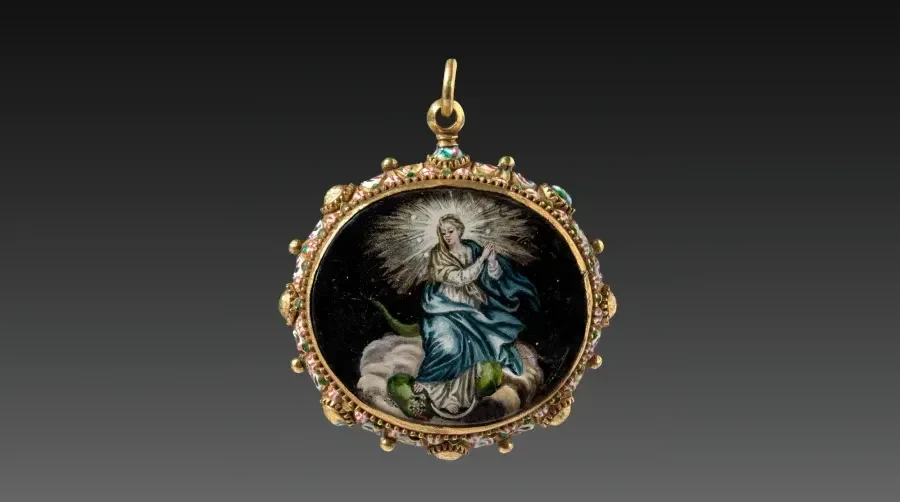
The pendant in the photograph is older and probably Spanish, from the seventeenth or eighteenth century, and uses the same Immaculate Conception imagery: hands joined, clouds and a crescent moon underfoot, a dragon trodden down. At almost five centimetres it is an adult's piece, but the gesture of giving the Virgin in a gilded frame has not changed.
If the family has its own devotion, the medal should follow it. The symbols on the reverse are explained in the guide to the Miraculous Medal, and other saints in saint medals and devotional medallions.
The chalice and host medal
The medal made for the day itself shows a chalice with the host above it. American Catholic retailers sell it as a sterling silver First Communion necklace, and Irish jewellers use the same motif.
Its strength is that it belongs to the occasion: twenty years on, nobody wonders which day it came from. Its limit is the same thing seen from the other side: it is a commemoration first and an everyday piece second. Choose one with a smooth reverse, so a jeweller can add the name and date.
The guardian angel
The guardian angel is the tender choice, and a sign of faith with Scripture behind it: in Matthew's Gospel, Jesus says of the little ones that their angels in heaven always see the face of his Father. The Church keeps the feast of the Guardian Angels on 2 October. It suits a child who already has a christening cross, or a giver who wants something gentler than a medal.
The mini angel pendant in gold measures 14 by 9.6 millimetres, in gold-plated brass with small cubic zirconia stones. It is a pendant only, and the chain comes from a jeweller. The angel's long history in jewellery is told in the guide to angels in jewellery.
Rosary beads and the decade bracelet
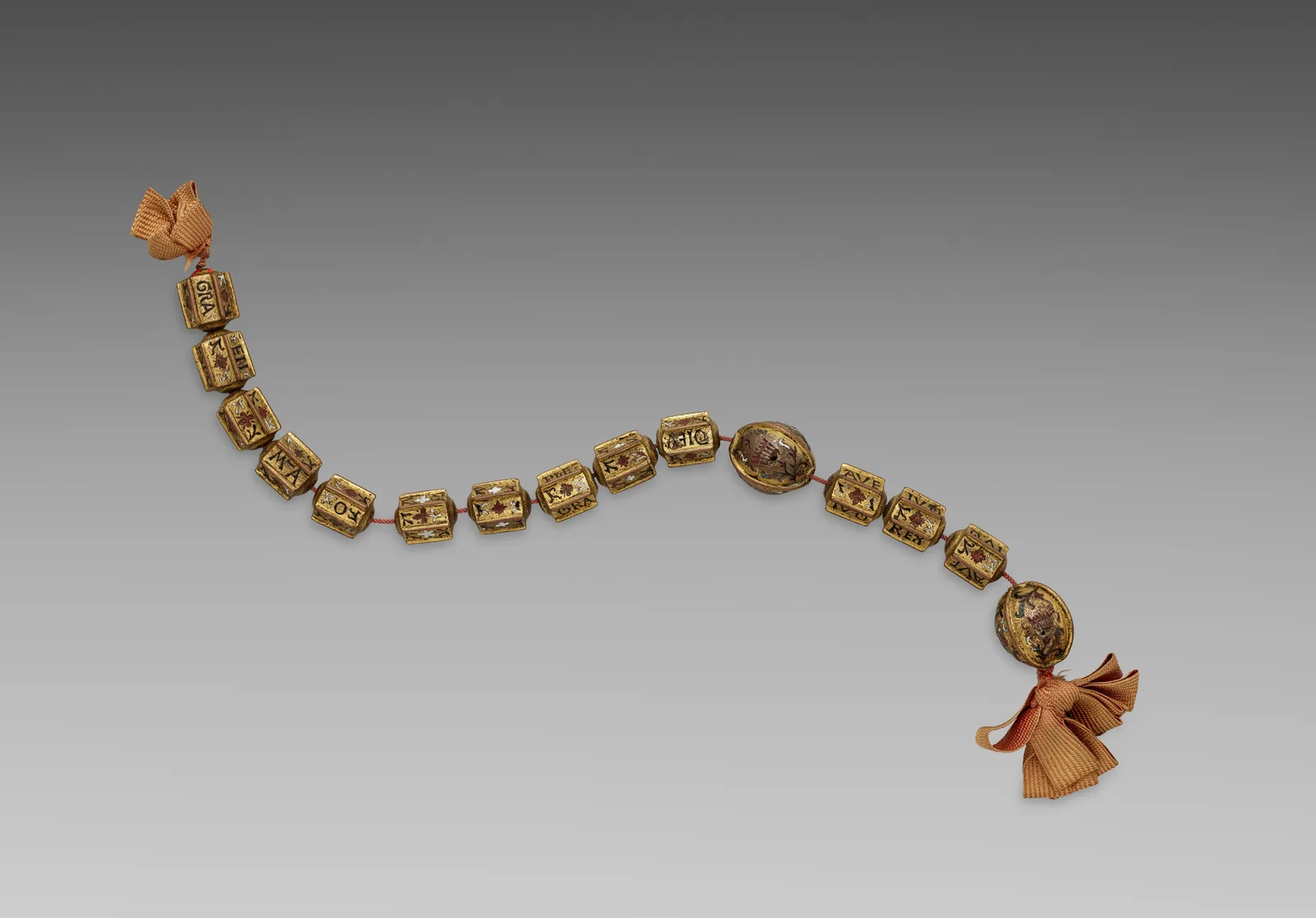
Rosary beads have long been a First Communion gift. Earlier generations received a prayer book, a scapular and a rosary on the day, and today's guides recommend a child's rosary with smaller beads for small hands. The section in the photograph is Italian, early sixteenth century: gilt copper beads with enamelled letters. The museum notes that rosaries were a proud possession of the well-off and that paintings show them hung from the belt.
For a seven-year-old a full rosary lives on the bedside table and comes to church; it is not for wearing. What can be worn is a decade bracelet: ten beads and a cross, enough for one mystery, kept on the wrist. The guide to rosary beads as jewellery explains how the beads are counted.
The children's Bible
It is not jewellery, but it belongs in the conversation. American Catholic gift guides call First Communion an ideal time to introduce children to the Bible and suggest one inscribed with the child's name and the date.
That makes the Bible a partner for jewellery rather than a rival. An illustrated children's Bible from the godparents and a small cross from the grandparents complement each other; two Bibles, or two crosses, do not.
The first watch
The watch is the other classic, and gift guides justify it by age: at this point a child moves around more independently, starts needing the time and feels grown up wearing one.
On the family list it competes with the medal rather than with earrings: if the godparents give the watch, the cross can be left to parents or grandparents. Agreeing beforehand stops two watches and three crosses arriving on one afternoon.
Earrings for a girl with pierced ears
For a girl whose ears are already pierced, small earrings keep being worn long after the day. Close to the lobe, they suit the white dress and plain clothes alike. Guides to children's jewellery stress a fastening that does not come loose during play, and note that studs are safer for children than drops.
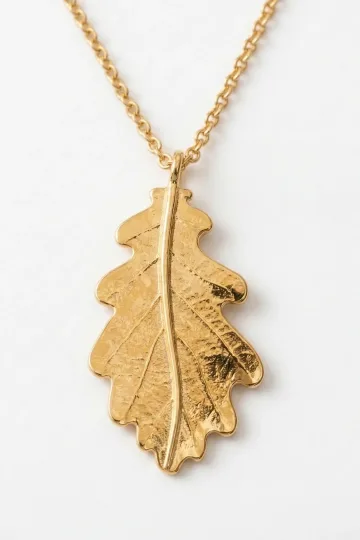
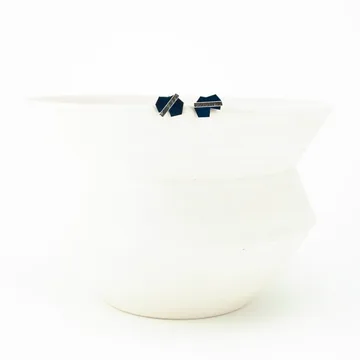
In the Zevira catalogue, the Mini Roble earrings are 925 silver from the Acosta en Plata author line: a miniature oak that sits close to the lobe. For a boy, earrings are not a Communion present to propose without asking the parents first.
Who gives what at a First Holy Communion
There is no official list, but every family recognises the roles.
What godparents give
Strictly speaking, First Communion has no godparents. The Code of Canon Law provides sponsors for baptism and for Confirmation, not for the Eucharist, and an American parish information page says plainly that none is required. In practice the christening godparents often give the main present, which Catholic gift guides describe as a devotional item or keepsake.
If you are the godparent, yours is the piece worn in church or kept for life: the engraved medal or the cross with its chain. If you gave a medal at the christening, Communion is the moment for the cross, a decade bracelet or a better chain for the medal the child already has.
What grandparents give
Grandparents have what nobody else has: family pieces. A grandmother's medal, a grandfather's cross, rosary beads that went to a First Communion two generations back. Handed down on this day, the piece gains a meaning no shop sells, and a seven-year-old understands perfectly what it means to wear Granny's cross.
If there is nothing to hand down, gift guides note that grandparents tend to choose something lasting: 925 silver or gold, picked so the child can still wear it as an adult.
Aunts, uncles and older cousins
Aunts and uncles who are godparents take the godparent's part; otherwise they belong to close family, and a small piece that completes the main present works well: an angel or little cross for the same chain as the medal, or earrings if the girl has pierced ears.
Older cousins paying from pocket money do best with something the child can take to school without fear: if a small gold-plated pendant disappears in the playground, the tears dry faster.
Neighbours, family friends and the parents' colleagues
In Ireland the classic gift from neighbours and family friends is money in a card, which the money section below looks at honestly. A family friend or a parent's colleague rarely knows whether the child has a medal, a cross or neither, and a religious piece risks doubling the godparents' present.
Two routes are safe. One is a small neutral piece, neither medal nor cross, such as the mini star pendant in gold, 7 by 10 millimetres in gold-plated brass, sold as a pendant only. The other is a gift certificate in the parents' name. More ideas for a modest budget are in the guide to affordable jewellery gifts.
What parents give
Parents buy what the child wears to church: the dress or suit, and often the cross or medal. The rest of the family chooses around that piece, so it helps when parents decide first and tell everyone. Their own present, opened at home, can be less solemn: a pendant the child picked, a pair of earrings.
Upload a photo of your pet, someone you love, or an object. We'll build a 3D model and hand-cast it in pewter.



First Communion gifts for a girl and for a boy
The sacrament is the same for girls and boys; what they wear afterwards is not.
A gift for a girl
With a girl the list is long: cross, medal, angel, earrings, bracelet, a silver pendant. What decides it is what she already has and which tone she likes. At this age a girl usually has opinions about gold and silver, and it is worth asking her or looking at what she wears in recent photographs.
For the day, gold shows better on a white dress; afterwards, silver goes with everything. A piece for both moments is a small silver pendant such as the Pétalo Simple necklace: a single petal in 925 silver from the Acosta en Plata line, with no religious motif, so it sits beside a christening medal without repeating it. Chain details are on the product page.
A gift for a boy
With a boy the list shortens: cross, medal, decade bracelet, watch. The present has to be sturdy, discreet and made to go under a school shirt. A small cross fits best: no image to protect, nothing to snag, and it disappears under any collar. If the family prays together, a decade bracelet is something he can wear every day.
For a boy who prefers a nature motif, the Mini Roble necklace in 925 silver is a small oak that sits high on the chest; chain details are on the product page. And if he has all of that already, the watch remains the classic alternative.



Gold, silver or gold-plated steel: what a seven-year-old can wear
A Communion piece lives two lives: one on the day, and one over the following years, round the neck of a child who runs, climbs and forgets to take it off for the bath. Choose for the second life.
Sterling silver
Sterling silver contains 925 parts per thousand of silver, which is what the stamp 925 means. It is the sensible middle choice: it wears well, cleans at home and leaves room in the budget for a good chain. It darkens over time, which on a medal with relief can even bring out the design. The guide to 925 silver explains what the number guarantees.
9, 14 or 18 carat gold
Hallmarks in Ireland and the UK give gold fineness in parts per thousand: 375 for 9 carat, 585 for 14 and 750 for 18. Gold is the traditional heirloom metal and does not darken; the higher the carat, the more gold in the alloy, and nine carat makes a solid gold piece possible on a smaller budget.
Its weak points at this age are price and loss, and some families keep the gold piece for Sundays.
Gold-plated steel and brass
Stainless steel and brass with gold plating are the light, affordable option. They look golden on the day and stand up to wear, but the plating thins over the years, first on the edges. For a present from an aunt, an uncle or a friend, or a pendant for every day, they fit well. For sensitive skin, the guide to nickel allergy explains what to check.
Reading the hallmark in Ireland and the UK
In Ireland, the Assay Office states that every item of gold, silver or platinum is subject to compulsory assay and hallmarking, with no exemption by weight. In the UK, the Hallmarking Act 1973 exempts silver articles under 7.78 grams. So a tiny silver cross bought in Dublin must carry a hallmark, while the same cross bought in Leeds may legally carry none.
A small unmarked silver pendant in Britain is therefore not suspicious in itself, and for gold-plated steel or brass the product page is where the material is stated.
How big the pendant should be
An adult's medal on a child looks like a medallion. Around two centimetres is a sensible reference for a Communion medal: visible in photographs, light on the chain. Pieces of about a centimetre, like the 8 by 11 millimetre cross, suit everyday wear and sharing a chain with a christening medal.
The chain: length, clasp and the day itself
The chain is half the present and the half people forget. The gift only works when pendant and chain arrive together.
Where the pendant should sit
Zevira's cross, angel and star are pendants only: the chain is bought from a jeweller, because Zevira does not sell loose chains. The silver pieces from the Acosta en Plata line are listed as pendants too; chain details are on each product page.
For length, the measure is where the pendant lands: on the chest, visible above the neckline of the dress or shirt, neither near the waist nor tight at the throat. Test it with a ribbon over the clothes for the day. There are full guides to chain length and chain types.
A clasp the child can open alone
The clasp matters more than the links. A lobster clasp the child can open and close alone beats a tiny spring ring, which small fingers find hard. A fine chain weighs little and snags less than a heavy one.
Practise at home before the day. A child who can take the chain off alone will also take it off before football, and that habit protects the piece better than any clasp.
Safety at the party
A child of seven or eight can wear a cross and chain without trouble; the party is what needs attention. Take the chain off before the bouncy castle or the pool and keep it in its box until evening. No child sleeps in a chain. Consumer safety advice on children's jewellery asks for pieces suited to the age and, for necklaces, clasps that release if the chain catches.
If toddlers or babies are among the guests, keep open boxes, earrings and loose pendants out of their reach: a small piece in a baby's hand is a choking risk. The guide to children's jewellery sets out the rules age by age.
Leave your email, we'll send your discount code. No spam, unsubscribe anytime.
The code arrives by email, valid on your first order.
Communion money or jewellery: an honest comparison
In Ireland any conversation about First Communion presents soon turns to money, and the comparison deserves honesty.
Communion money in Ireland
In Ireland, cards with money arrive from family, friends and neighbours, a custom common enough that a bank tracks it. Ulster Bank has published an annual Communion costs survey, and in 2018 parents told it that 39 per cent of the cash children had received was already spent by the time they were asked. The custom has its critics: Irish writers ask openly whether a child should be paid for the day.
Money is the most practical present and the quickest to vanish; jewellery solves nothing practical and is still in the drawer twenty years later, with a name on the back. The middle way is a small piece in its own box beside the card.
How much to spend, without the numbers
Amounts change; the levels stay. For a guest, a neighbour or a parent's colleague, the present is a gesture, roughly the price of a simple meal out: a small gold-plated pendant or a plain silver piece. A small piece well made always looks better than a large medal in a poor material.
Godparents and grandparents move a step up, to the price of a good dinner or several: the silver medal with its chain, the cross on a quality chain, an author piece in silver, with solid gold at the top. The guide to jewellery gifts for a bigger budget walks through that level.
Clubbing together: the gift certificate
In big families, brothers, sisters or cousins often join forces for one present. That makes sense when it lifts the material, from silver to gold, and less sense when it buys three small things.
If nobody dares to choose, a gift certificate in the parents' name solves it: the family pays for one certificate together, it arrives by email after payment, and the card carries everyone's names. It is valid for 24 months, so parents and child can choose calmly after the party.
Jewellery against gadgets and days out
A tablet, a games console or a smartwatch thrills a child on the day and ages quickly, outdated within a few years. If the parents have planned one, the rest of the family does well not to add a second device and to choose something that lasts.
A trip, match tickets or a day out are presents a child remembers, especially when shared with the giver, but they leave no object behind. One answer is to pair the experience with a small piece that recalls it: a tiny star for a night at the planetarium, a pendant for the trip. Whatever the mix, the family list decides more than any single present. The table below sets the common Communion gifts side by side, with the risk each one carries and the simple step that avoids it, from the duplicated medal to the forgotten chain.
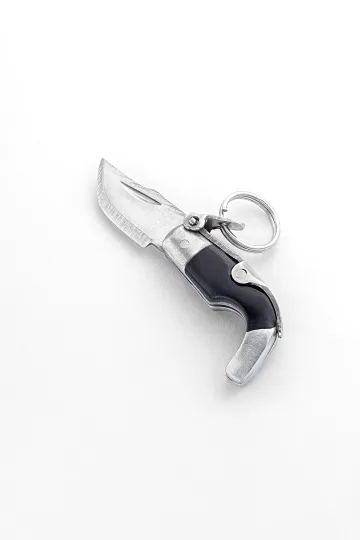
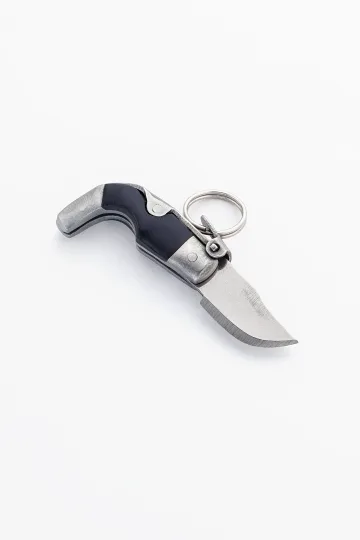
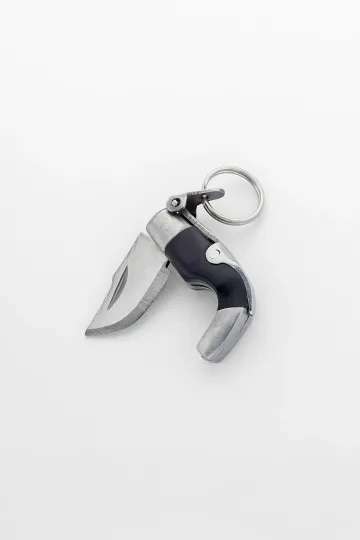
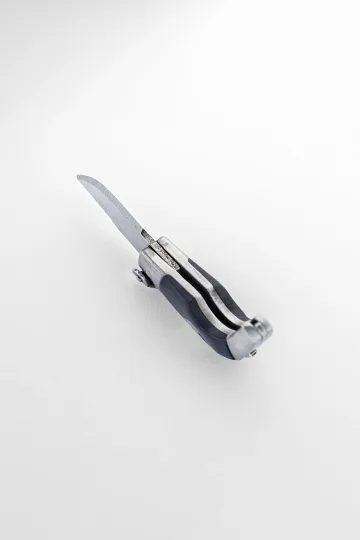
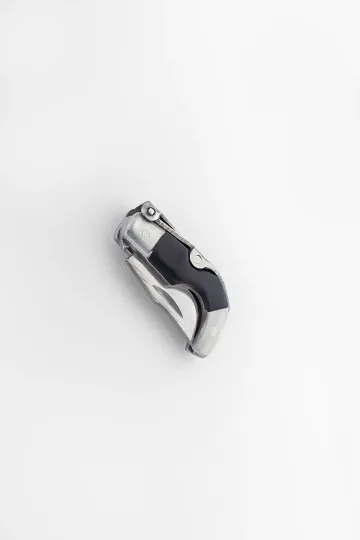
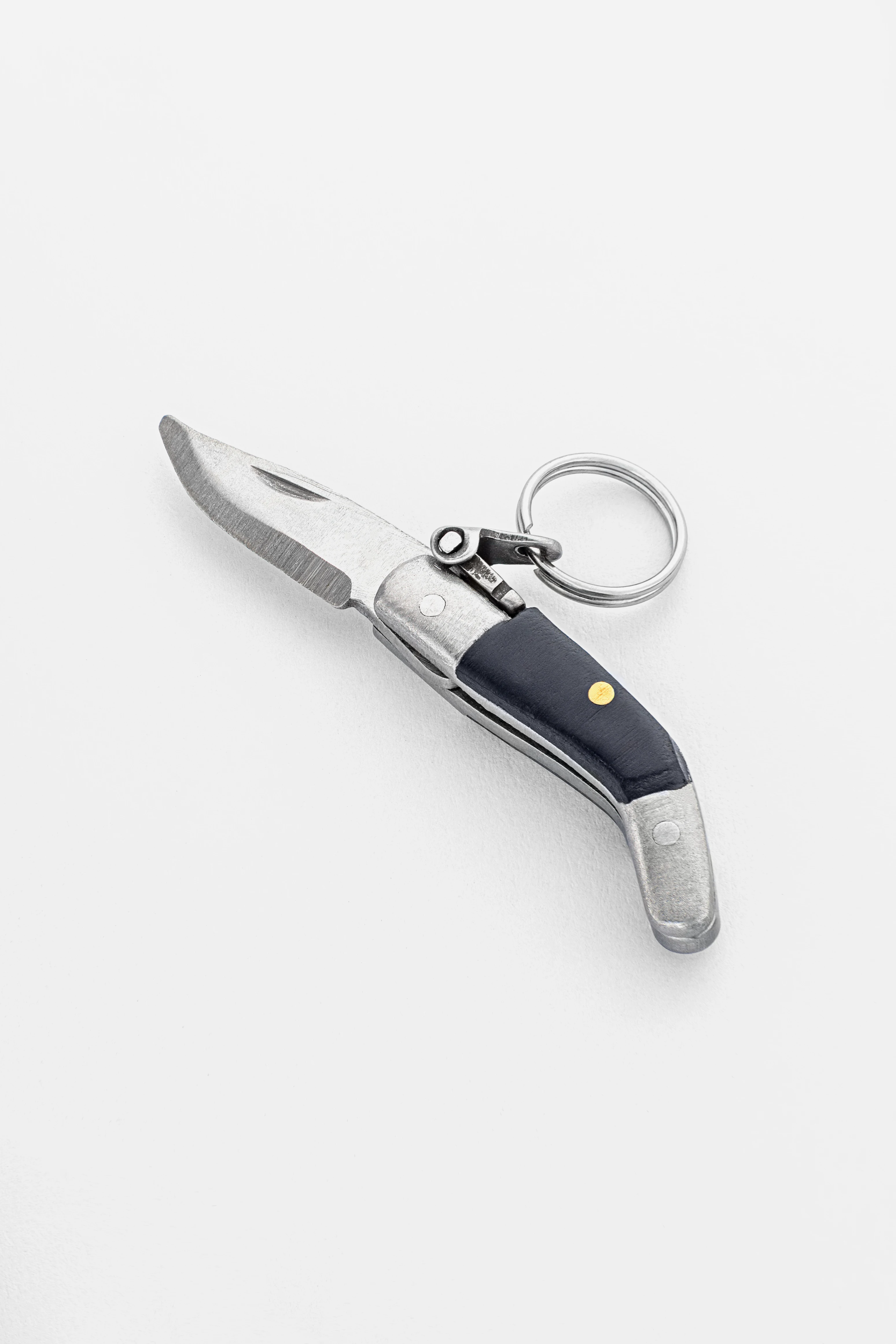
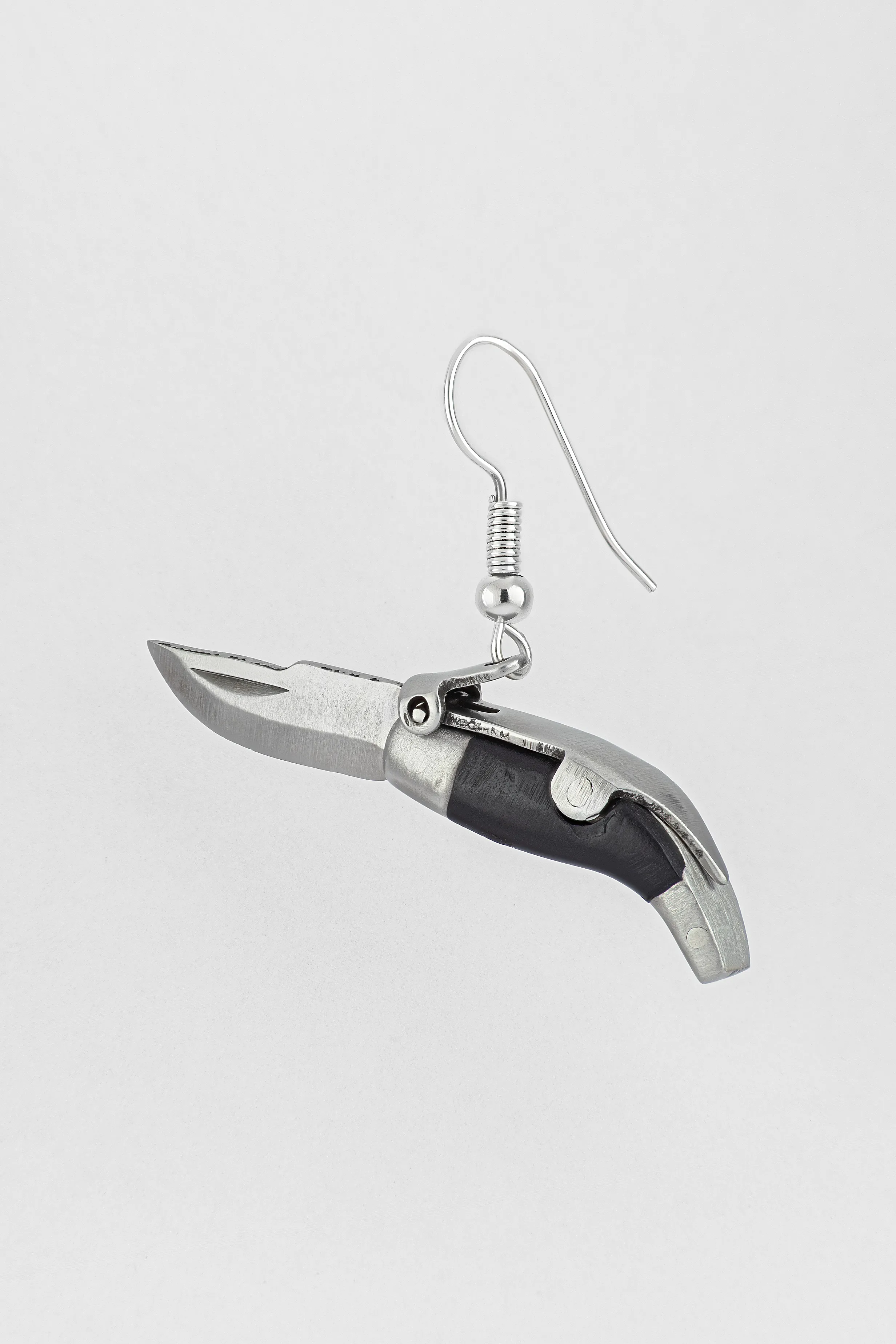
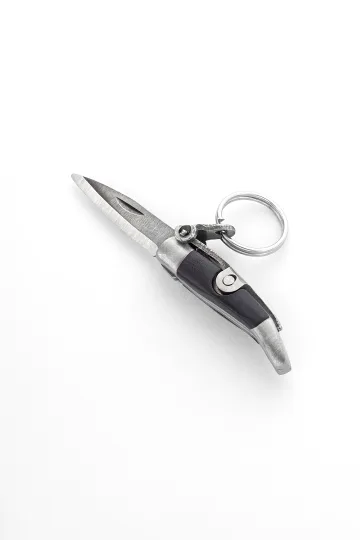
CAPAORA mini knife pendant
The 18th-century Spanish navaja in miniature: 40 mm of stainless steel, a real folding mechanism and a Palanquilla lock that clicks. An affordable gift to remember.
Authentic · Ships from Spain · 14-day returns
Engraving, the card and when to give it
Engraving turns a medal into that child's medal, and Communion medals often come with a smooth reverse to take it.
What to engrave on the back
The classic is the child's name and the date of the First Communion. Some add the church or town, and when several people give together, their initials. On a medal two centimetres wide, two short lines fit comfortably; more text means letters nobody can read. A short phrase or a few words of prayer work if they stay brief, but what ages best is name and date, the same two facts the Communion card carries. On a bracelet the order reverses: name on the front, date on the back against the wrist.
Where to have it engraved
Engraving is done after purchase at a jeweller or an engraver, by hand or by machine; order with plenty of time before the date rather than in the last week. Check first that the piece has enough flat surface: a pendant with relief on both sides cannot take an inscription.
The guide to jewellery engraving explains the techniques, and the guide to initials and monograms has ideas if you prefer a cipher to a full name.
What to write in the card
The card can be short: the name, the date and one line explaining why this piece. "So Granny's cross goes with you to school." "This medal was your great-grandfather's." A sentence like that is what the child still remembers at thirty. If the card also holds money, the jewellery goes beside it in its own box, so it does not get lost among the envelopes.
Before Mass or at the party
If the piece is meant for the ceremony, the cross or medal from parents or godparents, give it beforehand: a few days early, so the child can try it with the outfit, or that morning while getting dressed. Every other present comes at the party after Mass, where jewellery competes with the console and the cards, so choose a quiet moment with the family close by.
First Communion and Confirmation: two days, two gifts
For the gift, the difference between the two sacraments is the age of the person opening the box.
Confirmation in Ireland and Britain: sixth class, Year 6, Primary 7
In Ireland the bishops have decided that Confirmation should usually be given in sixth class, at around twelve. In Britain many Catholic schools follow a similar pattern: Year 6 in the Birmingham example, Primary 7 in Scotland. Unlike First Communion, Confirmation has a sponsor in canon law, who must be confirmed and at least sixteen, and the Code considers it fitting that the baptismal godparent take the role.
That leaves three or four years between the two days. A piece chosen for a seven-year-old will feel childish at twelve, and that is fine: the good silver chain from First Communion can take a new pendant at Confirmation, chosen by the young person.
Confirmation in the United States: up to about sixteen
In the United States the bishops' conference adopted a norm in 2000 placing Confirmation in the Latin rite between the age of discretion and about sixteen, with each diocesan bishop setting the limits. A Confirmation candidate in one diocese can be years older than in the next.
An aunt who plans for both days can make the two pieces belong together: the same metal, the same line, a more grown-up shape the second time.
Send a friend a discount code, they save on their first order.
What not to give for a First Holy Communion
Some presents, however pretty, do not fit the day or the age.
Lucky charms and amulets
First Communion is a Catholic sacrament. The cross, the medal and the guardian angel given that day are signs of faith, not talismans. A horseshoe, a four-leaf clover, an evil eye or a hand of Fatima mixes two different things on this occasion, and in a practising family it can go down badly. There are other days for a luck charm, and the guide can you give an amulet as a gift covers when one is welcome.
Adult pieces in miniature
A piece designed for an adult does not become a Communion present by being small. Pendants shaped like knives, daggers or skulls do not belong round a child's neck, however decorative. Neither do large, heavy pendants that drag on the chain, or pieces with many small parts that can come loose: charms on thin jump rings, loose stones, moving elements.
Rings
The ring is the present that ages worst on a child. At seven or eight the hand grows quickly, and a ring that fits in May may not pass the knuckle after the summer holidays. If someone insists, choose an open, adjustable ring, or better, wait for Confirmation.
Surprising facts
Pius X's home village now carries his papal name. Giuseppe Sarto, the future Pius X, was born in Riese, in the Veneto, on 2 June 1835. Since 1952 the town has been called Riese Pio X.
Imelda still lies in Bologna, under a wax figure. Leo XII beatified her in 1826, and her body rests in the church of San Sigismondo in Bologna beneath a wax effigy of a sleeping girl.
The poem that made Tarcisius known no longer exists on its stone. Pope Damasus had his verses for the martyrs cut in marble. The original for Tarcisius is lost, and its text survives only in later copies; the boy himself was buried in the catacombs of San Callisto.
Early Christians called the baptised little fishes. Around the year 200, Tertullian wrote in his treatise on baptism that Christians are born in water as pisciculi, little fishes, after the image of their ICHTHYS, Jesus Christ.
A pelican is a Eucharistic symbol. In the Physiologus the bird opens its breast to feed its young with its own blood, a story read as an image of Christ. Thomas Aquinas calls Christ "Pie pelicane", loving pelican, in his hymn Adoro te devote.
Dublin's goldsmiths received their charter from Charles I. The Company of Goldsmiths of Dublin was incorporated by royal charter on 22 December 1637, and its Assay Office has worked inside Dublin Castle since 1925, after the fire at the Custom House in 1921.
Frequently asked questions
What do you give for a First Holy Communion? A piece of faith the child can wear: a small cross, a medal, a guardian angel or a decade bracelet, with a children's Bible or a watch as alternatives. Guests outside the close family can choose a small neutral piece or a gift certificate.
What do godparents give for First Communion? First Communion has no official godparents, but by custom the christening godparents give the main present: the engraved medal, the cross with its chain, a children's Bible or the watch. Agree it with the parents first so nothing is duplicated.
How much money do you give for a First Communion? There is no fixed sum: it depends on how close you are to the child, and godparents and grandparents give more than neighbours. To combine money and jewellery, put a small pendant beside the card.
Is a cross necklace a good First Communion gift? Yes, it is the classic. Choose a small cross, a fine chain and a clasp the child can work alone. If the child already wears a christening cross, an angel or a medal makes a better companion.
Gold or silver for a First Communion? Gold is the heirloom metal and does not darken; sterling silver is the middle way, easy to clean at home; gold-plated steel or brass suits smaller presents.
What age is First Holy Communion? Around seven or eight: Second Class in Ireland, Year 3 or Year 4 in England and Wales, Primary 4 in Scotland and second grade in the United States. Church law since 1910 sets the age of reason, about seven.
What is the difference between First Communion and Confirmation? First Communion comes at about seven or eight, after First Reconciliation. Confirmation comes later, in sixth class in Ireland, Year 6 or Primary 7 in Britain, up to about sixteen in the United States, and has a sponsor in canon law.
What should you give for a First Communion if you are not family? Something small that is neither a cross nor a medal, so you do not double the godparents' present: a tiny neutral pendant, a book or a gift certificate.
A piece for the day of their First Communion
Small crosses and angels, 925 silver pendants and a gift certificate that arrives by email.
Buying it as a gift? Each one arrives ready to give.
 A branded Zevira box and a little card come with every order.


Conclusion
Pius X was not thinking about jewellery when Quam singulari was issued, but by lowering the age of First Communion he changed for good what is given on the day. A piece for a seven-year-old has to be small, sturdy, safely fastened and above all the child's own: with a name on the back, the Virgin of the family or the cross that goes to school on Monday.
The day adds the rest: the cross on the white dress, the photograph at the altar, the card with the same date as the engraving. Twenty years on, the piece will still say which spring it came from.
About Zevira
Zevira gathers jewellery around symbols with a history: small crosses and angels, celestial and botanical motifs, Mediterranean amulets, miniatures from the Spanish knife-making tradition and 925 silver author jewellery. We explain where each sign comes from, so whoever gives it can say why in two lines, and that is what turns a piece into a present. Every product page states the material: 925 silver, stainless steel, gold-plated steel or brass, enamel.